


Oat milk has surged in popularity, establishing itself as a leading dairy alternative. Oatly, a prominent oat milk brand, holds a 5.5% share of the overall plant-based dairy alternatives market. In 2023, oat milk sales surpassed other plant-based milk options in Europe, showing strong growth. This dairy-free beverage offers unique qualities.
This blog explores oat milk nutrition, its health benefits, and specific uses. Many people wonder, “Is oat milk good for you?” What should consumers look for when choosing this popular oatmilk? Understanding its nutrition helps make informed decisions about this versatile oatmilk, a great oat milk option.
Key Takeaways
Oat milk has good nutrition. It gives you energy, some protein, and healthy fats. Many brands add vitamins like B12 and D, and minerals like calcium, which are good for your bones.
Oat milk helps your heart. It has fiber called beta-glucans. This fiber can lower bad cholesterol. It also helps your digestion and keeps your gut healthy.
Always check the label when you buy oat milk. Some brands add a lot of sugar. Others have extra oils or thickeners. Choose unsweetened and fortified kinds for the best health benefits.
Oat milk is good for people with allergies. It does not have dairy, soy, or nuts. This makes it a safe choice for many. But, if you cannot eat gluten, pick oat milk that says ‘gluten-free’ to be safe.
Oat milk is great for coffee and cooking. It makes drinks creamy. It also works well in baking and smoothies. It is a good choice for people who want to help the environment because it uses less water than dairy milk.
Oat Milk Nutrition Facts

Oat milk offers a unique nutritional profile. It provides complex carbohydrates, some protein, and healthy fats. It also contains various micronutrients. However, the specific oat milk nutritional information varies significantly between brands. Consumers must read labels carefully. Fortification practices and added ingredients greatly influence the final nutritional value.
Calories & Macronutrients
A standard serving of oat milk typically contains 16.0 grams of carbohydrates. Some original varieties of oat milk can even contain up to 24 grams of carbohydrates per serving. These carbohydrates come from the oats themselves, providing a steady energy source. Oat milk also offers some protein. It typically provides 3 grams of protein per 240ml serving.
This amount is approximately 40% of the protein content found in cow’s milk. Brands like Oatly often highlight their 3 grams of protein per serving, which is a notable amount among plant-based milks. The fat content in oat milk varies. Many brands add oils like canola or sunflower oil to improve texture and mouthfeel.
Vitamins & Minerals
Manufacturers often fortify commercial oat milk with essential vitamins and minerals. They frequently add B vitamins such as riboflavin (B2) and vitamin B12. Riboflavin aids cell growth and helps convert food into energy. Vitamin B12 is crucial for healthy nerves and blood cells. It also helps produce DNA. Commercial oat milk varieties are also a good source of calcium and vitamin D. These nutrients are vital for bone health. Homemade oat milk typically lacks vitamin D or B12. These are added during commercial fortification processes.
Here is a comparison of calcium and vitamin D levels across various dairy and oat milk brands:
Brand | Calcium (mg) | Vitamin D (IU) |
|---|---|---|
Dairy Milk (1%) | 290 | 127 |
365 Organic Oatmilk | 350 | 144 |
Califia Farms Oatmilk | 240 | 0 |
Califia Farms Protein Oat Milk | 595 | 200 |
Chobani Oat Milk | 325 | 120 |
Earth’s Own Oat Milk | 300 | 80 |
Sprouts Organic Oatmilk | 260 | 120 |
Three Trees Oat Milk | 33 | 160 |
Trader Joe’s Oat Beverage | 110 | 116 |
Uproot Oatmilk | 200 | 64 |
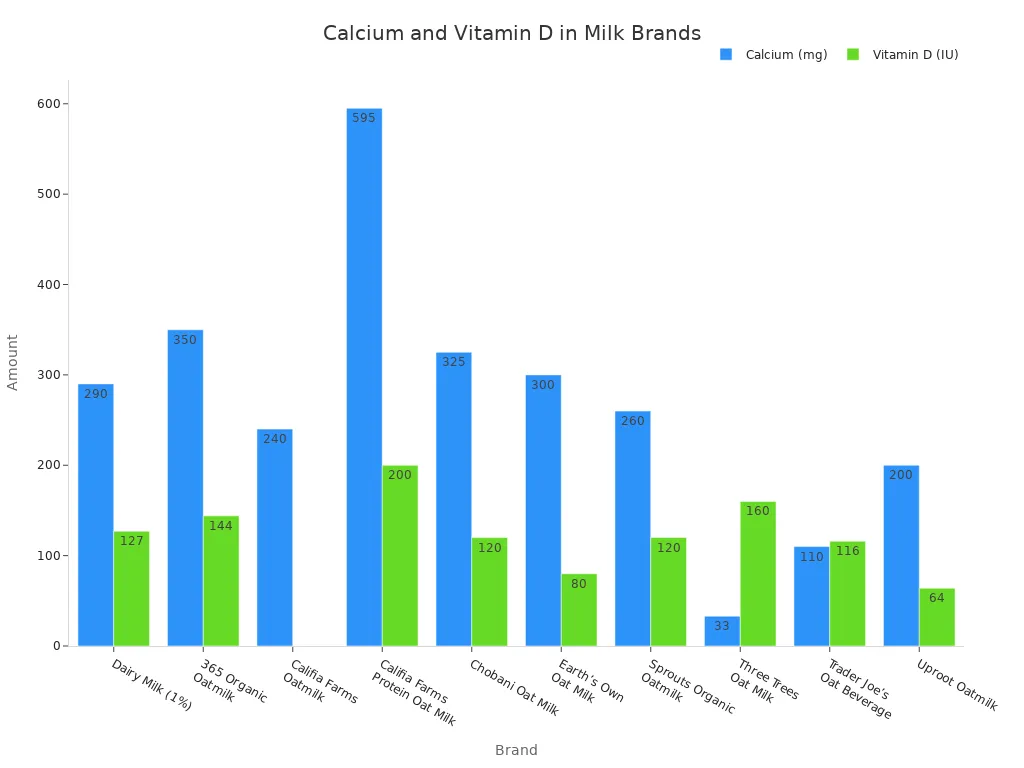
This chart shows how fortification levels differ. Some fortified oatmilks offer more calcium and vitamin D than dairy milk.
Added Sugars & Ingredients
Consumers should always check the ingredients list for added sugars. Many flavored or “original” oatmilk products contain significant amounts of added sweeteners. These can increase the calorie count and impact overall nutrition.
Other common ingredients include oils, such as canola or sunflower oil, which contribute to the fat content. Emulsifiers and stabilizers, like gellan gum or dipotassium phosphate, are also often present. They help create a smooth texture and prevent separation. Understanding these ingredients helps consumers make informed choices about their oat milk.
Brand Nutritional Variations
The nutritional value of oat milk varies widely among brands. This difference comes from several factors. These include the amount of oats used, the fortification levels, and the types of added ingredients. Some brands focus on lower sugar options. Others prioritize higher protein content. For example, some oatmilk brands offer more robust fortification with vitamins and minerals than others. Always compare the nutrition labels. This ensures the chosen oat milk aligns with individual dietary needs and preferences. This careful review helps consumers find the best oat milk nutrition for them.
Health Benefits of Oat Milk
Oat milk offers many health benefits. It provides essential nutrients and supports various bodily functions. These benefits make it a popular choice for many people.
Heart Health & Cholesterol
Oat milk contributes to heart health, especially through its fiber content. Beta-glucans, a type of soluble fiber found in oats, help reduce cholesterol levels. These fibers specifically target LDL-cholesterol and non-HDL-cholesterol. Their physical properties allow them to lower serum LDL cholesterol. Research shows that oat beta-glucan increases bile excretion. This process further helps reduce cholesterol.
A randomized clinical trial confirmed that oat beta-glucan’s properties influence its ability to reduce serum LDL cholesterol in humans. Studies also show that eating oat bran lowers serum low-density lipoprotein cholesterol in men with high cholesterol. A systematic review and meta-analysis of trials concluded that oat beta-glucan effectively reduces LDL-cholesterol and non-HDL-cholesterol. This helps lower the risk of cardiovascular disease.
Another systematic review on oat supplementation interventions (OSIs) showed consistent decreases in total and LDL-C levels. This happened regardless of the diet or comparison group. The review also noted potential benefits of oat dietary supplementation on apolipoprotein B and triglyceride levels. Oat products can lower blood lipids, mainly serum LDL-C concentrations, with modest reductions. A study by Onning et al. (1999) found that consuming oat milk for five weeks lowered serum cholesterol and LDL cholesterol in men with moderate hypercholesterolemia. These findings highlight the significant oat milk benefits for heart health.
Digestive Health & Fiber
Oat milk is a source of soluble fiber. This fiber supports healthy digestion. A scientific study indicates that oat milk contains about 0.5 grams of water-soluble dietary fiber (beta-glucan) per 100 grams. The fiber content in oat milk can range from 0 to 2 grams per cup. This amount is comparable to other plant milks like soy or almond milk. It can be more than dairy milk. One cup of plain unsweetened oatmilk provides about 2 grams of fiber. This makes oat milk a good choice for increasing dietary fiber intake. Over 95% of Americans do not consume enough fiber. Choosing a plant-based milk with fiber, such as oat milk, helps bridge this gap.
The soluble fiber β-glucan in oats is fermented by gut microbiota. This fermentation changes the makeup of the gut bacteria. It also leads to the production of short-chain fatty acids (SCFAs) like acetate, propionate, and butyrate. Oats are recognized as a functional food with prebiotic potential due to their fiber content. This fiber supports slow digestion and helps regulate blood sugar.
Fortification Benefits
Many commercial oat milk varieties are fortified. This means manufacturers add extra vitamins and minerals. These additions enhance the nutritional benefits of oat milk. Fortified oatmilks often contain B vitamins, such as riboflavin (B2) and vitamin B12. High levels of B vitamins can elevate mood and combat oxidative stress. They help produce red blood cells and support brain function. B vitamins also regulate metabolism. They aid nerve function and DNA production. Some B vitamins help with stress relief and improve hair, skin, and nail health. They also protect against oxidative damage and enhance cognitive performance.
Fortified oatmilks are also a good source of calcium and vitamin D. These nutrients are crucial for strong bones. Some fortified oatmilks offer more calcium and vitamin D than dairy milk. This makes oat milk a rich source of calcium for those avoiding dairy. These added nutrients contribute significantly to the overall health benefits of oat milk.
Allergen-Friendly Nature
Oat milk is naturally free from common allergens like dairy, soy, and nuts. This makes it an excellent option for individuals with allergies or sensitivities to these ingredients. People with lactose intolerance or dairy allergies can safely consume oatmilk. It also serves as a suitable alternative for those avoiding soy or nuts due to allergies. This allergen-friendly nature is one of the significant health benefits of oat milk, allowing more people to enjoy a creamy milk alternative. Oat milk is packed with antioxidants and offers various nutritional benefits without common allergens.
Oat Milk vs. Other Milks
Consumers have many choices for milk. Oat milk stands out among dairy and other plant-based options. Each type offers different nutritional profiles and environmental impacts.
Dairy Milk Comparison
Oat milk and cow’s milk have distinct nutritional differences. Cow’s milk naturally contains more protein. It also provides all nine essential amino acids. This makes it a complete protein. Oat milk, like other plant-based milks, does not offer a complete essential amino acid profile. The body may struggle to use its protein effectively without other protein sources.
Nutrient | Oat Milk (per 100ml) | Cow’s Milk (per 100ml) |
|---|---|---|
Protein | 0.4 grams (plant-based) | 3 grams |
Calcium | 130 mg (fortified) | 120 mg |
Cow’s milk naturally provides about 120 mg of calcium per 100ml. Oat milk can be fortified to provide similar or even higher levels, such as 130 mg per 100ml in some brands. Without fortification, oat milk’s natural calcium content is much lower.
“The quantity and quality of proteins in cow’s milk is high as it contains all nine essential amino acids,” said Ms Sarib. “As such, it is a preferred dairy source if one is able to tolerate it.” In contrast, oat milk typically contains lower levels of protein and calcium, and is therefore not suitable for individuals with higher nutritional requirements, such as children.
Oat milk serves as a healthy alternative to dairy milk for many people. It is a good dairy-free alternative.
Almond & Soy Milk Comparison
Comparing oat milk vs almond milk and soy milk reveals different nutritional strengths. Soy milk is often considered the closest plant-based milk to cow’s milk in protein content. It has the highest amount of protein per serving among plant-based milk varieties.
Oat milk has a moderate amount of protein and fat. It contains relatively low saturated fat. It naturally has more carbohydrates than some other plant-based milks. This leads to a slightly higher sugar content. Almond milk is generally low in protein and fat. Most fat is unsaturated. Unsweetened almond milk is naturally very low in sugar and calories.
Nutrient | Almond Milk | Oat Milk | Soy Milk |
|---|---|---|---|
Calories | 39 | 120 | 100 |
Protein | 1.05 g | 3 g | 7 g |
Fat | 2.52 g | 5 g | 4 g |
Carbohydrates | 3.43 g | 16 g | 8 g |
Vitamin D | 25% DV | 20% DV | – |
Vitamin A | – | – | 10% DV |
Calcium | 48% DV | 25% DV | 30% DV |
Iron | – | – | 6% DV |
Potassium | 176 mg | 390 mg | – |
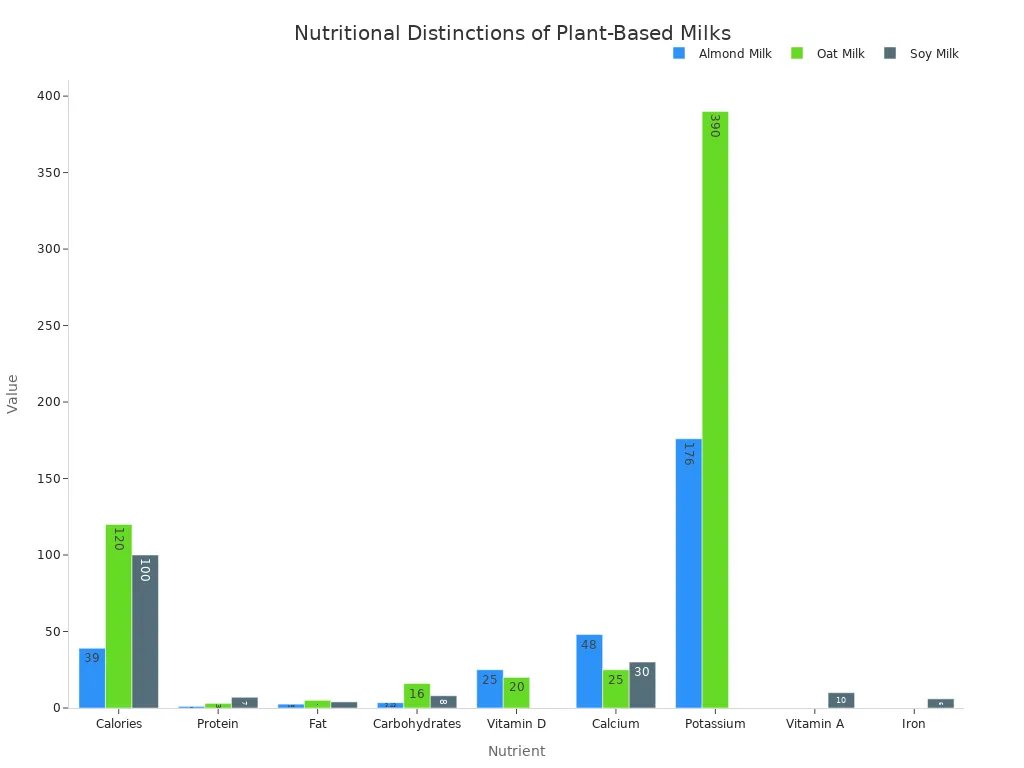
Almond milk has a low calorie count (around 39 calories per cup) and low protein content (1 gram). Many brands are fortified with calcium, potassium, and vitamins A, D, and E. Oat milk, on the other hand, has a higher calorie count (120 per cup). It is notably higher in carbohydrates (16 grams) and fiber, with 3 grams of protein. It is often fortified with calcium, potassium, and vitamins A, B, and D. Soy milk stands out with the highest protein content among the three (7 grams per cup) and 100 calories. It contains all essential amino acids. It is often fortified with high levels of calcium, vitamin A, iron, and B12.
Taste, Texture, & Use
Oat milk has a naturally sweet and creamy taste. Its texture is smooth and rich. This makes it a popular dairy alternative for coffee and other beverages. Almond milk has a thinner consistency and a nutty flavor. Soy milk often has a distinct beany taste. Its texture is usually thicker than almond milk. The specific use often depends on the desired taste and texture.
Environmental Impact
Oat milk production has a lower environmental impact than dairy milk. It uses significantly less water and produces fewer greenhouse gas emissions.
Environmental Impact | Oat Milk | Dairy Milk |
|---|---|---|
Water Usage | 80% less | More |
Greenhouse Gas Emissions | 80% fewer | More |
CO2e per cup of coffee | 21g | 53g |
Oat milk production results in significantly lower greenhouse gas emissions. This is primarily due to the absence of methane-producing livestock. These are a major contributor to emissions in dairy farming. Oat farming and processing require less energy. They also generate fewer greenhouse gases. Oat crops are naturally drought-resistant. They require minimal irrigation compared to dairy cows. Water savings also extend to processing. Oat milk production uses less water for cleaning and cooling than dairy operations.
Plant-based milks, including oat milk, generally produce roughly one-third or less of the greenhouse gas emissions of cow’s milk. They use considerably less water. This trend aligns with broader data comparing plant-based versus animal-based proteins.
Milk Type | Carbon Footprint (per 7oz glass) | Notes on Emissions |
|---|---|---|
Oat Milk | ~0.4 pounds CO2 | Lowest overall among cow’s, almond, and soy milk; includes farming, harvesting, and processing; excludes leftover pulp emissions. Global growth minimizes transport emissions. |
Almond Milk | 1.6 kg CO2 equivalent per kg raw nuts | Farming generates slightly fewer greenhouse gas emissions than oat farming; potential for carbon-neutral/negative due to coproducts and carbon storage in trees. Post-production transport emissions (California to global) are significant but often excluded from figures. |
Soy Milk | Not specified (implied higher) | Primarily grown in South America, suggesting longer transportation distances and associated emissions compared to oats. |
Oatmilk offers a more sustainable choice for many consumers.
Potential Downsides & Considerations
While oat milk offers many benefits, consumers should also consider some potential downsides. These include its sugar content, processing methods, cost, and allergen risks.
Sugar Content & Glycemic Index
Oat milk can contain varying amounts of sugar. Even unsweetened oat milk has natural sugars. The processing of oats into oat milk involves enzymes. These enzymes break down complex starches into simple carbohydrates. This can lead to rapid blood sugar spikes. Oat milk contains maltose, a sugar with a glycemic index of 105. This is higher than pure glucose. This can cause quick blood sugar increases. Individuals with diabetes or metabolic syndrome need to carefully monitor their blood sugar when consuming oat milk.
Here is a comparison of the glycemic index for different milk types:
Milk Type | Glycemic Index (GI) |
|---|---|
Oat Milk | 61.8 |
Almond Milk | 25-30 |
Rice Milk | 79-92 |
Cow’s Milk | ~39 |
Unsweetened oat milk has a moderate glycemic index of about 61.8. This is higher than almond milk (GI 25-30) but lower than rice milk (GI 79-92). Oat milk’s glycemic index is similar to cow’s milk, which is around 39. Added sweeteners can significantly raise the glycemic impact of oat milk.
Processing & Additives
Commercial oat milk often contains various additives. These ingredients help improve texture, shelf life, and nutritional content.
Emulsifiers: These enhance the texture of oat milk.
Stabilizers: These improve texture and extend shelf life.
Preservatives: These also help extend shelf life.
Specific ingredients like dipotassium phosphate act as an acidity regulator, emulsifier, stabilizer, and buffering agent. It helps oat milk mix better with acidic coffee, preventing splitting. Calcium carbonate is added to provide calcium. Potassium iodide supplies iodine. Vegan-friendly Vitamin D is included to address potential deficiencies. Some oatmilk brands include artificial fillers. These can have additional adverse health effects. Consumers should always check the ingredients list.
Cost & Accessibility
Oat milk can be more expensive than dairy milk. Plant-based milks generally cost more.
Milk Type | Average Price Per Gallon |
|---|---|
Plant-based milk | $7.27 |
Cow’s milk | $4.21 |
At stores like Walmart, oat milk costs about $0.06 per ounce. Whole dairy milk costs $0.02 per ounce. Almond milk costs $0.04 per ounce. Despite variations in raw material costs, all plant milks generally cost roughly the same. This higher price can be a consideration for some budgets.
Allergies & Gluten
While oat milk is often considered dairy free, some formulations can contain allergens. These include oats, nuts, and soy. Individuals with allergies or intolerances to these ingredients should be cautious. Oats are naturally gluten-free. However, cross-contamination with gluten-containing grains can occur during processing. This makes gluten a potential allergen for those with celiac disease or gluten sensitivity. Even if an oat milk product claims to be free of certain allergens, a risk of cross-contact exists. This happens due to shared kitchen surfaces and equipment during preparation.
Best Uses for Oat Milk

Oat milk offers great versatility in the kitchen. People use it in many different ways. It works well in beverages, baking, and cooking.
Coffee Creaminess
Oat milk is a favorite for coffee. It adds a creamy texture. Its natural consistency and starch content create a stable foam. This makes it ideal for coffee drinks. Barista-grade oat milks enhance this quality. They include added stabilizers and extra fat. This creates a richer, thicker, and more stable froth. This makes oat milk a top choice over other non-dairy options.
Frothing & Latte Art
Barista-style oat milks are specifically made for frothing. They create smooth, stable microfoam for latte art. These blends often contain added oils or thickeners. This increases their fat content. It allows them to froth more like dairy milk. Regular oat milk does not froth as effectively. Brands like Oatly Barista Edition, Califia Farms Barista Blend, Minor Figures Barista, and Ghost Town Oats are formulated for this purpose.
Smoothies & Shakes
Oat milk blends well into smoothies and shakes. It adds a smooth texture. A basic smoothie recipe includes 1 cup of oat milk, ½ banana, ½ cup of fruit, and a handful of spinach. For a thinner smoothie, add more oat milk. To make a thicker smoothie bowl, use 1 1/2 cups of oatmilk and frozen bananas. This achieves a thick consistency.
Baking & Cooking
Oat milk performs well as a dairy substitute in baking. It gives cookies a soft chewiness. It adds subtle sweetness. This pairs well with chocolate chips or spices. Oat milk is a strong choice for muffins or banana bread. Its natural sweetness adds depth to quick breads. It works for spiced cakes or delicate white or lemon cakes. Oat milk has a neutral flavor. It enhances baked goods without changing the taste.
Milk Type | Flavor Profile | Texture Contribution | Best For |
|---|---|---|---|
Oat Milk | Creamy, slightly sweet, natural sweetness | Soft, moist, comforting richness, soft chewiness | Versatile (sweet/savory), muffins, quick breads, spiced cakes, cookies, delicate cakes (white/lemon) |
Almond Milk | Subtle nuttiness, neutral | Lighter texture, light, fluffy | Pancakes, delicate vanilla cakes, cookies (neutral background) |
Soy Milk | Neutral | Springier, more structured, fluffy, tender crumb, strong gluten development | Loaf bread, cakes, cupcakes, muffins, yeast breads |
Coconut Milk | Rich, tropical note | Enhances chocolate desserts, fudgy, buttery flakiness | Chocolate desserts, brownies, pastries (croissants, scones) |
For savory cooking, use unsweetened oat milk. It works as a base for dairy-free cheese sauce in vegan mac and cheese. Incorporate oat milk into creamy soups like tomato bisque. It adds a velvety texture. Add it to plant-based curries for a rich consistency. Most plant-based milks, including oatmilk, handle high heat well in sauces and stews.
Oat milk offers significant nutritional value, providing various benefits and proving highly versatile. Careful selection makes oat milk a healthy and delicious choice. Look for unsweetened and fortified oatmilk options to maximize oat milk nutrition.
Readers should consider their dietary needs when choosing a plant-based milk. This helps answer “is oat milk good for you” for their specific situation. Oat milk continues its important role in plant-based diets, offering great nutrition and many nutritional benefits. This popular oatmilk will remain a staple.
FAQ
Is oat milk a healthy choice for daily consumption?
Oat milk can be a healthy daily choice. Look for unsweetened, fortified varieties. These options provide essential vitamins and minerals. They also help avoid added sugars. Oat milk offers fiber and can support heart health.
Does oat milk contain gluten?
Oats are naturally gluten-free. However, cross-contamination can occur during processing. People with celiac disease should choose certified gluten-free oat milk. This ensures safety and avoids gluten exposure.
Why does oat milk sometimes separate in coffee?
Oat milk can separate in coffee due to acidity and temperature differences. Barista-style oat milk contains stabilizers. These ingredients help prevent curdling. Warming the oat milk slightly before adding it to hot coffee can also help.
Is homemade oat milk as nutritious as commercial versions?
Homemade oat milk lacks the fortification of commercial brands. Store-bought oat milk often includes added calcium, vitamin D, and B vitamins. These nutrients are crucial for bone health and overall well-being. Homemade versions do not offer these added benefits.