

Your brain is an incredible powerhouse. What you eat directly affects its function and long-term health. Walnuts are a true brain food, significantly impacting your cognitive function and overall brain health. As you age, maintaining optimal brain health becomes crucial. Neurological disorders, such as Alzheimer’s disease, show a sharp increase in prevalence after age 65, affecting over 22% of those 90 and older. The health benefits of walnuts offer a natural way to support your brain. This powerful brain food makes understanding walnuts nutrition essential for long-term well-being.
Key Takeaways
Walnuts are a powerful brain food. They contain special nutrients like omega-3s and antioxidants.
Eating walnuts can make your memory better. They also help you focus and learn new things.
Walnuts protect your brain as you get older. They may help prevent problems like memory loss.
You can easily add walnuts to your daily meals. Eat about 1.5 ounces each day for the best brain benefits.
Walnuts Nutrition: Brain-Boosting Components
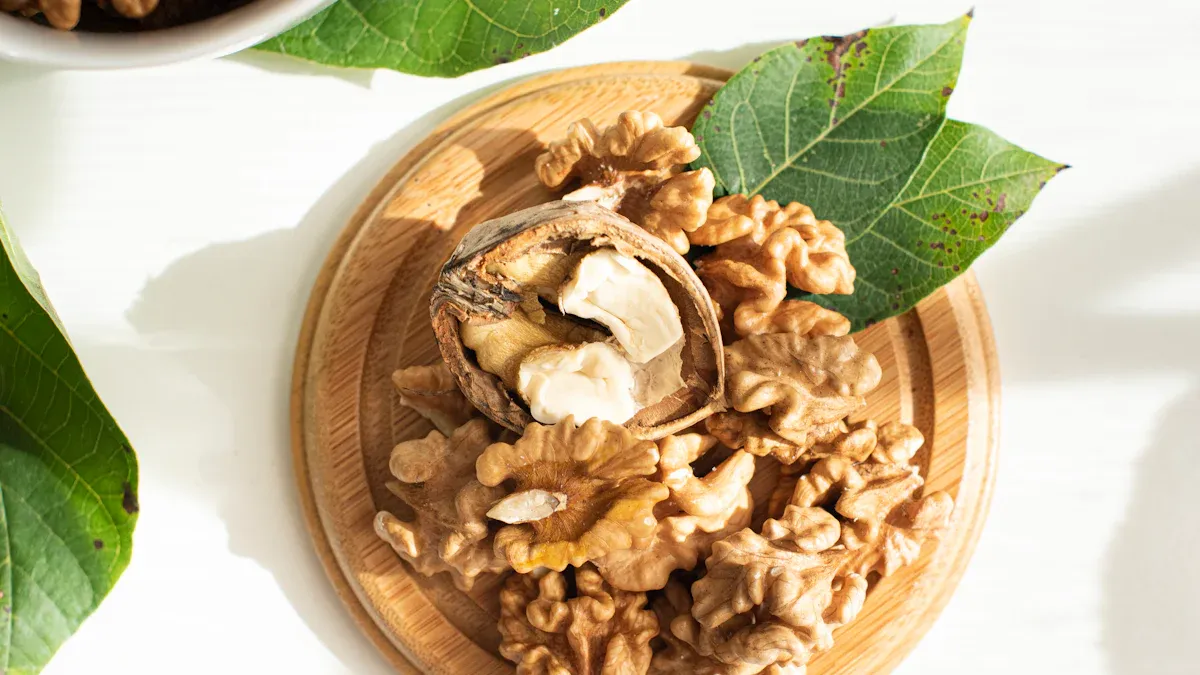
You might wonder, “what nutrients do walnuts contain” that make them so special for your brain? Walnuts offer a unique package of nutrients. This section explores the specific components of walnuts nutrition that provide significant benefits for your brain.
Omega-3 ALA: Essential for Brain Health
Walnuts stand out as the only nut that provides an excellent source of alpha-linolenic acid (ALA). ALA is a plant-based omega-3 fatty acid. You get 2.5 grams of ALA in just one ounce of walnuts. This amount meets your daily dietary recommendation for omega-3s. These polyunsaturated fatty acids are crucial for maintaining healthy brain cell membranes. They also play a role in reducing inflammation throughout your body, which supports overall brain health.
Antioxidants: Protecting Brain Cells
Your brain cells face constant threats from oxidative stress. This stress can damage cells and contribute to cognitive decline. Walnuts are rich in powerful antioxidants. These include polyphenols like hydrolysable gallotannins, glansrins, ellagic acid, and condensed tannins. Ellagitannins and ellagic acid are particularly abundant. These compounds offer strong anti-inflammatory effects.
They protect your brain cells in several ways. Walnut extracts significantly reduce the buildup of harmful reactive oxygen species (ROS) in cells. They also inhibit free radical generation caused by amyloid-beta, a protein linked to brain disorders. Flavonoids and polyphenols in walnuts help protect the integrity of your cell membranes from oxidative damage. They also activate pathways that regulate your cellular redox balance, further boosting protection.
Key Vitamins and Minerals
Beyond omega-3s and antioxidants, walnuts provide other vital vitamins and minerals that support brain function. You will find magnesium and copper in walnuts. These minerals are important for nerve signaling and energy production in your brain. Walnuts also contain antioxidant vitamins. These vitamins work with polyphenols to enhance the nutritional benefits of walnuts. For example, one ounce of walnuts provides 35% of the Recommended Dietary Allowance (RDA) for Vitamin E. This vitamin is another powerful antioxidant. Other beneficial minerals like manganese and selenium are also present. These components work together to support your brain’s overall health and performance.
Health Benefits of Walnuts for Cognitive Function
Walnuts are a powerful brain food. They offer many health benefits of walnuts. These benefits directly impact your cognitive health. They help your brain work better and protect it over time.
Enhancing Memory and Learning
Walnuts can boost your memory and learning abilities. Research shows that eating walnuts improves your ability to learn new words. You recall information better later in the day. Walnuts also make your reaction times faster. This helps with attention and switching between tasks. Your brain processes information more efficiently.
Brain activity recordings show increased alpha, delta, and theta waves in the front of your brain during memory tasks. These waves link to attention and memory processes. The rich nutrients in walnuts, like omega-3 fatty acids (ALA), proteins, and flavonoids, contribute to these effects. Your brain activity becomes more efficient during challenging mental tasks. Blood samples also show positive changes in glucose and fatty acid levels. These changes directly influence your brain function. Walnuts protect against neural damage. They enhance your memory and mental power.
Improving Focus and Cognitive Performance
Walnuts help you focus better. A review of studies found that eating walnuts consistently improves your cognitive performance. Walnuts have a unique mix of nutrients. They have a good balance of n–3 to n–6 fatty acids. They also contain many polyphenols. These compounds reduce inflammation and oxidative stress in your brain. This protects your brain cells.
One study looked at older mice fed a high-fat diet. Walnut supplements improved their short-term working memory. This is important for attention. Walnuts provide omega-3 fatty acids. These are vital for how your brain cells communicate. They lead to better focus and mental clarity. Eating foods rich in omega-3s improves your cognitive health. You might experience faster reaction times throughout the day. This happens on tasks that measure inhibition and task switching. This is part of executive function. This benefit comes after eating a walnut-rich breakfast. Your memory recall might be slightly worse at first, but it improves. You will outperform a control group six hours after your walnut-rich breakfast.
Protecting Against Cognitive Decline
Walnuts are a great brain food. They help protect against cognitive decline. They may slow the development of Alzheimer’s disease. Studies show walnuts limit oxidative stress. This stress is common in Alzheimer’s. Walnuts also boost your body’s natural antioxidant defenses. Walnuts may reduce the risk of dementia. They might slow the start or progress of Alzheimer’s disease. They also help protect against subjective cognitive decline. This condition affects many people over 45.
The WAHA trial studied older adults. It found no overall effect on cognition after two years of walnut eating. However, it suggested benefits for groups at higher risk. This included people with less education and lower baseline alpha-linolenic acid in their diet. Another study, PREDIMED, looked at older individuals at high risk for heart disease or cognitive impairment. Eating nuts, including walnuts, as part of a Mediterranean diet led to better cognitive outcomes. It delayed age-related memory decline. It also improved memory, executive function, and overall cognitive health. More research is needed. But current evidence suggests walnuts can help maintain your cognitive health. They may prevent cognitive decline, especially for older adults.
Supporting Mood and Mental Well-being
Walnuts can also support your mood. One study looked at walnut supplements for eight weeks. It did not find a mood improvement for everyone. But young, healthy males showed a significant improvement in their Total Mood Disturbance (TMD) score. They felt less tension, depression, anger, and confusion. They also felt more energetic. This suggests walnuts improved mood in healthy males.
Another study looked at a large group of people in the U.S. over ten years. It found a link between eating nuts, especially walnuts, and fewer depressive symptoms. People who ate walnuts had 45% lower depression scores. They also reported being more interested in things. They felt less hopelessness and had more energy. This shows the health benefits of walnuts extend to your mental well-being.
Incorporating Walnuts into Your Daily Diet

You now understand the amazing benefits walnuts offer your brain. The next step is to make them a regular part of your diet. Adding walnuts to your daily routine is easy and delicious. A diet enriched with walnuts can significantly boost your cognitive health.
Simple Snacking and Meal Additions
You can easily add walnuts to your everyday meals. Sprinkle them over your morning oatmeal or yogurt. They add a satisfying crunch and healthy fats. You can also toss them into your salads for lunch or dinner. Walnuts make a great snack on their own. Keep a small bag with you for a quick energy boost. Mix them with dried fruit for a homemade trail mix. You can also chop them and add them to your favorite stir-fries or vegetable dishes.
Creative Culinary Uses
Walnuts are versatile in the kitchen. You can use them in many creative ways. Try making a homemade pesto with walnuts instead of pine nuts. This gives your pasta a unique flavor. You can also bake them into muffins, bread, or cookies for a nutritious treat. For a savory option, crush walnuts and use them as a coating for fish or chicken. This adds texture and flavor. You can even blend them into smoothies for extra protein and healthy fats.
Recommended Serving Sizes
You might ask, “how many walnuts should i eat?” A standard recommended serving of walnuts is one ounce. This equals about 14 walnut halves. For optimal brain benefits, aim for about 1.5 ounces each day. This is roughly seven to eleven whole walnuts, depending on their size. Consuming this amount, especially as part of a walnut-rich breakfast, can support your focus, memory, and overall brain function throughout the day. Make eating walnuts a daily habit for long-term brain vitality.
Walnuts offer unique walnuts nutrition, making them a powerful brain food. They significantly enhance your cognitive function and protect against cognitive decline. You can easily incorporate these versatile nuts into your daily diet. Make walnuts a regular part of your meals. This simple step supports your long-term brain health and overall well-being. Start enjoying the benefits today!
FAQ
How many walnuts should you eat daily for brain benefits?
You should aim for about 1.5 ounces of walnuts each day. This is roughly seven to eleven whole walnuts. Eating this amount supports your focus, memory, and overall brain function.
Can walnuts help improve your memory?
Yes, walnuts can enhance your memory. Research shows they improve your ability to learn new words and recall information. The omega-3s and antioxidants in walnuts protect your brain cells and boost cognitive function.
Are there any side effects of eating too many walnuts?
Eating too many walnuts can cause digestive upset, like bloating or diarrhea, due to their fiber content. They are also high in calories, so eating large amounts can lead to weight gain. Enjoy them in moderation.
What makes walnuts unique for brain health compared to other nuts?
Walnuts are unique because they are the only nut providing an excellent source of plant-based omega-3 ALA. This essential fatty acid, combined with their high antioxidant content, offers superior brain-boosting benefits.