

At nine months, milk feeds should feel less like a negotiation and more like a predictable part of the day. Your baby may be ready for a higher flow rate, a bottle that is easier to hold, or a shape that supports a natural latch. The right choice depends on your baby’s feeding pace, your bottlewashing routine, and whether you combine nursing with bottle feeds.
A Quick View Of The Lineup
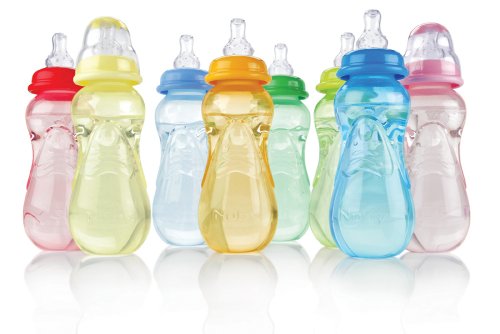
Nuby Non-Drip Bottles 10 oz 3-Pack

Nuby Wide Neck Anti-Colic Bottle 9 oz

mum to mum Self-Grip Bottles 8oz 2-Pack

Dr. Brown’s Options+ Narrow Bottle 8 oz 4-Pack

Thyseed Anti-Colic Glass Baby Bottle 5 oz Extra-Slow

Thyseed PPSU Anti-Colic Bottle 5 oz Extra-Slow

Thyseed PPSU Anti-Colic Bottle 8 oz Slow Flow
A Breakdown Of The Leading Choices
The Nuby Non-Drip Bottles put flow control in your baby’s hands, which can be useful while a nine-month-old is still adjusting to bottle feeding. Unlike the single-bottle Nuby Wide Neck Anti-Colic Bottle, this set gives you three 10-ounce bottles for keeping a clean bottle ready at home, in the car, or at daycare.
The teething nubs on the nipple provide texture for a baby who is likely exploring everything with their gums. The air system is designed to reduce swallowed air, though you may still need to pause burping your baby during feeds.
What Earns Its Place
- The Vari-Flo valve lets your baby control the pace of the milk.
- Three 10-ounce bottles provide a convenient rotating set.
- The nipple’s teething nubs add useful texture during a common stage of development.
- The air system supports a more controlled feeding experience.
Worth Noting
- Color combinations change between sets, so matching bottles is not guaranteed.
- The 0-months-and-up label does not identify a flow stage specifically for nine-month-olds.
At A Glance
Made For
This set suits families who want multiple standard-neck bottles and a nipple that gives their baby some control during feeds.
A Better Fit Elsewhere
The Nuby Wide Neck Anti-Colic Bottle 9 oz may suit you better when measured servings and a soft silicone nipple matter most.
A printed measuring system gives the Nuby Wide Neck Anti-Colic Bottle a practical edge over the Nuby Non-Drip set, where measurement marks are not listed. The soft Flex silicone nipple and wider neck also make this a sensible candidate for a baby working toward more independent handling.
Its listed medium flow is intended for children at least three months old, so it may suit a nine-month-old who has already accepted bottle feeding. Watch your baby’s pace during a full feed, since a nine-month-old may drink faster than this flow stage was designed to accommodate.
Reasons It Performs
- The printed measurements help you prepare a consistent amount of milk.
- Soft Flex silicone provides a gentle surface for sucking.
- The wide neck can simplify bottle assembly and access to the interior.
- The air system is intended to limit the amount of air entering the milk.
Small Caveats
- Only one bottle is included, so you may need separate bottles for rotation.
- The listed medium flow may be slower than the pace preferred by some nine-month-olds.
Feature Snapshot
Right Fit For
This bottle fits caregivers who value visible measurements, a soft nipple, and a simple single-bottle format for home or travel.
Swap It Out When
The Nuby Non-Drip Bottles 10 oz 3-Pack is a better fit when you prioritize adjustable flow and need several bottles ready to rotate.
The mum to mum Self-Grip Bottles are built around the idea that a nine-month-old should be able to hold and orient the bottle with less help. Small handles give little hands a grip, while the weighted straw can help the bottle remain in an any-way-up drinking position.
The listed L-flow nipple is intended for babies from 6 to 12 months, making it the most closely age-matched option in this group. You can also remove the handle or straw, which gives you a simpler configuration for naps, travel, or times when your baby prefers a conventional bottle.
Real-World Strengths
- Ergonomic handles support independent handling by a nine-month-old.
- The weighted straw offers a practical any-way-up drinking option.
- Removable parts let you adjust the setup to your baby’s routine.
- The extra-soft nipple supports a gentle transition between nursing and bottle feeding.
- Every component can be separated for cleaning and sanitizing.
Practical Considerations
- The straw, handle, nipple, and bottle body create more pieces to wash than a basic bottle.
- The L-flow nipple is a defined stage, so your baby must be comfortable with that pace.
Built With In Mind
This set suits caregivers whose nine-month-old is practicing self-feeding and needs several drinking configurations in one bottle.
Where A Sibling Pick Shines
The Thyseed PPSU Anti-Colic Bottle 8 oz Slow Flow may be a closer fit for a breastfed baby who values a breast-like nipple over a weighted straw.
Four narrow bottles give the Dr. Brown’s Options+ Narrow Bottle a different advantage from the mum to mum two-pack: fewer interruptions while several bottles sit ready for use. Its 8-ounce format also offers more room than the compact 5-ounce options later in this list.
The internal vent system is designed to keep air separated from the milk during feeding. That makes this a reasonable choice for a nine-month-old who becomes uncomfortable with trapped air, although the included Level 1 slow-flow nipple may not match a baby who already drinks briskly.
Everyday Advantages
- Four bottles make it easier to maintain a rotation at home or daycare.
- The internal vent is designed to reduce air mixing with milk.
- The 8-ounce capacity suits feeds that may be increasing in size.
- The narrow bottle format gives your baby something distinct to hold onto.
Details To Watch
- The Level 1 slow-flow nipple may be slower than a nine-month-old’s preferred pace.
- The four-piece set creates more items to wash and store than a single-bottle format.
Important Details
Whose Shelf It Belongs On
This set belongs in homes that want several 8-ounce bottles and expect to manage a slow-flow nipple during the transition to a larger feed.
Reach For A Different Pick When
The mum to mum Self-Grip Bottles 8oz 2-Pack may suit you better when a nine-month-old needs a higher-flow nipple and an easy-grip handle.
Glass gives the Thyseed Anti-Colic Glass Baby Bottle a distinct feel compared with the PPSU options later in the list. It may suit a caregiver who prefers a rigid bottle body for milk that has been warmed, while the breast-like nipple remains shaped for babies used to nursing.
The extra-slow nipple and 5-ounce capacity make this a better match for small, unhurried feeds than for a nine-month-old who typically finishes larger bottles quickly. Multiple micro-openings in the nipple help pace the milk, and the base vent is designed to keep air separate from the liquid.
A Favorable Mix
- Glass provides a rigid, straightforward bottle material.
- The breast-like nipple supports a familiar latch shape.
- Micro-openings encourage a steadier flow during feeds.
- The base vent is intended to reduce bubbles and swallowed air.
Where It May Fall Short
- The extra-slow nipple may feel restrictive for a baby accustomed to a faster flow.
- The 5-ounce size may require more frequent fills as milk intake increases.
Core Details
Who It Suits Best
This bottle suits breastfed caregivers offering measured small feeds and prioritizing a paced nipple over a larger capacity.
Consider Something Else When
The Thyseed PPSU Anti-Colic Bottle 8 oz Slow Flow is a better fit when you want a larger serving with a similar breast-like design.
The Thyseed PPSU Anti-Colic Bottle keeps the same breast-like approach as the glass version but uses PPSU, the rigid plastic named in its title. It may be a sensible choice for feeds at daycare or on the road, where a smaller bottle is easier to pack and your baby is already comfortable switching between nursing and bottle feeding.
The extra-slow nipple creates the main fit question at nine months. You may find it works well for a deliberate feeder, but a baby who pulls away from the bottle or becomes frustrated may need a faster nipple stage.
The Helpful Details
- The breast-like silicone shape supports a natural latch style.
- The compact 5-ounce body fits easily into a diaper bag.
- The base vent is designed to reduce air mixing with milk.
- The design suits breastfed babies who also use bottles.
Less-Strong Areas
- Extra-slow flow may be too restrained for some nine-month-olds.
- Only one bottle is included in the set.
The Right Fit
This bottle fits a breastfed nine-month-old who takes small, paced feeds and travels with a compact bottle setup.
Not Your Match When
The Dr. Brown’s Options+ Narrow Bottle 8 oz 4-Pack may suit you better when you need four larger bottles and a slow-flow nipple stage.
The larger 8-ounce capacity makes the Thyseed PPSU Anti-Colic Bottle a useful step up from the two compact Thyseed options. Its slow-flow nipple and breast-like shape may support a measured routine, particularly for a baby transitioning between nursing and bottle feeds.
There is one important fit check: the product is listed for 3 to 6 months, while your child is nine months old. A 9-ounce bottle like the Nuby Wide Neck Anti-Colic Bottle 9 oz is listed only from three months without a specific upper age, but it also uses medium flow, so neither option removes the need to observe your baby’s pace.
Good Reasons To Consider
- The 8-ounce capacity supports larger milk portions than the 5-ounce versions.
- The slow-flow nipple offers a defined pace for measured feeding.
- The soft breast-like shape suits babies familiar with nursing.
- The base vent is designed to keep air separate from the milk.
Points To Keep In Mind
- The stated 3-to-6-month range sits below the age of a nine-month-old.
- A slow-flow nipple may be slower than a baby’s current feeding pace.
- The set contains one bottle, so a second bottle is useful for rotation.
Key Product Details
Who Will Love This
This bottle suits a breastfed caregiver whose baby accepts slow flow and who wants a larger 8-ounce serving with a familiar nipple shape.
Where Another Pick Suits Better
The mum to mum Self-Grip Bottles 8oz 2-Pack is a better fit for a nine-month-old in the stated 6-to-12-month range who needs a faster flow and self-grip handles.
What Matters Most At Nine Months
Match the nipple to your baby’s pace
A flow rate describes how quickly milk leaves the nipple. A slow or extra-slow stage can encourage a measured feed, but your baby’s comfort matters more than a printed age label. Watch for relaxed sucking, steady progress, and frustration that suggests the flow is unsuitable.
Choose the bottle for the routine
A two-pack gives you enough bottles to rotate between home and daycare, while a four-pack simplifies the same task further. A single-bottle format can make sense for travel or occasional feeds, provided you have another clean bottle ready afterward.
Check latch, cleaning, and capacity together
A breast-like nipple may help with combo feeding, while a standard neck can support familiar bottle shapes. Count the removable pieces before committing to a complex handle-and-straw design, and consider whether 5 ounces is enough for your baby’s typical serving.
Look beyond the age marker
Age guidance provides a starting point, not a guarantee. A 9-month-old may outgrow a slow nipple, and a bottle listed for babies three months and up may not suit a baby who drinks quickly. Observe complete feeds and adjust the nipple stage when the listed range no longer reflects your baby’s pace.
Common Bottle-Feeding Buying Traps
Mistaking capacity for the right flow
A larger bottle does not automatically mean a better match. Your baby must comfortably manage the nipple flow, and the amount of milk should match the serving your baby normally finishes.
Ignoring the number of parts
Handles, straws, valves, and wide necks can make cleaning more involved. Choose the simplest arrangement your baby will actually use, especially during a busy morning routine.
What Separates Premium From Basic
Paying for a refined feeding design
Higher-tier bottles often spend more on the nipple shape, venting system, material, or multi-part construction. Those features can help with latch support, air management, and handling, but they matter only when they suit your baby’s feeding style.
Choosing the upgrade that gets used
A glass bottle is worth considering for its rigid feel, while PPSU may suit a lighter travel setup. A weighted straw or self-grip handle adds independence, and a four-bottle pack adds convenience, so compare the upgrade with your daily routine rather than the feature list alone.
Frequently Asked Questions for Bottles For 9 Month Old
What flow rate is best for a 9-month-old?
A medium or faster flow is often more suitable than a slow newborn stage, but your baby’s feeding behavior matters most. Choose a nipple your baby can draw from comfortably without prolonged struggling or gulping.
Is a wide-neck bottle easier to clean?
A wide neck can provide broader access to the interior, but the number and shape of the parts also affect cleaning. Check the nipple, vent, and handle separately for a full wash.
Should a breastfed 9-month-old use a breast-like bottle?
A breast-like nipple may support a familiar latch during combo feeding. Watch your baby’s latch and feeding pace rather than relying on the bottle shape alone.
Is an 8-ounce bottle right for a 9-month-old?
An 8-ounce bottle may suit a baby whose milk portions are increasing. Your baby’s usual serving and feeding pace are better guides than capacity alone.
How many bottles should you keep on hand?
Two bottles support simple rotation between washing and filling, while four reduce interruptions for daycare or frequent feeds. More bottles also create more items to wash and store.
Final Verdict
Your baby’s pace and your daily setup should decide the fit. The mum to mum Self-Grip Bottles lead for independent handling, the Dr. Brown’s four-pack suits bottle rotation, and the Nuby sets cover adjustable or measured feeding. For breastfed babies, the Thyseed options offer a closer latch shape, with capacity and flow determining the most practical choice.
