

A bottle can support a breast-to-bottle transition without making feeding feel like a completely different experience. You’ll get the most useful results by matching the nipple shape, flow rate, capacity, and venting system to your baby’s age and your usual feeding routine.
Your Options, Compared
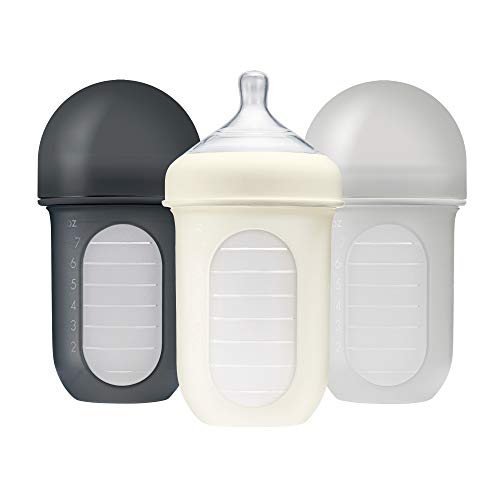
Boon Nursh Silicone Baby Bottle 8 oz Medium Flow White Food-Safe Pouch

Dr. Brown’s Options+ Bottle Set

Dr. Brown’s Options+ Dinos Bottle 9 oz

Lansinoh Glass Baby Bottles 8 oz 2 Count White Medium Flow

Thyseed Glass Baby Bottle 5 oz Newborn Extra Slow Flow

Thyseed Glass Baby Bottles 8 oz 2 Pack 3m+ Slow Flow

Thyseed PPSU Anti-Colic Baby Bottle 5 oz Extra Slow
A Closer Look At Each Pick
The Boon Nursh takes a noticeably different approach to bottle feeding. Its flexible silicone pouch contracts as your baby drinks, while the nipple supports a latch and the 8-ounce capacity handles a standard bottle feed with only a few parts involved.
This design may suit breastfed babies who react poorly to air entering the bottle. The silicone nipple and pouch are free of BPA and PVC, and the medium flow gives you a specific option during the transition. Compared with vented bottles, however, the Nursh relies on pouch movement rather than a removable internal system.
Key Advantages
- The collapsing pouch keeps milk close to the nipple as your baby feeds.
- The latch-focused nipple shape supports tongue positioning during feeds.
- Fewer components make bottle assembly and cleanup easier to manage.
- Silicone parts may also be boiled, sterilized, or frozen for varied routines.
Things To Consider
- The medium-flow nipple may not suit a newborn who needs a slower rate.
- Storage lids, pouches, and other Nursh accessories are sold separately.
Quick Facts
Made For
You’ll appreciate this bottle most when your baby latches readily but tends to fuss with air introduced through conventional bottle vents.
Look Elsewhere When
Dr. Brown’s Options+ Bottle Set suits you better when a removable internal vent and a wider bottle selection matter more than a collapsible pouch.
Dr. Brown’s Options+ keeps the transition familiar through its breast-like nipple shape and steady silicone flow. That makes it a practical starting point for a baby who accepts the breast but needs a bottle for an occasional feed, daycare, or travel.
The internal vent is the defining component. The manufacturer says it reduces air-related feeding issues, while the removable system lets you take the vent out as your baby develops. That flexibility separates this set from the fixed vent approach in the Boon Nursh.
Reasons It Performs
- The breast-like nipple supports a more familiar latch during bottle feeds.
- Consistent silicone flow lets your baby set the pace of feeding.
- The removable vent can accommodate a developing feeding routine.
- The internal system is designed to reduce swallowed air, burping, and spit-up.
Trade Offs
- Keeping the vent in place preserves the feeding system’s intended design.
- The set includes more functional parts than a pouch-based bottle.
Who Will Love This
You’ll find this bottle set particularly useful for mixed feeding, especially when you want one bottle that can change with your baby’s feeding development.
Another Choice May Suit
Lansinoh Glass Baby Bottles suit you better when a wide, gentle nipple slope and baby-led feeding are your main priorities.
The 9-ounce Dr. Brown’s Options+ Dinos Bottle brings more capacity to the same vent-centered design used in Dr. Brown’s set. Two bottles give you a useful rotation for home and daycare, while the Level 1 nipple and 0m+ marking orient the set toward newborn feeding.
Its wider neck can make bottle filling and cleaning easier, although the exact dimensions of that opening aren’t listed. The dinosaur print adds visual appeal without changing the feeding function. Compared with the single 5-ounce Thyseed glass bottle, this pair is better suited to households managing frequent bottle feeds.
Why It Works Well
- The internal vent is designed to reduce air entering the milk.
- The breast-like nipple shape supports a natural transition from nursing.
- Two 9-ounce bottles support rotation between home, travel, and daycare.
- The Level 1 silicone nipple provides an entry point for newborn feeding.
Points To Note
- The 9-ounce capacity may exceed what a newborn finishes in one feed.
- The internal vent and nipple add parts that need careful assembly and cleaning.
Feature Snapshot
Best Suited To
You’ll benefit most from this two-bottle set when feeding volume and bottle rotation matter for a newborn or young baby.
Reach For A Different Pick When
Thyseed Glass Baby Bottle 5 oz Newborn Extra Slow Flow suits you better when your baby feeds at a smaller volume and needs the gentlest listed rate.
Lansinoh puts latch comfort at the center of this two-bottle set. The nipples have a broad base and gradual slope, giving your baby a shape similar to the breast rather than the narrow profile of many conventional bottles.
For a baby around three to six months, the included medium flow may offer a more natural pace than a newborn nipple. The air-venting arrangement is intended to limit air intake, while the flexible tip stretches during sucking. Unlike the 9-ounce Dr. Brown’s Dinos set, this pair uses 8-ounce glass bottles and a flow intended for an older stage.
Good Reasons To Consider
- The wide, gentle nipple slope supports a secure latch.
- The flexible tip responds to your baby’s sucking motion.
- Two 8-ounce glass bottles support routine rotation.
- The vent is designed to reduce air intake during feeds.
Small Caveats
- The included medium flow is labeled for three- to six-month-old babies.
- All glass parts require boiling for at least five minutes before first use.
Who Should Grab It
You’ll appreciate this set when your baby is around three to six months, latches well on a broad nipple shape, and feeds at a medium pace.
Swap It Out When
Thyseed PPSU Anti-Colic Baby Bottle 5 oz Extra Slow suits you better for newborn combo feeding that calls for an extra-slow rate.
The 5-ounce Thyseed glass bottle is built around a simple premise for an early transition: use a small volume and a slower flow while your baby learns the mechanics of bottle feeding. Its extra-slow nipple is marked for newborns, making it a more focused choice than the medium-flow Lansinoh set.
You’ll find the base vent useful in a household focused on limiting swallowed air. Multiple tiny openings in the nipple are designed to release milk steadily, which may make feeds feel more controlled. One bottle keeps the initial setup simple, although a second bottle would help with continuous daily use.
What Earns Its Place
- The extra-slow rate is tailored to newborn bottle feeding.
- The 5-ounce size supports smaller, frequent feeds.
- The base vent separates air from milk to reduce bubbles.
- Micro-openings support a smoother, more even milk flow.
Where It May Fall Short
- The single-bottle pack offers no rotation during feeds.
- A very slow rate may not suit a baby accustomed to a faster flow.
Important Details
Built With In Mind
You’ll find this bottle most useful during the first stage of bottle introduction, especially with a newborn who needs a small feed and extra-slow pace.
A Better Fit Elsewhere
Dr. Brown’s Options+ Dinos Bottle 9 oz suits you better when two larger bottles and simple rotation across daycare and home matter more.
Moving up from the 5-ounce Thyseed bottle brings a larger 8-ounce capacity, a slow-flow nipple, and a two-bottle pack. That combination makes more sense once your baby is ready for a somewhat larger feed and can manage the slow rate.
The same base-vent approach separates air from the milk, while the nipple’s micro-openings create a steadier delivery. Compared with the extra-slow newborn version, this set is intended for babies at least three months old. The two-bottle format is the practical upgrade, giving you a spare during the same day’s routine.
Real-World Strengths
- The 8-ounce bottles accommodate larger feeds as your baby grows.
- Two bottles support a practical home and travel rotation.
- The slow flow suits babies ready for a pace beyond extra-slow.
- The base vent is designed to limit swallowed air.
Possible Compromises
- The 3m+ marking and slow flow may not suit a newborn.
- Two glass bottles take more room than a single compact bottle.
Technical Reference
Whose Shelf It Belongs On
You’ll get the most value from this pair once your baby is at least three months old and ready for slow-flow bottles in larger quantities.
Where A Sibling Pick Shines
Thyseed Glass Baby Bottle 5 oz Newborn Extra Slow Flow suits you better during the earliest transition stage when small volume and the gentlest rate are the priorities.
The Thyseed PPSU bottle uses a 5-ounce format, an extra-slow nipple, and a breast-like shape aimed specifically at combo feeding. Its soft silicone nipple is designed to support a natural latch, while the base vent keeps air separated from the milk to support smoother feeds.
Milk releases as your baby actively sucks, which gives you a more baby-led rhythm than a free-flowing nipple. Compared with the glass version in the same line, this bottle uses PPSU rather than glass, giving you a different material option for the same extra-slow feeding profile.
Useful Highlights
- The soft, breast-like nipple supports a natural latch.
- The extra-slow flow suits newborn combo feeding.
- Milk releases in response to active sucking.
- The base vent is designed to reduce gassiness and burping.
Details To Watch
- The package contains one bottle, so daily rotation is limited.
- The extra-slow rate may need time for a baby used to a faster flow.
Core Details
The Right Fit
You’ll appreciate this bottle for newborn combo feeding when a breast-like latch, paced flow, and 5-ounce capacity are the main requirements.
Consider Something Else When
Dr. Brown’s Options+ Bottle Set suits you better when you want a removable internal vent and the flexibility to change the bottle setup as feeding develops.
What Matters Before Bottling Up
Match the flow to your baby’s stage
Flow rate describes how quickly milk leaves the nipple. Extra-slow options suit the earliest bottle introduction, while slow and medium flows support babies moving to larger feeds. Start with the flow labeled for your baby’s age, then watch your baby’s sucking rhythm and feeding cues rather than forcing a faster rate.
Look closely at the nipple shape
A transition bottle often uses a breast-like shape to make the change less disruptive. Lansinoh emphasizes a broad base and gradual slope, while the Dr. Brown’s and Thyseed options use breast-like or latch-supporting silhouettes. Compare those shapes with the way your baby latches rather than relying on the word “natural” alone.
Understand the venting system
An anti-colic vent is designed to keep air away from the milk or reduce the amount your baby swallows. Dr. Brown’s uses a removable internal system, Boon relies on a collapsing silicone pouch, and Thyseed places its vent near the base. Each approach affects assembly, cleaning, and the parts you need to keep together.
Choose capacity and pack size around your routine
A 5-ounce bottle works well for smaller or more frequent feeds, while 8- and 9-ounce options can suit larger feeding volumes. Two-bottle packs are convenient for rotation across home, daycare, and travel. Consider how much milk you typically prepare, your available storage space, and how many bottles need to be washed between feeds.
Bottles That Reward a Closer Look
Mistakes Worth Dodging
Don’t judge a transition bottle by its shape alone. Check the age marking, nipple flow, venting requirements, and cleaning method together. A breast-like nipple does not automatically suit every baby, and a larger capacity does not guarantee a more comfortable feed.
What Separates Premium From Basic
A higher-tier bottle may add a removable vent, a softer latch-focused nipple, paced milk delivery, or a coordinated cleaning design. Those features matter most when your baby rejects air, needs a controlled pace, or requires a specific flow. A basic glass bottle can still be a sensible choice for a straightforward routine.
Frequently Asked Questions
Which bottle is best for transitioning from breastfeeding?
Dr. Brown’s Options+ Bottle Set is a strong all-around choice because it combines a breast-like nipple, steady flow, and a removable vent. Lansinoh Glass Baby Bottles may suit you better when a broad nipple slope and baby-led pace are the main concerns.
Are glass or PPSU bottles better for a transition?
Glass and PPSU both support a transition, but the choice depends on your priorities and household routine. The 5-ounce Thyseed PPSU bottle adds a non-glass option, while the Thyseed glass bottles provide a 5-ounce or 8-ounce format.
How do you choose the correct nipple flow?
Choose the flow marked for your baby’s age and feeding pace. Extra-slow suits the earliest bottle introduction, while slow and medium flows fit later stages or babies already accustomed to bottle feeding.
Does the anti-colic vent need to stay in place?
The vent should remain in place when you want the bottle to operate as designed. Dr. Brown’s Options+ can be used without its vent as your baby develops, but that changes the feeding system from the configuration described for reducing air intake.
How many bottles are useful during a transition?
Two bottles make day-to-day rotation easier because one can be washed while the other is ready. The Dr. Brown’s Dinos and Thyseed 8-ounce options include two bottles, while the 5-ounce options give you a more compact starting point.
