

A one-year-old can drink from a proper cup, yet the wrong lid still leaves milk on a high chair, shirt, or floor. Your child also needs a drinking method they can manage: a straw, soft spout, or open rim changes everything. The right cup makes milk practice less like another cleanup job and more like a small step toward independence.
The Picks In Brief

GROSMIMI Baby Straw Cup Stage 1 Rotating Handles 10oz (Sky Blue)

Munchkin It’s a Miracle! 360 Sippy Cup Gift Set

bamboo bamboo Baby and Dinky Toddler Bamboo Cup 150ml (Lilac)
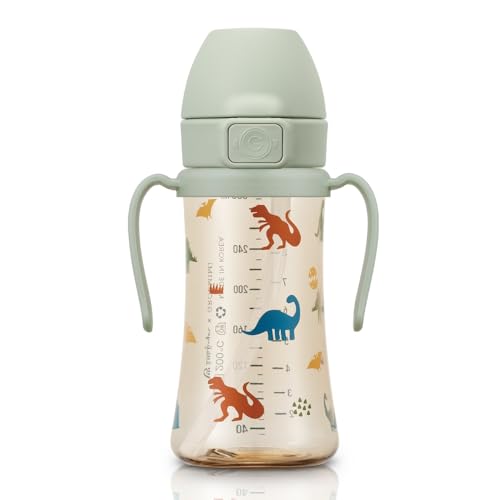
GROSMIMI Stage 2 Straw Cup 10oz

UBMOM No-Spill Backflow Prevention Sippy Cup 9.47oz

Nuby 2oz Training Cup

Nuby Clik-It Grip N’ Sip No-Spill Training Cup 10oz 3-Pack
More On The Choices That Made The List
A younger child meeting a straw for the first time may manage this cup better than a spout because the soft Stage 1 straw creates an easy entry point for milk. The 10-ounce size also holds a reasonable drink without making the cup feel oversized for small hands. It makes more sense as a learning cup than as a permanent open-cup option.
Unlike the bamboo bamboo cup, this model uses a cross-cut straw, flip-top lid, and rotating handles to manage a busy drink. The handles follow your child’s wrists, while the straw design is intended to limit leaks as the cup is tipped or carried.
Noteworthy Benefits
- Soft Stage 1 straw suits children developing their first straw-drinking technique.
- Rotating handles reduce awkward wrist positions during independent drinking.
- The 10-ounce capacity gives you a useful size for milk or water at home and on the move.
- Every drinking-contact component uses PPSU or silicone, with no metal in the drinking path.
Small Caveats
- A one-year-old who chews straws may find the softer Stage 1 insert less suitable than GROSMIMI’s Stage 2 model.
- Its many removable parts need careful disassembly for a thorough wash.
Feature Snapshot
Made For
This cup suits families introducing a soft straw to a young toddler under close supervision.
Consider Something Else When
A child who regularly chews the straw is better served by GROSMIMI PPSU Baby Straw Cup Stage 2 (Dinosaur).
Two drinking formats make this set more useful than a single-cup purchase. The 10-ounce cup handles milk or water, while the 14-ounce version adds fruit infusion for water, giving your family a separate vessel for a different drink.
Both cups use a 360-degree valve that closes when the child stops drinking. For a one-year-old learning to drink, the drinkable edge offers another way to approach the rim, although it may take some practice to use consistently.
Where It Helps
- The pair covers both a standard drinking cup and a fruit-infusing water cup.
- A closing 360-degree valve helps reduce leakage between sips.
- The 10-ounce cup suits routine milk, while the larger cup offers useful capacity for water.
Things To Consider
- The set is intended for children 18 months and older, so check your child’s current drinking stage.
- You need both cups and more storage space than a single 10-ounce option requires.
Built With In Mind
This set fits families that want separate containers for milk and fruit-infused water.
Where Another Pick Shines
The GROSMIMI Baby Straw Cup Stage 1 Rotating Handles 10oz (Sky Blue) suits younger children ready to practice with a soft straw.
A small 150ml portion is easier for a toddler to manage than a full-size tumbler, especially during early cup practice. The lightweight shape and easy-grip design also make this a straightforward choice for children learning to hold their own drink.
The honest read is that this cup prioritizes a soft silicone drip rim and simple handling rather than a sealed drinking valve. You may see a few drops during enthusiastic sipping, so it works best with a firm grip and a place where minor spills are manageable.
What Works In Its Favor
- The 150ml capacity supports smaller, controlled drinking amounts.
- A lightweight body is easier for a toddler to lift and hold.
- The soft rim offers a gentler transition from a bottle to an open cup.
Practical Considerations
- The open rim does not offer the same spill control as a valve-based straw cup.
- Its smaller capacity requires refilling more often than a 10-ounce cup.
- Milk residue around the rim may need extra attention during washing.
Quick Facts
Right Fit For
This cup suits parents practicing open-cup drinking with a toddler who handles smaller portions well.
Swap It Out When
The Munchkin It’s a Miracle! 360 Sippy Cup Gift Set is a better fit when leak control matters more than open-rim drinking.
Once chewing becomes common, a firmer straw becomes more practical than the softer insert used by GROSMIMI’s Stage 1 cup. This model keeps the same cross-cut straw and flow rate, but the Stage 2 component is firmer for a child who likes to bite the drinking tube.
For a one-year-old who already handles straws confidently, the 10-ounce format suits both milk and water. Rotating handles and a flip-top lid add everyday control without asking a small child to manage a loose sports cap.
A Strong Showing
- The firmer Stage 2 straw is intended to withstand chewing better than Stage 1.
- A cross-cut straw and flip-top lid are designed to limit leaks during normal handling.
- The rotating handles adapt to the child’s wrist position.
- A 10-ounce capacity is practical for routine drinks.
- All drinking-contact pieces use PPSU or food-grade silicone.
One Detail To Check
- The firmer straw suits a child ready for Stage 2, so a brand-new straw drinker may benefit more from the softer option.
Feature Rundown
Who Will Love This
This cup suits one-year-olds who drink through straws but frequently chew on the straw insert.
Look Elsewhere When
The GROSMIMI Baby Straw Cup Stage 1 Rotating Handles 10oz (Sky Blue) better supports a child still learning the basic straw technique.
Families managing a gradual bottle-to-cup transition can take advantage of this cup’s removable backflow disk and straw. Removing those parts turns the vessel into a bottle-style container, while the assembled configuration supports straw drinking with a 9.47-ounce capacity.
Compared with GROSMIMI’s fixed straw design, this approach offers more ways to change the drinking setup. The flexible straw and rotating handle may be useful for a child still adjusting to holding a cup, although your child needs time to learn the change.
The Case For It
- The removable disk and straw allow the cup to serve two drinking formats.
- Rotating handles stay comfortable as the child’s wrists change position.
Some Limits To Know
- At 9.47 ounces, it holds less than the 10-ounce GROSMIMI cups.
- The backflow disk and straw add parts that must be removed and washed.
- Older children may need a larger vessel for everyday drinks.
Who Should Grab It
This cup suits families who want one container to support both bottle-style feeding and early straw drinking.
Another Choice May Suit
The Nuby Clik-It Grip N’ Sip No-Spill Training Cup 10oz 3-Pack is better for households wanting several soft-spout cups in different colors.
A two-ounce cup serves a different purpose from the larger options in this list. It is built for introducing the motions of open-cup drinking, using a silicone body, angled walls, and an easy-grip shape suited to very small hands.
For a one-year-old, you may find the 2-ounce capacity useful for a small amount of milk during supervised practice, but it is not a practical main drinking cup. The Nuby Clik-It Grip N’ Sip No-Spill Training Cup 10oz 3-Pack offers more capacity and a valve for routine use.
Where It Delivers
- The soft silicone construction suits early cup practice.
- Angled walls and an easy-grip shape help a toddler control a small cup.
- Its compact size makes it easy to hold and rinse.
Less Ideal Details
- The 2-ounce capacity is small for an everyday milk serving.
- Open-cup drinking will generally require more supervision than a valve-based design.
Core Details
Whose Shelf It Belongs On
This cup suits parents introducing a toddler to an open drinking vessel before moving to a larger everyday cup.
Not Your Match When
The Munchkin It’s a Miracle! 360 Sippy Cup Gift Set is a stronger match for a child ready for a larger, valve-controlled cup.
A soft spout gives many one-year-olds a familiar place to rest their upper lip while they learn to sip. The 10-ounce size makes this a more practical everyday option than a tiny training cup, and three colors make it easy to assign one cup to each child or keep one in the diaper bag.
The built-in touch valve is designed to open during sipping and close between drinks, reducing the chance of a tipped cup emptying itself. That approach differs from a straw, so a child who strongly prefers straw drinking may adapt more readily to one of the GROSMIMI cups.
What Makes Sense
- The soft silicone spout offers a familiar transition from bottle feeding.
- A touch-activated valve helps control leakage between drinks.
- Each 10-ounce cup holds a practical serving for milk, water, or juice.
- Three colors make the cups easier to organize within a household.
Points To Note
- Three cups require more storage space than a single-cup purchase.
- Children who have already mastered straws may find the spout less convenient.
Feature Facts
Best Suited To
This three-pack suits families with one-year-olds learning from a soft spout who need separate cups for home, travel, or daycare.
Reach For A Different Pick When
The GROSMIMI Stage 2 Straw Cup 10oz is a better fit for a child whose preferred method is drinking through a firm straw.
What Matters Before The First Cup of Milk
Start With the Drinking Method
Your child needs a method they can repeat: open rim, soft spout, or straw. Straw cups suit children who are comfortable bringing a tube to their lips, while soft spouts offer a familiar edge for new drinkers. An open cup supports motor practice but calls for closer supervision around milk.
Match Capacity to the Routine
A 10-ounce cup works for many regular milk servings, while a 150ml or 2-ounce cup offers more control during early practice. Consider how much your child usually drinks and how many refills fit your routine. You also need room in the diaper bag, cabinet, or stroller for the cups you choose.
Check the Parts and Cleaning Method
Removable straws, lids, valves, and handles make a cup easier to reach during cleaning. Look for components your family can disassemble and wash without leaving narrow spaces unattended. The GROSMIMI cups also support several common cleaning methods, which can simplify a repeated daily routine.
Practical Cup Decisions To Make Early
Mistakes Worth Dodging
A sealed valve does not replace supervision, and a larger cup does not automatically make a child ready for more milk. Choose the drinking method before focusing on color or capacity. Also consider the number of parts, since a busy kitchen can make complicated cleaning routines less appealing.
What Separates Premium From Basic
The added cost often reflects tougher materials, stronger seals, rotating handles, and more flexible straw stages. Those features matter most for active toddlers or frequent travelers. For light use at home, a simpler open or spout design may handle the job without extra complexity.
Frequently Asked Questions
Can a one-year-old drink milk from a sippy cup?
Yes, many one-year-olds can drink from a cup with a straw, soft spout, or open rim. Choose the method your child can use with the least assistance.
What size cup is best for a one-year-old?
A 10-ounce cup suits many everyday milk routines, while smaller cups help with controlled practice. Consider your child’s usual serving and how easily they can lift and hold the container.
Are straw cups better than spout cups for toddlers?
Straw cups suit children already comfortable sipping through a tube. Soft spout cups tend to feel more familiar to children moving away from bottles, so the child’s current technique matters most.
Can these cups hold warm milk?
The listed materials and cleaning features support warm drink use, but you should follow the product’s care instructions. Let warm milk cool to a safe drinking temperature before serving it.
How should I clean a toddler milk cup?
Disassemble every removable part and wash the lid, straw or spout, valve, and body separately. A bottle brush helps reach narrow areas, and a dishwasher-safe model may offer a simpler cleanup option.
Final Verdict
The best choice depends less on a cup’s appearance than on your child’s drinking method. GROSMIMI’s Stage 2 straw cup suits a confident straw drinker, Nuby offers a soft-spout alternative in a useful three-pack, and the bamboo bamboo cup supports smaller open-cup practice. Match the design to your child’s ability, then check the parts and capacity against your daily routine.
