

A toddler knocks a cup across the high chair tray, reaches for a snack container, or tries to drink from a bottle one last time. The right cup can make that transition easier, whether you need a hard spout, a straw, an open drinking option, or a small container for finger foods.
These seven cups cover different stages, from a 4-month-old learning to sip to an active toddler who carries a drink around the house. They also differ in capacity, material, grip design, cleaning requirements, and the amount of help required. The right choice depends less on appearance than on what your child is ready to practice next.
A Side-By-Side Look

NUK Fun Grips Sippy Cup 10 oz 69729

Skip Hop x CoComelon Snack Container 7.5 oz

NUK Learner Cup Blue 5 oz

GROSMIMI Baby Straw Cup Stage 1, 10 oz, Sky Blue
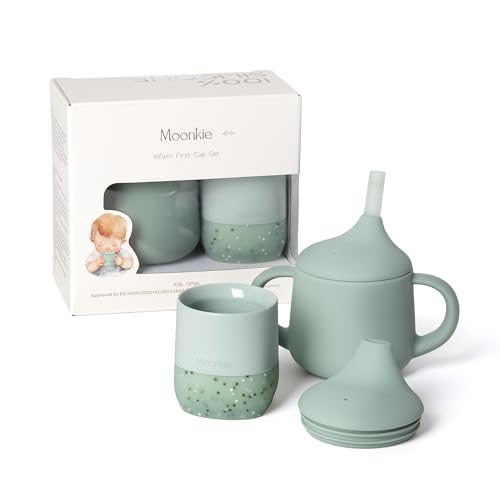
Moonkie Baby Training Cup Set Mint, 2 Pack

Moonkie Baby Training Cup Set Blush, 2 Pack

GROSMIMI PPSU Cup Stage 2, 10 oz
Taking A Closer Look At The Options
A raised hard spout gives this NUK cup a sturdier feel than a soft drinking spout, which can matter as your toddler grips the cup more firmly. Its waisted shape helps reduce tipping on a high-chair tray, while the flow-control valve helps manage the pace as your child learns.
Compared with the smaller NUK Learner Cup, this model offers a larger 10-ounce capacity and a more substantial spout. It suits children at least 12 months old, so it fits a toddler already working on independent drinking rather than a baby making an early bottle-to-cup transition.
Noteworthy Benefits
- The bite-resistant raised spout supports a more conventional sippy-cup technique.
- The flow-control valve helps a child pause between sips without rushing the drink.
- The tapered, waisted body can stay steadier during enthusiastic movement.
- Two cups give you a rotation for home, daycare, or travel.
- Dishwasher-safe construction simplifies daily cleanup.
Things To Consider
- The hard spout may not suit a child still preferring a gentle silicone spout.
- At 10 ounces, this cup takes more room than a smaller learner cup in a diaper bag.
Key Specs
Who It Suits Best
You need a practical sippy cup for a toddler at least 12 months old who can grip a cup and sip without much help.
Another Choice May Suit
The NUK Learner Cup fits babies making an earlier transition from bottle feeding with its soft spout and smaller grips.
This Skip Hop container solves a different problem from the drinking cups: it gives your toddler something to hold while eating finger foods. The compact 7.5-ounce size suits portions such as puffs, cereal, fruit snacks, or crackers, and the handle is shaped for small hands.
The CoComelon artwork also makes it easy to spot in a stroller or diaper bag, although that is secondary to the practical handle and removable lid. Unlike the Skip Hop and Moonkie drinking cups, this model is built around snack access rather than sipping from a spout or straw.
What Makes Sense
- The easy-grip handle supports independent carrying and snack eating.
- The 7.5-ounce capacity provides a small portion suited to toddler appetites.
- The screw-off lid separates for thorough cleaning.
- Its compact shape fits conveniently into a snack pouch or stroller cup holder.
- The character design coordinates with other Skip Hop CoComelon accessories.
Minor Gripes
- This is a snack container rather than a drinking cup, so it does not replace a bottle or sippy cup.
- Dishwasher cleaning is limited to the top rack.
Made For
You want a light, portable snack container for a child at least 12 months old who is beginning to eat finger foods independently.
Where A Sibling Pick Shines
The GROSMIMI Baby Straw Cup fits situations where your main goal is drinking through a straw rather than carrying finger foods.
Soft spouts and removable, easy-grip handles make the NUK Learner Cup a practical starting point for a baby leaving bottles behind. During a busy breakfast or bedtime routine, the handle gives small hands something secure to hold while the spout supports a gentler drinking rhythm.
Its 5-ounce size is smaller than the 10-ounce NUK Fun Grips, so it may be easier for a child with a smaller appetite. The two-cup pack also helps when one cup needs washing while the other remains in use.
Features That Help
- The soft spout offers a gentler starting point than a rigid drinking spout.
- Anti-slip handles make the cup easier to hold and carry.
- The vent helps balance airflow during use.
- Two cups provide a practical home-and-travel rotation.
Points To Note
- The 5-ounce capacity may require more refills than a 10-ounce cup.
- A young drinker may still need help stabilizing the cup at home.
- The smaller size offers less room for adding milk or juice.
Quick Facts
Built With In Mind
You need an easy-to-hold introduction to cup drinking for a baby who is not yet ready for a harder spout or straw.
Reach For A Different Pick When
The NUK Fun Grips Hard Spout Cup suits a larger toddler who has developed a stronger sip and needs more capacity.
A baby pulling on the straw can quickly turn a new drinking skill into a sticky-floor problem, so the GROSMIMI’s flip-top lid and cross-cut straw are useful around high chairs and playrooms. The Stage 1 straw is softer, making it a sensible starting option from six months onward.
PPSU, or polyphenylsulfone, is a heat-resistant plastic used in the cup’s drinking system alongside food-grade silicone. The rotating handles follow your child’s wrists, while the 10-ounce body offers more capacity than the NUK Learner Cup.
The Value In It
- The soft Stage 1 straw suits babies practicing their first sips.
- The sealed straw and flip-top lid help contain accidental spills.
- Rotating handles reduce awkward wrist positions during use.
- The 10-ounce capacity supports longer drinking sessions.
- All pieces separate for thorough cleaning.
Practical Considerations
- The straw mechanism has more removable areas than a simple spout cup.
- Stage 1 may need replacing once your child begins chewing more firmly.
Technical Highlights
Right Fit
You want a soft straw cup for a baby at least six months old who is ready to practice drinking independently.
Consider Something Else When
The Moonkie Training Cup Set offers a better fit for a baby who needs both an open cup and a covered drinking option.
Two drinking formats let you follow your child’s pace rather than forcing a sudden switch. The covered cup supports sucking through a soft spout or straw, while the open cup gives you a chance to practice tipping, sipping, and setting the cup down without a lid.
The mint set starts at four months, making it earlier than the GROSMIMI Stage 1 straw cup. Food-grade silicone means the cups contain no BPA, PVC, or phthalates, and both pieces can go in the dishwasher.
Useful Touches
- The open cup supports gradual practice without a spout or straw.
- The covered cup offers a familiar way to drink during the transition.
- Soft silicone components are gentle on developing gums and teeth.
- The two-piece set lets you move between open and covered drinking.
Worth Noting
- An open cup usually creates more spills while a baby learns to control it.
- Some babies may initially prefer one cup and ignore the other.
- The set is less useful once your child strongly prefers a straw.
The Right Fit
You want a flexible two-cup set for a baby from four months old who is beginning baby-led weaning.
Look Elsewhere When
The Skip Hop x CoComelon Snack Container fits a child who primarily needs a handled container for finger foods.
The blush version offers the same practical pairing as the mint set, but its soft color may blend more easily into a neutral nursery or changing table. One cup is open for practicing natural sipping, and the other provides a spout and straw for babies who still want a familiar way to drink.
Starting at four months, the set can support an early, gradual transition. Dishwasher-safe silicone also keeps cleanup uncomplicated, although the open cup will need a cloth nearby during early practice.
Where It Delivers
- Two cup styles let you introduce open drinking without abandoning the covered cup.
- The broad silicone construction suits sensitive developing gums.
- The set contains no BPA, PVC, or phthalates.
- Both cups are suitable for dishwasher cleaning.
Soft Spots
- The open cup can be messy before your baby understands the angle needed for sipping.
- Capacity is not specified, so checking the filled volume before use is worthwhile.
- The design offers no rotating handles or enclosed straw system.
Core Details
Whose Shelf It Belongs On
You want an early training set for a baby who is ready to alternate between an open cup and a covered cup.
A Better Fit Elsewhere
The GROSMIMI Stage 2 cup suits a more active toddler who needs a firmer straw and rotating handles.
Once a toddler starts chewing rather than simply sipping, a softer straw can become an frustrating choice. The GROSMIMI Stage 2 cup uses a firmer straw intended for children at least 12 months old, while retaining the same sealed drinking design as the earlier GROSMIMI model.
The dinosaur design adds a playful touch for a child becoming more attached to a cup, but the rotating handles and 10-ounce size serve the everyday routine. For playrooms, car rides, and daycare, the enclosed straw and flip-top lid help manage the usual dropped-cup moments.
Standout Benefits
- The firmer Stage 2 straw is designed to tolerate more chewing.
- The sealed straw and lid help reduce leaks during active use.
- Rotating handles follow your toddler’s wrists from multiple angles.
- The 10-ounce capacity holds a generous drink.
- The dinosaur styling may encourage your child to carry the cup independently.
Where It May Fall Short
- The firmer straw is less suitable for a baby still developing initial straw skills.
- Multiple removable parts require more attention during cleaning.
Feature Facts
Who Should Grab It
You need a sturdy straw cup for an active toddler at least 12 months old who chews on the straw.
Not Your Match When
The NUK Fun Grips Hard Spout Cup fits a toddler who prefers learning through a raised spout rather than a straw.
What Matters Before the First Straw
Match the cup to the drinking skill
A spout, straw, and open cup teach different movements. Soft spouts and open cups suit early practice, while hard spouts and firmer straws fit children with stronger oral control. Your child’s current behavior matters more than the age printed on the box.
Check capacity around the real routine
A 5-ounce cup may suit a smaller appetite, while a 10-ounce option reduces refills during travel or daycare. Consider how much your child drinks in one sitting and how much space the cup takes in a diaper bag or cup holder.
Inspect the grip and cleaning design
Handles should be comfortable for small hands, and removable parts make dried-on residue easier to reach. Straw cups often have more hidden areas than open cups, so full disassembly can matter during daily cleaning.
Separate drinking from snack storage
A handled snack container solves carrying and eating finger foods, not drinking through a straw or spout. You may need one cup for beverages and another container for snacks during outings.
Two Details That Change the Decision
Common Shopping Slip Ups
The easiest mistake is choosing a straw stage based on age alone. Watch your child’s actual behavior: soft spouts suit first sips, while firmer straws make sense once chewing becomes common. Another trap is assuming a snack cup can replace a drinking cup.
What Separates Premium From Basic
Premium options tend to add PPSU, rotating handles, sealed straw systems, or broader cleaning compatibility. Those features matter most for frequent travel, repeated cleaning, and children who carry cups actively rather than sitting with them at a table.
Frequently Asked Questions
What is the best cup for a toddler learning to drink?
The NUK Fun Grips Hard Spout Cup suits a toddler ready for independent sipping, while the Moonkie set offers earlier open-cup practice. Your child’s current drinking behavior should guide the choice.
Are straw cups better than sippy cups for toddlers?
Neither style is better for every child. A straw cup supports active toddlers who chew on the spout, while a traditional sippy cup may be easier for a child still learning the basic grip and sip.
What age should a toddler start using a cup?
The cups listed here range from four months for early open-cup practice to 12 months for hard spouts, snack containers, and firmer straws. Readiness matters, so watch for steady head control and interest in drinking independently.
How do I choose between a 5-ounce and 10-ounce cup?
Choose based on serving size, portability, and refills. A 5-ounce cup is compact for smaller portions, while a 10-ounce cup can suit a bigger appetite and fewer refill stops.
Which toddler cup is easiest to clean?
The NUK Learner Cup has fewer straw-related areas than the GROSMIMI models. The GROSMIMI cups fully disassemble and support several cleaning methods, which helps reach the straw and lid.
Final Thoughts
The most useful toddler cup is the one that matches the skill your child is ready to practice. Hard spouts support conventional sipping, open cups encourage controlled drinking, and straw stages range from soft first sips to firmer designs for chewers. Snack containers add a separate benefit by keeping finger foods within easy reach. Match the format, capacity, grip, and cleaning requirements to your daily routine rather than relying on appearance alone.
