

A baby’s first toothbrush creates a surprisingly important decision for new parents. The right tool needs a small head, soft bristles, and a shape that makes daily brushing easier without turning the routine into a struggle.
The Leading Options At A Glance
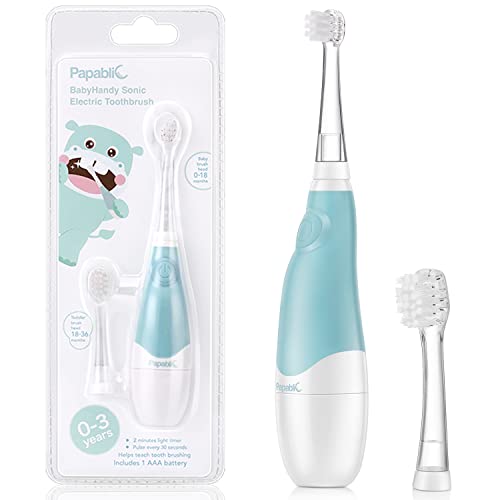
Papablic Baby Sonic Toothbrush Blue

Papablic BabyHandy Sonic Toothbrush Pink

grabease Silicone Finger Toothbrush for Infants & Toddlers, Teal

NUK Training Toothbrush Set

Papablic Pippin Sonic Toothbrush Blue Penguin

Papablic Arya Sonic Toothbrush Unicorn

Dr. Brown’s Infant-to-Toddler Toothbrush Variety Pack
The Details Behind The Selections
The Papablic Baby Sonic Toothbrush Blue turns an unpredictable baby routine into something more structured. Its light and mild vibration can hold a young child’s attention, while the soft head gives parents a practical way to guide brushing during a wiggly bedtime routine.
Two replacement heads cover the baby and toddler stages, so this feels like a sensible long-running option rather than a single-use tool. In our view, families who want guided timing without handling a bulky electric brush will appreciate the combination of cues and compact proportions.
The Good Stuff
- A two-minute cycle and 30-second prompts help divide brushing into manageable sections.
- Baby and toddler replacement heads extend the brush across two developmental stages.
- The small head and light handle make adult-led brushing easier around a moving child.
- Automatic shutoff adds a useful endpoint for short attention spans.
Points To Keep In Mind
- Electric vibration and pulsing may not suit a child who strongly dislikes powered brushes.
- The included replacement heads need regular checks for fit and cleanliness as the child grows.
Feature Snapshot
Who Will Love This
This suits parents of babies and toddlers who want guided electric brushing with age-specific replacement heads.
Another Choice May Suit
The grabease Silicone Finger Toothbrush suits families who prefer direct parent control over a manual brush.
Compared with the straight blue Papablic, the BabyHandy adds a more explicitly child-oriented name and a pink presentation, but the core routine is similarly focused on light, vibration, and guided timing. That makes sense for households building a consistent habit around a baby who is still learning what happens during brushing.
The compact proportions suit small hands that may eventually hold the brush with an adult’s help. A parent supervising a daily routine will likely appreciate the section prompts, though the powered movement remains a matter of individual preference.
Strong Points
- Soft illumination provides visibility while keeping the child’s attention on the brush.
- Two age-specific heads accommodate changing mouth sizes.
- Section prompts turn a short routine into an understandable sequence.
- Automatic shutoff gives busy caregivers a clear finish.
Small Caveats
- The brush head and vibration remain adult-guided rather than fully independent.
- Replacement heads add more parts to organize during travel or overnight stays.
- Children sensitive to vibration may prefer a purely manual option.
Built With In Mind
This works well for parents introducing an electric brush to a baby or young toddler with a short attention span.
Look Elsewhere When
The NUK Training Toothbrush Set is a better fit when a protective ring and manual gum massage matter more than timing prompts.
For a teething baby, a finger brush keeps the parent physically close to the mouth, which can make careful cleaning easier than guiding a long handle. The grabease uses tapered bristles on two sides, giving each finger access to a different cleaning surface.
Unlike the powered Papablic models, this brush relies on your movement rather than vibration or a timer. That makes it a quieter, simpler choice for families beginning oral care around six months, though children with more teeth may need a more conventional brush head.
Everyday Perks
- Finger placement gives the parent precise control around small teeth and tender gums.
- The two-sided bristle layout reduces finger repositioning during a brief brushing session.
- A protective collar limits how deeply the brush can enter the mouth.
- The teal silicone construction is simple to wipe clean after use.
Things To Consider
- A finger brush offers less independence once a toddler can hold a longer handle.
- Replacement every three to four months adds a recurring step to the routine.
- Children who bite firmly may prefer a sturdier, handle-based design.
The Right Fit
This fits caregivers of babies around six to twelve months who want close, controlled brushing during teething.
Reach For A Different Pick When
The Dr. Brown’s Infant-to-Toddler Toothbrush Variety Pack suits families who want two conventional manual brushes for different stages.
The NUK Training Toothbrush Set addresses the earliest stage of oral care with very little complexity. A protective ring keeps the brush from traveling too deeply, while the small design can be used to massage emerging gums and clean a first tooth as it appears.
Unlike the electric choices, this manual trainer gives the parent complete control over pressure and movement. That simplicity may be useful during a teething episode, although the brief training format may feel less substantial once several teeth need brushing.
What It Does Well
- The protective ring sets a physical limit on how far the brush can enter.
- Soft bristles suit delicate gums and newly emerging teeth.
- Manual operation avoids vibration, lights, and powered controls.
- The compact trainer is straightforward to carry in a diaper bag.
Worth Noting
- The training format is most useful before a child needs a larger toddler brush.
- Manual technique places more responsibility on the supervising adult.
Quick Facts
Made For
This suits families caring for a teething baby or a child who has only just developed a first tooth.
Swap It Out When
The grabease Silicone Finger Toothbrush for Infants & Toddlers offers more control through a finger-mounted design for very early routines.
The blue penguin cover gives the Papablic Pippin Sonic Toothbrush Blue Penguin a more playful identity than the plain blue Baby model. For a toddler who is beginning to recognize the toothbrush as part of the daily routine, that visual change may make the toothbrush easier to accept.
It retains the two-minute timer, half-minute prompts, and powered movement, so the practical difference is presentation rather than a new brushing system. The suction-cup base also offers a tidy place to stand the brush between uses.
Where It Helps
- The penguin shape gives a familiar character to an otherwise clinical routine.
- A glowing light supports visibility and keeps attention on the brush head.
- Two replacement heads support routine changes as the child grows.
- The suction-cup base keeps the brush upright during storage or travel.
- Prompting helps a caregiver move through sections rather than brush randomly.
Trade Offs
- Lightweight construction suits children aged one to three but offers less grip for an adult.
- The powered movement remains unsuitable for children who strongly dislike vibration.
Core Details
Who Should Grab It
This fits toddlers who respond well to animal characters and enjoy a visual routine with visible timing prompts.
Where A Sibling Pick Shines
The Papablic Arya Sonic Toothbrush Unicorn is the better match for a child whose preference centers on unicorn rather than penguin styling.
The Papablic Arya Sonic Toothbrush Unicorn follows the same timed sonic format as the Pippin but changes the appeal through a unicorn cover. That distinction matters in homes where a child consistently chooses a favorite character, since visual familiarity can make the routine feel more predictable.
Four replacement heads make this the more extensively equipped of the two character brushes. You also get the same section timing, light, compact handle, and upright base, so the deciding factor comes down to theme and replacement-head quantity.
What Works In Its Favor
- Unicorn styling gives the routine a playful focal point.
- Four replacement heads offer useful stock for regular changes.
- The illuminated head supports visibility during brushing.
- Soft bristles and sonic movement suit a gentle toddler routine.
Possible Compromises
- The extra replacement heads create more items to store and track.
- Electric vibration may not interest a child who dislikes powered brushes.
- Its character theme is less useful for children without an interest in unicorns.
The Right Fit
This suits active toddlers aged one to three who are drawn to unicorns and respond well to guided routines.
Consider Something Else When
The Papablic Pippin Sonic Toothbrush Blue Penguin fits toddlers who prefer a blue animal design and a smaller set of replacement heads.
The Dr. Brown’s Infant-to-Toddler Toothbrush Variety Pack includes a giraffe brush for infancy and a crocodile brush for toddlers, giving a family two manual options without moving between entirely different routines. Both are aimed at children from one to four years old.
The giraffe stands on four legs, while the crocodile uses a suction cup, so either brush has a dedicated upright resting place. Compared with the Papablic electric models, this pack is quieter and simpler, though it offers no timing prompts or powered movement.
The Upside
- Two brush designs cover infancy and toddlerhood in one package.
- The giraffe’s four stable legs keep its body away from the counter.
- The crocodile’s textured legs and suction cup support a secure grip and upright storage.
- Soft, resilient bristles suit sensitive mouths and teething children.
- Both brushes have easy-to-hold forms suited to developing motor skills.
Details To Watch
- Manual brushing means the adult controls the pace and coverage.
- Each brush occupies a little space, though both stand upright when stored.
Essential Details
Best Suited To
This fits families seeking two quiet manual brushes for home, nursery, or travel use across early childhood.
Not Your Match When
The Papablic Baby Sonic Toothbrush Blue fits families who place greater value on timed section prompts and powered brushing.
What Matters Before You Choose
Match the Brush to the Child’s Stage
A newborn may need only a gum-massaging trainer, while a toddler with several teeth benefits from a longer handle and a compact brush head. Check the stated age range and replacement-head stages before buying, especially for a child who is already close to moving into the next stage.
Decide Between Manual and Powered Control
Manual brushes give a parent direct control over movement, while electric models add vibration, illumination, and timing cues. Powered routines may engage an older toddler, but a manual finger brush can be easier for a very young baby or a child who dislikes vibration.
Consider the Handle and Storage
A small handle helps a child develop independence, but adult supervision remains important with any infant brush. Upright bases, stable legs, and compact bodies also matter for bathrooms, diaper bags, and travel bags where a brush may sit near sinks or toiletries.
Check Replacement Needs
A brush head should be replaced as bristles become worn or the child’s mouth changes. A multi-head set can make regular changes easier, though households should confirm the included head count and the age stages represented by the package.
Two Details Worth Checking
Mistakes Worth Dodging
Choosing by color alone can overshadow brush size, bristle softness, and the child’s actual age. Look for the head size, handle length, and age guidance first, then treat characters, lights, and vibration as supporting features.
The Upgrade Payoff
A higher-priced model may add powered movement, timed prompts, more replacement heads, or a freestanding base. Those extras earn their place when your child needs more guidance or your household values a simpler storage routine, rather than every family needing them.
Frequently Asked Questions
When should a baby begin using a toothbrush?
A baby can begin oral care as soon as teeth appear, using an age-appropriate brush with a tiny head and soft bristles. A gum-massaging trainer can also help a parent introduce the sensation before several teeth emerge.
Are electric infant toothbrushes suitable for newborns?
Newborns generally need a gentle trainer or soft manual brush rather than a vibrating model. Electric toothbrushes become more relevant once teeth appear and a child can tolerate the sensation under adult supervision.
What size brush head should a baby use?
Choose a compact head that fits comfortably within the child’s mouth without requiring a wide-open position. The head should also allow access to the front, sides, and back without crowding the cheeks.
How often should an infant toothbrush be replaced?
Replacement timing depends on bristle wear and the child’s growth, with many dental-care guidelines suggesting replacement about every three months. Replace the head sooner if the bristles become frayed or the fit no longer suits the mouth.
Should a baby brush independently?
Young children need close adult supervision and assistance because they may bite, swallow toothpaste, or miss sections of the mouth. Letting a child hold the brush builds coordination, while the adult completes the cleaning.
Final Thoughts
The right infant toothbrush depends less on bells and whistles than on the child’s age, your comfort with manual or powered brushing, and how well the tool fits a daily routine. Start with the youngest stage your child has reached, watch how they respond to the sensation, and replace the head as their mouth changes. A comfortable, consistent routine matters more than any single feature.
