

Moving from a bottle to a sippy cup works best when the drinking method matches your baby’s stage. A bottle-fed 4-month-old may need a soft nipple or spout, while an active toddler may handle a straw cup more comfortably. These seven options cover gentle first steps, open-cup practice, and spill-resistant routines for home and travel.
An Overview Of The Picks

Zak Designs Sesame Street Kelso Tumblers 15oz, Elmo and Cookie Monster

Munchkin Gentle Transition 4oz Cup

MAM Trainer Cup 8oz, 2-Pack
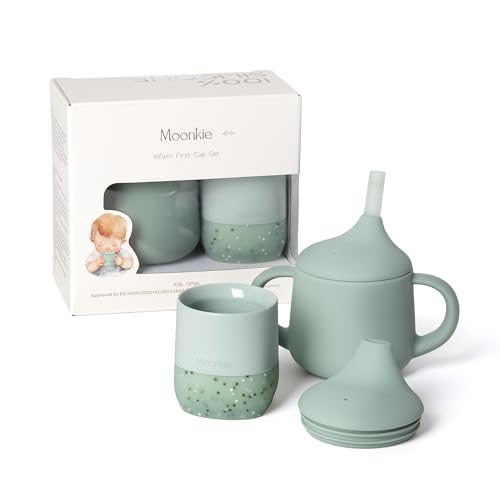
Moonkie Baby Training Cup and Sippy Set, Mint

Moonkie Baby Training Cup and Sippy Set, Blush

GROSMIMI PPSU Stage 2 Straw Cup, Dinosaur

GROSMIMI PPSU Cup 6oz, Peach Flower
A Deeper Look At The Lineup
Once a child is ready to leave a bottle behind, a straw tumbler can make the change feel more grown-up. These 15-ounce cups add a built-in straw valve that opens during drinking and helps prevent accidental spills when the tumbler tips. The soft silicone straw is easier for small mouths to manage than a rigid spout.
Unlike the smaller transition cups later in this list, the 3.20-inch diameter fits a standard car cup holder and the 6.67-inch height keeps a reusable drink within reach. The Elmo and Cookie Monster graphics also give your child a more personal choice during the transition.
The Helpful Details
- Two character tumblers support rotation at home and during outings.
- The valve reduces accidental leaks without requiring a separate closing action.
- Dishwasher-safe parts simplify cleanup after juice or milk.
- The 15-ounce capacity suits toddlers who drink larger amounts.
Practical Considerations
- These are plastic tumblers, so you must keep them away from the microwave.
- Straw drinking takes more coordination than a basic training spout.
At A Glance
Made For
These tumblers suit toddlers who already understand sipping and need a larger, cupholder-friendly drink for travel.
Where A Sibling Pick Shines
The Munchkin Gentle Transition 4oz Cup is a gentler choice for a baby still learning the basic squeezing motion of a spout.
A small bottle-fed baby often needs a gradual change rather than an abrupt move to a straw. The Munchkin Gentle Transition uses an accordion-style silicone spout that bends with the mouth, offering a softer introduction than a fixed nipple or straw. Removable, nonslip handles give small hands something stable to grip.
This is a more deliberate first step than the MAM Trainer Cup, which offers both a nipple and a spout. At 4 ounces, this cup handles smaller drinks and is listed for babies from 4 months onward, making capacity another consideration during the earliest practice stage.
Where It Helps
- The flexible spout moves with a baby’s mouth during practice.
- Removable handles help little hands hold the cup steadily.
- See-through walls and measurement markings simplify portion checks.
- The listed material formulation excludes BPA.
Small Caveats
- The 4-ounce capacity requires refills more often than an 8-ounce cup.
- Handles add width, so check the space available in a diaper bag or stroller cup holder.
- It offers a spout rather than a straw-based drinking method.
The Right Fit
This cup suits a baby around four months or older who is beginning bottle-to-cup practice with a soft, graspable spout.
Another Choice May Suit
The MAM Trainer Cup 8oz, 2-Pack offers more drinking choices and a larger capacity for a baby ready to try both a nipple and spout.
Some babies move from bottle sucking to cup drinking more smoothly when they can keep familiar feeding shapes available. The MAM Trainer Cup includes a spill-free nipple and an extra-soft spout, giving you two ways to encourage that progression. Its handles are sized for a baby to grip rather than hold in an adult-style position.
Compared with the 4-ounce Munchkin cup, this 8-ounce set offers greater capacity and more drinking options. A wide top opening also makes filling and cleaning more straightforward, which matters during a day of bottles, meals, and snacks.
Real Benefits
- Two interchangeable feeding pieces accommodate different stages of practice.
- The wide opening supports easier filling and cleaning.
- Nonslip handles improve a baby’s control over the cup.
- Two cups provide a useful home-and-outing rotation.
Some Limits To Know
- The 8-ounce size may be more than a very young baby drinks in one sitting.
- The included dust cap covers one component, so check that it remains over the opening during storage.
Quick Facts
Who It Suits Best
This set suits bottle-fed babies who may benefit from moving gradually between a nipple and a spout while learning to grip a cup.
A Better Fit Elsewhere
The Moonkie Baby Training Cup and Sippy Set, Mint is a stronger fit when open-cup practice matters alongside spout drinking.
Moving beyond a sippy cup can be easier when your child has a way to practice without relying on one drinking method. This Moonkie set pairs a training cup with an open cup, moving from assisted sucking toward natural sipping. The mint color gives the coordinated pair a light, nursery-friendly appearance.
Unlike the MAM Trainer Cup, which concentrates on two closure styles, this set opens a later stage of independence. Both pieces use silicone and are dishwasher-safe, so families managing frequent meals can clean them without a complicated teardown.
A Strong Showing
- The open cup introduces natural sipping alongside spout practice.
- Food-grade silicone excludes BPA, PVC, and phthalates.
- Both cups are dishwasher-safe for regular use.
- Soft spout and straw components feel gentle on developing gums.
Where It May Fall Short
- An open cup naturally offers less spill control than a closed training cup.
- You may need close supervision while your baby practices uncovered sipping.
Feature Snapshot
Built With In Mind
This set suits families introducing baby-led weaning who want both a covered training option and an open cup for later practice.
Reach For A Different Pick When
The Munchkin Gentle Transition 4oz Cup offers greater spill protection for a baby who is still mastering a soft spout.
The blush version of the Moonkie set has the same practical foundation as the mint set, with a training cup and an open cup for staged drinking practice. The warmer color may fit a nursery, changing table, or gift arrangement better for your household. Functionally, it serves the same bottle-to-open-cup progression.
That shared design matters when comparing products: the distinction is presentation, not a different drinking system. You still get a silicone training piece, an open cup, and dishwasher-safe construction, so select this version for its appearance rather than expecting added features.
Everyday Wins
- The two-cup format supports both assisted and independent drinking practice.
- Dishwasher-safe silicone simplifies frequent cleanup.
- Soft components are suitable for gums and emerging teeth.
- The blush finish coordinates easily with nursery tableware.
Things To Consider
- The open cup can create more spills during early practice.
- Color is the main difference from the mint set, so assess the core design first.
- Close supervision remains important during uncovered drinking.
Who Should Grab It
This set suits families who prioritize a coordinated blush appearance alongside open-cup and training-cup practice.
Swap It Out When
The GROSMIMI PPSU Stage 2 Straw Cup, Dinosaur is a stronger choice for a toddler ready for a protected straw rather than an open cup.
An active toddler needs more than a cup that merely contains liquid. This 10-ounce GROSMIMI model combines a cross-cut straw, flip-top lid, and rotating handles for a cup built around movement. Stage 2 provides a firmer straw intended to resist chewing by toddlers 12 months and older.
PPSU, or polyphenylsulfone, is a heat-resistant plastic used in the drinking path alongside food-grade silicone. The larger 10-ounce capacity distinguishes it from the 6-ounce GROSMIMI option, while the dinosaur design gives a drink-holding toddler something recognizable to choose.
Everyday Advantages
- Rotating handles reduce awkward wrist positions as the cup tilts.
- The firmer Stage 2 straw suits toddlers who chew softer straws.
- All parts disassemble for thorough cleaning.
- Dishwasher, microwave, and steam-sterilizer cleaning are supported.
Trade Offs
- The 10-ounce capacity is larger than needed for some toddlers’ smaller portions.
- Straw drinking requires more coordination than an open or handled training cup.
Technical Highlights
Built For Active Families
This cup suits an active toddler aged 12 months and older who has moved beyond a flexible training spout.
Consider Something Else When
The Munchkin Gentle Transition 4oz Cup makes more sense for a younger baby still learning the gentle squeezing action of a spout.
A smaller straw cup can give a toddler a more manageable introduction than a large handled tumbler. This 6-ounce GROSMIMI combines a protected cross-cut straw with a flip-top lid, helping control leaks while a child carries, tips, or drops the cup. Rotating handles keep the grip comfortable as the cup changes angle.
The drinking system includes a soft Stage 1 straw for 6 months and up and a firmer Stage 2 straw for 12 months and up, with the same stated flow rate. That makes the progression easier to manage than replacing the entire cup, while the smaller capacity sits neatly between the Munchkin’s 4 ounces and MAM’s 8 ounces.
Where It Delivers
- Two straw stages accommodate different chewing habits.
- The flip-top lid helps protect the straw during carrying and storage.
- Rotating handles follow the child’s hands without forcing a fixed wrist angle.
- Every part disassembles for cleaning.
Details To Watch
- The 6-ounce capacity may be smaller than the portion some toddlers drink at once.
- Stage 2 requires careful adult handling because the firmer straw is intended for children 12 months and older.
Essential Details
Best Suited To
This cup suits a toddler with a smaller portion size who is ready for a protected straw and rotating handles.
Look Elsewhere When
The GROSMIMI PPSU Stage 2 Straw Cup, Dinosaur is a better fit when a 10-ounce capacity better matches your child’s usual drink amount.
What Matters Before Your Child Leaves the Bottle
Start With the Drinking Method
A bottle transition is easier when the first change is small. Nipples preserve familiar sucking, flexible spouts require gentle squeezing, and straws call for more deliberate mouth control. The Munchkin Gentle Transition 4oz Cup offers the gentlest spout route, while the MAM Trainer Cup includes both a nipple and a spout for a gradual change.
Match Capacity to Small Hands
A smaller cup is easier for a baby to hold, but 4 ounces may need frequent refills. Eight ounces suits a larger drink, while 6 ounces provides a middle ground for a toddler still developing grip strength. The 10-ounce GROSMIMI cup makes more sense for a child who already handles straw drinking comfortably.
Check Cleaning and Storage
Removable pieces make it easier to reach trapped residue. Dishwasher-safe components help with frequent cleanup, while a wide opening can simplify hand washing. For cups with flip lids or protected straws, check that closures are secure before placing the cup in a diaper bag.
Making the Transition Work Day to Day
Mistakes Worth Dodging
Moving too quickly can make the new cup frustrating. Begin with the method your child already understands, then practice at consistent times rather than replacing every drink immediately. An open cup also needs more supervision than a sealed sippy cup.
What Separates Premium From Basic
Higher-tier cups often add rotating handles, firmer straw stages, broader cleaning compatibility, or a protected lid. Those upgrades matter most for toddlers who carry cups frequently or need a gradual straw-stage change. A simple spout remains more appropriate for a baby whose main goal is comfort with bottle-like feeding.
Frequently Asked Questions
When should a baby transition from a bottle to a sippy cup?
A transition can begin around 4 months for babies showing interest in cups and able to hold their heads up steadily. Readiness matters more than a specific birthday, so watch your baby’s attention, hand control, and feeding cues.
Which cup is easiest for a bottle-fed baby?
The Munchkin Gentle Transition 4oz Cup is designed for early practice with a flexible, accordion-style silicone spout. Its removable handles also give a baby an easy grip while learning to control the cup.
Is a straw cup better than a spout cup?
A straw cup suits a child ready to use a more controlled sucking motion, while a spout cup supports an earlier and gentler transition. There is no single stage for every baby, so match the cup to the behavior your child already displays.
Are open training cups messy?
Open cups usually create more opportunities for spills because no lid protects the drinking surface. They work best for supervised practice, particularly after a baby has become comfortable with controlling a cup.
Should sippy cups be dishwasher-safe?
Dishwasher-safe sippy cups are convenient for families cleaning bottles and meal items throughout the day. Disassemble removable parts before washing and keep any microwave-incompatible components away from the microwave.
Final Verdict
The right transition cup depends on your child’s current feeding method, grip, and portion size. Munchkin and MAM offer gentle routes away from a bottle, Moonkie supports a staged move toward open drinking, and GROSMIMI handles the straw-drinking stage with more specialized parts. Match the cup to the next skill your child is ready to practice.
