

A parent settling an infant for the night needs to know whether the child is breathing, sleeping, or simply restless. Some devices only carry nursery audio or video, while one wearable system also tracks pulse and blood oxygen through a foot sock, so choosing by the word “heart rate” alone can lead to the wrong purchase.
Your decision depends on the situation: you may need sound-only monitoring, a camera for the nursery, a car camera, or a wearable that records infant pulse and oxygen information. The seven options below cover those distinct needs, with close attention to connectivity, power, image coverage, measurement type, and setup considerations.
The Essentials At A Glance

VTech DM111 DECT 6.0 Audio Baby Monitor with 8-Hour Battery

Ognee 2K Wireless Baby Car Camera

CMI Health Rechargeable Handheld Adult Pulse Oximeter

GoodBaby 5-Inch Video Baby Monitor

GoodBaby Video and Audio Monitor
Owlet Dream Duo 3 Monitor
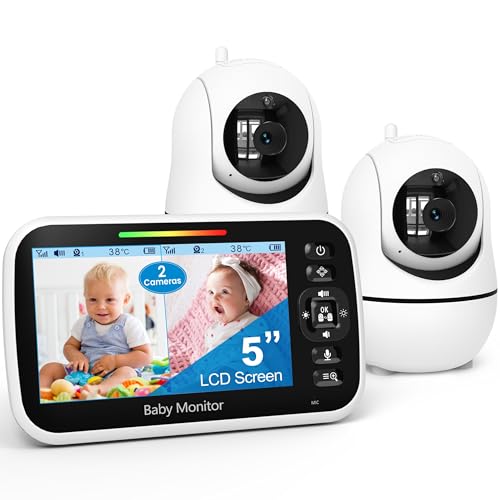
GoodBaby Two-Camera Split-Screen Monitor
More On The Choices That Made The List
The VTech DM111 focuses on one job: delivering nursery sound without WiFi, an app, or a screen. DECT 6.0 digital transmission keeps the audio quiet until the nursery produces a sound, which makes it useful in a bedroom where constant background hiss would be distracting.
Its belt clip, rechargeable eight-hour battery, and included AAA backup cells suit a caregiver moving between rooms, a grandparent learning the controls, or a family traveling with minimal equipment. Compared with the GoodBaby options, it trades visual coverage for a simpler, more discreet setup.
Benefits That Matter
- The digital connection avoids the constant static associated with many analog audio monitors.
- Five LEDs communicate nursery volume without requiring you to pick up the parent unit.
- Automatic connection and basic up-and-down volume controls make the system approachable for first-time caregivers.
- No account or internet connection is needed, which keeps the setup focused on the nursery.
Worth Noting
- This is an audio-only monitor, so it cannot show movement or record infant pulse information.
- The advertised 1,000-foot range can encounter interference from walls, appliances, and the layout of your home.
Quick Facts
Made For
This model suits caregivers who want uncomplicated sound monitoring without creating an account or connecting the system to a home network.
Look Elsewhere When
The Owlet Dream Duo 3 Monitor offers a better fit for caregivers who want infant pulse and oxygen information rather than sound alone.
Car travel calls for a different kind of monitor, and the Ognee 2K Wireless Baby Car Camera puts the view inside the vehicle. Its 2K camera, touch display, and color night vision are designed to show a rear-facing child during daytime drives and darker journeys.
The wireless camera-to-monitor link keeps cables away from the seating area, while the monitor draws power from the vehicle. Compared with a nursery camera, this system is portable by design, though its suction mount may require a compatibility check before you buy.
Reasons It Performs
- 2K resolution provides more visible detail than a standard-definition car camera.
- Color night vision preserves a colored view in darkness rather than relying only on a grayscale image.
- The anti-reflective touch display helps control the monitor under strong daylight or bright cabin lighting.
- Automatic capture saves notable expressions and movements without requiring someone to press a record control.
Points To Note
- The monitor needs a vehicle power connection and has no built-in battery for use away from the car.
- The suction bracket does not work with integrated seats, including those found in some Tesla models, so a strap mount is needed for those vehicles.
- This camera records visual activity but does not provide infant heart-rate measurements.
Feature Snapshot
Right Fit For
This camera works for families who spend regular time in the car and want a clear rear-facing view without running cables through the cabin.
Another Choice May Suit
The VTech DM111 DECT 6.0 Audio Baby Monitor is a better fit for nursery listening without a vehicle installation.
A pulse oximeter estimates blood oxygen saturation and pulse rate by measuring light absorption through a sensor placed on a finger. The CMI Health Rechargeable Handheld Adult Pulse Oximeter includes that adult finger sensor and packages it with a display, stand, charging components, and a carrying case.
This makes it a portable spot-check device for adults, not an infant monitor. For a parent seeking a wearable that records an infant’s pulse and oxygen level through the night, the Owlet Dream Duo 3 Monitor is the only option here whose stated functions directly include those measurements.
A Few Strong Suits
- The rechargeable handheld unit avoids the need for disposable batteries during routine spot checks.
- A bright color LCD and simple button layout make displayed values easier to locate.
- The included case and metal stand support storage and hands-free placement during use.
- Display preferences, language, and notification settings can be adjusted to suit the user.
Where It May Fall Short
- The included sensor and product description are specifically intended for adults, so the device is not designed for infant monitoring.
- A handheld spot-check setup differs from a wearable system designed to track an infant throughout sleep.
- The accessory kit takes up more storage space than a simple audio monitor and its single sensor.
Who Should Grab It
This device suits adults who want a portable display and rechargeable setup for occasional pulse and oxygen measurements.
Reach For A Different Pick When
The GoodBaby 5-Inch Video Baby Monitor better fits a caregiver who wants to see an infant in the nursery instead of measuring an adult finger.
The GoodBaby 5-Inch Video Baby Monitor gives a caregiver a larger view than a sound-only unit and adds a movable camera. Its 355-degree pan, 120-degree tilt, and 2x zoom let you follow a sleeping infant or scan a crib without physically moving the camera.
For a single nursery, that flexibility is the central benefit. Unlike the VTech DM111, it shows movement and the room; unlike the Owlet Dream Duo 3 Monitor, it does not collect pulse or oxygen information through a wearable sensor.
The Good Stuff
- The five-inch LCD provides enough screen space to watch a crib while keeping the audio controls close at hand.
- Wide pan and tilt coverage reduces the need to reposition the camera when the child moves.
- VOX mode, which activates the screen and audio after sound is detected, can reduce unnecessary screen use in a dark room.
- The camera and parent unit operate without a WiFi connection, avoiding dependence on a home network.
Things To Consider
- Video does not replace an infant pulse or oxygen sensor in this particular system.
- You need a clear placement for the camera, and crib rails or furniture may block some of the view.
The Numbers That Matter
The Right Fit
This system suits caregivers monitoring one child who want camera positioning, night viewing, and audio in a single parent unit.
Where A Sibling Pick Shines
The GoodBaby Two-Camera Split-Screen Monitor is the stronger option for two children or two separate rooms viewed together.
GoodBaby Video and Audio Monitor keeps the core nursery task straightforward: show the child and carry the sound. The five-inch display, 355-degree camera rotation, 120-degree tilt, and 2x zoom create a useful view of a crib or sleeping area.
This listing shares the broad single-camera approach of the GoodBaby 5-Inch Video Baby Monitor. The practical distinction is less about special features and more about which listing and camera package you prefer for a straightforward setup, so comparing the included components remains important.
The Case For It
- Video and audio appear on one parent unit, avoiding the need to depend on a separate phone or tablet.
- The five-inch screen offers a clear view without moving to a smaller display.
- The camera can pan, tilt, and zoom to follow a child within its mounting position.
- A stated 1,000-foot range supports monitoring from another room or another part of the home.
Small Caveats
- The system provides visual and audio monitoring rather than infant pulse or oxygen measurements.
- Continuous use provides up to 10 hours, while VOX mode can stretch the rechargeable battery to as much as 30 hours.
- A single camera cannot show two rooms simultaneously, even though another GoodBaby system supports multiple cameras.
Who Will Love This
This monitor suits a caregiver who wants one parent unit for both nursery sound and a movable camera view without a WiFi connection.
Swap It Out When
The Ognee 2K Wireless Baby Car Camera is a better fit for monitoring a child from the back seat during a car journey.
The Owlet Dream Duo 3 Monitor combines two functions that usually appear in separate products. Dream Sock uses pulse oximetry, a light-based measurement method used to track pulse rate and blood oxygen, while the 2K HD camera provides a nursery view.
For a caregiver who wants both visual coverage and infant vital information in one connected setup, it addresses a more specific need than the GoodBaby cameras. The tradeoff is added complexity: you must manage a wearable sock, its connection to the app, and a separate camera.
Well-Handled Touches
- The Dream Sock records infant pulse rate and oxygen information rather than limiting the system to sound or video.
- The 2K camera adds a detailed nursery view for checking sleep position, lighting, and room conditions.
- Combining the sock and camera reduces the need for separate products when both types of monitoring matter.
- The connected app brings sleep information and camera access into one interface.
Less-Strong Areas
- The sock must sit properly on the infant’s foot for its light-based sensor to gather consistent information.
- The camera and wearable are separate parts of the setup, so both require placement and routine attention.
- This option carries more complexity than a simple audio monitor, which may matter in a shared caregiving arrangement.
Technical Highlights
Built With In Mind
This system suits caregivers seeking infant pulse and oxygen information alongside a camera view from one connected product.
Consider Something Else When
The VTech DM111 DECT 6.0 Audio Baby Monitor is easier for a grandparent or travel setup that only requires nursery sound.
Two nurseries complicate a single-camera view, and the GoodBaby Two-Camera Split-Screen Monitor addresses that problem directly. It shows both camera feeds on one five-inch high-definition display, with an audio focus mode for listening to one location at a time.
Automated scan mode shifts the audio feed between cameras every 15 seconds, while the system can expand to as many as four cameras on the same parent unit. Compared with the single-camera GoodBaby options, the added coverage comes with a more involved setup and a screen that must divide its space.
The Practical Payoff
- Split-screen viewing lets a caregiver check two children or two nursery areas without switching devices.
- Audio focus keeps sound from the selected camera prominent when background noise complicates listening.
- Scan mode provides a simple way to hear both locations in rotation.
- Expansion to four cameras makes the parent unit useful for larger homes or additional rooms.
Possible Compromises
- Each divided image is smaller than the single-camera view on the five-inch display.
- Automatic scanning alternates attention every 15 seconds, so audio focus remains necessary when you need to follow one sound.
- The system does not record infant pulse or oxygen information, even with multiple camera views.
Key Product Details
Whose Shelf It Belongs On
This monitor suits families with two children, twins, or a need to watch two separate rooms from one parent unit.
Skip It When
The Owlet Dream Duo 3 Monitor better fits a caregiver whose priority is infant pulse and oxygen information rather than multiple camera views.
How To Match A Monitor To Your Nightly Routine
Start With The Information You Need
An infant heart rate monitor can mean sound, video, a camera view, or a wearable that records pulse and oxygen information. Begin with the gap you need to fill: use the VTech DM111 for sound, GoodBaby for nursery video, and the Owlet Dream Duo 3 for infant vital information.
Consider The Room You Will Monitor
A wall-mounted or clipped audio unit suits a nearby nursery, while a pan-and-tilt camera benefits from a clear view of the entire crib. Car travel adds another requirement: the monitor must draw power from the vehicle and have a mount compatible with your seat.
Check Connection And Battery Needs
DECT provides a dedicated digital link, while the listed camera systems operate without WiFi. Battery life also depends on the mode: the GoodBaby system offers up to 30 hours in VOX mode but about 10 hours with continuous audio and video.
Look At Data And Wearable Fit
Pulse oximetry measures pulse and blood oxygen through light-based sensing, so placement matters. A sock-style device must fit properly, and a camera system will not provide that information merely because it shows the child.
Making Sense Of Monitor Tiers
Common Shopping Slip Ups
A common mistake is assuming every baby monitor measures heart rate, when most only transmit audio or video. Another error is overlooking vehicle compatibility, screen size, or the difference between continuous and sound-activated battery operation.
What Separates Premium From Basic
The Owlet Dream Duo 3 costs more conceptually because it adds a wearable pulse sensor, app-based information, and a 2K camera. That extra complexity makes sense when you need infant vital information; a sound-only or single-camera system is more appropriate when your priority is simpler nursery awareness.
Frequently Asked Questions
Do All Seven Options Track Infant Heart Rate?
No. Only the Owlet Dream Duo 3 Monitor states that it tracks infant pulse rate and blood oxygen, while the other products provide audio, video, car-camera views, or adult measurements.
Which Is Better For A Nursery Without WiFi?
The VTech DM111 and the listed GoodBaby monitors all operate without a WiFi connection. Choose the DM111 for sound-only listening, the single-camera GoodBaby model for one nursery, or the split-screen model for two viewing areas.
Which Monitor Works Best For Car Travel?
The Ognee 2K Wireless Baby Car Camera is designed specifically for vehicles. Its wireless camera link, vehicle power connection, and 2K display fit a rear-seat setup, subject to checking the suction mount against your car seat.
Can The CMI Health Pulse Oximeter Be Used On An Infant?
No, the CMI Health Rechargeable Handheld Adult Pulse Oximeter is designed for adults and includes an adult finger sensor. It is not a substitute for an infant wearable monitor or nursery camera.
Should You Choose A Single-Camera Or Split-Screen System?
A single-camera system is simpler for one child or one room. A split-screen system makes more sense for two children, two nurseries, or a home where you want room to add cameras later.
Final Verdict
Your first step is to decide what kind of information matters most. Choose the VTech DM111 for uncomplicated sound, a GoodBaby model for video, the Ognee camera for the car, or the Owlet Dream Duo 3 for infant pulse and oxygen tracking. Matching the device to the routine avoids paying for features your household will rarely use.
