

Moving from a bottle to a straw can turn meals, car rides, and playground time into a small independence test. The right cup gives a developing child a manageable mouthpiece, a stable base, and enough spill control to make practice less frustrating, whether you’re home, commuting, or heading out for the day.
The Shortlist At A Glance
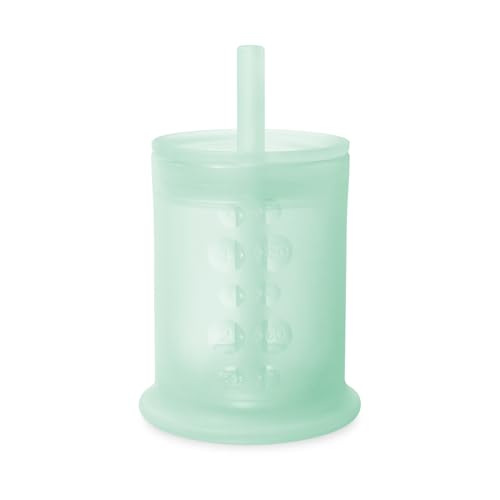
Olababy Straw Training Cup, Mint 5oz

Nuby Flip-It Reflex Stainless Steel Cup, 10 oz, Aqua Mint

Nuby Grip N’ Sip Cup, 3-Pack

Nuby Flexstraw Cup, 12 oz

Dr. Brown’s Milestones Kit, 2-Pack

The First Years Take and Toss Cup

Special Supplies Squeezable Honey Bear Straw Cup, 3-Pack
What Each Pick Brings To The Table
Soft silicone makes this 5-ounce cup a gentle starting point for babies moving beyond a bottle. The weighted base and nonslip surface help little hands keep it steady, while the removable straw and lid give you a way to practice at home or during travel.
The cup also works as a small open cup, which makes it useful for children ready to learn two drinking methods at once. For a first straw cup, the clear material and ounce or milliliter markings give you an easy way to monitor the amount a child drinks.
What It Does Well
- The food-grade silicone body is soft, lightweight, and made without BPA, PVC, lead, or phthalates.
- A wide, weighted base reduces the chance of tipping as a child brings the straw toward their mouth.
- Transparent walls with readable volume markings simplify portion checks and liquid monitoring.
- One cup includes a silicone straw and lid, giving you a simple setup for meals and snacks.
- It handles cold, warm, and hot liquids, plus thin smoothie ingredients, and can go in the microwave, freezer, and dishwasher.
Trade Offs
- The 5-ounce size suits early drinkers, but older toddlers may need a larger capacity.
- Keeping the cup upright and avoiding overfilling remains important because the soft straw controls flow rather than creating a completely sealed system.
Key Specs
Who It Suits Best
This cup fits families with babies around six months who are beginning supervised straw practice and need a lightweight first cup.
Where Another Pick Suits Better
The Nuby Flip-It Reflex Stainless Steel Cup is a better fit for an older toddler who needs a protected spout and insulated stainless steel body.
A flip-top spout and stainless steel body make this cup better suited to school runs, car rides, and long afternoons outdoors than the softer Olababy Straw Training Cup. The covered spout stays protected while the cup is closed, which is useful when it rides in a bag with other belongings.
Its 10-ounce capacity gives a toddler more liquid than the Olababy cup without moving to the larger Flexstraw format. The shaped body is intended for small hands, and the insulated construction is a sensible upgrade when a drink needs to stay cool for several hours.
Real Benefits
- The soft silicone spout is gentle on developing gums and teeth.
- Closing the flip-top cover reduces drips and protects the drinking surface during travel.
- The 304 food-grade stainless steel body does not create condensation like a cold exterior can.
- Insulation helps drinks remain cool for up to 10 hours under the stated conditions.
- The 10-ounce capacity suits toddlers who need more than a starter cup but not a large bottle.
Worth Noting
- The age guidance begins at 18 months, so it does not suit a baby working through an early four-month transition.
- The stainless steel body adds more weight than an all-plastic or all-silicone cup, which may matter in a smaller diaper bag.
Feature Snapshot
Made For
It suits families with toddlers who regularly travel and want a protected spout alongside a larger insulated capacity.
Consider Something Else When
The Nuby Grip N’ Sip Cup is the better option for a child who needs handles, a soft spout, and suitability from four months old.
For families managing several cups, the three-pack keeps spare cups within reach during meals, travel, and cleanup rotations. Unlike the stainless Nuby Flip-It Reflex Stainless Steel Cup, this model uses a soft spout, two handles, and a contoured base to help a younger child grip and guide it.
The built-in valve opens when the child sips, reducing the chance of liquid escaping when the cup is handled rather than actively used. The set also works with water, milk, or juice, while the three colors make it easy to assign a cup to each child.
Why It Works Well
- The age guidance starts at four months, making this the earliest-starting option in this group.
- A silicone spout and Touch-Flo valve support gentle sipping while limiting leaks and drips.
- Two handles and the shaped base give a child more than one way to steady the cup.
- Three colors make it practical for siblings or for keeping cups separated around the house.
- Top-rack dishwasher placement reduces the work involved in routine cleaning.
Small Caveats
- The soft-spout design is intended for babies, so an older child may move more naturally to a conventional straw.
- Each cup holds 10 ounces, making the three-pack bulkier than a single-cup purchase for travel.
Right Fit For
This set fits a household with babies at least four months old, siblings, or caregivers who want several easy-to-clean cups on hand.
Not Your Match When
The Nuby Flexstraw Cup is a stronger choice for an older toddler who has moved beyond a soft spout and wants a larger straw-drinking format.
The Flexstraw format offers a larger alternative to the Nuby Flip-It Reflex Stainless Steel Cup, with room for 12 ounces of water, milk, or juice. That extra capacity can be useful for toddlers spending longer periods at daycare, outdoors, or on family outings.
A silicone valve vents air around the straw, a feature that can make sipping feel less effortful as a child learns the technique. The 304 food-grade stainless steel base helps keep drinks cooler, and the disassemblable design supports more thorough cleaning.
Where It Delivers
- The 12-ounce capacity reduces the need for refills during longer outings.
- The vented silicone valve supports easier straw drinking for a child learning the motion.
- A stainless steel base helps maintain a cooler drink without condensation on the outside.
- Disassembly makes the straw, valve, and body easier to clean individually.
- Playful colors and character prints add appeal without changing the drinking format.
Points To Note
- The 12-ounce size may be more than a younger child needs during a short snack.
- Unlike the Flip-It Reflex Stainless Steel Cup, this design does not list a flip-top cover for protecting the straw opening.
At A Glance
Who Will Love This
It suits an 18-month-old or older toddler who can already manage a straw and needs a larger insulated cup for daytime travel.
Look Elsewhere When
The Nuby Flip-It Reflex Stainless Steel Cup is more suitable when a protected spout matters more than the extra two ounces of capacity.
A worn straw does not require replacing the entire cup, and that is the practical role this two-pack serves. It provides replacement parts for existing Dr. Brown’s Milestones insulated straw cups, making it a focused choice for families already committed to that cup system.
Compatibility matters more than novelty here. The kit is made for 10-ounce, or 300-milliliter, insulated straw cups and is intended for children 12 months and older, so you should match both the size and cup design before adding it to your routine.
Useful Highlights
- Two replacement assemblies provide a spare for your existing Milestones cup.
- The parts are sized for 10-ounce insulated straw cups rather than a broader fit range.
- Replacing the relevant component can keep a familiar cup in rotation without changing the child’s drinking setup.
Practical Considerations
- This kit is not a complete cup and requires an existing compatible 10-ounce Milestones insulated straw cup.
Built With In Mind
It suits a household that already uses Dr. Brown’s Milestones insulated straw cups and wants two replacement straw assemblies.
A Better Fit Elsewhere
The Olababy Straw Training Cup is the better fit for a parent seeking a complete 5-ounce training cup rather than replacement parts.
For a child beyond the earliest sippy-cup stage, the Take and Toss design keeps the focus on a conventional straw and straightforward cleanup. Its valve-free lid removes one of the small internal parts that can trap liquid, which can be reassuring during frequent snack and meal use.
The 10-ounce size aligns with the Nuby Flip-It Reflex Stainless Steel Cup, but the materials and construction serve a different purpose. This option skips the stainless body and flip-top cover, favoring a colorful, reusable cup for children at least two years old.
Everyday Advantages
- The snap-on lid helps keep drinks inside the cup during normal use.
- A valve-free lid reduces the number of small components involved in washing.
- Top-rack dishwasher placement suits busy family cleanup routines.
- The cup is made without BPA and is designed for repeated use.
- Bright colors can make a personal cup easier for a child to recognize.
Details To Watch
- Its age guidance starts at two years, so it does not suit an infant learning to sip.
- The insulated Nuby Flexstraw Cup may serve a longer outing better when keeping a drink cool is the priority.
Technical Sheet
The Right Fit
It suits a child aged two or older who can drink through a straw and whose family values a simple, valve-free lid.
Where A Sibling Pick Shines
The Nuby Flip-It Reflex Stainless Steel Cup is a stronger fit for a toddler who needs a protected spout and an insulated stainless steel body.
Some children need more help moving liquid than a standard straw cup can provide. The squeezable bear-shaped body lets a caregiver or child compress the container, while the long, flexible straw carries the drink toward the mouth with less reliance on strong suction.
That makes this set distinct from the The First Years Take and Toss Cup, which supports a more conventional straw-drinking action. The three cups come with six reusable straws, and the leak-resistant lid adds another layer of protection for home, therapy, or specialist feeding routines.
Features That Help
- The flexible body can be squeezed to move liquid toward the straw.
- Wide straws allow liquid to pass with less effort than a narrow straw may require.
- Six reusable straws across the three-pack provide useful replacements.
- The lid is designed to resist leaks and spills during use.
- Three cups make the set practical for multiple children, locations, or rotation.
Things To Weigh
- The specialized design is most useful for children or adults with reduced suction or additional feeding support needs.
- Caregivers should confirm that the drinking method and container shape suit the child’s specific routine before making it a permanent cup choice.
Core Details
Whose Shelf It Belongs On
It suits families supporting a child or adult who benefits from squeezing the cup and using a flexible, easy-flow straw.
Another Choice May Suit
The Nuby Grip N’ Sip Cup is a better fit for a baby developing ordinary straw-drilling skills without a specialized feeding method.
Match The Cup To The Child And Routine
Start With Drinking Ability
Age guidance is only the first checkpoint. A baby who can hold a cup but has not mastered suction may do better with a soft spout and touch-activated valve, while a child with stronger oral skills may be ready for a traditional straw. Specialized feeding needs call for a design that supports the child’s actual movement, not simply a smaller bottle.
Check The Material And Care Requirements
Food-grade silicone is soft and suitable for developing gums, while stainless steel is useful when a cup needs insulation and reduced condensation. Dishwasher placement matters for busy households, and removable parts should be easy to reach. A cup that survives daily rinsing but is difficult to disassemble may not suit your cleanup routine.
Match Capacity To The Outing
A 5-ounce cup gives a first-stage drinker a manageable portion, while 10- and 12-ounce options support toddlers and longer outings. Consider bag space, expected time away, and how often you can refill. Larger insulated bodies also add weight, so a compact cup may be easier for you to carry.
Why Material And Flow Matter
Mistakes Worth Dodging
Avoid choosing by color before checking the drinking method. A protected flip spout, conventional straw, and squeezable therapy straw each support a different action. Also confirm the stated age range, capacity, cleaning method, and compatibility before ordering, especially for a replacement kit.
What Separates Premium From Basic
The added cost often buys a stainless body, insulation, a protected spout, or finer flow control. Those features matter most during travel or for a child who needs a gentler transition, while a simpler silicone cup can handle early practice at home. Pay for the construction your routine actually needs.
Frequently Asked Questions
What Age Is Best For A Straw Sippy Cup?
Most children begin straw practice around six months, but readiness matters more than age alone. Look for a child who can sit upright, bring a cup toward the mouth, and begin sucking or sipping with support.
Are Silicone Straw Cups Safer Than Glass Cups?
Silicone cups do not crack or shatter like glass, and flexible spouts can feel gentler on developing gums. The material alone does not determine suitability, so you should also consider the child’s age, grip, and drinking ability.
How Do I Reduce Spills From A Straw Cup?
Choose a cup with a sip-activated valve or a protected spout, then keep it upright during use. Avoid overfilling, and clean removable valves regularly so that the drinking mechanism works as intended.
Should I Choose An Insulated Stainless Steel Cup?
An insulated stainless steel cup is useful for school, travel, and warm-weather outings because it helps maintain drink temperature and limits condensation. A silicone or plastic cup may be simpler for early indoor training, depending on capacity and handling needs.
What Is A Squeezable Honey Bear Straw Cup For?
A squeezable cup supports children or adults with limited suction or specialized feeding needs. The flexible container moves liquid toward a wide straw, allowing the drinker to receive liquid with less sucking effort.
Wrap Up
The best straw cup depends on the child’s age, grip, sucking ability, and the places you use it. Olababy suits early gentle practice, the Nuby options cover soft-spout, protected-spout, and insulated designs, and the Special Supplies set addresses more specialized drinking needs. Match the format to the person using it, then check capacity and care requirements before deciding.
