

The right back support for lifting depends on the movement, the weight, and how long you need it around your torso. A leather belt helps with heavy barbell or dumbbell lifts, while a padded hip belt makes loaded hip thrusts more stable. You also need a different kind of support for posture, lower-back comfort, or lifting around the hips.
The Lineup, Simplified

Mytra Fusion Women’s Weight Lifting Belt 7mm Leather

sboddy Hip Thrust Belt for Dumbbells and Plates

HONGJING Dual Pulley Back Brace with 7 Stays
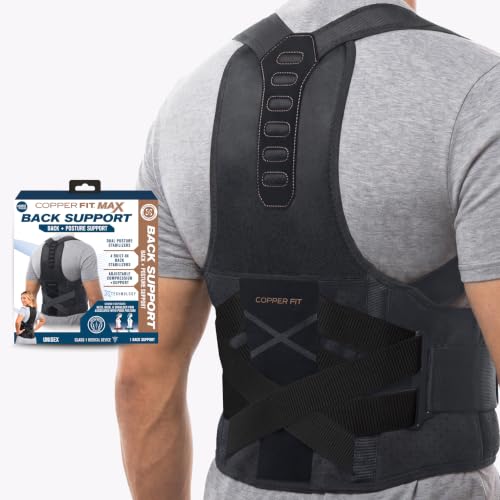
Copper Fit Max Back Posture Support L/XL
Copper Fit Max Back Posture Support 2X/3X

FREETOO Back Brace for Lower Back Support
Copper Fit Max Back Posture Support Small/Medium
The Picks, Examined More Closely
This belt makes the most sense when a squat, deadlift, or similar lift creates noticeable trunk fatigue. The 7mm leather and 4-inch width give you a substantial surface around your midsection, while the quick-release buckle keeps adjustments simple between sets. Compared with the sboddy belt, it supports the trunk rather than securing weights at the hips, so the two serve different training goals.
It is especially appealing for women training with heavier barbell loads who want a firm, dedicated lifting belt. The leather construction may feel warmer than a mesh brace during long sessions, and the bulk of the belt matters when you need to fit it over or under clothing.
Where It Helps
- 7mm thickness provides a substantial, rigid-feeling support surface for heavy lifts.
- 4-inch width distributes support across more of the lower torso than a narrow belt.
- Steel quick-release buckle allows fast removal and multiple adjustments.
- Dual stitching supports repeated gym use and reinforces the construction.
Things To Consider
- Leather can retain heat and feel less ventilated during long training sessions.
- The thicker design may be less convenient for exercises requiring very little trunk compression.
Key Specs
Built With In Mind
This is a strong fit for experienced lifters handling heavy barbell or dumbbell loads who prefer a structured belt over a soft posture support.
Where A Sibling Pick Shines
The sboddy Hip Thrust Belt for Dumbbells and Plates is a better fit for lower-body work built around dumbbell hip thrusts and glute bridges.
Loaded hip thrusts create a different problem from heavy squats: the weight needs to stay positioned over your hips without pressing painfully into the pelvic area. The sboddy belt answers that need with a dual-strap system for dumbbells, kettlebells, and plates. It is a targeted accessory rather than a general-purpose back brace, which makes it useful in a focused home-gym setup.
The 13mm neoprene and high-density SBR foam padding adds cushioning across the hips, while the stated 18–32 inch range gives you a useful fit check before ordering. You may find that the included 12-week glute program helps organize progression, though the belt itself remains the central feature.
What Earns Its Place
- Dual straps help keep dumbbells and kettlebells from shifting during hip thrusts.
- 13mm cushioning reduces direct pressure on the hip bones compared with bare weights.
- Supports up to 400 pounds for progressive lower-body training.
- Works across hip thrusts, glute bridges, split squats, weighted planks, and squats.
Trade Offs
- The listed 18–32 inch range requires you to check your hip width before purchase.
- It is designed around loaded hip work, so it does not replace a belt for heavy barbell lifts.
Feature Snapshot
Made For
Home lifters who regularly perform hip thrusts or glute bridges and want a stable platform for loaded weights will get the most value from it.
Another Choice May Suit
The Mytra Fusion Women’s Weight Lifting Belt 7mm Leather is a better choice for heavy lifts that require trunk bracing rather than weight positioning.
For lower-back support during ordinary lifting tasks, this brace offers more adjustability than a fixed leather belt. Its dual pulleys let you refine compression and fit, while the seven internal stays combine fixed spring-steel bars with flexible memory-alloy supports. The goal is steady movement support rather than the rigid trunk position of a powerlifting belt.
The breathable mesh and low-profile gray design make it easier to wear under everyday clothing, and sizes M, L, and XL give you distinct fit options. The honest caveat is that a brace can feel different from a lifting belt, so you may prefer the Mytra Fusion model when your priority is heavy-load bracing.
The Helpful Details
- Dual-pulley adjustment lets you tune compression and fit around the waist.
- Seven stays combine fixed spring steel with flexible memory alloy.
- Breathable mesh helps manage heat during active use.
- Low-profile construction can sit discreetly beneath clothing.
Where It May Fall Short
- The seven stays may feel more noticeable during deep squat positions than a simple elastic brace.
- Size M, L, or XL must be selected to match your torso.
Technical Highlights
The Right Fit
People who want adjustable lower-back support for housework, desk work, or moderate training will find this design more flexible than a heavy leather belt.
Look Elsewhere When
The FREETOO Back Brace for Lower Back Support is a better fit for people who prioritize a removable lumbar pad and targeted compression around the lower back.
This support is aimed at people whose back feels tired from sitting, standing, or moving through the day rather than from a single heavy lift. The L/XL size is intended for larger torsos, and the reinforced support panels with targeted compression focus on the upper and mid-back. That makes it closer to a posture aid than a powerlifting belt.
It can be useful during long shifts, desk work, or chores where you want a reminder to sit taller. You may find the coverage more comfortable than a narrow lower-back brace, although it does not provide the same rigid trunk support for barbell loads. That distinction matters before you put it in your gym bag.
The Practical Payoff
- Reinforced panels provide broader back coverage than a narrow lumbar support.
- Targeted compression encourages a more upright position during daily wear.
- L/XL sizing suits larger torso measurements.
- The extended back area may be useful for long periods of sitting or standing.
Small Caveats
- It is not a substitute for a structured lifting belt during heavy barbell work.
- The L/XL size will not suit people needing the smaller Small/Medium version.
Who Will Love This
Office workers, drivers, and people on their feet will benefit most from this option when posture support matters more than heavy-load bracing.
Skip It When
The HONGJING Dual Pulley Back Brace with 7 Stays is a better fit for adjustable lower-back compression around the waist.
The 2X/3X version serves the same posture-support role as the L/XL model, with a size choice for bigger torsos. The reinforced panels and targeted compression make it more relevant to long workdays, standing tasks, and general posture maintenance than to a specific heavy lift. It offers a softer-looking way to support the back without the pronounced structure of a leather lifting belt.
Compared with the L/XL version, the main decision is fit rather than function. You should check your measurements before ordering, since a support that sits too high or too low may not provide the intended coverage. For lifters who need to brace against barbell loads, choose a dedicated belt instead.
Everyday Perks
- Extended back coverage supports posture across the upper and mid-back.
- Reinforced panels add structure for daily wear.
- Targeted compression provides a steady support cue without a lifting-belt profile.
- 2X/3X sizing gives larger torsos a dedicated fit option.
Possible Compromises
- It is less relevant to heavy barbell lifting than the Mytra Fusion belt.
- A wrong size may change how the panels sit across the back.
Quick Facts
Whose Shelf It Belongs On
This version suits people with larger torsos who want broad posture support for commuting, desk work, or household tasks.
Reach For A Different Pick When
The Copper Fit Max Back Posture Support Small/Medium is the better choice for smaller torso sizes that need the same general posture format.
The FREETOO brace is a practical choice for lower-back support during work, walking, and general lifting tasks. Its removable lumbar pad is the defining feature: the pad can provide focused cushioning where you want it, while the brace supplies broader compression around the lower torso. That gives it more flexibility than a fixed-stays design for changing comfort needs.
It is designed for men and women, so it can serve a broad range of users, though the exact fit will determine how comfortably it sits. Compared with the HONGJING brace, this model emphasizes a removable pad and targeted lumbar cushioning rather than seven stays and dual-pulley adjustment. For heavy-load training, it remains separate from the job of a structured leather belt.
Strengths Worth Knowing
- Removable lumbar pad lets you adjust the cushioning around the lower back.
- Targeted compression supports the lumbar area during daily tasks.
- Unisex design works for a wide range of lifting and work routines.
- The removable pad offers more flexibility than a fixed cushion.
Practical Considerations
- You may need to adjust the pad and compression to prevent bunching under clothing.
- It is not designed to replace a rigid belt for heavy barbell bracing.
Best Suited To
People who lift at work, walk frequently, or want adjustable lower-back cushioning will find this brace straightforward to live with.
Consider Something Else When
The HONGJING Dual Pulley Back Brace with 7 Stays is a better fit for people who want a more structured support system with adjustable stays and pulleys.
The Small/Medium version keeps the same posture-support concept as the other Copper Fit options while serving smaller torso sizes. Its reinforced panels and targeted compression are aimed at keeping your upper and mid-back engaged during desk work, driving, or standing shifts. You are choosing a daily comfort tool here, not a specialized heavy-lift belt.
The smaller sizing can make the support feel less loose around the waist, provided it matches your measurements. Its coverage is more extensive than a narrow lumbar wrap, but it will not give you the same rigid bracing as the Mytra Fusion Women’s Weight Lifting Belt 7mm Leather. That distinction is useful for anyone building a mixed training kit.
Strong Points
- Small/Medium sizing gives smaller torsos a more appropriate starting fit.
- Reinforced panels provide broad support across the back.
- Targeted compression encourages posture awareness during extended wear.
- Extended coverage is useful for work, commuting, and household tasks.
Points To Note
- It is less suitable for heavy barbell lifting than a structured lifting belt.
- Check the fit carefully because the coverage is designed for a smaller torso range.
Core Details
Who Should Grab It
This support suits smaller-framed people who want broad back coverage for desk work, commuting, and general daily movement.
A Better Fit Elsewhere
The Copper Fit Max Back Posture Support L/XL is the better option when you need the same design in a larger torso size.
What Matters Before You Choose
The first decision is the type of pressure your training creates. A lifting belt braces your trunk against a barbell, a hip belt positions weights across your hips, and a posture support encourages alignment during ordinary movement. Treat those as different jobs instead of expecting one support to cover every scenario.
Material and fit determine how comfortably the item works through a session. Leather offers firm structure, mesh can improve airflow, and foam or neoprene can cushion contact points. Measure your torso or hips before ordering, especially for the sboddy belt and the three Copper Fit size options.
For heavy lifts, thickness and closure matter most. The Mytra Fusion belt uses 7mm leather, a 4-inch width, and a steel quick-release buckle. You may prefer a quick buckle between sets, but you also need enough rigidity to support your bracing position without shifting.
Daily wear calls for a different balance. The Copper Fit models provide broader upper-back coverage, while the FREETOO and HONGJING braces focus more directly on lower-back compression. Try them over the clothing you normally wear, since fabric thickness can change how a brace sits.
Common Shopping Slip Ups
The most common mistake is choosing a belt by appearance rather than by the movement. A hip thrust belt is not a substitute for a barbell belt, and a posture support is not designed to replace a lifting belt.
Another mistake is skipping measurements. Compare the stated fit ranges with your torso or hip width before buying, especially for the sboddy Hip Thrust Belt for Dumbbells and Plates and the different Copper Fit sizes.
What The Higher Tier Buys
Higher-tier support usually adds more structure, specialized materials, or extra adjustment features. A thick leather belt may suit heavy barbell work better than a softer daily brace, while a support with stays, pulleys, or a removable pad can offer more targeted comfort.
The extra spending matters most when your movement demands precise positioning or firm compression. For occasional desk wear, a simpler posture option may be enough. Your training intensity and the length of each session are more useful guides than the word “premium.”
Frequently Asked Questions
What type of back support is best for lifting heavy weights?
A thick leather lifting belt is the most relevant choice for heavy barbell or dumbbell lifts because it provides structured trunk support. A hip belt serves a different purpose by securing weights for hip thrusts.
Can a lifting belt help with lower-back fatigue?
A belt can add support and help you maintain a braced position during demanding lifts. It does not replace good technique, appropriate load progression, or care for persistent pain.
Are posture supports suitable for weightlifting?
Posture supports are better suited to general alignment, desk work, and lighter everyday movement. Choose a structured lifting belt when your primary goal is heavy-load bracing.
How do I choose the right size for a hip thrust belt?
Compare your hip width with the stated 18–32 inch range for the sboddy belt. A snug, stable fit helps keep the load positioned over your hips.
Should a back brace be worn during every workout?
No. Use the support that matches the movement and your comfort needs, rather than adding one automatically to every session. A structured belt is most useful when the exercise requires a strong bracing position.
Final Thoughts
Choose the Mytra Fusion belt for serious heavy-load bracing, the sboddy belt for loaded hip work, and the FREETOO or HONGJING braces for adjustable lower-back support. The Copper Fit options suit posture needs across different torso sizes. Match the support to the movement first, then confirm the fit before ordering.
