

A sore on the lower back, tailbone, or buttocks can make turning, sitting, and sleeping uncomfortable, especially when wound fluid soaks through a standard bandage. The right dressing depends on the wound’s depth, drainage level, skin sensitivity, and how much the person moves, so these options cover sacral wounds, smaller pressure injuries, and difficult-to-dress areas.
How The Shortlist Stacks Up

NeuHeils Sacrum Foam Dressing 7×7

NeuHeils Sacrum Dressing 7×7

Coloplast Triad Paste Dressing 2-Pack

Smith & Nephew Primapore IV

Dynarex Non-Adherent Pad 2×3

NeuHeils Foam Dressing 4×4
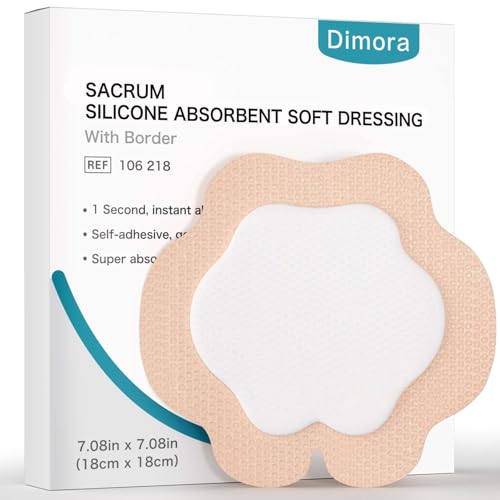
Dimora 7×7 Sacrum Silicone Absorbent Wound Dressing with Border, 10 Count
Taking A Closer Look At The Options
The broad 7-by-7-inch format gives this dressing room to cover the sacral area, where a flat bandage can wrinkle or shift as someone repositions in bed. Its contoured shape, absorbent foam, and silicone contact surface make it a more specialized option than the smaller Dynarex Non-Adherent Pad 2×3.
For a person with moderate drainage who spends much of the day lying down, the soft cushioning and repositionable contact layer are practical features. The dressing can serve as a primary cover for a shallow wound or a secondary cover over a deeper wound, according to the stated intended uses.
Real-World Strengths
- The sacral shape fits the curved lower-back and tailbone area better than a rectangular pad.
- Foam absorption and fluid retention help limit contact between wound drainage and nearby skin.
- The silicone layer allows adjustment without repeatedly pulling the dressing against fragile skin.
- Its cushioning supports the area during sitting, turning, and repositioning.
Practical Considerations
- The wide, shaped format needs enough flat skin and proper positioning to sit correctly.
Key Specs
Made For
This dressing fits caregivers supporting adults with moderate sacral drainage who need a shaped, repositionable cover.
A Better Fit Elsewhere
Coloplast Triad Paste Dressing 2-Pack suits wounds in more irregular or difficult-to-cover areas where a flexible paste format is appropriate.
NeuHeils takes a slightly different tack from its 7-by-7-inch companion by emphasizing a butterfly-shaped sacral layout. That shape follows the lower back and buttock area more closely, which can be useful when a dressing must stay aligned despite frequent changes in position.
The high-absorption foam, silicone contact layer, and stated suitability for moderate-to-heavy drainage make this a practical selection for low-mobility care. It can also function as a secondary dressing over a deeper wound, giving caregivers a versatile option when the wound-care plan calls for added coverage.
Where It Helps
- The butterfly contour supports more even placement over the sacrum.
- Foam cushioning helps limit pressure from the mattress or seat.
- The repositionable silicone surface suits fragile, sensitive skin.
- Ten dressings simplify stocking for frequent changes.
Small Caveats
- Its specialized shape offers little advantage for a small wound away from the sacral area.
- The broad dressing requires careful placement to prevent folds or lifting.
Built With In Mind
This option is tailored to caregivers managing draining sacral ulcers in people with limited mobility.
Where A Sibling Pick Shines
NeuHeils Foam Dressing 4×4 is the more manageable choice for a smaller, localized sore that does not need a broad sacral shape.
A sacral bandage has to cover a curved, difficult surface, and paste dressing takes a different approach. Coloplast Triad can be spread into areas where conventional adhesive dressings may not conform cleanly, making it a useful secondary option for uneven wound contours.
Carboxymethylcellulose helps draw in light-to-moderate drainage and broken-down tissue, while the zinc oxide, dimethicone, and petrolatum formula creates a soft paste suited to sensitive areas. Two 6-ounce tubes provide more application material than a single small tube, although proper technique matters.
Where It Delivers
- The paste conforms closely to irregular or recessed wound areas.
- Carboxymethylcellulose supports fluid absorption and debris management.
- Dimethicone and petrolatum leave the contact area soft and moist.
- Two tubes provide 12 ounces of paste in total.
Possible Compromises
- It offers less structured coverage than a bordered foam dressing.
- Application may require instruction from a wound-care professional, especially around a deep wound.
- The two-tube format takes more storage space than a handful of adhesive dressings.
Feature Snapshot
Right Fit For
This paste suits wound-care plans involving recessed, irregular, or difficult-to-bandage areas with light-to-moderate drainage.
Consider Something Else When
NeuHeils Sacrum Dressing 7×7 is the better fit when a person needs a self-contained, bordered dressing for moderate-to-heavy sacral drainage.
Not every pressure injury needs a large sacral dressing. Smith & Nephew Primapore IV measures 2 by 3 inches, making it a more proportionate choice for a smaller sore on a flatter part of the body where an island-style dressing can sit securely.
The soft, breathable cover surrounds a highly absorbent pad, while the low-allergy adhesive helps hold the dressing in place. A box of 100 is also convenient for care settings, home caregivers, or anyone expecting frequent dressing changes.
A Strong Showing
- The 2-by-3-inch size suits smaller pressure injuries and localized wounds.
- The absorbent pad manages drainage while the nonadherent layer limits sticking.
- The conformable cover and pad adjust to body contours.
- A large box reduces the need for frequent restocking.
Less Ideal Details
- Its small rectangular footprint offers less coverage than the 7-by-7-inch sacral options.
- The adhesive design may not suit wounds with very heavy drainage.
Quick Facts
Who Should Grab It
This option fits caregivers dressing smaller pressure injuries who value a breathable, absorbent, adhesive-style cover.
Another Choice May Suit
Dynarex Non-Adherent Pad 2×3 is more appropriate when the care plan calls for a sterile non-adherent pad without a full adhesive island dressing.
The Dynarex Non-Adherent Pad 2×3 keeps the design simple, which can be valuable when a larger bordered dressing would cover more skin than the wound requires. Its non-adherent surface is intended to reduce contact between the dressing and wound tissue during removal.
Each pad is sterile and measures 2 by 3 inches, while the box contains 100. That makes this a practical base layer for a care routine that specifies a non-adherent pad, particularly for smaller wounds or supplemental protection.
Everyday Perks
- The non-adherent design helps limit sticking to wound tissue.
- Individual sterile packaging supports clean handling during dressing changes.
- The compact size suits smaller, localized areas.
Details To Watch
- It does not provide the shaped border or adhesive coverage of an island dressing.
- Its modest size may not suit a broad sacral wound with heavier drainage.
The Right Fit
This pad works best for home caregivers following a care plan that calls for a sterile, non-adherent 2-by-3-inch dressing.
Swap It Out When
Smith & Nephew Primapore IV fits better when you want an absorbent pad and adhesive cover combined in one 2-by-3-inch dressing.
A 4-by-4-inch dressing offers a middle ground between a small island dressing and a broad sacral cover. That balance makes NeuHeils Foam Dressing 4×4 useful for localized bed sores where contoured 7-by-7-inch products would extend well beyond the affected area.
The absorbent foam core locks in fluid, while the silicone contact layer permits repositioning around sensitive skin. A breathable, waterproof film helps protect the dressing from moisture, and the bordered format simplifies placement over a flatter wound surface.
Useful Highlights
- The 4-by-4-inch size balances coverage and a manageable footprint.
- Silicone contact allows the dressing to be adjusted after placement.
- The foam core cushions the area while absorbing drainage.
- The waterproof film offers a protective outer layer.
Areas To Watch
- Its coverage is limited compared with the 7-by-7-inch sacral dressings.
- The rectangular format may not follow a deeply curved tailbone area as closely.
Technical Highlights
Best Suited To
This option fits people with smaller localized sores who want the convenience of a repositionable bordered foam dressing.
Not Your Match When
NeuHeils Sacrum Dressing 7×7 is the better choice for a broad wound with moderate-to-heavy drainage near the tailbone.
Dimora places particular emphasis on the absorbent tail extending toward the lower sacrum and coccyx. The stated design is 23 percent wider than the earlier version, which may help reduce leakage into clothing or bedding during sitting, sleeping, and repositioning.
The silicone contact surface, gentle adhesive border, and absorbent core suit moderate-to-heavy drainage in the sacral region. Compared with the NeuHeils Sacrum Dressing 7×7, Dimora’s distinguishing feature is its wider tail coverage, while both share a 7-by-7-inch general footprint.
What Stands Out
- The expanded tail gives extra coverage over the lower sacrum and coccyx.
- Its absorbent core is designed to collect moderate-to-heavy drainage.
- The silicone layer provides gentle contact with sensitive skin.
- The adhesive border helps keep the dressing in place during movement.
Where It May Fall Short
- Its large sacral shape is unnecessary for small wounds elsewhere on the body.
- The broad adhesive area requires clean, dry placement and careful alignment.
Core Details
Who Will Love This
This dressing fits caregivers managing heavily draining sacral wounds where extra tail coverage and leakage control are priorities.
Look Elsewhere When
NeuHeils Foam Dressing 4×4 is the more practical option for a smaller sore that needs less coverage.
Matching a Dressing to Wound Needs
The right choice starts with location and drainage rather than pack size or brand. A sacral wound sits on a curved area that stretches and shifts, so a shaped dressing may stay in position better than a flat pad. A smaller sore on a flatter section may only need a 2-by-3-inch or 4-by-4-inch format.
Match The Dressing To The Wound
Moderate-to-heavy drainage calls for an absorbent core and enough surface area to prevent fluid from reaching nearby skin. Silicone contact layers add flexibility for sensitive skin, while adhesive borders simplify placement. The dimension of a paste dressing depends more on the wound cavity than the size of the surrounding skin.
Account For Movement And Skin Condition
People who turn frequently in bed or transfer from a chair need a dressing that can be repositioned without lifting the entire pad. Fragile skin also favors gentle silicone contact, though the wound-care plan should determine the dressing type. A non-adherent pad can work as one layer in a system, but it does not replace the full cover chosen for the wound.
Check Size And Dressing Format
Confirm that the dressing physically fits the affected area before opening it. Sacral shapes make sense for tailbone and lower-back wounds, while rectangular island dressings suit smaller, flatter sites. Paste formats offer a different approach for irregular areas and may require guidance from a wound-care professional.
Practical Checks Before You Buy
Common Shopping Slip Ups
A large dressing does not automatically suit every sore, and a small adhesive pad may not manage heavy drainage. Check the stated wound location, drainage level, and dressing format against your care plan, and confirm that the adhesive or contact surface suits the person’s skin.
What Separates Premium From Basic
Higher-capacity options add larger absorbent cores, shaped coverage, silicone contact, or a protective outer film. Those features can help with movement, drainage, and positioning, but they are worthwhile only when the wound’s size and location call for them.
Frequently Asked Questions for Bandage For Bed Sores
What type of bandage is most useful for a sacral bed sore?
A shaped sacral dressing is often useful because it fits the curved lower-back and tailbone area. The correct drainage capacity and dressing format should still match the wound-care plan.
Is silicone foam dressing suitable for sensitive skin?
Silicone contact can be gentler and more repositionable than a rigid adhesive surface. The surrounding skin should still be checked for irritation, and a wound-care professional can confirm suitability.
Can a non-adherent pad cover a bed sore?
A non-adherent pad can provide a gentle contact layer for smaller wounds or sit within a multi-piece dressing system. It may need a separate cover or securement method.
What matters most for heavy drainage?
Absorbent capacity, coverage area, and the dressing’s ability to remain positioned during turning or sitting deserve close attention. A sacral shape may also help limit leakage near the tailbone.
Is paste dressing useful for difficult wound areas?
A hydrophilic paste can conform to recessed or irregular areas more readily than a rigid adhesive pad. Its application and the accompanying cover should follow professional wound-care guidance.
Final Thoughts
The most useful choice is rarely the largest package. A shaped 7-by-7-inch dressing serves the sacrum, a smaller bordered foam dressing fits localized sores, and paste or non-adherent formats suit different wound-care plans. Match drainage, coverage, and movement to the person’s needs, and let a wound-care professional confirm the dressing system.
