

A blood pressure check at 7 a.m. becomes easier when the monitor fits your routine and stores the details you care about. Your needs may range from a connected upper-arm model for daily tracking to a manual gauge, a two-person system, or a talking device that reads results aloud.
A Snapshot Of The Selections

OMRON Bronze Upper Arm Monitor


Welch Allyn DS44 Aneroid Gauge

easy@Home EHP035 Oximeter

OMRON 2-in-1 EKG Monitor
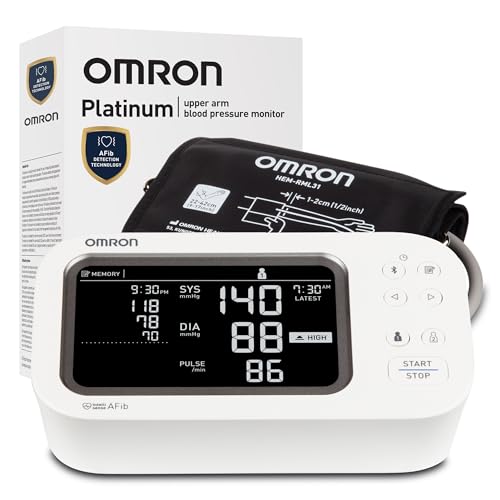
OMRON Platinum AFib Monitor

Maynovia Talking Monitor
The Strengths Of Each Pick
You get a practical balance of automated measurement, memory, and phone-based trend tracking from the OMRON Bronze Upper Arm Monitor. Bluetooth moves readings to the OMRON connect app, where you can review patterns and prepare reports for your doctor instead of relying on scattered pieces of paper.
For most daily routines, the 14-reading internal memory fills the gap between app transfers, while the hypertension indicator gives you a quick visual cue about elevated results. The cuff fits arms from 9 to 17 inches, making arm measurement a practical pre-purchase check.
What Works In Its Favor
- You can store 14 readings directly on the monitor for quick reference between phone syncs.
- Bluetooth supports connection with the OMRON connect app, Apple Health, and Google Fit.
- Irregular heartbeat detection adds a rhythm-related flag during your upper-arm measurement.
- The included wide-range cuff, case, guide, and four AA batteries cover the core setup.
Points To Note
- You need an arm circumference within the 9-to-17-inch range for the included cuff.
- The internal memory is smaller than the Platinum model’s two-user storage.
Quick Facts
Who It Suits Best
You benefit most from this model when you want connected upper-arm tracking without paying for a two-person or combined EKG system.
A Better Fit Elsewhere
The OMRON Platinum AFib Monitor suits you better when two profiles and separate rhythm screening matter most.
You operate this aneroid sphygmomanometer by inflating a cuff and reading a mechanical dial. That hands-on process suits a home first-aid kit or a clinical setting where you prefer visible markings and no electronic display.
The large burgundy cuff spans 34 to 50 centimeters, giving you a broad fit for adult arms. Compared with the OMRON Bronze, it removes charging and app pairing, but your written log becomes the main way to retain a history.
Useful Touches
- You get a clear dial with expanded graduation marks for easier reading during a manual check.
- The 300-millimeter Hg gauge covers a broad range on its face.
- Chrome plating and a filter screen support the instrument’s regular use and storage.
Practical Considerations
- You need to learn the inflation and deflation process before you can read results confidently.
- You must verify that your arm falls within the 34-to-50-centimeter cuff range.
- You need a separate notebook or log because the gauge does not create a digital trend record.
Core Details
Made For
You benefit most from this gauge when you want a durable-style manual instrument, broad adult cuff range, and a simple dial rather than app-based storage.
Another Choice May Suit
The OMRON Bronze Upper Arm Monitor suits you better when automated inflation and connected record keeping take priority over manual operation.
You can pack the Welch Allyn DS44-11CB into a compact kit without separating a bulky gauge from its cuff. Its integrated construction and cuff-mounted FlexiPort design keep the main components close together.
The gear-free Dura Shock mechanism distinguishes this model from traditional aneroid units built around exposed gears. For clinical kits and travel cases, that compact arrangement can make setup more orderly, although you still operate it manually.
Well-Handled Touches
- You get an integrated gauge, cuff, and bladder arrangement for compact storage.
- The gear-free Dura Shock design avoids the traditional exposed-gauge mechanism.
- The premium inflation system supports a consistent manual measurement routine.
- You get a latex-free configuration for use in homes and professional kits.
Some Limits To Know
- You still need a written log because the instrument does not store electronic trends.
- You need to become familiar with the manual inflation process and dial reading.
Feature Snapshot
Right Fit For
You benefit most from this model when compact storage, latex-free construction, and a professional-style manual gauge shape matter to your kit.
Look Elsewhere When
The McKesson Burgundy Aneroid suits you better when a large 34-to-50-centimeter cuff and a 300-millimeter Hg dial are your main requirements.
You place a finger in the easy@Home EHP035 and receive an oxygen-saturation reading, pulse rate, and pulse intensity in about eight seconds. During a steady break from hiking, cycling, skiing, or climbing, its compact body and lanyard make it easy to carry.
Unlike the upper-arm monitors in this list, this device does not measure blood pressure. Its waveform, numbers, and bar graph give you a different view of pulse-related information, so you need a separate cuff monitor for systolic and diastolic readings.
Benefits That Matter
- You get SpO2, pulse rate, and pulse intensity information in one display.
- The OLED screen can rotate through four viewing directions and seven display modes.
- You can adjust brightness across ten levels for bright or dim conditions.
- Two AAA batteries provide more than 24 hours of continuous use, with automatic shutdown after eight idle seconds.
Where It Is Less Suited
- You cannot use this device to measure blood pressure.
- You need to keep your finger still during the reading.
- The stated purpose is sports and aviation use, not medical use.
Who Will Love This
You benefit most from this oximeter when you take part in outdoor activities and want a pocket-sized pulse display alongside your blood pressure monitor.
Where A Sibling Pick Shines
The OMRON Bronze Upper Arm Monitor suits you better whenever your priority is blood pressure, cuff fit, and stored measurement history.
You get blood pressure measurement and an electrocardiogram, or ECG, from one upper-arm device. That combination gives you more than the two numbers on a standard pressure display, while 90 stored readings provide a larger local history.
For your own routine, the extra EKG step takes more attention than a basic upper-arm check. You also receive support coverage for qualifying accidental damage and breakdowns, although coverage terms vary by plan.
Key Advantages
- You can record both blood pressure and an ECG waveform through one device.
- The monitor stores up to 90 readings for reviewing changes over time.
- Advanced Accuracy Technology supports its upper-arm measurement function.
- You have access to 24/7 support for questions related to the purchase.
The Fine Print
- The combined setup involves more steps than a conventional blood pressure monitor.
- Protection plans vary, so you should review the coverage terms before relying on them.
Key Product Details
Built With In Mind
You benefit most from this model when you want to record blood pressure and an ECG waveform without managing separate devices.
Swap It Out When
The OMRON Bronze Upper Arm Monitor suits you better when you only need blood pressure readings, phone syncing, and a simpler setup.
You can keep separate records for yourself and a partner with the OMRON Platinum AFib Monitor. Each profile stores up to 100 readings, which prevents one person’s morning check from crowding out the other’s history.
Its Advanced Accuracy with AFib Detection Technology adds screening for atrial fibrillation, a type of irregular heart rhythm, during a blood pressure measurement. Compared with the 2-in-1 EKG model, you receive rhythm screening without a separate ECG waveform.
Features That Help
- You can track two users separately, with 100 readings stored for each profile.
- AFib Detection Technology adds a rhythm-related screen to your upper-arm check.
- Advanced Accuracy Technology supports the pressure measurement function.
- The separate profiles keep household readings organized and easy to compare.
Factors To Consider
- You need to confirm that your arm fits the included upper-arm cuff.
- The two-profile arrangement offers more local storage but remains less flexible than app-based unlimited tracking.
Who Should Grab It
You benefit most from this model when two people need separate histories and rhythm screening matters alongside blood pressure tracking.
Where Another Pick Suits Better
The OMRON 2-in-1 EKG Monitor suits you better when you want an actual ECG waveform rather than AFib screening during blood pressure checks.
You hear the Maynovia Talking Monitor announce its results in English or Spanish, with six volume levels for different preferences. That spoken output makes the display less essential during a daily check and gives you options for different users.
The large backlit screen also shows systolic and diastolic pressure, pulse rate, time, and the selected user profile. One-touch operation suits a quick routine, while color-coded indicators and an irregular-heartbeat flag add visual context.
Standout Benefits
- You can choose spoken results in English or Spanish.
- Six volume levels let you adjust the audio to your setting.
- The backlit display presents pressure, pulse, time, and user selection together.
- Color-coded indicators and an irregular-heartbeat flag support visual interpretation.
Trade-Offs To Consider
- Spoken output may be inconvenient in a shared room or during a quiet morning routine.
- You need to confirm that your arm fits the 8.6-to-16.5-inch cuff.
Technical Highlights
Best Suited To
You benefit most from this model when spoken English or Spanish results make your daily upper-arm checks easier to follow.
Consider Something Else When
The OMRON Bronze Upper Arm Monitor suits you better when phone syncing, app-based trend storage, and a silent display are your priorities.
What Matters Most In A Home Blood Pressure Monitor
Start With Measurement Type
You get systolic and diastolic blood pressure readings from an upper-arm cuff, while a manual aneroid gauge gives you a dial-based reading. A fingertip pulse oximeter measures oxygen saturation and pulse information instead, so it cannot replace a blood pressure monitor.
Fit Trumps Extra Features
You should measure your upper arm and compare the result with the cuff range before choosing. A wide range gives you more room, while the included cuff range, position, and upper-arm placement can affect whether the monitor feels comfortable during repeated checks.
Decide How You Track Results
You can use app syncing for long-term trend views, internal memory for quick access, or a written log with a manual gauge. You may also prioritize two separate profiles, an ECG waveform, AFib screening, or spoken results based on your household routine.
Think About Operation And Storage
You get automatic inflation and one-touch controls with an electronic upper-arm model, while a manual gauge requires more active handling. Compactness, carrying cases, cuff size, and a backlit display can matter for travel, bedside use, or a shared family space.
Smart Choices And Common Traps
Mistakes Worth Dodging
You should not mistake a pulse oximeter for a blood pressure monitor because the two devices display different measurements. You also need to check cuff range before purchase, rather than relying on arm size alone, and consider whether manual readings fit your routine.
What The Higher Tier Buys
You may get more stored readings, separate user profiles, rhythm screening, an ECG function, or spoken results from a higher-tier model. Those additions help when you need more context or easier access, while a basic upper-arm model remains easier to manage for straightforward tracking.
Frequently Asked Questions For High Blood Pressure Monitor
What Is The Easiest Type Of High Blood Pressure Monitor To Use?
An electronic upper-arm monitor is usually the simplest choice because it inflates the cuff, displays the reading, and can store results. The OMRON Bronze adds Bluetooth tracking, while the Maynovia offers spoken output for accessibility.
Do Any Of These Devices Measure Blood Pressure Without A Cuff?
None of the listed fingertip devices measures blood pressure without an upper-arm cuff. The easy@Home EHP035 reports oxygen saturation, pulse rate, and pulse intensity instead, so you need a separate blood pressure monitor for pressure readings.
How Do I Choose The Right Cuff Size?
Measure your upper-arm circumference and compare it with the monitor’s stated cuff range. The OMRON Bronze fits 9-to-17-inch arms, the Maynovia covers 8.6 to 16.5 inches, and the McKesson uses a 34-to-50-centimeter range.
Is A Manual Aneroid Monitor Better Than A Digital Model?
A manual aneroid gauge gives you direct control and needs no app or batteries, but it requires practiced operation and a separate log. An electronic upper-arm model is easier for frequent daily tracking and usually supports more organized history.
Which Model Works Best For Two Household Members?
The OMRON Platinum AFib Monitor fits shared use best because it stores up to 100 readings for each of two profiles. The OMRON 2-in-1 EKG Monitor serves a different need by adding an ECG waveform to blood pressure measurement.
Final Verdict
Your best fit depends on the part of your routine that causes the most friction. Choose the OMRON Bronze for connected daily tracking, the Platinum for two profiles, the 2-in-1 model for EKG records, or the Maynovia for spoken results, and match the cuff to your arm before you order. A manual gauge remains a sensible fit when you prefer hands-on operation.
