

A blood pressure check at the kitchen table becomes easier when the monitor fits your routine, stores readings clearly, and needs little cleanup afterward. For people who travel, share a device with a partner, or want fewer cables around the home, wrist models offer a compact alternative to upper-arm monitors. Built-in rechargeable power is less common than the category suggests, though, so you’ll need to distinguish true rechargeable models from battery-operated and USB-powered options before choosing.
The Shortlist At A Glance

SimpliCare AES-U382 Blood Pressure Monitor, XL Cuff, 5.2-Inch LED Display
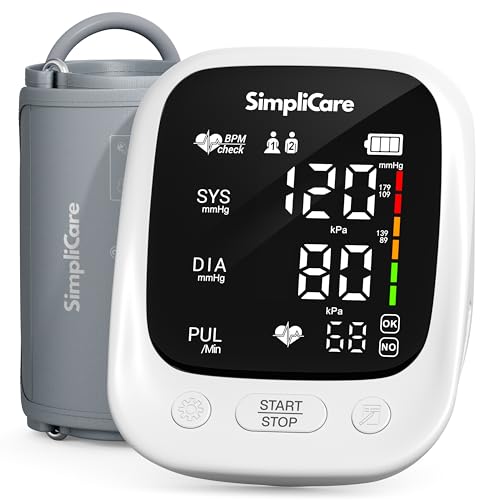
SimpliCare AES-U181 Blood Pressure Monitor, XL Cuff, 5.1-Inch LED Display
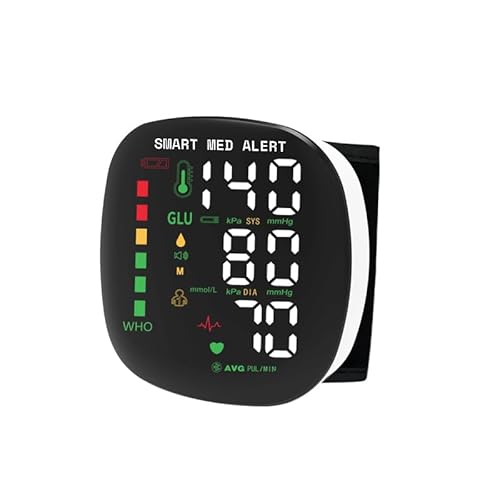
Smart Med Alert Rechargeable Wrist Blood Pressure Monitor with Carrying Case

ADC Advantage 6015N Wrist Monitor, Blue

Maynovia Talking Monitor

Maynovia 2-User Monitor

Checkme Bluetooth Wrist Monitor
The Strengths Of Each Pick
A daily check at the kitchen table can feel less complicated with an automatic upper-arm monitor that handles the measurement after one button press. The SimpliCare AES-U382 combines a 9–17-inch cuff with a large 5.2-inch display, making it a sensible choice for larger arms and households with two adults tracking readings separately.
Its color-coded indicator gives the screen an at-a-glance reference, although the device does not use a built-in rechargeable battery. Home users who favor the familiar upper-arm format and value separate memory profiles will likely find the setup more useful than a compact wrist alternative.
Notable Upsides
- The wide 9–17-inch cuff covers a broader arm range than many wrist models.
- Two separate 90-reading memories prevent household profiles from being mixed.
- Three-reading averaging helps reduce the influence of one unusual result.
- USB-C or four AAA batteries offer two external power paths.
Worth Noting
- USB-C is an external power option, not an internal rechargeable battery.
- The upper-arm format takes more space than a wrist monitor during travel.
Quick Facts
Built With Larger Arms In Mind
This model suits adults with larger upper arms and couples who want independent stored readings.
Where A Sibling Pick Shines
The Smart Med Alert Rechargeable Wrist Blood Pressure Monitor suits people who prioritize built-in rechargeable power and a carrying case.
Two people checking their blood pressure at different times need separate records, and that is where the SimpliCare AES-U181 becomes practical. Each profile can hold 90 readings, while the large 5.1-inch LED screen presents the result with green, yellow, or red color coding for quick reference.
Compared with the slightly larger AES-U382 display, this model offers essentially the same core format and memory arrangement. The real distinction is subtle, so shoppers should compare cuff fit, power requirements, and storage needs rather than expecting a major change in everyday operation.
Key Advantages
- Separate 90-reading profiles suit couples or family caregivers.
- The XL cuff accommodates arms from 9 to 17 inches.
- Automatic three-reading averaging supports more consistent tracking.
- Color-coded results make the display easier to interpret quickly.
- External USB-C and AAA battery options support flexible locations.
Minor Gripes
- There is no built-in rechargeable battery despite the USB-C connection.
- Its 5.1-inch screen is slightly smaller than the AES-U382 display.
Feature Snapshot
Made For Shared Household Tracking
This monitor works well for couples who want separate histories in one upper-arm device.
Another Choice May Suit
The SimpliCare AES-U382 offers a slightly larger display for people who prioritize number size over the difference in model price.
Packing a monitor into a carry-on no longer means hunting for a spare cable, and that convenience sets the Smart Med Alert apart from the SimpliCare upper-arm options. Its built-in battery supports up to 198 measurements per charge, while the included case keeps the wrist unit together during travel.
The oversized LCD digits and one-button operation make it approachable for frequent home checks, and two user profiles accommodate a couple. Its adjustable cuff is designed for most adult wrists, although a specific size range would help shoppers confirm fit with greater confidence.
Features That Help
- Built-in rechargeable power removes the need for routine battery changes.
- The carrying case protects a compact monitor during trips.
- Each user can store up to 99 readings independently.
- Large digits remain readable in dim rooms.
- Automatic cuff detection simplifies each measurement.
Points To Note
- The adjustable wrist cuff has no published circumference range.
- Claimed battery duration depends on how frequently you measure.
Core Details
Right Fit For Frequent Travelers
This model suits travelers, couples, and anyone who wants a wrist monitor with genuine built-in rechargeable power.
Consider Something Else When
The ADC Advantage 6015N fits people who prefer a defined 5.3–7.7-inch wrist range and replaceable AAA batteries.
A wrist monitor for daily home use needs a cuff that clearly fits, and the ADC Advantage 6015N makes that decision unusually concrete with a stated range of 5.3 to 7.7 inches. It records systolic pressure, diastolic pressure, and pulse, covering the three figures most people want to see together.
Unlike the Smart Med Alert’s rechargeable setup, this ADC model uses two AAA batteries, so the trade-off is simple: replaceable power in exchange for carrying or replacing batteries. Its 99-reading memory for each of two users and included storage case suit an established home routine.
What Stands Out
- The published cuff range simplifies wrist-fit checks.
- Two-user memory stores 99 readings for each person.
- BHS AA accuracy validation adds a formal measurement credential.
- The compact case helps keep the unit with its batteries.
Honest Caveats
- Two AAA batteries are required for cordless operation.
- Your wrist must fall within the stated 5.3–7.7-inch range.
Key Product Details
The Right Fit
This ADC model suits adults within the stated wrist range who value replaceable batteries and separate user memory.
Reach For A Different Pick When
The Smart Med Alert Rechargeable Wrist Blood Pressure Monitor better serves people who want a built-in battery and carrying case.
Reading a result aloud changes the routine for people who find a small screen difficult to interpret. The Maynovia Talking Monitor combines an upper-arm design with a talking function, a large backlit LCD, and one-button operation, making it a practical choice for daily checks in a home.
Its 8.6–16.5-inch cuff covers a broad arm range, though this is an upper-arm model rather than a compact wrist unit. The trade-off is size: spoken results and a wide cuff may feel more involved to pack than the Smart Med Alert’s rechargeable wrist design.
The Practical Payoff
- Spoken results reduce the need to interpret small digits.
- One-button operation keeps the sequence uncomplicated.
- The backlit screen supports use in dim rooms.
- The broad cuff fits a substantial adult arm range.
Things To Consider
- Audible results may be inconvenient in shared or noisy spaces.
- The upper-arm design is bulkier than a wrist monitor.
Who Will Love This
This model suits people who prefer spoken results, simple controls, and a generously sized upper-arm cuff.
Where Another Pick Shines
The Checkme Bluetooth Wrist Monitor better serves people who prefer compact readings and phone connectivity.
A shared monitor works best when each person can recognize their own history, and the Maynovia 2-User Monitor centers on that arrangement. Its backlit LCD presents the readings in a dark room, while the upper-arm format provides a familiar way to take a measurement at the kitchen table or bedroom desk.
The two-user memory reduces the chance of one partner overlooking whose numbers are on screen, though the feature does not replace a labeled routine for each person. Compared with the Maynovia Talking Monitor, this option favors visual reading over spoken results, making it a quieter alternative for shared spaces.
What Earns Its Place
- Backlit digits improve visibility in dim conditions.
- Two user profiles suit couples and family caregivers.
- Automatic upper-arm operation avoids a manual inflation process.
Where It May Fall Short
- It is less compact than the wrist options in this shortlist.
- Shared use benefits from each person keeping a consistent schedule.
Built With In Mind
This monitor suits couples or family members who want separate profiles and a clearly backlit upper-arm display.
Swap It Out When
The Smart Med Alert model is a better travel fit for anyone who prioritizes a carrying case and built-in rechargeable power.
A monitor that can move readings to a connected device suits people who want their home records organized alongside other digital health information. The Checkme Bluetooth Wrist Monitor uses Bluetooth, measures systolic pressure, diastolic pressure, and pulse, and includes a large backlit display for quick reference.
Its FDA 510(k) clearance provides a formal regulatory credential, while the wrist format keeps the unit compact. Compared with the ADC Advantage 6015N’s replaceable batteries and defined 5.3–7.7-inch cuff, this model emphasizes connected use and a backlit screen rather than a published wrist range.
The Value In It
- Bluetooth supports a more connected home monitoring routine.
- The backlit LCD displays clear figures day or night.
- FDA 510(k) clearance adds a formal regulatory credential.
Details To Watch
- Phone and app compatibility need confirmation before purchase.
- No specific wrist-cuff range is provided.
Feature Facts
Made For Connected Routines
This monitor suits people who want Bluetooth connectivity and a backlit wrist display in a compact home device.
A Better Fit Elsewhere
The ADC Advantage 6015N suits people who value a published wrist range and replaceable AAA batteries more than connectivity.
What Matters Before You Choose A Wrist Monitor
Match The Form To Your Routine
Wrist monitors suit travel, compact storage, and people who may find an upper-arm cuff restrictive. Upper-arm models generally provide a larger cuff range and a familiar measurement position, so comfort and consistency matter more than the label on the form. A talking function can make the display easier to use, while Bluetooth may suit a phone-centered routine.
Check Storage And Display Details
Two-user memory helps couples keep separate histories, but the per-user capacity still determines how long records remain available. A backlit display is useful for nighttime checks, and large digits reduce the strain of reading small numbers. Color coding adds another quick reference, but it should complement rather than replace consistent measurement habits.
Confirm Power And Cuff Fit
A built-in rechargeable battery is the most convenient option for frequent use, while AAA batteries or external USB-C power require a different routine. For wrist models, check the published circumference range carefully. The Smart Med Alert offers a genuine built-in battery, whereas the SimpliCare AES-U382 and AES-U181 use external USB-C or batteries.
Wrist Monitor Details Worth Checking
Mistakes Worth Dodging
Do not assume every compact monitor contains a rechargeable battery; some use replaceable cells or an external cable. Avoid choosing by wrist size without checking the cuff range, and keep upper-arm and wrist designs separate when comparing comfort. Bluetooth is another feature that needs a compatibility check rather than a general assumption.
What Separates Premium From Basic
Extra cost may bring a larger display, broader cuff, two-user memory, a carrying case, or rechargeable power. Those additions matter when they remove a daily inconvenience, such as replacing batteries or squinting at a dim screen. A simpler monitor can still fit your routine better when your main priorities are a secure cuff and clear readings.
Frequently Asked Questions
Are All Seven Monitors Rechargeable?
No. The Smart Med Alert has a built-in rechargeable battery, while the other models use batteries or external power. Check each product’s power details before choosing based on rechargeability.
Is A Wrist Monitor Better Than An Upper-Arm Model?
A wrist monitor is more compact, while an upper-arm model may feel more familiar and often provides a wider cuff range. The better choice depends on arm size, comfort, travel, and storage needs.
What Does Two-User Memory Mean?
It stores readings under separate profiles so two people can review their own history without mixing entries. Storage capacity varies, so compare both the number of users and readings per profile.
How Do I Check Whether the Cuff Fits?
Compare the device’s stated cuff range with your arm or wrist measurement. A range outside your body size can make positioning less consistent, regardless of the monitor’s other features.
Does the Checkme Monitor Work With a Phone?
The Checkme Bluetooth Wrist Monitor includes Bluetooth connectivity, so phone and app compatibility should be confirmed before purchase. You’ll also need a compatible phone and the appropriate connected service.
Closing Thoughts
The Smart Med Alert stands out for genuine built-in rechargeable power and a portable case, while the ADC Advantage 6015N offers the clearest wrist-fit range and replaceable batteries. The SimpliCare models serve couples who prefer upper-arm measurements, and the Maynovia options serve people who prioritize spoken results, a backlit display, or shared profiles. Choose the model that fits your body, power routine, and reading habits rather than rechargeable status alone.
