

A late-night laptop session can leave you squinting at a bright screen, while a child wearing glasses for school may also spend hours playing games. Amber blue light blocking glasses can filter part of the blue-light spectrum and soften screen glare, but tint, magnification, and fit matter more than fashion alone. These options serve different needs, from focused reading to compact frames for younger gamers and tinted lenses for evening screen use.
An Overview Of The Picks
GUNNAR Kids Blue Light Cruz

GUNNAR Vertex Reading Glasses

Horus X Kids Gaming Glasses

THL SLEEP Orange Blue Light Blocking Glasses

THL SLEEP Orange Aviator Blue Light Glasses

THL SLEEP Orange Blue Light Migraine Glasses
Prospek Blue Light Glasses
More On The Choices That Made The List
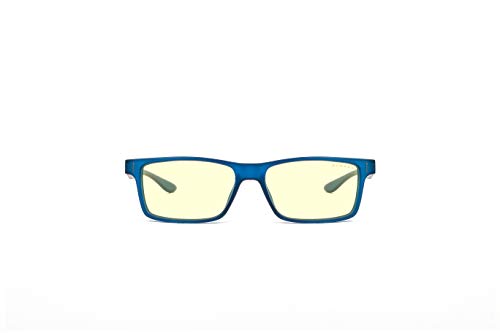
For a teen moving between school tablets, a game console, and a phone, the Cruz offers a lightweight amber-tinted option without looking overly juvenile. Its 21-gram frame and small dimensions suit younger users, although the fit deserves attention before a long session.
Unlike the Horus X model, GUNNAR reports a 65 percent reduction at the 450-nanometer peak of blue light. A blue light protection factor, which indicates the amount filtered at that wavelength, gives you a more concrete comparison than a vague “computer glass” label.
Notable Upsides
- Amber tint softens the look of bright computer and television screens.
- The lightweight 21-gram frame suits extended school and gaming sessions.
- A 65 percent blue-light reduction figure offers a clear lens specification.
- A microfiber cleaning cloth supports routine lens care.
Points To Note
- The small fit may sit tightly on wider adolescent faces.
- Amber lenses can shift the apparent color of game graphics and on-screen images.
Feature Snapshot
Who It Suits Best
You get the strongest fit match with older children and teenagers who need a lightweight, defined level of screen filtering.
Where Another Pick Suits Better
Horus X Kids Gaming Glasses suit younger users who need a narrower 19-gram frame and a case included in the package.
Close-up work on a phone or laptop leaves many people leaning toward these GUNNAR glasses because they combine screen filtering with focusing power. Magnification ranges from +1.00 to +3.00, with amber or clear lens tints available for different tasks.
Compared with the GUNNAR Kids Blue Light Cruz, the Vertex serves adults who need close focusing rather than a general-purpose teen frame. The same 21-gram weight and small dimensions keep it suitably light, though you should confirm that the proportions feel comfortable.
Real-World Strengths
- Magnification makes small phone text and printed labels easier to view up close.
- Amber and clear tint choices let you balance filtering with color appearance.
- A stated 65 percent reduction at 450 nm gives you a useful filtering benchmark.
- The package includes a pouch and microfiber cleaning cloth.
Small Caveats
- Magnified lenses are less suitable for continuous distance viewing.
- The small fit may feel cramped on broader faces.
Quick Facts
Made For
You will appreciate this model for reading menus, manuals, receipts, and small text while working close to a screen.
Consider Something Else When
THL SLEEP Orange Blue Light Blocking Glasses suit you better when evening screen use matters more than close-focus magnification.
A child who wears glasses during a long gaming session needs a frame that stays light and does not crowd a narrow face. The Horus X Hope weighs 19 grams, with a polycarbonate frame, slim arms, and a padded nose area for comfort under a headset.
The specifications are more extensive than those of the GUNNAR Kids Blue Light Cruz: Horus X states full UV filtration and full blocking of blue light at 400 nanometers, along with more than 86 percent reduction across the 380-to-450-nanometer range. For younger players, the included case, box, and cloth make the package easier to organize.
Notable Gains
- The 19-gram construction keeps pressure light during lengthy play sessions.
- A narrow profile suits children whose faces are too slim for broader gaming frames.
- Slim arms can fit beneath a headset without the bulk of a full-size frame.
- The package includes a protective case, box, and 180-gram microfiber cloth.
Practical Considerations
- The amber tone may change how you perceive colors in games and animated content.
- Check that the narrow bridge rests comfortably before extended use.
Best Suited To
This pair fits younger gamers and teens who need a lightweight frame for narrow faces and regular headset use.
Not Your Match When
GUNNAR Vertex Reading Glasses suit you better when you require magnifying lenses for close reading rather than a youth gaming frame.
Evening computer use calls for a lens with a noticeably deeper amber tone, and this THL SLEEP model states that it filters 99.5 percent of blue light. The seven-layer nylon lens also carries oleophobic, anti-fingerprint, anti-reflective, and anti-glare coatings, a useful combination for a screen-facing frame you handle often.
Unlike the lightweight GUNNAR options, this pair uses a hand-polished acetate frame with spring hinges. Focusing strengths from +0.25 through +3.00 also let you choose between a plain filtered lens and a reading-oriented version.
What Makes Sense
- The stated 99.5 percent filtering rate gives this model a strong evening-screen profile.
- Spring hinges add flexibility at the frame-to-lens connection.
- Multiple focusing strengths support close reading as well as general screen use.
- The anti-fingerprint and anti-reflective coatings suit frequent touchscreen handling.
Trade-Offs To Consider
- A deep orange tint can noticeably alter on-screen colors.
- Make sure your prescription strength matches the task before ordering.
Technical Highlights
Who Should Grab It
You suit this pair when evening screen sessions and close reading matter more than preserving perfectly natural screen colors.
A Better Fit Elsewhere
Prospek Blue Light Glasses suit color-sensitive work better because their nearly clear lenses reduce the visual effect of tinting.
The aviator shape gives this model a more expressive look than the rectangular frames from GUNNAR. Its orange lens filters a stated 97 percent of blue light and 75 percent of green light, so you should expect a stronger color shift than a nearly clear design.
That tint makes the frame a natural companion to late-day computer work or gaming, but the metal construction changes the everyday experience. A full stainless-steel frame keeps the structure light, while the coated nylon lens is designed to limit reflections, fingerprints, and glare.
Everyday Wins
- The aviator profile gives screen glasses a less technical appearance.
- A lightweight stainless-steel frame avoids the bulk of a heavy acetate model.
- The lens combines anti-reflective, anti-glare, and anti-fingerprint coatings.
- Broad blue-light and green-light filtering suits strongly tinted evening use.
Areas To Watch
- The orange lens noticeably changes color perception.
- The aviator shape may sit differently from the closer-fitting frames in this roundup.
Core Details
Built With In Mind
You will like this frame for evening gaming or computer sessions where a metal aviator silhouette suits your style.
Look Elsewhere When
THL SLEEP Orange Blue Light Migraine Glasses suit you better when you prefer a thick acetate frame rather than thin metal arms.
Sometimes the simplest decision is enough: a deeply tinted amber lens and a substantial acetate frame for screen use later in the day. This THL SLEEP model states 99.5 percent blue-light filtering, matching the strong filtering profile of the related acetate option.
Compared with the THL SLEEP Orange Aviator Blue Light Glasses, it trades slim metal construction for a more substantial frame profile. That distinction matters more for appearance than for screen filtering, so choose based on whether you want bold acetate lines or understated metal arms.
Everyday Advantages
- A stated 99.5 percent filtering rate supports strongly tinted screen use.
- The orange lens can soften the visual effect of bright evening displays.
- The acetate construction gives the glasses a more substantial appearance.
Less Ideal Details
- The amber tint can make color selection on a screen less accurate.
- You may prefer a nearly clear lens for color-sensitive work.
The Right Fit
This pair suits you when a deep orange lens and bold acetate styling match your evening screen routine.
Swap It Out When
Prospek Blue Light Glasses serve you better when magnification and minimal color distortion matter more than a deep amber tint.
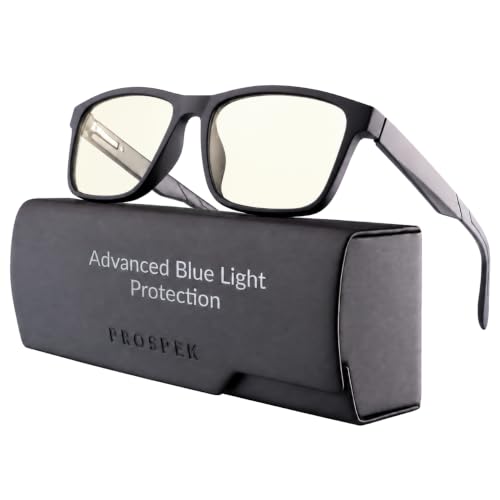
Color-sensitive screen work calls for restraint, and the Prospek lens stays nearly clear rather than adopting the deep amber tone of the THL SLEEP models. Its optical-grade lens targets blue light between 400 and 455 nanometers, a practical range for computers, phones, tablets, and televisions.
The frame can also provide +1.25 or +1.75 magnification, giving you more flexibility than a nonmagnified pair. Eight coatings cover glare, reflections, and smudge resistance, while the light tint is likely easier to wear for video calls, color editing, and extended daytime computer work.
What Stands Out
- The nearly clear lens preserves a more natural-looking screen palette.
- Two focusing strengths support close reading on phones and printed material.
- Optical-grade lenses suit detailed work where visual clarity matters.
- Eight coatings address several common lens and screen-use concerns.
Possible Compromises
- Its lighter tint may provide less visual separation than a deep amber lens.
- Choose your focusing strength carefully for prolonged close viewing.
Important Details
Whose Shelf It Belongs On
You will appreciate these glasses for color-sensitive computer work that also calls for occasional close-up magnification.
Another Choice May Suit
THL SLEEP Orange Blue Light Blocking Glasses suit you better when a deep amber tint and several focusing strengths are the priority.
Matching Tint, Fit, And Function To Your Routine
Lens Tint And Filtering Level
Amber lenses remove more blue light than nearly clear lenses, which can make evening screens less harsh. Blue light protection factor, abbreviated as BLPF, describes the amount filtered at the 450-nanometer peak of blue light. You should compare like with like: 65 percent, 97 percent, and 99.5 percent describe different levels of tinting rather than separate comfort scores.
Frame Fit And Daily Comfort
A light frame matters during long computer sessions, but weight alone does not determine comfort. Compare lens width, bridge width, and temple length, then check whether the nose pads and arms sit without pressure. A small frame may suit a younger or narrower face, while an adult may need more room across the front.
Magnification And Intended Use
Magnified lenses help with close text on a phone, menu, label, or manual. They can feel awkward during distance viewing, so a separate pair may suit a mixed routine better. Choose no magnification for general screen viewing and add focusing power only for the tasks where you need it.
Lens Color And Visual Accuracy
Deep orange lenses can make a gaming display or design palette look different from an unfiltered screen. Nearly clear lenses suit color-sensitive work better, while amber tones create stronger visual separation from a bright display. Think about the work you perform, not only how the glasses look at home.
Two Details That Change The Decision
Mistakes Worth Dodging
Do not compare tint depth without considering the task. A nearly clear lens may work better for video calls and design, while a deeper amber tint suits evening use. Check magnification and frame measurements too, because a filtering percentage cannot tell you whether the glasses will sit comfortably.
When Paying More Pays Off
A higher-end frame may add spring hinges, lighter materials, multiple coatings, or a broader range of focusing powers. Those details help when you use the glasses throughout the day, but a simpler pair remains sensible when you want one lightweight frame for occasional screen sessions.
Frequently Asked Questions
Are amber blue light blocking glasses suitable for evening computer use?
Yes, amber lenses are a practical choice for evening computer use because their tint filters more blue light. Their deeper color can also alter the appearance of on-screen graphics and videos.
Do blue light blocking glasses replace prescription glasses?
No, you need a pair that includes your required prescription or magnification. You can also wear blue light filtering glasses over suitable contact lenses, provided the fit remains comfortable and your vision is not obstructed.
What does a 450-nanometer blue-light figure mean?
It describes filtering at 450 nanometers, a peak within the blue-light spectrum. Comparing figures at the same wavelength gives you a more meaningful product comparison than a general statement about screen protection.
Are nearly clear lenses better for color-sensitive work?
Usually, yes. A nearly clear lens causes less visible color shift than a deep amber lens, making it more suitable for photo editing, design, and other tasks where screen colors matter.
Should children choose a narrow gaming frame?
A narrow frame may suit a smaller face and keep the glasses light during play. Check the bridge, temples, and nose area for pressure, especially during long gaming sessions.
Final Verdict
GUNNAR provides the clearest specification choices for teens and close-up work, while Horus X offers the lightest youth-oriented frame. THL SLEEP dominates the deeper amber and evening-screen category, and Prospek makes the strongest case for color-sensitive computer use. Your best choice comes down to tint strength, magnification, and a fit that remains comfortable through your usual screen routine.
