

A desk at 8 p.m. can make close reading and screen time feel unusually tiring, especially when near-vision correction means putting on a separate pair of readers. These glasses combine magnification with blue-light filtering, but the best choice depends on whether you need a dedicated screen pair, progressive lenses, or something that slips over your current prescription glasses.
A Closer Look At The Lineup

Gaoye Ultralight Blue Light Glasses for Women with UV400

J+S Medium-Small Blue Light Readers
MIRYEA Rimless Titanium Progressive Multifocus Blue Light Computer Reading Glasses

FEISEDY Vintage Blue Light Reading Glasses B2519

MIRYEA Progressive Blue Light Readers

Women’s Diamond Rimless Anti-Blue Light Presbyopia Glasses
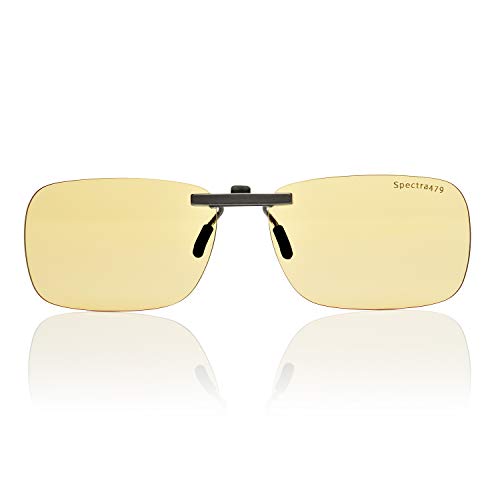
Spectra479 Clip-on Blue Light
What Each Pick Brings To The Table
Gaoye’s clear, square frames suit people who spend much of the day moving between a monitor, a phone, and printed material. The polycarbonate lenses include blue-light filtering and UV400 protection, while the anti-reflective coating is intended to reduce distracting reflections without giving the lenses a noticeably dark tint.
Unlike the progressive options later in this list, this pair is designed for people who mainly need screen filtering rather than magnification at several distances. The replaceable-lens arrangement is the useful detail for long-term wearers, since the original lenses can be exchanged for prescription lenses. For your face shape and temple comfort, a try-on remains worthwhile.
Well-Handled Touches
- The lightweight frame is practical for extended computer sessions.
- Clear lenses preserve a natural view for everyday indoor use.
- Polycarbonate construction adds a lighter, impact-conscious feel.
- Replaceable lenses accommodate a later prescription upgrade.
Trade Offs
- This is a non-magnifying frame, so it does not address close-reading needs on its own.
- The square shape and stated fit should be checked against narrower or wider faces.
Key Specs
Who Will Love This
You will likely appreciate this pair most if you work at a computer, want a clear-lens design, and prefer the option to replace the lenses later.
Another Choice May Suit
J+S Medium-Small Blue Light Readers are a stronger fit when built-in close-reading magnification is your priority.
The J+S Haka Series combines reading magnification with one of the more clearly stated blue-light specifications in this group. It filters 90% of the 400–430nm band while providing an overall block rate of about 52%, a useful distinction when comparing broad filtering language with a defined range.
Aspheric lenses provide even magnification across the viewing area, while the medium-small frame targets faces that find many full-size readers too broad. Compared with Gaoye’s replaceable non-prescription design, this pair puts more attention on close reading and screen use, although its listed frame dimensions make a fit check worthwhile.
Useful Touches
- Aspheric lenses support a more uniform magnified field of view.
- The defined blue-light range makes the filtering easier to compare.
- A spring hinge reduces pinching around the temples.
- The included case and cloth simplify storage and care.
Things To Weigh
- Medium-small dimensions may feel narrow for wider faces.
- Acrylic lenses offer clarity, but the frame size still needs checking.
- You should confirm the required magnification before ordering.
Quick Facts
Made For
These readers suit adults with smaller facial dimensions who want magnification, spring-hinge comfort, and documented blue-light filtering in one pair.
A Better Fit Elsewhere
FEISEDY Vintage Blue Light Reading Glasses B2519 offer a broader selection of magnification levels for shoppers who need more than one power.
Progressive lenses divide a single lens into zones for distance, intermediate viewing, and close reading, reducing the need to swap glasses as your focus changes. This MIRYEA pair uses that layout for people who want to look across a room, work at a monitor, and read a menu without carrying several pairs.
The rimless titanium frame weighs 15g, and silicone nose pads, metal hinges, and spring legs support an adjustable fit. That makes it more specialized than the straightforward J+S readers, and adaptation matters because progressive magnification changes gradually rather than switching at one visible line.
The Case For It
- Progressive zones serve distance, screen, and close-up tasks.
- The 15g titanium frame places little weight on the nose.
- Adjustable silicone nose pads can improve the fit.
- Anti-reflective coatings soften distracting surface glare.
- Blue-light filtering suits a multi-device daily routine.
Room For Improvement
- Progressive lenses require time to adjust to their gradual magnification zones.
At A Glance
Built With In Mind
This pair is built for people who regularly alternate between distance, computer work, and close reading without wanting separate pairs for each task.
Reach For A Different Pick When
MIRYEA Progressive Blue Light Readers are the simpler choice when a half-frame design and fewer moving parts matter more than rimless styling.
The B2519 uses a vintage square frame to bring a more deliberate look to close reading. Its spring hinges and smooth nose pads are practical details for a pair that may live beside a bedside chair, an easy chair, or a home-office keyboard rather than in a full-size frame.
Five listed powers, from +1.25 through +2.50, make it useful for comparing different magnification needs. The 52mm lens width gives you a concrete measurement to compare with a pair you already own, while the 139mm temples and 16mm bridge provide a fuller view of the frame’s proportions.
Key Advantages
- Five magnification choices support a more useful fitting process.
- Spring hinges accommodate changing head positions more comfortably.
Minor Gripes
- The vintage square shape may feel less suitable for very small faces.
- Manual measurements can vary by 1–2mm, so compare them with an existing frame.
Feature Snapshot
Whose Shelf It Belongs On
This pair belongs with readers who want a vintage appearance, a spring hinge, and several listed magnification powers for close-up work.
Where Another Pick Shines
J+S Medium-Small Blue Light Readers suit smaller faces that need a narrower frame with detailed blue-light filtering.
This half-frame MIRYEA pair takes a more compact route to progressive viewing. Its lens zones cover distance, intermediate computer work, and close reading, while the shorter frame makes it easier to keep on a desk or slip into a bag between tasks.
The listed blue-light blocking rate is 90%, and the transparent lenses are designed to maintain color clarity. Compared with the rimless titanium MIRYEA option, this pair trades some visual refinement for a smaller profile and a more approachable first step into progressive lenses.
Features That Help
- Progressive magnification covers several working distances.
- The half-frame shape reduces visual bulk.
- Transparent lenses preserve a natural-looking view.
- A case and cleaning cloth are included for storage.
Possible Compromises
- Progressive magnification takes time to adapt to.
- The compact frame may not suit every face shape.
- Close-work and distance viewing require changing your gaze position.
The Right Fit
These readers suit people who want a compact progressive pair for regular computer work and close reading without switching between two full-size glasses.
Consider Something Else When
FEISEDY Vintage Blue Light Reading Glasses B2519 are easier to consider when you prefer a traditional full frame and a choice of five listed powers.
Diamond-cut lens edging, glitter accents, and a nearly invisible rim give this pair a dressier look than the square, half-frame, and rectangular alternatives. The 55 × 35mm lenses and 20mm bridge preserve the proportions of a conventional reading frame while leaving the face of the lens largely unobstructed.
Magnification choices run from no magnification through +4.00, making this a useful option for shoppers with different near-vision needs. Adjustable nose rests help with positioning, while the resin lenses are described as scratch-resistant, waterproof, and oil-resistant. The delicate look still deserves a case for storage.
Where It Helps
- Fine rimless detailing suits dressier everyday outfits.
- Eight listed magnification options accommodate varied needs.
- Adjustable nose rests help center the lenses.
- Waterproof and oil-resistant resin lenses simplify routine care.
Less Ideal Details
- The refined finish calls for more careful storage than a plain full frame.
Technical Highlights
Who Should Grab It
This pair is a strong fit for someone who wants reading glasses that coordinate with a more polished wardrobe while offering several magnification levels.
Swap It Out When
MIRYEA Rimless Titanium Progressive Multifocus Blue Light Computer Reading Glasses suit you better when changing magnification zones across several distances is the priority.
A clip-on filter is useful when you already wear prescription glasses and do not want another full frame competing for the same job. You can keep your current correction in place, then add or remove the Spectra479 eyewear around the computer during intensive screen sessions.
The listing identifies it for daytime and nighttime use, but the decision still comes down to fit and comfort. A clip-on needs to sit evenly across both lenses without pulling the underlying frames forward. Clear the viewing area and inspect the attachment points before a long workday, as those details determine whether the arrangement feels secure.
Bright Spots
- The clip-on format works around existing prescription glasses.
- Daytime and nighttime positioning gives you some scheduling flexibility.
Practical Considerations
- Compatibility with your current frame shape is essential to secure attachment.
- You may find that a full-frame option feels more balanced during long sessions.
Made For
This format suits prescription-glass wearers who want temporary screen filtering without replacing their everyday frames.
Another Choice May Suit
Gaoye Ultralight Blue Light Glasses for Women with UV400 suit you better when a dedicated lightweight frame sounds simpler than a clip-on arrangement.
Matching the Lens to Your Daily Routine
Presbyopia is the age-related difficulty of focusing on nearby objects, and the right lens design depends on how often your focus changes. A fixed reading power handles printed material and a steady viewing distance, while progressive lenses add intermediate and distance zones for computer work and looking across a room.
Start With the Magnification You Need
The J+S Medium-Small Blue Light Readers suit a straightforward reading routine, while the FEISEDY B2519 provides five listed powers for comparing close-vision needs. Have your current prescription or an established reader power nearby, and avoid choosing a stronger magnification simply because a number looks larger. In your view, stronger is not always more comfortable.
Decide Between Fixed and Progressive Zones
Progressive lenses are useful for frequent switching between a book, monitor, and distant object. The MIRYEA rimless titanium pair emphasizes that range with a 15g frame, while the half-frame MIRYEA option takes a more compact approach. New progressive wearers should allow time to learn where each magnification zone sits.
Check the Frame Before the Features
Frame width, lens size, bridge, and temple length can matter more than any lens specification. A narrow face may favor the J+S medium-small fit, while a broader face may find the FEISEDY dimensions more comfortable. Clear lenses suit people who dislike a dark tint, and those already wearing prescription glasses may prefer the Spectra479 clip-on arrangement.
Two Details That Matter Before Ordering
Where Shoppers Go Wrong
Choosing by blue-light claims alone can hide a more important issue: the glasses may not provide the magnification you need. Check the lens power, frame dimensions, and intended viewing distance before judging the filtering specification. A pair meant for reading may still be uncomfortable during computer work if the screen sits outside its practical range.
What Separates Premium From Basic
The more elaborate options in this group add progressive zones, titanium construction, defined blue-light percentages, or replaceable lenses. Those features are worth considering when you change focus often or already depend on a particular frame shape. For occasional reading, a well-fitting fixed-power pair may be all the complexity your routine requires.
Frequently Asked Questions
Do anti blue light presbyopia glasses need a prescription?
Some pairs are non-prescription, while others provide magnification or allow replacement with prescription lenses. Choose based on whether your near-vision correction must be built into the frame or supplied separately.
How do I choose the right magnification?
Start with a reader power that already feels comfortable for normal print and compare your near-vision needs with that established pair. Higher numbers are not automatically better, and a vision professional can help when your required strength is uncertain.
Are progressive reading glasses different from ordinary readers?
Progressive lenses contain zones for different distances, while ordinary readers usually provide one consistent magnification throughout the lens. Progressives suit frequent changes between close work, a screen, and the surrounding environment.
Can clip-on blue light glasses fit over prescription frames?
They can, but the shape and dimensions of your current frames determine how securely the clip-on sits. Compare the lens area and attachment points, then check that both glasses remain level during normal movement.
Which option is easiest for daily computer use?
The Gaoye pair offers the simplest dedicated screen design, while the MIRYEA progressive models suit people who also need near and distance magnification. The Spectra479 clip-on is more convenient for people who prefer keeping their current prescription frames in place.
Final Verdict
Your best choice comes down to the way you use your glasses. Fixed-power readers serve steady close work, progressive pairs handle changing distances, and a clip-on adds filtering around prescription frames you already own. Measure your face, confirm the magnification, and choose the simplest design that fits your routine.
