

A balance beam scale has to fit the load, the available space, and the precision your work demands. This selection covers medical platforms, laboratory balances, classroom models, and hanging scales for lifting, farming, and outdoor weighing. Capacity sets the largest load, while readability tells you the smallest weight change the instrument can display.
How The Shortlist Stacks Up
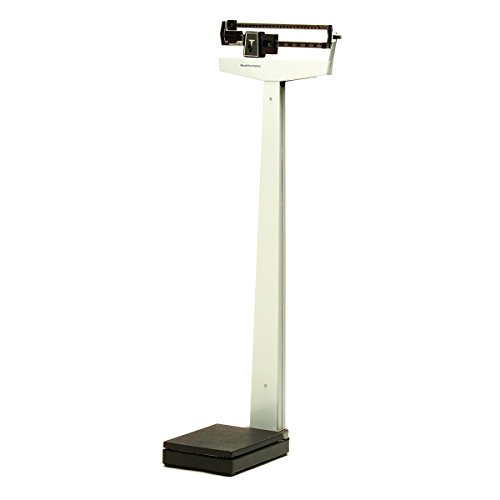
Health o meter 400KL Mechanical Beam Medical Scale

Fuzion 660LB Crane Scale
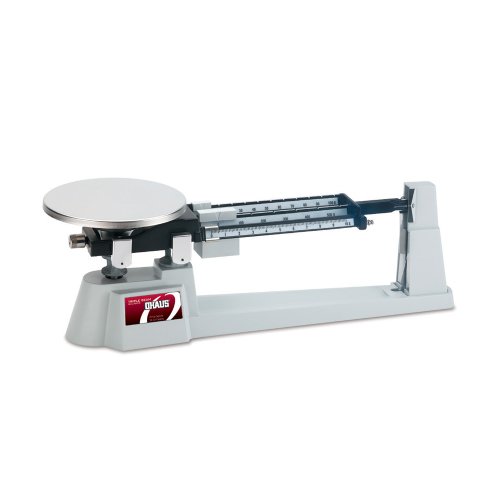
Ohaus 80000012 Triple Beam Balance 610g 0.1g

Ohaus 80621692 Triple Beam 2610g

B-200-O Triple Beam

Ohaus 80000004 Harvard Trip Balance

Fuzion 440LB Mini Crane Scale
A Breakdown Of The Leading Choices
A wide platform and familiar moving needle make the Health o meter 400KL easy to settle into for routine body-weight checks. Its alloy-steel structure is finished inside and out with powder coating, which helps protect the mechanism in a busy clinic or home entryway.
The scale reaches 390 pounds and presents readings in pounds on the front and kilograms on the back. That dual-unit layout separates it from the gram balances in this collection, which serve a much more specialized measurement task.
Notable Upsides
- The non-slip platform mat gives patients a more stable footing during a weighing session.
- Quarter-pound graduations support a practical level of precision for routine body measurements.
- Pounds in front and kilograms in back reduce the need to move the scale for different reading preferences.
- Compatible optional wheels make a shared clinical room easier to organize.
Things To Consider
- The standard capacity stops at 390 pounds, so heavier loads require the separate counterweight accessory.
- The platform occupies a permanent floor area, making the wheeled configuration more attractive in shared spaces.
Quick Facts
Built With In Mind
This model suits homes, clinics, and other settings where a stable floor platform and straightforward body-weight readings matter.
Where Another Pick Suits Better
Laboratory workers measuring gram-level samples will find the Ohaus 80000012 Specialty Mechanical Triple Beam Balance more appropriate.
Suspending a load changes the practical scale of the job, and the Fuzion 660LB handles loads up to 660 pounds without turning a platform scale into a floor obstacle. It fits warehouse pulls, farm work, fishing gear, and other suspended-weight tasks where your hands need to stay free.
Unlike the Health o meter 400KL, this is an electronic hanging instrument with unit conversion, a backlit display, and digital functions. The snap-fit ring and hook connection also remove the need for screws during initial assembly.
Benefits That Matter
- The 660-pound capacity covers substantially heavier suspended loads than the smaller Fuzion model.
- Switching among pounds, kilograms, and newtons saves manual conversion at different worksites.
- Hold keeps a changing reading visible, while Tare removes the container’s contribution from the result.
- The 2.5-inch backlit display remains easy to consult in dim storage areas or outdoor settings.
- Aluminum housing and a stainless steel lifting ring suit repeated transport and rigging work.
Practical Considerations
- Your lifting point must accept the specified snap-fit ring, and a load near 660 pounds requires a suitably secure suspension system.
Feature Snapshot
Who Will Love This
Warehouse crews, farm workers, and outdoor sports people will appreciate the combination of high capacity, unit switching, and quick assembly.
Consider Something Else When
The Fuzion 440LB Mini Crane Scale is a more compact option for loads that stay below 440 pounds.
The Ohaus 80000012 turns a classroom weighing exercise into a hands-on lesson in how a mechanical balance works. Its three sliding weights, notched beams, and stainless steel pan cover a useful range of classroom and laboratory tasks without introducing a digital display.
That manual format also gives you a direct view of the measurement process. Magnetic damping settles the beam more quickly, while the spring-loaded zero compensator allows fine correction before work begins.
Well-Handled Touches
- Three beam levels support practical mass measurement in a classroom or teaching lab.
- The 0.1-gram readability provides a useful resolution for small samples and demonstrations.
- Magnetic damping reduces the wait for the beam to settle after a weight adjustment.
- A metal base and beam suit an institutional setting where the instrument may be handled regularly.
Small Caveats
- The 610-gram ceiling restricts the balance to smaller samples compared with the Ohaus 80621692.
- Manual weight placement takes more attention than moving riders on an electronic balance.
Best Suited To
Teachers, students, and small laboratories benefit from a visible, hands-on balance that reads to 0.1 gram.
Not Your Match When
You will need the higher capacity of the Ohaus 80621692 Triple Pro Mechanical Triple Beam Balance for substantially larger samples.
Your sample nearly exceeds the limit of a compact laboratory balance, and the Ohaus 80621692 answers with a 2,610-gram capacity. It keeps the same 0.1-gram readability as the smaller Ohaus 80000012, giving you more room without sacrificing the displayed increment.
That makes it a practical middle ground for lab work involving larger quantities. The manual three-beam layout keeps the measurement process visible, although careful setup and zeroing remain central to a dependable reading.
Why It Works Well
- The 2,610-gram maximum covers a much broader sample range than the 610-gram Ohaus model.
- Readability stays at 0.1 gram despite the higher capacity.
- The triple-beam format suits labs and teaching environments that favor visible mechanical measurement.
Points To Note
- The larger capacity does not remove the need for careful leveling and zeroing before placing a sample.
- Manual beam adjustment takes more time than a digital interface for repeated routine weighing.
Core Details
Who Should Grab It
Laboratory technicians and advanced students handling loads above 610 grams will find the added capacity especially useful.
Look Elsewhere When
Basic classroom demonstrations stay within reach of the Walter Products B-200-O Economy Triple Beam Balance.
The Walter Products B-200-O keeps the lesson simple: a 610-gram capacity, three graduated beams, and a 15-centimeter platform. Its front beam provides 0.1-gram sensitivity, while the middle and rear beams cover larger increments needed to assemble a complete reading.
For a classroom, this straightforward layout can make beam balancing easier to demonstrate than a sealed electronic model. The trade-off is manual operation, which suits instruction but rewards a calm, methodical approach during repeated measurements.
Noteworthy Benefits
- Three graduated beam levels let you work from small adjustments to larger mass increments.
- The 0.1-gram front-beam sensitivity supports fine classroom measurements.
- The 15-centimeter platform gives smaller samples a defined place to rest.
- The mechanical format has an intuitive visual quality for teaching balance adjustment.
Where It May Fall Short
- The 610-gram maximum is unsuitable for samples that exceed the platform’s stated capacity.
- Manual rider placement takes more practice than entering a value on a digital scale.
Quick Technical Notes
Made For
Teachers, students, and hobbyists who want a hands-on mechanical balance will find this model easy to understand.
A Better Fit Elsewhere
The Ohaus 80000012 Triple Beam Balance 610g 0.1g offers more explicitly listed metal construction for a dedicated laboratory.
The Ohaus 80000004 uses two beam levels to cover a 2,000-gram capacity with 0.1-gram readability. Its angled beams and pointer present the balance from a convenient viewing angle, which can reduce the chance of misreading the scale during a classroom or lab session.
Compared with the three-beam Ohaus models, the double-beam design reduces the number of adjustments while retaining fine measurement. The stainless steel pan, metal base and beam, and hardened steel edges give it a purposeful laboratory appearance.
What Pays Off
- Two beams keep the weighing process simpler than a three-beam arrangement.
- Angled beams and the pointer make the balance easier to read at the workstation.
- The agate bearing supports smooth movement, while the counterbalancing knob makes zeroing quick.
- A stainless steel pan and hardened steel edges suit repeated laboratory use.
Less Ideal Details
- Its 2,000-gram maximum is lower than the 2,610-gram capacity of the Ohaus 80621692.
- The manual mechanism requires careful beam and rider adjustment during each weighing sequence.
The Right Fit
Laboratory and classroom users who want 0.1-gram readability with a simpler two-beam layout will appreciate this model.
Another Choice May Suit
The Ohaus 80621692 Triple Beam 2610g serves laboratories that need a higher ceiling for larger samples.
The Fuzion 440LB Mini Crane Scale handles suspended loads without reaching the 660-pound ceiling of its larger sibling. That middle range works well for fishing gear, farm bundles, luggage, and outdoor equipment that needs a portable hanging measurement.
Its display resolves to 0.2 pounds, 0.1 kilograms, or 1 newton, and a long press of the unit button changes the measurement system. The snap-fit lifting ring keeps the connection simple, although your suspension point must accept that fitting.
Where It Excels
- The 440-pound capacity covers many portable outdoor and farm loads without approaching the heavier model’s limit.
- Switching among pounds, kilograms, and newtons supports different work environments.
- The snap-fit lifting ring removes the need for screw-fastened assembly.
Factors To Consider
- Loads above 440 pounds call for the Fuzion 660LB Crane Scale instead.
- Your overhead support must be secure and compatible with the snap-fit lifting ring.
Important Details
Whose Shelf It Belongs On
Outdoor enthusiasts, anglers, and farm workers will find this model useful for portable loads within 440 pounds.
Reach For A Different Pick When
Warehouses and farms regularly handling loads above 440 pounds should use the Fuzion 660LB Crane Scale.
What Matters Before You Choose
Match Capacity to the Load
Capacity should be based on the largest realistic sample, including its container. The Health o meter 400KL handles body weights, while the Fuzion models cover suspended loads and the laboratory balances work in grams. Leave a sensible margin above your normal workload rather than choosing solely by the largest theoretical number.
Choose Readability for the Task
Readability is the smallest increment the instrument can show. Quarter-pound steps suit routine body measurements, 0.1-gram readings serve laboratory work, and 0.2-pound increments fit many portable hanging tasks. The resolution should be fine enough for your decisions without exceeding what your workflow actually needs.
Check the Weighing Setup
Platform balances need stable floor space and room to step onto them. Hanging scales require a secure overhead connection, while mechanical laboratory balances need a level work surface and enough room to move the weights. Measure the area and confirm the required attachment before ordering.
Two Details That Affect Your Decision
Mistakes Worth Dodging
A common error is focusing on the largest capacity number without considering readability or workflow. Another is overlooking how the scale is supported, especially with hanging models and compact classroom benches. Checking the platform size, connection style, and intended load first prevents a mismatch later.
What The Higher Tier Buys
A higher-capacity model gives you room for larger samples or loads, while added display functions can make changing tasks easier. The upgrade earns its place when your present measurements approach the limit of a basic model. For smaller samples, a simpler balance may offer a more practical fit.
Frequently Asked Questions
What Is a Balance Beam Scale?
A balance beam scale measures weight by comparing a load with movable weights on graduated beams. Readability describes the smallest change the scale can display.
How Do I Choose the Right Capacity?
Choose a capacity above your heaviest realistic sample or body weight. Account for containers and accessories that contribute to the total.
Is 0.1-gram Readability Necessary?
It is useful for fine laboratory samples and detailed classroom work. Larger outdoor loads and routine body measurements do not need that level of resolution.
Should You Choose a Mechanical or Digital Scale?
Mechanical balances suit teaching, demonstrations, and straightforward laboratory work. Digital hanging scales offer unit conversion and hold functions for changing outdoor or industrial tasks.
Which Scale Handles the Heaviest Loads?
The Fuzion 660LB Crane Scale has the highest stated capacity in this group at 660 pounds. The Health o meter 400KL expands to 490 pounds with its specified counterweights.
Closing Remarks
The right balance beam scale depends on the job rather than a single universal style. A Health o meter model handles body weight, Ohaus balances cover precise laboratory work, and Fuzion scales suit suspended loads. Match capacity, readability, and the required connection to the task you perform most often.
