

Stepping onto a scale that estimates body fat can add useful context to your weight, especially during a fitness reset or a routine strength-training program. The right device should balance electrode design, readable displays, dependable app tracking, and enough detail to make each morning’s reading meaningful. These options range from compact scales for small bathrooms to handle-equipped models built for detailed body composition tracking.
A Snapshot Of The Selections
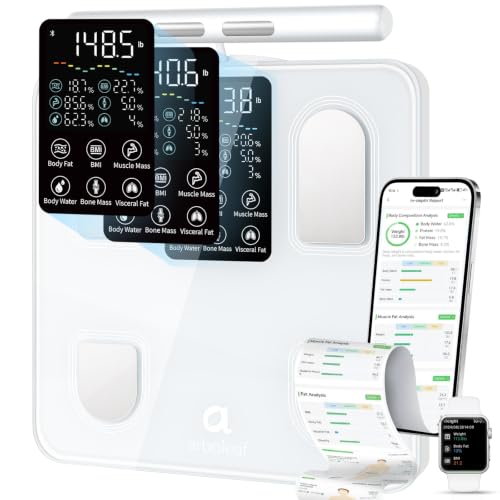
arboleaf Smart Scale with 50+ Body Metrics

COUNTO Smart Scale 14 Body Composition Measurements

InBody Dial H30 Body Composition Scale, Matte Black

pavaba 8-Electrode Body Composition Scale

RENPHO MorphoScan Lite Body Composition Scale

RENPHO Smart Scale with TFT Handle Display

RENPHO MorphoScan Base 50+ Metrics Scale
Why These Options Stand Out
Daily weigh-ins become more informative when the scale also estimates fat, muscle, water, and other body metrics. The arboleaf Smart Scale uses eight electrodes across the hands and feet for segmental analysis, meaning it can estimate readings for the arms, legs, and torso rather than relying on foot contact alone.
For households sharing one scale, eight automatic profiles and guest mode make morning use less disruptive. The 12.2-inch glass platform is spacious, although that footprint may be less convenient in a compact bathroom.
Benefits That Matter
- More than 50 body metrics support broad progress tracking
- Bluetooth syncs with Apple Health, Google Fit, and Fitbit
- Weekly, monthly, and yearly charts reveal long-term patterns
- Automatic profiles suit families and shared fitness spaces
- A large rotating display reduces phone dependency
Things To Consider
- The broad platform requires more floor space than a compact scale
- BIA figures are estimates that can shift with hydration and should be compared over time
- The instructions advise against use with a pacemaker or during pregnancy
Key Specs
Built With In Mind
You benefit most from this scale if your household wants extensive metrics, separate profiles, and long-term app-based progress charts.
A Better Fit Elsewhere
The COUNTO Smart Scale suits you better when bathroom floor space is limited and a lighter, more compact design matters more.
A scale that slides beneath a bed and still tracks fat, muscle, water, and other estimates solves a real space problem. At 10 by 10 inches and 0.7 inch thick, the COUNTO Smart Scale is noticeably more compact than the broad arboleaf model, while its 2.3-pound weight also makes repositioning straightforward.
The app records progress, supports goals, and works with current iOS and Android devices. That makes this a practical choice for apartment living or a fitness routine where you want meaningful composition data without surrendering floor space.
Why It Works Well
- Its low profile fits beneath most beds and cabinets
- Fourteen measurements include fat, muscle, water, and bone mass
- The LCD provides straightforward weight visibility
- Bluetooth syncing supports goal setting and historical tracking
- A 400-pound capacity accommodates a wide range of users
Minor Gripes
- You must establish app connectivity before relying on saved trends
- The compact platform offers less standing space than larger models
- Body composition values remain estimates rather than clinical measurements
Quick Facts
Made For
This scale fits you best if you live in a small space, need easy storage, and want core composition estimates without a large display platform.
Where A Sibling Pick Shines
The arboleaf Smart Scale is a better fit for you when you prioritize eight profiles, wider health-platform integration, and more than 50 metrics.
Taking a measurement involves more than standing still, and the InBody Dial H30 makes that extra step purposeful. Its pull-up handle includes thumb electrodes, giving the scale hand and foot contact while multiple impedance frequencies are used to analyze fat and muscle distributions.
Auto-recognition and Wi-Fi or Bluetooth syncing suit a shared home where switching profiles would become tiresome. The matte finish and backlit LCD fit a modern bathroom, though the handle adds a step compared with the straightforward pavaba scale.
The Upside
- Multiple frequencies support detailed composition analysis
- Thumb electrodes encourage consistent handle positioning
- Automatic user recognition reduces profile switching
- Wi-Fi and Bluetooth offer flexible syncing options
- Apple Health integration keeps BMI, fat, and muscle trends accessible
Worth Noting
- You need to hold the handle during each measurement
- Its higher specification level may exceed a simple weight-tracking need
- BIA readings should be interpreted as trends because hydration can influence estimates
Technical Sheet
Right Fit For
You will appreciate this model most if detailed trend tracking and consistent handle-assisted measurements matter more than minimal setup.
Another Choice May Suit
The pavaba 8-Electrode Body Composition Scale fits you better when a 400-pound capacity and segmental body data are your main requirements.
Strength-focused routines benefit from measurements that distinguish the trunk and limbs instead of providing a single undifferentiated body percentage. The pavaba scale uses eight electrodes to gather segmental information, with 57 metrics covering BMI, body fat, muscle mass, basal metabolic rate, and visceral fat.
The wide platform supports up to 400 pounds and provides a slip-resistant standing area, which makes the physical design more substantial than the compact COUNTO. Bluetooth syncing and multiple profiles suit a household where several people follow separate fitness goals.
The Practical Payoff
- Segmental readings provide a more detailed composition view
- Bluetooth transfers results to a smartphone automatically
- The extra-wide platform feels suited to vigorous daily use
- Multiple profiles simplify tracking for families or roommates
Honest Caveats
- The broad platform requires adequate floor clearance
- You must pair the scale with its app before receiving synced measurements
- A high metric count does not turn estimated BIA readings into clinical analysis
Feature Snapshot
Who Will Love This
This model suits strength trainers and larger households that value segmental measurements, multiple profiles, and a sturdy, wide platform.
Consider Something Else When
The COUNTO Smart Scale is more suitable when a thin 0.7-inch profile and minimal storage footprint take priority over a broad platform.
Some mornings call for a scale that answers a few composition questions without turning the bathroom into a control panel. The RENPHO MorphoScan Lite combines a handle-based measurement method with a clear display, making the essential readings easy to locate after you step off.
Its eight-electrode arrangement provides segmental analysis, while automatic user recognition helps household members move between profiles with less manual setup. The handle requires more attention than a foot-only scale, but the straightforward display may appeal more to you than the dense information screens offered by the TFT model.
Practical Pluses
- Handle and foot electrodes support segmental analysis
- A clear display keeps important figures easy to scan
- Automatic recognition simplifies use by multiple household members
- The Lite format focuses on essential composition tracking
Small Caveats
- You must use the handle correctly for consistent positioning
- The product category is less visually detailed than the RENPHO TFT model
- Body composition figures remain useful for trend tracking rather than clinical evaluation
The Right Fit
You benefit most from this scale if you want handle-assisted composition readings and a clear display without a dense menu of on-device pages.
Swap It Out When
The RENPHO Smart Scale with TFT Handle Display suits you better when rechargeable power and detailed information pages matter more than a simple display.
The main appeal here is visibility. A 4.3-inch TFT display in the handle provides nine pages of measurements, trends, and goals, so you can scroll through fat analysis and muscle information without reaching for your phone after every session.
Rechargeable power removes the need to keep replacement batteries in mind, and handle buttons control scrolling and unit changes. You must complete Bluetooth pairing in the RENPHO Health app before measuring, so think of the initial setup as part of getting the scale ready for daily use.
Strengths Worth Knowing
- The color TFT screen presents detailed data without a phone
- Nine pages cover measurements, trends, and goals
- Rechargeable operation suits frequent daily use
- Handle controls make navigation and unit changes convenient
Possible Compromises
- The app pairing requirement adds a setup step
- A large handle display takes more visual attention than a simple LCD
- Detailed pages may feel excessive for weight-only tracking
Core Details
Whose Shelf It Belongs On
This scale belongs on your list if you want rich measurements and trends on a built-in color screen without checking your phone every morning.
Not Your Match When
The RENPHO MorphoScan Lite is a better fit when you prefer a simpler display and want to reduce the amount of information shown directly on the scale.
The MorphoScan Base brings segmental measurement and a broad metric set together without moving everything into a phone screen. Eight electrodes at two frequencies are used to analyze the body, while the handle provides the upper-body contact needed for that approach.
An LED display presents BMI, body fat, skeletal muscle percentage, visceral fat index, and a seven-day weight trend. Compared with the RENPHO TFT model, the information presentation is more restrained, which may be easier to check at a glance during a busy morning.
Where It Excels
- Dual-frequency segmental analysis supports detailed tracking
- More than 50 metrics cover a wide range of composition data
- The display keeps a seven-day weight trend close at hand
- Core fat, muscle, BMI, and visceral figures appear directly on the scale
Points To Keep In Mind
- The handle adds a deliberate step to every measurement
- Segmental estimates still react to temporary changes such as hydration
- You need consistent positioning to make morning comparisons meaningful
Who Should Grab It
You benefit most from this model when you want extensive composition data, segmental analysis, and a useful short-term trend in one home scale.
Look Elsewhere When
The InBody Dial H30 is a better fit for you when multiple impedance frequencies and automatic Wi-Fi recognition are your main priorities.
What Matters Before You Choose a Body Composition Scale
Electrode Layout and Handle Design
Foot-only scales are convenient, but segmental models add hand or upper-body contact for a more complete composition estimate. Eight-electrode designs generally fit your routine better when you want limb and trunk data rather than a single overall figure. A handle adds a step, so choose one based on how consistently you will hold it.
App Tracking and Multiple Profiles
Look for automatic syncing, recognizable profiles, and charts that make sense to you. Households benefit from separate accounts, while people focused on one routine may value broader health-platform connections. Compare the app experience with your existing phone and fitness ecosystem before settling on a model.
Display and Daily Practicality
A large platform feels more stable, while a thin profile saves space under furniture. A simple LCD suits quick weight checks, and a color display works better for people who want fat, muscle, trends, and goals visible without opening an app. Check the listed dimensions against your available floor area.
Reading BIA Estimates Responsibly
Bioelectrical impedance analysis, or BIA, estimates body composition through electrical measurements. Hydration, meal timing, exercise, and measurement consistency can affect the result, so repeated readings matter more than one isolated number. Compare trends rather than expecting a small daily shift to reflect a dramatic change in fat.
Making Sense of Advanced Scale Features
Mistakes Worth Dodging
Avoid comparing every BIA scale as though its readings are interchangeable. A large number of metrics can look impressive while saying little about consistency, so check the electrode design, app setup, and display first. A smaller scale may also fit your bathroom better than a feature-heavy model with a much larger platform.
What Separates Premium From Basic
Additional features often bring more electrode contacts, multiple frequencies, handle-based measurement, or richer displays. Those additions can be worthwhile for detailed tracking, but a basic app-connected scale is enough for weight and general composition trends. Pay for a clearer workflow rather than a long list of figures you will rarely open.
Frequently Asked Questions
How accurate are body fat measurement devices?
Body fat scales estimate composition through bioelectrical impedance, so their readings can vary with hydration and other temporary conditions. They are best used to monitor changes over time under consistent conditions.
Do I need a scale with a handle?
A handle provides upper-body contact and supports segmental analysis. You need one when you want more detailed limb or trunk measurements, though a simpler foot-only scale is easier to use every day.
Can multiple people use the same smart scale?
Most listed scales support separate profiles, while automatic recognition makes shared use easier. You should still confirm that every person has a separate profile before comparing readings.
How often should I check body fat?
Consistent timing helps you compare results without mistaking temporary changes for meaningful shifts. Daily readings work for trend tracking, while weekly review can be less distracting for some routines.
Which scale works best for a small bathroom?
The COUNTO Smart Scale has the most compact listed footprint at 10 by 10 inches and 0.7 inch thick. You should also check where you can store it and maintain a level, firm surface for use.
Wrap Up
The right body fat scale depends on your space, household, and appetite for detail. Compact users can favor the COUNTO, broad metric trackers may prefer arboleaf, and handle-equipped models such as the InBody Dial H30 suit those who want richer composition estimates. Choose the workflow you will use consistently, then interpret the readings as trends rather than isolated verdicts.
