

Your Achilles takes the brunt of every uphill mile, quick start, and hard landing. Whether you need adjustable compression for changing swelling, low-profile support inside running shoes, or firmer stabilization after a sprain, the right fit matters more than adding bulk. These seven options cover different support styles, activity levels, and recovery routines.
A Fast Comparison Of The Options
Polawis Openable Ankle Brace Compression Sleeve 2-Pack

Modvel Foot and Ankle Brace Socks

PAPLUS 6-Pair Compression Socks

PAPLUS 6-Pair Arch Support Socks
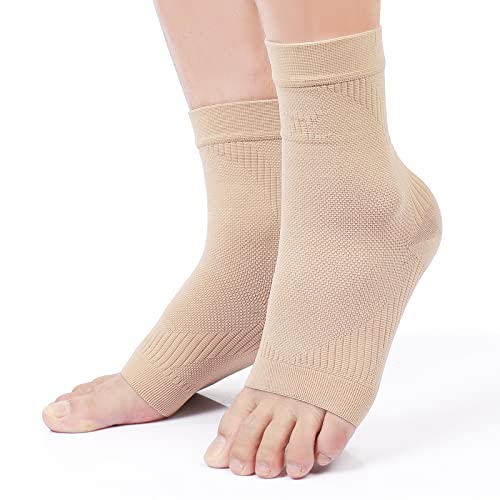
KEKING Compression Sleeve for Achilles Support

AGPTEK Lace-Up Ankle Stabilizer

Pure Therapro Rx Tendon Support, 90 Capsules
A Deeper Look At The Lineup
The fully openable construction gives you direct control over how the wrap sits around your foot and ankle. Its graduated compression means pressure changes through the support rather than staying uniform, while the open heel reduces fabric rubbing against that sensitive area.
For runs that cross from warm-up effort to hills, the adjustable strap can be loosened or tightened as your foot changes. The two-pack also gives you a spare or lets you support both feet, although the included size is Large.
Real-World Strengths
- Open-wrap design allows compression adjustments throughout the day
- Detachable strap adds support for higher-impact movement
- Open heel improves airflow and reduces bulk
- Two pieces support rotation or bilateral use
Trade Offs
- More layers and straps may feel bulkier than a compression sock
- Measure both ankle and sole circumference before choosing the Large size
Feature Snapshot
Who It Suits Best
Runners who want adjustable compression for changing foot volume gain the most control from this design.
A Better Fit Elsewhere
The Modvel Foot and Ankle Brace Socks suit runners who prefer a smoother, sock-like profile over a multi-part wrap.
Unlike the adjustable Polawis wrap, this option combines foot and ankle coverage in a stretchy sock-like format. That shape may feel more natural during running because it lacks the separate layers and fastening hardware of a rigid brace.
Compression is intended for Achilles tendon discomfort, plantar fasciitis, sprains, and general foot support, so it sits between a basic sock and a substantial stabilizing brace. The trade-off is less control over compression once the sleeve is on.
Positive Points
- Low-profile construction suits running shoes
- Stretchy knit follows the foot and ankle
- Supports several lower-foot and tendon concerns
Soft Spots
- Less adjustable than the Polawis open-wrap model
- Provides compression rather than pronounced lateral stabilization
Quick Facts
Made For
You get a practical fit for short runs, long walks, or daily wear when discreet compression matters.
Consider Something Else When
The AGPTEK Lace-Up Ankle Stabilizer offers firmer directional support for more demanding post-sprain activity.
Six pairs make these socks easier to rotate through a regular training week. Their compression format focuses on the foot and arch, which can feel useful when heel discomfort and plantar fascia support are your main concerns.
They differ from the Modvel Foot and Ankle Brace Socks by offering a multi-pair set rather than one prominent ankle sleeve. You gain convenient laundry rotation, although this is gentler footwear support than a wrap with lateral stabilizers.
The Good Stuff
- Six pairs simplify weekly rotation
- Compression supports the arch and foot
- Useful for walking, training, and recovery days
Practical Considerations
- Primary emphasis is plantar fasciitis and arch support
- Less structured than a lace-up ankle stabilizer
Right Fit For
Runners building a reliable rotation of supportive everyday socks benefit most from this set.
Not Your Match When
The KEKING Compression Sleeve for Achilles Support suits runners who prioritize a defined compression range around the ankle.
The arch emphasis makes this PAPLUS set more relevant when your feet feel unstable during long stretches of running or walking. Six pairs provide enough rotation for regular use, and the compression fabric presents a familiar alternative to a bulky brace.
Compared with the PAPLUS 6-Pair Compression Socks, this listing places more attention on arch support and ankle stabilization. It remains a sock-based option, so runners seeking adjustable straps or stronger side support need a different design.
Everyday Wins
- Arch support suits high-mileage routines
- Compression covers the foot and ankle area
- Six pairs make regular rotation simple
- Discreet enough for regular running shoes
Small Caveats
- No adjustable compression settings
- Not designed to immobilize a severely unstable ankle
Essential Details
Best Suited To
You benefit most when a supportive, familiar sock fits your routine better than a mechanical brace.
Look Elsewhere When
The Polawis Openable Ankle Brace Compression Sleeve 2-Pack gives you finer adjustment as swelling changes.
The stated 20-30 mmHg range gives this sleeve a more defined compression profile than the general-purpose socks in the lineup. Millimeters of mercury, or mmHg, describe pressure, so the range tells you the level surrounding the foot and ankle rather than merely calling it supportive.
A supportive knit is positioned to support the arch and heel during activity. For runners with a marked morning-stiffness pattern, the sleeve may feel more purposeful, though its pull-on design remains less adaptable than the Polawis wrap.
Positive Takeaways
- Specified 20-30 mmHg compression range
- Knit supports both arch and heel
- Simple pull-on construction
- Suitable for daily wear and running
Possible Compromises
- Compression cannot be adjusted while worn
- No lateral stabilizers for sprain support
Technical Highlights
Who Will Love This
Runners who understand compression levels and want a consistent sleeve benefit most from this choice.
Where A Sibling Pick Shines
The AGPTEK Lace-Up Ankle Stabilizer serves runners needing straps and reinforced sides rather than a compression sleeve.
Reinforced side stabilizers and crossed straps create a much more structured design than any of the compression socks. The top wrap adds another adjustable layer, giving you control over where pressure and support are concentrated.
That structure makes sense during recovery walks, light training, or everyday use following a sprain. The honest trade-off is bulk, since a lace-up brace is less likely to disappear unnoticed inside a narrow running shoe.
Standout Benefits
- Dual side stabilizers reinforce vulnerable ankle areas
- Crossed straps provide adjustable compression
- Top wrap adds another support layer
- Structured design suits sprain-related support
Things That May Matter
- Bulkier fit may not suit narrow running shoes
- Straps require more time to adjust than a sleeve
Built With In Mind
You get the most value from this brace when firm, adjustable ankle structure takes priority over minimal bulk.
Swap It Out When
The Modvel Foot and Ankle Brace Socks are more suitable for runs where a smooth, unobtrusive layer matters.
This option belongs in a different category from the mechanical supports surrounding it. Pure Therapro Rx is a capsule-based product marketed for acute tendon and ligament support, with collagen biosynthesis among its stated areas of support.
Some runners exploring a supplement-based approach alongside modified activity may find it relevant. It does not compress, stabilize, or hold the Achilles in position, so it cannot replace a brace for a sprain or provide running-day support.
What Stands Out
- Specifically positioned for tendon and ligament support
- Ninety capsules provide a substantial supply
Details To Keep In Mind
- Provides no mechanical support during activity
- Requires label and professional guidance for supplement use
- Does not replace activity modification or clinical assessment
Core Details
The Right Fit
You benefit most from this option when your approach centers on supplement-based support rather than compression.
Reach For A Different Pick When
The KEKING Compression Sleeve for Achilles Support fits runners needing direct physical support around the ankle during activity.
What Matters Before You Pick Achilles Support
Support Type First
Compression sleeves and socks suit general lower-foot support, while wraps and lace-up braces provide more control over stabilization. Choose according to your activity and the guidance you receive from a qualified professional, not simply the severity shown in a listing title.
Compression And Adjustment
Graduated compression means pressure varies through the support instead of remaining completely uniform. Adjustable straps help accommodate swelling and activity changes, but they add bulk and take more time than a pull-on sleeve.
Fit Inside Running Shoes
A brace should remain comfortable without distorting your stride or creating pressure points. Leave adequate room around the heel and forefoot, and check whether a structured brace interferes with your usual running shoes.
Match Support To Activity
Compression socks work neatly for frequent training and rotation. Wraps suit runners who need changing compression levels, while lace-up stabilizers favor more structured support. Supplements serve a different purpose and should not be treated as mechanical aids.
Practical Details Before You Buy
Mistakes Worth Dodging
Do not treat compression socks, adjustable braces, and supplements as interchangeable. Match the device to the support you actually need, and check your running shoe volume before choosing a structured brace.
What Separates Premium From Basic
Better-defined compression, reinforced stabilizers, and multiple adjustment points create the main differences. Those features matter most when your support needs vary, while a simple sleeve may be sufficient for lighter daily wear.
Frequently Asked Questions
Should runners use an Achilles support brace?
A brace or sleeve can add compression and stability during activity, but it does not replace activity modification or professional assessment. Persistent pain, swelling, or weakness deserves evaluation before your training continues.
Can Achilles support be worn while running?
Some options are designed for sports or running, while others are bulkier recovery devices. Choose a product that fits your shoe, remains comfortable, and matches your clinician’s guidance.
Is compression better than a lace-up ankle brace?
Compression sleeves suit general support and easier movement, while lace-up braces provide more structured stabilization. Your activity level and any specific ankle concerns determine which approach is more suitable.
Are compression socks useful for Achilles discomfort?
They can provide lower-foot compression and support, though they are less targeted than a dedicated Achilles sleeve. Pair them with appropriate footwear and avoid using them to push through worsening symptoms.
Does Pure Therapro Rx work like an ankle brace?
No. It is a capsule-based supplement marketed for tendon and ligament support, not a device that compresses or stabilizes the ankle.
Closing Remarks
The right Achilles support depends on your training pattern, foot shape, and the degree of structure you need. Compression socks keep routines simple, adjustable wraps accommodate changing conditions, and structured braces serve more demanding support needs. Choose the format that feels comfortable and remains practical for your actual miles.
