

A long shift on concrete, miles of walking, or a full day in supportive sneakers can leave your feet asking for more than the factory lining provides. These arch support insoles help you narrow the decision by foot shape, shoe type, cushioning preference, and the amount of structure your feet need.
Each insert has a different practical angle, from a compact work-boot option to a child-specific design, full-length cushioning, and a rigid carbon-fiber extension for a narrower toe-joint need.
The Choices Worth Comparing
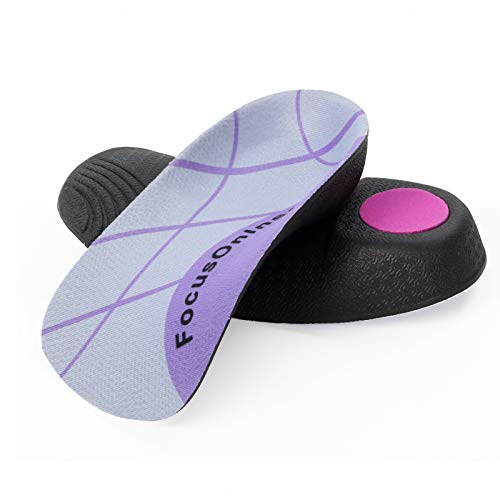
RooRuns 3/4 Length EVA Orthotic Insoles for Work Boots, Flat Feet and Overpronation

WALKROFEET Kids Orthotic Inserts

PowerStep Pinnacle Pink Women’s Orthotics, Maximum Cushioning, Deep Heel Cup

Vionic Women’s Full Orthotic

TEGA Carbon Fiber Morton’s Extension Orthotic, Pair
TEGA Carbon Fiber Arch Support Insole with Deep Heel Cup
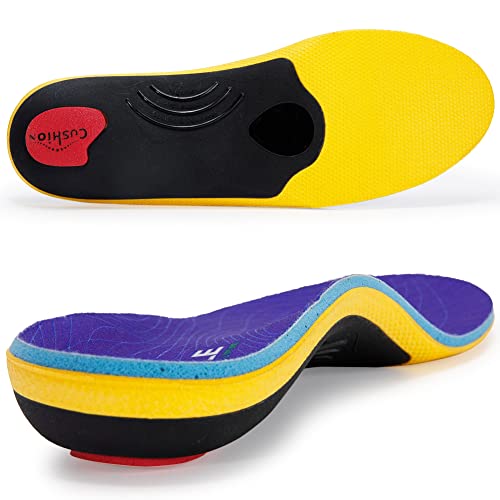
VALSOLE Heavy Duty Orthotics for 220+ lbs, High Arch Support
A Deeper Look At The Lineup
Factory insoles rarely provide much structure in a work boot, and the RooRuns 3/4 Length design takes a direct approach with firm EVA beneath the arch. For long shifts on hard floors, the 1.38-inch support profile, three-point load distribution, and deep heel cup create a more structured platform than a basic padded liner.
The velvet top adds a softer contact layer, while the non-slip sole helps keep the insert in place during repeated walking or running. The three-quarter length is practical for work boots, casual shoes, canvas shoes, and sneakers, although a narrow or shallow shoe may leave less room than a full-length insert provides.
What Works In Its Favor
- Firm high-density EVA gives the arch and heel a structured base during long periods of standing.
- The 1.38-inch support height suits people seeking a more substantial arch lift.
- A deep heel cup helps center the heel, which is useful in loose work-boot interiors.
- The heel insert adds cushioning where repeated steps create noticeable impact.
- Velvet helps manage perspiration while providing a softer upper surface.
Trade Offs
- The 3/4 length does not suit high heels, ballet shoes, or very flat footwear.
- Confirm the size chart against your sneaker size, and check that the shoe has enough interior depth.
Key Specs
Who It Suits Best
You benefit most from this insert if you spend full workdays in boots or sneakers and prefer firm arch structure over a soft, highly compressible footbed.
Where Another Pick Suits Better
Runners seeking more top-layer cushioning may prefer the TEGA Carbon Fiber Arch Support Insole with Deep Heel Cup.
Children’s shoes need room to grow, so the WALKROFEET Kids Orthotic Inserts provide a distinct choice rather than a scaled-down version of an adult insert. The design is intended for mild to moderate pronation, heel and arch discomfort, metatarsal discomfort, and general foot fatigue during school and activity.
The manufacturer describes more than 15 years of experience designing pediatric orthotics, which gives this option a clear family-focused identity. Fit remains the deciding factor, since children’s shoe sizes and shapes vary considerably even within the same labeled size.
Well-Handled Touches
- The insert is designed specifically for children’s smaller foot structures.
- Its support profile addresses mild to moderate pronation rather than using a generic adult arch shape.
- Heel, arch, and metatarsal areas all shape the intended support coverage.
- Pediatric design experience provides a more relevant basis than a general-purpose insert.
Practical Considerations
- Check the child’s current shoe size and internal dimensions before ordering.
- Growing feet may require a fresh size check sooner than adult footwear does.
Feature Snapshot
Made For
This option best suits families looking for a child-specific insert to accompany school days, playgrounds, and regular athletic activities.
Consider Something Else When
Adults seeking a firm 3/4-length work-boot insert will find the RooRuns 3/4 Length EVA Orthotic Insoles more directly aligned with that use.
The PowerStep Pinnacle Pink shifts the emphasis toward full-length cushioning, making it a different proposition from the RooRuns insert’s compact, firm structure. A polyester construction, neutral arch profile, maximum cushioning, and a deep heel cup give it a softer, more continuous feel inside a walking shoe.
For women who spend time walking, standing, or moving between appointments, the coverage may feel more balanced underfoot. You may find the heel cup takes up more room than a short insert, so shoes with a removable factory insole offer the cleaner installation.
Real-World Strengths
- Full-length coverage supports more of the foot than a three-quarter insert.
- Maximum cushioning favors long walks and extended daily wear.
- The deep heel cup gives the rear foot a more defined resting position.
- Neutral arch support suits feet that prefer balanced rather than especially tall support.
A Few Limitations
- The neutral support profile may not suit someone seeking a pronounced arch lift.
- Shoes need a removable factory insole and enough internal depth for a full-length insert.
Right Fit For
You are a good match if you want women’s full-length cushioning for everyday shoes and prefer moderate structure with generous heel support.
Not Your Match When
People seeking rigid carbon-fiber structure for a specific toe joint will find the TEGA Morton’s Extension Carbon Fiber Insole more purposeful.
A full workday can include far more walking than a quick shopping trip suggests, and the Vionic Women’s Full Orthotic is built around that kind of regular use. Its deep heel cup helps organize the rear foot, while the full-length shape offers broader coverage than the RooRuns 3/4 design.
Vionic’s three-zone comfort approach divides support across different areas of the foot rather than concentrating every feature in the arch. That makes sense for casual shoes, work shoes, and active days, although the internal height of your footwear remains worth checking.
Everyday Wins
- Full coverage creates a continuous base beneath the foot.
- The deep heel cup provides structured positioning for everyday movement.
- Three-zone comfort spreads support across multiple foot regions.
Details To Watch
- Check that the shoe has sufficient depth for a full-length orthotic.
- The broad everyday design may be more than you need for a narrow dress shoe.
Core Details
Who Will Love This
This orthotic suits you if your routine alternates between commuting, desk work, errands, and casual walking in roomy shoes.
Look Elsewhere When
A dedicated work-boot user may prefer the firmer RooRuns 3/4 Length EVA Orthotic Insoles and their more compact profile.
The TEGA Carbon Fiber Morton’s Extension Orthotic takes a much more targeted approach than the broad arch supports in this roundup. A Morton’s extension is a rigid section placed beneath the forefoot to support a specific toe-joint area, and the carbon-fiber construction keeps that section thin and firm.
Each package includes one right and one left insert. The supplied size is W10/M9, and TEGA recommends measuring the removed factory insole for a more useful comparison than relying only on your labeled shoe size.
Everyday Perks
- Carbon fiber creates a slim, rigid platform beneath the forefoot.
- The extension targets Morton’s toe, turf toe, hallux limitus, and hallux rigidus concerns.
- A matched pair supports both feet without mixing left and right pieces.
- The thin profile may fit more easily than a thick full-length footbed.
Possible Compromises
- Rigid carbon fiber offers less give than a memory-foam or EVA insert.
- This is a specialized toe-joint device rather than a general pronation-support insole.
- Measure the original insole before ordering because labeled shoe sizes can differ.
Quick Facts
Best Suited To
You most likely want this option when your main concern is a specific forefoot or big-toe joint issue and a rigid, targeted extension fits that need.
A Better Fit Elsewhere
For general overpronation support across the arch and heel, the TEGA Carbon Fiber Arch Support Insole with Deep Heel Cup offers broader coverage.
This TEGA model combines a carbon-fiber base with a memory-foam top layer, giving it a different balance from the all-EVA RooRuns insert. The arch support is designed for flat feet, high arches, and overpronation, while the deep heel cup adds structure around the rear foot during running or training.
A gel pad beneath the heel absorbs impact, while the breathable fabric and memory foam create a softer upper surface. For fast walks or repeated gym sessions, that combination may feel more accommodating, although the structured heel and arch still call for a proper size match.
Standout Benefits
- The carbon-fiber base provides structure beneath a softer memory-foam layer.
- A gel heel pad cushions repeated running and walking impacts.
- The deep heel cup supports balance and keeps the rear foot centered.
- Breathable fabric improves comfort during active use.
Worth Noting
- Confirm that your running or training shoes have enough room for the full insert profile.
- Available size ranges differ between women’s and men’s versions, so check the chart carefully.
Built With In Mind
This insole fits runners, gym-goers, and active walkers who want structured arch and heel support with a cushioned upper surface.
Skip It When
Someone seeking a simple 3/4-length insert for narrow casual shoes will find the RooRuns model easier to accommodate.
VALSOLE positions this orthotic for heavier users, with the product specifically labeled for people over 220 pounds. That heavier-duty framing, paired with high-arch and flat-foot support, makes it more relevant to demanding work environments than many lightly cushioned lifestyle inserts.
Work boots are the natural setting, where a structured insert can replace a factory lining that does little beyond separate your foot from the insole. The product also emphasizes shock absorption through each step, which may be useful during long shifts on concrete, although your boot’s internal space and available sizing should guide the final choice.
The Value In It
- The 220-pound-plus positioning targets a specific high-load use case.
- High-arch and flat-foot support broadens the intended foot-shape range.
- The work-boot focus suits industrial, warehouse, and outdoor footwear.
- Shock-absorbing construction complements the heavier-duty support profile.
Some Limits To Know
- The 220-pound-plus positioning may not align with your preferred support profile.
- Check the size chart and boot interior before ordering.
Technical Highlights
The Right Fit
This option makes the most sense for higher-weight users who spend substantial time in work boots and need substantial arch support.
Another Choice May Suit
Adults with lighter builds who prefer a compact, defined arch lift may find the RooRuns 3/4 Length EVA Orthotic Insoles more suitable.
What to Check Before You Buy an Insole
Start With Your Foot Pattern
Pronation describes the direction your foot rolls as you stand and walk. Overpronation generally means the foot rolls inward more than your arch structure comfortably handles, so an insert may need firm support beneath the arch, a deeper heel cup, or both. You gain more from matching the insole to your foot shape than from choosing the thickest option available.
Match the Insert to the Shoe
Your footwear dictates practical compatibility. The RooRuns 3/4 insert fits more easily into work boots, sneakers, canvas shoes, and casual shoes, while the PowerStep Pinnacle and Vionic designs cover the entire foot. Full-length inserts need shoes with adequate depth and, for the PowerStep, a removable factory insole. The TEGA Morton’s Extension is thinner but needs a correct length match.
Balance Support and Cushioning
Firm EVA and rigid carbon fiber create structure, while memory foam adds a softer landing surface. The RooRuns design concentrates on firm arch support and heel cushioning, whereas the TEGA sports insole combines carbon fiber with memory foam and a gel heel pad. A rigid device like the Morton’s Extension serves a different purpose, concentrating support on a specific forefoot joint.
Check the Fit Before Committing
Measure your foot or remove the current insole and compare its length with the size chart, especially for children and narrow shoes. A well-fitting insert should sit flat without bunching at the toe or forcing the shoe to feel tight. You can also move between shoes to confirm that one design will cover the footwear you use most.
Common Errors to Avoid When Choosing Insoles
Mistakes Worth Dodging
Choosing by cushioning alone can leave out the structural support your foot needs. Avoid assuming every pronation pattern requires the same arch height, and do not force a full-length insert into a shallow shoe. Measure first, then compare the insert’s coverage with your footwear.
What Separates Premium From Basic
Higher-tier designs often combine firmer base materials, shaped heel cups, and more deliberate size ranges. The extra construction matters most when your shoes already need substantial support or cushioning. For occasional use in roomy sneakers, a simpler insert may cover the same daily need at a lower level of complexity.
Frequently Asked Questions
How Do I Know Which Arch Support Matches My Pronation?
Look for an insert whose stated support profile matches your arch type and shoe needs, then check that it sits securely without crowding the foot. A deep heel cup and firm arch section suit many overpronation patterns, though fit remains the deciding factor.
Should I Choose Full-Length or Three-Quarter Insoles?
Choose a three-quarter insert for work boots, casual shoes, and sneakers where flexibility matters. Full-length designs provide broader coverage and often more cushioning, making them useful in roomier walking shoes.
Can Arch Support Insoles Fit in Work Boots?
Many can, but the insert must match both the boot’s interior and your size. The RooRuns 3/4 model and VALSOLE heavy-duty option are designed with work boots in mind, while rigid extensions require particular length matching.
How Does a Rigid Carbon-Fiber Insole Differ?
A rigid carbon-fiber insert provides firm support with less compression than foam or EVA. The TEGA Morton’s Extension targets a specific forefoot joint, while the broader TEGA arch-support model combines carbon fiber with memory foam and heel cushioning.
When Is an Insole Not the Only Step to Take?
Persistent discomfort, swelling, or a worsening walking pattern deserves assessment from a qualified foot-care professional. An insole may improve comfort, but it cannot answer every question about the structure or source of your symptoms.
