

Waking with a stiff, twisted, or uncomfortable neck can make rest feel unpredictable, especially when involuntary neck movement changes your position during the night. Cervical dystonia involves involuntary muscle contractions that can affect head and neck positioning, so a pillow should be considered for comfort and support rather than as a substitute for specialist care. These six options differ in contour height, foam density, side support, adjustability, and overall shape.
The Shortlist At A Glance

Ylekto Contour Memory Foam Cervical Pillow for Neck Support, Blue

Cozyplayer Adjustable Contour Memory Foam Cervical Pillow with Armrest, Light Grey

AM AEROMAX Contour Memory Foam Cervical Pillow, White
C CUSHION LAB Extra Support Orthopedic Knee Pillow for Side Sleepers, Large Size
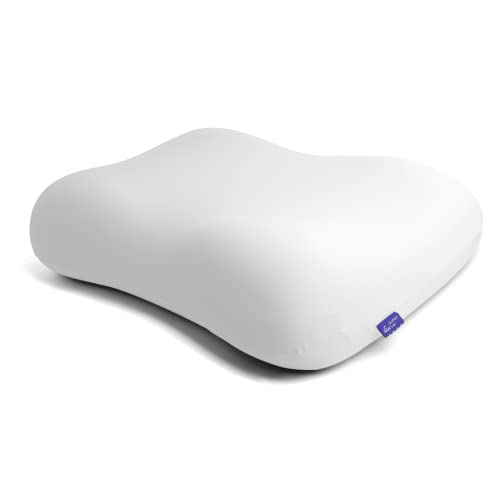
C CUSHION LAB Deep Sleep Contour Memory Foam Pillow for Side and Back Sleepers

C CUSHION LAB Extra Dense Ergonomic Cervical Pillow with Organic Cotton Cover
More Details On Our Top Picks
A contoured pillow can keep your head from drifting toward a sharply bent neck position as you rest. The Ylekto model combines a raised neck area with lower edges that cradle the head, and its two curve heights give you a practical way to compare side and back sleeping positions. It suits people who want adjustable support without carrying a large armrest or separate insert.
Its slow-rebound memory foam, which returns to shape gradually rather than springing back immediately, provides a steadier surface for your head and shoulders. You may find the firmer center unfamiliar at first, particularly while your sleep position changes during the night. The removable, washable double-layer cover makes routine care easier.
Useful Strengths
- Two curve heights let you compare how much neck elevation feels comfortable.
- The raised center supports the neck while lower sections accommodate side and back sleeping.
- Slow-rebound foam maintains a shaped surface under your head and shoulders.
- The breathable cover removes for washing, which helps with regular care.
Trade Offs
- Check the 23.6-by-13.8-inch footprint against your mattress and usual pillowcase.
- Its fixed curves offer less height control than the Cozyplayer model with a removable insert.
Key Specs
Made For
You benefit most from this option if you alternate among side, back, and stomach sleeping and want two contour heights without extra components.
Another Choice May Suit
The Cozyplayer Adjustable Contour Memory Foam Cervical Pillow with Armrest suits you better when a removable insert and space for your arms matter more than a compact footprint.
Where the Ylekto uses two fixed curves, the Cozyplayer gives you more control over the pillow’s height and room around your shoulders. Its crescent shape, five support zones, and extended armrest create a broad sleeping surface for people who reposition their arms during the night. Side sleepers can place their hands in the extended area instead of balancing them on a raised edge.
Flipping the pillow changes the profile, and a removable 0.8-inch insert gives you another height adjustment. The open-cell foam and 260-gram cover are designed for airflow, although you may need several nights to become comfortable with the segmented shape. It is the most adjustable option in this group.
Where It Delivers
- The removable insert lets you fine-tune neck elevation.
- Five sculpted zones distribute support across different parts of the sleeping surface.
- The extended armrest gives side sleepers a place for their hands.
- Open-cell memory foam encourages air circulation around the head and neck.
- A heavier 260-gram cover gives the broad shape a substantial feel.
Practical Considerations
- The armrest and larger side make this less compact than a simple two-curve pillow.
- Its many contours take more time to adjust to than the Ylekto design.
Feature Snapshot
Who It Suits Best
You benefit most from this pillow when you sleep on your side, move your arms often, and want several ways to adjust the pillow’s height.
Where Another Pick Suits Better
The Ylekto Contour Memory Foam Cervical Pillow for Neck Support, Blue is a better fit for you when a smaller footprint and simpler two-height design matter more than an armrest.
The AM AEROMAX keeps the design focused, giving you two contour heights without the extra arm space of the Cozyplayer. The higher side measures 4.2 inches and the lower side measures 3.4 inches, so you can compare a more elevated neck position with a flatter one. That straightforward setup works well for back and side sleepers.
Small holes through the foam core create channels for moving air, a detail that may feel useful if warm air collects around your head. Inner and outer covers use a skin-friendly fabric, while the zipper closure helps keep the cover attached during repeated use. The white finish suits a simple bedroom setup.
Everyday Wins
- Two distinct heights make it easy to compare neck elevation.
- Honeycomb holes promote airflow through the pillow core.
- The zipper helps keep the skin-friendly cover in place.
Points To Note
- The 3.4-inch side may feel too low for you, particularly with broader shoulders.
- It offers less height adjustment than the Cozyplayer model with its removable insert.
Right Fit For
You benefit most from this option when you want a straightforward two-height contour pillow with ventilation and prefer a compact design without an armrest.
Consider Something Else When
The Cozyplayer Adjustable Contour Memory Foam Cervical Pillow with Armrest suits you more when you need extra arm space and finer control over the height.
This knee pillow takes a different route from the five head-supporting models. Instead of shaping the neck, it supports the thighs and lower legs during side sleeping, which can reduce the need to reposition your legs repeatedly. You may find it useful when hip or lower-back discomfort makes it difficult to settle into one side.
The large version measures 11 by 8.5 by 6.5 inches and is intended for side sleepers at least 5 feet 8 inches tall who want a substantial amount of support between their legs. Its gel-infused memory foam keeps a firm shape, while the washable cover adds a softer contact surface. The honest distinction is that this supports body positioning rather than the neck itself.
The Helpful Details
- The contoured foam keeps your legs stacked instead of letting them fall together.
- Steady support may reduce repeated repositioning during the night.
- The washable cover makes routine cleaning more convenient.
Where It Is Less Suited
- It does not provide a head or neck contour, unlike the other five options.
- The large dimensions take up meaningful space between your legs.
- Its stated height range may not suit a smaller side sleeper.
Quick Facts
Built With In Mind
You benefit most from this option if you sleep on your side and need more support between your knees than your current setup provides.
A Better Fit Elsewhere
The AM AEROMAX Contour Memory Foam Cervical Pillow, White is a better fit when you need direct head and neck support rather than leg positioning.
Sleepers who turn between their side and back can find a changing position difficult when a pillow has one sharply defined opening. The C CUSHION LAB Deep Sleep model uses a contoured cervical shape intended for both positions, giving you one familiar surface as your body shifts. It is a practical option for anyone avoiding a stomach-sleeping design.
The extra-dense memory foam gives the pillow a substantial feel, while a recycled polyester-spandex inner cover and nylon-spandex outer cover create a stretchy surface around the core. Depending on your preference, the dense construction may feel supportive rather than plush. Compare its contour with your usual pillow before committing, especially if you move positions often.
The Value In It
- The contour is designed for both side and back sleeping positions.
- Extra-dense memory foam provides a substantial, shaped sleeping surface.
- Stretch cover materials allow the case to conform closely around the core.
Small Caveats
- You may prefer a softer surface if dense memory foam feels too substantial.
- Its nylon-spandex outer cover has a different feel from the Ylekto model’s double-layer fabric.
Who Will Love This
You benefit most from this pillow when you alternate between side and back positions and want a substantial contour without a dedicated armrest.
Reach For A Different Pick When
The Cozyplayer Adjustable Contour Memory Foam Cervical Pillow with Armrest suits you better when height adjustment and room for your hands are your main priorities.
The C CUSHION LAB Extra Dense model focuses on a firmly shaped side-sleeping surface rather than a broad area for your arms. A recessed head basin catches the weight of your head, a raised neck ramp guides the transition toward your shoulders, and a higher cheek section supports the side of your face. Those separate contours make its support more structured than the simpler Ylekto design.
Extra-dense CertiPUR-US memory foam maintains a substantial shape, while the organic cotton cover adds a more familiar woven surface near your skin. You may prefer this firmer feel if soft pillows leave you repositioning throughout the night. It is designed for back and side sleeping rather than stomach sleeping.
Bright Spots
- The head basin gives your head a clearly defined resting area.
- A raised neck ramp provides structured support between your head and shoulders.
- Higher cheek support gives side sleepers a dedicated place to rest.
- Extra-dense foam offers a firm, substantial surface.
Things To Consider
- The extra-dense core may feel too firm if you prefer a softer pillow.
- It does not include the stomach-sleeping orientation offered by the Ylekto model.
Core Details
The Right Fit
You benefit most from this option if you sleep on your side and prefer a firm, structured pillow with distinct support for your head, neck, and cheek.
Where A Sibling Pick Shines
The Ylekto Contour Memory Foam Cervical Pillow for Neck Support, Blue is a better fit when you want a cooler woven cover, two fixed curve heights, and support for stomach sleeping.
What to Look for in a Cervical Support Pillow
Match the Contour to Your Position
A contour is the raised or recessed area that supports your head and neck. Side sleepers generally benefit from enough elevation to keep the head and shoulders in a more level relationship, while back sleepers may prefer a lower profile. The Ylekto and AM AEROMAX models offer two heights, making them useful when your position changes during the night.
Look for Useful Adjustment
A fixed contour gives you a predictable shape, but an insert or removable section lets you fine-tune the height. The Cozyplayer offers a 0.8-inch insert, while the C CUSHION LAB Extra Dense model uses distinct head, neck, and cheek contours. Check whether the adjustment changes the entire pillow or only one zone, since that affects how it responds to different positions.
Consider Foam Density and Cover Texture
Memory foam returns to its original shape at different speeds, and a denser core usually feels firmer. You may prefer slower-rebound foam for steady support, while a contour that feels too firm can encourage frequent repositioning. Cover material also matters: double-layer woven fabric may feel cooler and more familiar than a stretchy nylon-spandex blend.
Account for Involuntary Movement
Cervical dystonia can cause involuntary contractions that alter your head position, so even a well-matched pillow cannot keep your neck completely still. You can reduce discomfort by choosing a shape that leaves room for movement rather than trapping your head in one narrow opening. Persistent symptoms deserve discussion with an appropriate specialist doctor.
Common Mistakes and Worthwhile Upgrades
Mistakes Worth Dodging
Choosing by the word “orthopedic” alone can leave you with an unfamiliar contour and no meaningful comparison. Check the height, foam feel, cover texture, and your usual sleeping position before ordering. A pillow that looks supportive may not suit your shoulder width or movement pattern.
What Separates Premium From Basic
A higher-priced model may add a removable insert, specialized zones, denser foam, or a more structured cover. Those features are worthwhile when your previous pillow failed for a clear reason, such as too little elevation or no arm support. They matter less if you already know the height and shape that feel comfortable.
Frequently Asked Questions for Pillow For Cervical Dystonia
Can a pillow correct cervical dystonia?
No. A pillow can support a comfortable head and neck position, but it cannot correct involuntary muscle contractions. An appropriate specialist doctor should guide care for the condition.
What pillow height is most comfortable?
The most comfortable height depends mainly on your sleeping position, shoulder width, and personal preference. Two-height models are useful because you can compare a flatter curve with a more elevated one.
Is a firm contour pillow better than a soft pillow?
Firm contour pillows provide a more structured surface, while softer pillows may feel easier to settle into initially. Your preferred sleeping position and the amount of movement during the night matter more than softness alone.
Should side sleepers use a pillow with an armrest?
An armrest can be helpful when you keep your hands near or beneath your head while sleeping. You may prefer a standard contour instead when extra bed space or a compact shape matters more.
How should you adjust to a new contour pillow?
Begin with the position you normally sleep in and change only the pillow height after a few nights. Side sleepers may need to compare both sides, while back sleepers can check how the lower contour feels.
The Takeaway
The AM AEROMAX offers the simplest two-height design, the Ylekto adds a cool woven cover, and the Cozyplayer provides the most adjustment and arm support. The C CUSHION LAB options cover firmer cervical contours and a separate knee-support use case. Choose based on your usual position, pillow height, and tolerance for a structured foam surface, then give your neck and shoulders time to adjust.
