

By 7 a.m., a pillow that felt supportive at midnight can leave your neck twisted and your shoulders tense. Choosing between a flat pillow and a contoured cervical design comes down to your sleep position, preferred loft, and sensitivity to foam. Persistent neck discomfort or headaches can have many causes, so a pillow should form part of a comfortable sleep setup rather than replace advice from an appropriate specialist.
The Choices Worth Comparing

Anvo Memory Foam Neck Contour Pillow, Blue White Soft

Bespillow Memory Foam Cervical Pillow for Multiple Sleep Positions

CushyMemo Side Sleeper Neck Pillow

Sidney Sleep Adjustable Curved Queen Pillow with Extra Shredded Fill

ZAMAT Adjustable Cervical Memory Foam Pillow with Cooling Pillowcase
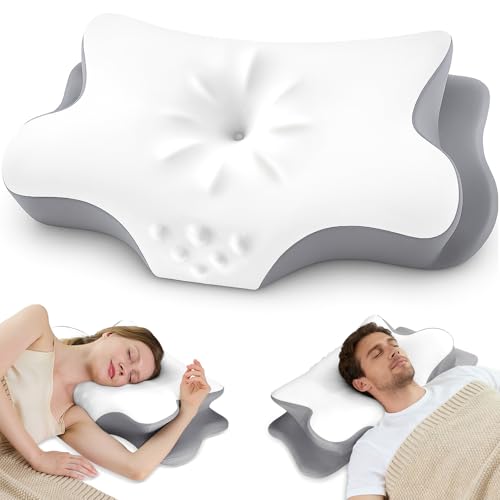
VJASD Ergonomic Memory Foam Neck Pillow for Side Sleepers, Cooling Cover
Why These Options Stand Out
The Anvo pillow offers a balanced introduction to contoured sleep support, with two neck heights built into one 24-by-13.4-inch shape. You can use the lower section for a flatter position or move to the taller side for more support, making it useful for side, back, and stomach sleepers.
Its memory foam returns to shape gradually after pressure is removed, which may help you settle in without constant repositioning. The breathable outer cover and meshed sides are sensible additions for a warm bedroom, although you may need a few nights to become accustomed to the raised contour.
What Helps Most
- Two support levels let you change the neck angle without buying another pillow.
- The slow rebound absorbs pressure instead of flattening immediately under your head.
- Breathable fabric and meshed sides improve airflow around a warm sleeping area.
- The machine-washable outer cover simplifies routine care.
Points To Keep In Mind
- Memory foam rebounds over roughly three to five seconds, so quick position changes may feel less responsive.
- The 13.4-inch width may feel narrow for broad shoulders, making a size check worthwhile.
Key Specs
Made For
Side sleepers, students, and desk workers who want one contoured pillow that can accommodate several positions.
Another Choice May Suit
Anyone who wants to fine-tune firmness and loft should look at the Sidney Sleep Adjustable Curved Queen Pillow with Extra Shredded Fill instead.
The Bespillow combines a broad 25.2-by-15-inch base with two neck heights, giving it a larger footprint than the Anvo Memory Foam Neck Contour Pillow. That extra width may suit people who shift around during the night or want room around the shoulders.
Its foam takes about three seconds to recover after pressure, according to the listed specifications. The shape is intended to reduce direct compression around the ear, though comfort still depends on your body shape, neck curve, and usual position.
A Few Strong Suits
- Two height options suit side, back, stomach, and low-loft preferences.
- The broad base gives your head and shoulders more room to settle.
- Breathable fabric helps manage moisture around the sleeping surface.
Small Caveats
- A slight foam scent may remain after shipping, so keep the pillow ventilated before using it.
- Its large dimensions may take up more bed space than a standard flat pillow.
- Comfort varies between people, so allow time to test both neck heights.
Feature Snapshot
Right Fit
Combination sleepers and people who rotate between low, medium, and higher pillow heights will appreciate the adaptable layout.
Where A Sibling Pick Shines
People wanting a smaller footprint and a more visibly breathable mesh cover may prefer the Anvo Memory Foam Neck Contour Pillow, Blue White Soft.
The CushyMemo puts temperature management at the center of its design, which distinguishes it from the Anvo and Bespillow options. Its material is described as responsive to warmth, absorbing heat on contact and releasing it as you move, while small pores promote airflow.
The stated temperature range of 14°F to 108°F is meant to show that the material remains stable through seasonal temperature changes. You may find that appealing during hot nights, but its higher 3.74- and 4.33-inch sides still require a loft check against your shoulders.
Benefits That Matter
- Temperature-responsive material targets heat buildup around the neck.
- Two height choices accommodate smaller and broader shoulder frames.
- The contoured structure supports back and side positions in one design.
- Its compact use also suits office naps and overnight travel.
Honest Caveats
- The higher side may feel substantial if you normally use a low pillow.
- Material claims alone cannot predict comfort, so test both heights before settling in.
- Its feature-heavy construction may be unnecessary for someone satisfied with basic memory foam.
Built With In Mind
Warm sleepers, side sleepers with broader shoulders, and people who nap away from home are the strongest audience for this design.
Reach For A Different Pick When
Anyone who wants to control firmness by adding or removing filling should consider the Sidney Sleep Adjustable Curved Queen Pillow with Extra Shredded Fill.
The Sidney Sleep removes the fixed-height decision by using shredded filling that can be added or removed. That makes it more accommodating than the dual-height Anvo Memory Foam Neck Contour Pillow, particularly when your preferred support changes as your sleeping position changes.
Its curved shape follows the head, neck, and shoulder area rather than creating one fixed angle. For a side sleeper, you can increase the fill to close the gap between your shoulder and head, then reduce it when switching to your back.
Everyday Wins
- Adjustable filling lets you change loft and firmness over time.
- The extra shredded fill makes it easier to build up a taller side-sleeping profile.
- The curved form supports the neck and shoulder region rather than the head alone.
- Its large queen dimensions suit couples or spacious beds.
Things To Weigh
- Reaching a comfortable height takes some arranging rather than choosing a fixed side.
- Check your bed and pillowcase setup against the 19-by-29-inch dimensions.
Quick Facts
Who It Suits Best
Side sleepers and couples who want to fine-tune the pillow rather than stay with a fixed foam height.
Consider Something Else When
Travelers who need a compact pillow are better served by the CushyMemo Side Sleeper Neck Pillow and its travel-oriented use case.
The ZAMAT uses a butterfly shape to add space around the arms while a central cavity supports the head. Unlike the straighter Bespillow Memory Foam Cervical Pillow for Multiple Sleep Positions, it brings a more sculpted layout to the bed.
A contoured neck section and adjustable height give you room to change the angle between side, back, and stomach sleeping. The cooling cover adds a practical layer for warm nights, while the odorless memory foam avoids the strong scent associated with some new foam products.
Positive Points
- Butterfly wings create space for a tucked or resting arm.
- The central cavity gives the head a defined place to settle.
- Adjustable height allows support changes between sleeping positions.
- The cooling pillowcase suits sleepers who notice warmth around the neck.
- Its broad shape serves stomach, back, and side sleepers.
Practical Considerations
- The sculpted shape takes more bed space than a conventional flat pillow.
- People who prefer a low, uniform surface may find the raised neck contour unfamiliar.
The Right Fit
Combination sleepers, people who rest their arms near their head, and those who appreciate a distinct head cradle fit this design well.
Not Your Match When
Anyone seeking a simple rectangular pillow will find the straight-sided VJASD Ergonomic Memory Foam Neck Pillow for Side Sleepers, Cooling Cover easier to manage.
The VJASD keeps the design focused on a basic ergonomic contour, which makes it a straightforward choice for side and back sleepers. Its slow-rebound memory foam responds gradually and is designed to support the head, neck, and shoulder area during the night.
The cooling cover gives it a practical advantage over the Sidney Sleep Adjustable Curved Queen Pillow with Extra Shredded Fill for anyone who wants less warmth around the neck. You may still need a few nights to determine whether the contour suits your usual head position.
A Strong Showing
- The contoured shape gives the head and neck a defined support area.
- Slow-rebound foam adapts gradually as you settle into position.
- The cooling cover supports a more comfortable sleep environment in warmer rooms.
Less-Strong Areas
- Without listed dimensions, checking the pillow’s height against your mattress is important.
- The fixed contour offers less control over firmness than an adjustable shredded-fill model.
Core Details
Who Will Love This
Side sleepers and everyday users who want a straightforward memory foam pillow without adjustable filling.
Look Elsewhere When
People who want a warm-responsive material and two precisely measured heights may prefer the CushyMemo Side Sleeper Neck Pillow.
Match the Pillow to Your Position and Body Shape
Begin With Your Usual Position
Side sleepers generally need enough loft to keep the head from bending toward the shoulder, while back sleepers often prefer a lower profile that supports the neck without lifting the head too far. Stomach sleepers may need a flatter surface to limit neck rotation. You can identify the dominant position by noticing how you arrange yourself during a typical night.
Use Loft to Fill the Gap
Loft is the distance between the mattress and the top of the pillow. A side sleeper needs a taller contour to bridge the shoulder, whereas a back sleeper may need less height. Measure the distance from your shoulder to the center of your head while lying down, then compare it with the pillow’s listed profile. This is more useful than choosing by appearance alone.
Account for Foam and Adjustment
Slow-rebound memory foam initially feels firmer and gradually conforms to your head and neck. Adjustable shredded filling gives you another type of control because you can add or remove material. Check the dimensions, cover-care details, and foam scent guidance before ordering. Persistent neck discomfort or headaches deserve attention from an appropriate specialist, since a pillow cannot identify their cause.
Before You Commit to a Cervical Pillow
Wrong Turns To Avoid
Choosing only by the word “orthopedic” can leave you with the wrong height and shape for your position. Avoid ignoring your bed setup, dismissing a new contour before your body adjusts, or assuming extra loft always improves support. Compare the stated dimensions with your shoulder width and usual posture.
What The Higher Tier Buys
Higher-cost pillows often invest in responsive materials, temperature management, removable covers, or adjustable construction. Those features matter when heat, firmness, or changing positions disrupt your sleep. A basic dual-height foam design remains the more economical choice for a straightforward setup.
Frequently Asked Questions
Which pillow is most suitable for neck pain and headaches?
The Anvo Memory Foam Neck Contour Pillow, Blue White Soft is a practical starting point because it offers two support heights and a breathable cover. The right match still depends on your position, body shape, and mattress firmness.
Can a cervical pillow help with headaches?
A contoured pillow may support a more neutral sleeping posture and reduce nighttime tension for some people. Headaches have many causes, so recurring or persistent symptoms require guidance from an appropriate specialist.
How long does it take to adjust to a memory foam pillow?
Most people notice the shape and feel changing over several nights as the foam responds to pressure. Give the pillow time to settle with your usual position, but adjust the height sooner if your neck feels strained.
Which option works best for side sleepers?
Side sleepers with broader shoulders may prefer the taller setting on the CushyMemo Side Sleeper Neck Pillow. The Sidney Sleep Adjustable Curved Queen Pillow with Extra Shredded Fill offers more direct control over loft and firmness.
Is memory foam better than shredded filling?
Memory foam provides a gradual, molded feel, while shredded filling lets you change the height and firmness. Choose memory foam for a consistent contour and choose adjustable filling when your preferred support changes frequently.
The Takeaway
Start with your sleep position, then match the pillow’s height and adjustment method to your body. The Anvo offers a balanced two-height design, the Sidney Sleep adds fill control, and the CushyMemo emphasizes temperature responsiveness. Give any new pillow several nights, and keep persistent discomfort in perspective with guidance from an appropriate specialist.
