

A lower back brace can make a demanding workday more manageable, but the right amount of support depends on your task, comfort, and fit. You may need firm structure for heavy lifting, softer adjustability for long office hours, or a rigid design for post-surgery support. These six options cover those distinct needs, with sizing and construction details worth checking before you buy.
The Main Contenders

PUROKUTA Ergonomic Lumbar Support Brace with Removable Pad
SOLOEVER Ultra Breathable Lumbar Brace

AVESTON Thin Breathable Lumbar Brace with 6 Ribs, Large

Modvel Lumbar Compression Brace with Adjustable Pad

Comfyorthopedic Medical Grade Rigid LSO Back Brace L0648/L0631
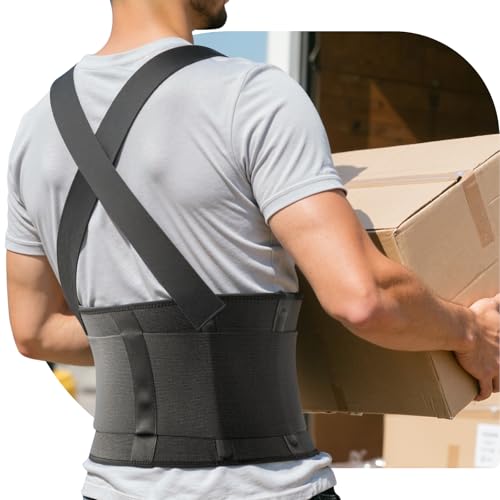
SOLOEVER Adjustable Work Lumbar Brace
What Each Pick Brings To The Table
The PUROKUTA brace combines four contoured alloy panels with three flexible springs, giving the lower back a layered structure rather than relying on fabric tension alone. Its removable lumbar pad lets you change the amount of cushioning and compression, which is useful across office hours, walking, and physically demanding work.
Two adjustable straps help control the fit, while breathable fabric makes it more practical for extended wear. The listed Large size covers a 40.2 to 47.2-inch waist. Compared with the simpler construction of the later SOLOEVER work option, this model offers more visible adjustment points.
Useful Touches
- Removable pad lets you personalize pressure and bulk.
- Four alloy panels and three springs create structured support.
- Dual straps make it easy to adjust compression.
- Breathable fabric suits sitting, walking, and work.
- Double stitching and latex-free construction add practical details.
Points To Note
- The listed waist range may exclude smaller or larger bodies.
- Removing the pad reduces cushioning, so you may need to readjust the straps.
Feature Snapshot
Made For
You benefit most from this option during heavy lifting, long workdays, or active days when adjustable lumbar support is useful.
Where Another Pick Suits Better
The AVESTON Thin Breathable Lumbar Brace with 6 Ribs, Large suits you better when a slim, rigid six-rib layout matters more than a removable pad.
Instead of a broad collection of ribs, this SOLOEVER model centers on a curved support panel shaped to a 26-degree angle. That geometry is intended to follow the lumbar region, which is the lower part of the spine between the ribs and pelvis, and the panel spans the L1 through L5 vertebrae.
Its breathable construction makes it a sensible candidate for office days and travel where stiffness can become tiring. Unlike the PUROKUTA brace’s four alloy panels and removable cushion, this design keeps the support focused in a single contoured panel.
What Pays Off
- The 26-degree panel follows the lumbar curve.
- Breathable construction favors longer wear.
- Focused panel design reduces visual bulk.
Worth Noting
- People wanting several adjustment points may prefer the PUROKUTA model.
Quick Facts
Who Will Love This
This model suits you best when breathability and a low-profile curved panel matter during office work, travel, or light daily activity.
A Better Fit Elsewhere
The Comfyorthopedic Medical Grade Rigid LSO Back Brace L0648/L0631 fits you better when substantial rigidity and post-surgery support lead your decision.
Six ribs create a more segmented form of support than the single curved panel used by the SOLOEVER Ultra Breathable Lumbar Brace. AVESTON pairs those ribs with thin, firm, breathable elastic fabric, giving the brace a close-fitting profile that may work well under looser clothing.
The Large size fits a belly circumference of 38 to 45 inches. Measure at the navel rather than relying on trouser size, since waist and belly measurements can differ considerably. That simple check can prevent a loose or overly restrictive fit.
Benefits That Matter
- Six ribs provide structured lumbar support.
- Thin fabric reduces bulk beneath clothing.
- Breathable material suits active daily use.
- Elastic construction allows movement with the body.
Minor Gripes
- The Large option has a specific 38 to 45-inch belly range.
- Its rigid rib layout may feel firmer than the padded PUROKUTA brace.
Right Fit For
This AVESTON brace suits people who want firm, rib-based support without the bulk of a heavily padded belt.
Another Choice May Suit
The PUROKUTA Ergonomic Lumbar Support Brace with Removable Pad suits you better when removable cushioning and multiple adjustment points take priority.
Modvel combines an adjustable pad with vertical stays, giving you a way to vary both compression and support. The pad concentrates pressure around the lower back, while the stays help the belt retain its vertical structure during walking, bending, and stretching.
This adjustable approach makes the brace a flexible middle ground between the AVESTON model’s six-rib design and the PUROKUTA brace’s layered panels and springs. You may find it useful for varied tasks because the contact area can be fine-tuned rather than fixed.
Noteworthy Benefits
- Adjustable pad lets you vary lumbar pressure.
- Vertical stays help the brace retain structure.
- Compression adjustment supports different activities.
- The belt format remains practical for daily tasks.
Trade Offs
- Vertical stays can feel more prominent than a panel-based design.
- The lumbar pad needs repositioning when body position changes significantly.
Feature Breakdown
Built With In Mind
People whose workload changes throughout the day benefit most from the adjustable pad and replaceable pressure settings.
Reach For A Different Pick When
The AVESTON Thin Breathable Lumbar Brace with 6 Ribs, Large suits you better when a slim rib arrangement matters more than movable compression.
LSO stands for lumbosacral orthosis, a brace type that extends support from the lumbar spine into the lower-back region. This Comfyorthopedic model takes a rigid approach and is offered under the L0648 and L0631 identifiers, with the listing describing coverage across the L1 through L5 vertebrae.
That structure makes it a distinct choice from the breathable SOLOEVER panel and the adjustable Modvel belt. It is also marketed for post-surgery support, though your clinician should decide whether a rigid brace suits your recovery plan and how you should use it.
Where It Delivers
- Rigid construction offers substantial lumbar support.
- L1 through L5 coverage targets the lower spine.
- The design is intended for post-surgery support.
- Two model identifiers offer distinct product variants.
Practical Considerations
- Rigid support may be less comfortable during unrestricted daily wear.
- Compare the L0648 and L0631 listings carefully before selecting a variant.
Technical Highlights
Best Suited To
This rigid brace suits people following a clinician-guided recovery plan that calls for substantial lumbar stabilization.
Swap It Out When
The SOLOEVER Adjustable Work Lumbar Brace suits you better for construction, warehousing, and other physically demanding shifts.
This work-oriented SOLOEVER model focuses on substantial lower-back support for construction, warehousing, and other physically demanding jobs. Its adjustable fit is the key practical feature, allowing the belt to be tightened for a demanding lift and loosened during a change of pace.
The straightforward work-belt format makes it easy to understand, particularly for people adding lumbar support to a work uniform. Compared with the PUROKUTA brace, though, it offers fewer visible ways to alter the internal support structure, so your choice comes down to simplicity versus detailed adjustability.
What Earns Its Place
- Designed for construction and warehouse tasks.
- Adjustable fit accommodates different body shapes.
- Simple belt format suits active work routines.
- Comfortable material supports extended wear.
Things To Consider
- Check the available sizing against your measurements before ordering.
- Loosen the fit during prolonged sitting or resting periods.
Whose Shelf It Belongs On
This brace belongs in work bags for warehouse staff, construction workers, and anyone who repeatedly bends, carries, or lifts during a shift.
Look Elsewhere When
The Modvel Lumbar Compression Brace with Adjustable Pad suits you better when a movable lumbar cushion is important for varied daily activity.
Matching Brace Support to Your Daily Demands
A useful back brace does more than look supportive. Its support structure, fit, and bulk determine whether you can comfortably wear it through the activities that matter to you.
Decide How Much Structure You Need
Rigid braces, such as the Comfyorthopedic Medical Grade Rigid LSO Back Brace L0648/L0631, offer firm support across the lumbar region. More flexible designs use ribs, springs, panels, or compression pads to create stability while allowing greater movement. Your daily workload is the useful starting point.
Check the Fit Against Real Measurements
Body measurements matter more than a loose size label. The AVESTON Large brace uses belly circumference, while the PUROKUTA Large option lists a waist range of 40.2 to 47.2 inches. Measure the intended area and compare it with the listing before ordering.
Match the Design to Your Workday
Office workers may prefer breathable fabric and restrained structure, while warehouse staff may value adjustability during repeated lifting. The Modvel lumbar pad and PUROKUTA removable pad both let you vary contact and compression, which can be helpful across changing tasks.
Think About Where You Will Wear It
A thin brace may disappear beneath loose work clothing, while a rigid lumbar orthosis can feel more noticeable. Consider sitting, driving, walking, and lifting before choosing, and plan to adjust the fit as your position changes.
Common Buying Decisions
Mistakes Worth Dodging
Choosing by waist-pants size can lead to a poor fit, so use the listed body measurement. Another common error is assuming every brace offers the same support. Ribs, springs, curved panels, and rigid stays create different wearing experiences.
What Separates Premium From Basic
Added panels, stays, and removable pads provide more ways to tune support and compression. A simpler work belt may handle the basic task, while a more elaborate design suits people whose comfort needs change from hour to hour.
Frequently Asked Questions
Which LSO back brace size should you choose?
Measure the body area specified in the product listing, then compare it with the available range. A Large designation alone does not guarantee an accurate fit.
How tight should a lumbar brace feel?
It should feel secure without limiting normal breathing or movement. Start with moderate tension and adjust the straps as your position changes.
Can you wear a back brace all day?
Some people wear these braces throughout the workday, particularly during active tasks. You may find it more comfortable to loosen or remove the brace during prolonged rest.
What is the difference between an LSO brace and a flexible lumbar belt?
An LSO brace uses a more rigid lumbosacral design, while flexible belts rely on ribs, springs, panels, or compression for support. Your comfort needs and activity level should guide the choice.
Can you use a rigid back brace after spine surgery?
The Comfyorthopedic model is marketed for post-surgery support, but your clinician should confirm whether a rigid brace suits your recovery plan. Follow their guidance on placement, wear time, and movement.
Final Verdict
Your best LSO back brace depends on where support is needed and how much structure feels comfortable. The PUROKUTA model offers the richest customization, AVESTON favors a slim rib structure, Modvel provides an adjustable pad, and Comfyorthopedic leads with rigid recovery support. Choose the construction that fits your measurements, workload, and guidance.
