

A sharp pull at the back of your heel can make a workday or a walk around the block feel completely different. Shoe inserts may add cushioning, control foot motion, or reduce the strain placed on the Achilles tendon, but the most useful option depends on your shoes, activity, and symptoms. These six choices cover everything from soft gel cushions to sports orthotics and work-boot supports.
The Lineup, Simplified

Welnove Plantar Fasciitis Achilles Tendonitis Relief Gel Heel Cushion Cups

Vasyli+McPoil Low Profile Tissue Stress Relief Orthotic for Sports, Small
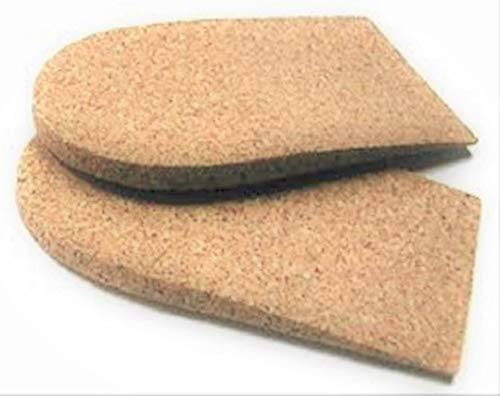
Atlas Biomechanics 1/4 Inch Cork/Rubber Heel Lift, 10 Pack

JKcare 1/2 Inch Gel Heel Lifts for Leg Length Discrepancy

CRUVHEAL 220+ lbs Plantar Fasciitis High Arch Insoles, M

CRUVHEAL Work Orthotic Plantar Fasciitis Boot Insoles, XL
More Details On Our Top Picks
Soft gel and Poron foam make these cups a straightforward choice for people who spend much of the day walking or standing. The gel cushions the heel, while the firmer foam adds arch support without the bulk of a full-length orthotic.
Unlike the controlled correction in the Vasyli+McPoil model, the Welnove focuses on cushioning and grip. Its honeycomb surface helps keep each cup from shifting, which should matter more during a long shift than a perfectly rigid insert.
Points In Its Favor
- Soft gel helps reduce pressure against the heel during walking.
- Poron foam adds a firmer support layer beneath the cushioning.
- Honeycomb texture helps the cups stay put inside shoes.
- Compact design moves easily between casual and walking shoes.
- Available for women’s sizes 6.5–10 and men’s sizes 5–8.
Practical Considerations
- Check the stated size range carefully, particularly when switching between narrow and roomy shoes.
Key Specs
Who It Suits Best
These cups suit commuters and casual walkers seeking soft heel cushioning without full-foot motion control.
Where Another Pick Suits Better
Active people needing structured movement control may prefer the Vasyli+McPoil Low Profile Tissue Stress Relief Orthotic for Sports, Small.
Built around six degrees of rearfoot correction, this orthotic is aimed at athletes and active adults whose foot rolls too far inward. Rearfoot correction refers to changing the position of the back portion of the foot, while the high-profile medial arch supports the inner side of the midfoot.
This is the most mechanically focused option in the group. You may find its controlled positioning more useful for soccer, basketball, baseball, or football than the softer cushioning offered by the Welnove cups.
A Few Strong Suits
- Dual-density construction supports normal motion while limiting excessive inward rolling.
- The high-friction top layer helps reduce movement during active movement.
Trade Offs
- The small size fits men’s shoe sizes 7.5–9, so it will not fit every foot.
- Its arch contour and correction create a more structured feel than a soft gel cushion.
- Sports-oriented positioning may feel unnecessarily firm for casual indoor wear.
Technical Sheet
Made For
This orthotic fits athletes and active adults who need foot positioning during sports or after ankle or Achilles stress.
Consider Something Else When
People wanting simple cushioning for ordinary shoes may find the Welnove Gel Heel Cushion Cups more approachable.
Raising the heel changes the angle between the foot and lower leg, which can reduce the amount of pull placed on the Achilles during some activities. These Atlas lifts use a cork-and-rubber blend to provide that elevation without the foamy feel of a disposable pad.
The 10-piece set is the practical reason to notice this option. You can move a lift between shoes or use one in each heel, and the medium version measures 2½ inches wide for a relatively compact footprint.
What Helps Most
- Provides a consistent quarter-inch heel elevation.
- Cork-rubber construction combines a supportive feel with rubber resilience.
- Ten lifts make pairing or sharing across several pairs easy.
Small Caveats
- Elevation is fixed at 1/4 inch, so it cannot accommodate every preferred shoe angle.
- The medium 2½-inch width may not suit very narrow footwear.
The Right Fit
These lifts suit people who want discreet heel elevation across several pairs of shoes or work footwear.
Reach For A Different Pick When
A noticeable leg-length adjustment calls for the thicker JKcare 1/2 Inch Gel Heel Lifts for Leg Length Discrepancy instead.
These gel pads combine a half-inch rise with soft cushioning, giving them a broader purpose than ordinary heel lifts. The elevation may help balance a modest leg-length difference, while the silicone gel can reduce pressure between your foot and the shoe.
A sweat-absorbing fabric cover makes them a practical choice for smaller shoes, particularly during warm weather. Compared with the quarter-inch Atlas lifts, the thicker profile provides more noticeable height and a softer landing.
Strong Points
- Half-inch elevation creates a noticeable difference between shoes.
- Medical-grade silicone gel cushions the heel rather than relying on a hard surface.
- The fabric cover helps manage moisture around the heel.
- Useful for subtle leg-length discrepancies as well as heel comfort.
One Thing Worth Considering
- The small version needs enough internal shoe space to accommodate its half-inch height.
Whose Shelf It Belongs On
These lifts suit people with small shoes who want a gentle leg-length adjustment alongside soft heel cushioning.
Another Choice May Suit
People managing a larger difference between their legs may benefit from professional guidance rather than a fixed half-inch pad.
These full-foot insoles are designed around the support demands of people weighing 220 pounds or more. A 1.4-inch arch section creates a pronounced support profile, while the medium version targets people with higher arches who spend substantial time on their feet.
The structure is the central benefit and the central compromise. Compared with the compact Welnove cups, these insoles cover more of the foot and may feel more substantial inside work shoes or roomier everyday footwear.
Everyday Perks
- The 1.4-inch arch profile offers meaningful support for higher-arched feet.
- Full-foot construction suits work boots and roomier shoes that can accommodate a substantial insert.
Points To Note
- The medium size may not align with your foot length or arch profile.
- A high arch can feel intrusive in shallow or narrow shoes.
Core Details
Built With In Mind
This model suits higher-weight adults with high arches who need substantial support during long workdays.
Where A Sibling Pick Shines
People focused on prolonged standing may prefer the roomier boot-oriented design of the CRUVHEAL Work Orthotic Plantar Fasciitis Boot Insoles, XL.
This boot-focused orthotic is built for people who spend hours standing during a shift. It combines a cushioning layer with arch support, a deep U-shaped heel cup, and shock-absorbing pads to keep the foot more securely positioned.
The XL format makes it more relevant to people with larger shoe sizes, though the boot-oriented shape still needs adequate room inside the footwear. Compared with the CRUVHEAL high-arch model, this option places more emphasis on heel containment and all-day standing comfort.
Notable Gains
- The deep heel cup helps center the heel inside the boot.
- Cushioning and shock-absorbing pads soften repeated standing impacts.
- Arch support spreads the support requirement across more of the foot.
Practical Considerations
- The XL designation requires checking against the fit of your work boots.
- A structured full-foot design may feel unnecessary in close-fitting casual shoes.
Feature Snapshot
Best Suited To
This orthotic suits workers in supportive boots who spend long shifts standing or walking.
Not Your Match When
People seeking a nearly invisible insert for dress shoes may prefer the slimmer Atlas Biomechanics 1/4 Inch Cork/Rubber Heel Lift, 10 Pack.
What Matters Before You Choose an Achilles Insert
Start with the support you need
Soft heel cups prioritize cushioning, while structured orthotics add positioning and motion control. Daily walkers may prioritize a secure, flexible heel cup, while athletes often need firmer support that remains stable through quick direction changes. Choose the feature your daily activity actually requires rather than adding more support than your shoes can accommodate.
Match the insert to the shoe
A heel lift that works in a roomy work boot may create a cramped feeling in a narrow sneaker. Full-foot insoles also need enough depth to sit flat without bunching the toes. Remove the existing insole and compare its shape with the replacement, paying close attention to heel width, arch height, and total length.
Consider the heel-to-toe angle
Heel lifts raise the back of the foot and change its angle relative to the lower leg. A modest rise can suit some shoes, but a thicker lift may alter your stance more noticeably. Athletic orthotics serve a different purpose by controlling how the rear of the foot moves, so they are a better fit for activity-specific support than simple elevation.
How Your Daily Routine Shapes the Decision
A desk worker who walks between meetings may need less structure than a warehouse employee who spends an entire shift on concrete. Athletes need stability during sudden movement, while drivers and warehouse staff may value a deep heel cup and cushioning over a pronounced arch. The right question is not which insert sounds most supportive, but which support fits your shoes and daily movement.
Persistent swelling, weakness, or Achilles pain deserves attention from a healthcare professional rather than repeated changes to footwear. A properly fitted insert may be one helpful part of that process, not a substitute for an assessment.
Choosing the Insert That Fits Your Day
The Welnove cups are the softest everyday option, while the Vasyli+McPoil orthotic provides the most structured control for athletic movement. The Atlas heel lifts and JKcare gel pads serve opposite elevation needs, and the two CRUVHEAL options suit higher-arched feet and long work shifts.
You may find the most useful choice by matching the insert to the shoe you wear most, rather than selecting based on the broadest list of features. Start with comfort, check the fit, and give your feet time to adjust.
Common Shopping Mistakes to Avoid
Buying by shoe category alone can hide important differences in arch shape, heel depth, and support level. A work boot insert may be too bulky for a dress shoe, while a thin heel lift may not provide enough structure for active movement.
Removing the factory insole also matters because it changes the available space inside the shoe. Check the fit while standing, and avoid forcing an insert into footwear that already feels crowded.
What Separates Premium From Basic
More structured inserts may include firmer arch contours, deeper heel cups, motion-control layers, or targeted cushioning zones. These features are worthwhile when your activity creates repeated loading or you need a precise fit.
Basic gel pads remain useful for cushioning and modest elevation. The practical upgrade appears when basic padding cannot stay in place, provide sufficient control, or fit comfortably in your shoes.
Frequently Asked Questions
Which shoe inserts work best for Achilles tendon discomfort?
The most useful insert depends on your activity and footwear. Cushioning helps with impact, while structured support or heel elevation may suit athletes, prolonged standing, or uneven foot positioning.
Should I use full-length insoles or heel-only pads?
Heel-only pads work well for smaller shoes and focused cushioning needs. Full-length insoles provide broader arch and forefoot support but require more room inside the shoe.
Can an insert reduce pressure on my Achilles tendon?
An insert can change cushioning, heel position, or foot movement, which may reduce mechanical stress in some situations. Persistent pain or weakness should be assessed by a healthcare professional.
How much heel elevation is appropriate?
A quarter-inch lift offers a subtle adjustment, while a half-inch pad creates a more noticeable angle. The right amount depends on your footwear, leg alignment, and the advice you receive from a clinician.
How do I know an insert fits properly?
The insert should sit flat without wrinkles, crowding your toes, or causing the shoe to rub. Walk and stand in the shoes before committing to a full day of use.
Closing Remarks
The best shoe inserts for Achilles tendonitis depend on whether your priority is cushioning, motion control, heel elevation, or full-day work support. Match the insert to your footwear and daily activity, then reassess the fit as your feet adapt. The right choice should feel supportive without making your shoes feel crowded.
