

A full round can leave your feet working harder than the rest of you. The right golf insoles add support where your shoe lacks it, soften repeated steps across fairways, and help keep your footing more consistent from the first tee to the last putt.
These six options cover different needs, including high arches, heavier body weight, regular-width feet, and players who also compete in court sports. The best fit depends more on your foot shape, shoe volume, and support preferences than on golf score alone.
The Lineup, Simplified

GED Court Insoles for Pickleball

EZQF Golf Insoles, Size M
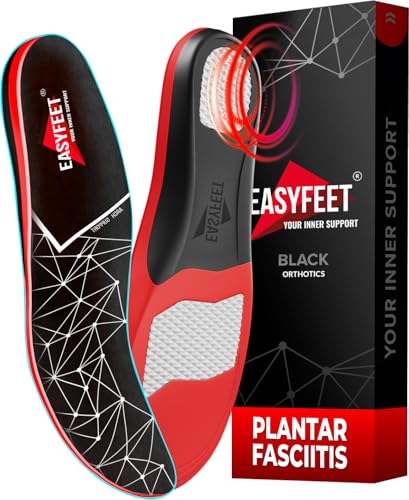
EASYFEET High Arch Support Insoles

GED Carbon Fiber Insoles 220 lbs

EASYFEET Heavy Duty 220+ Insoles

GED Golf Insoles Women 7-10.5
Inside Each Recommended Option
Court movement calls for more than a soft footbed. Pickleball, tennis, and badminton involve repeated sideways pushes, abrupt stops, and quick changes of direction, and this design concentrates support around the outer forefoot and arch.
That makes it practical for golfers who also play racket sports, though it approaches the problem differently from the dedicated golf picks later in the lineup. The raised outer pad helps anchor the foot during a cut, while mid-to-high arch support keeps the foot from shifting as you recover position.
Good Reasons To Consider
- Supports the lateral pushes and sudden stops common on courts.
- Reinforced outer edges add structure during direction changes.
- Targeted cushioning softens impact without an overly bulky feel.
- Trim-to-fit sizing lets you match the insert to your court shoe.
- Serves golfers who also need support for pickleball or tennis.
Points To Note
- This size L version corresponds roughly to US men’s 9 through 11.5, so check your shoe size before trimming.
- The mid-to-high arch profile may feel more structured than a neutral insert, particularly during the initial break-in period.
At A Glance
Who It Suits Best
This option fits golfers who need firmer lateral support and regularly play pickleball, tennis, or badminton.
Another Choice May Suit
GED Golf Insoles Women 7-10.5 may suit golfers who want medium arch support and heel cushioning without the court-focused outer pad.
Round after round, a golf shoe needs to cushion walking without letting your foot wander inside it. The EZQF design combines an EVA comfort layer with a firmer support shell, giving you a more balanced foundation than a simple foam insert.
EVA is a lightweight foam commonly used in shoe inserts, and the listed memory-foam section can gradually follow your sole’s shape. A deep heel cup and separate arch area add stability, while Poron cushioning at the heel absorbs impact from firm surfaces.
What It Does Well
- The EVA comfort layer cushions long walks between holes.
- A structured shell spreads pressure across the foot during swings.
- The heel cup improves stability through weight shifts.
- Poron heel foam softens impact on hard fairway paths.
Small Caveats
- This listing is size M, so golfers needing another size should confirm availability before purchase.
Quick Facts
Made For
Regular-width golfers who want balanced cushioning, arch support, and heel stability in one insert.
Consider Something Else When
GED Carbon Fiber Insoles 220 lbs may be a better match for high arches and a preference for rigid, shape-retaining support.
Unlike the adaptive foam construction of the EZQF Regular Golf Insoles, this EASYFEET model relies on a firm arch bridge. That bridge fills the space beneath a high arch and gives the foot a more defined support point.
The design also includes a deep heel cup, which helps keep the heel centered inside the shoe. Golfers who prefer a structured insert over a gradually conforming footbed may find that approach more noticeable underfoot, depending on personal preference.
Useful Touches
- The firm bridge gives high arches a defined support point.
- Broader support can distribute pressure beyond the heel and forefoot.
- The deep heel cup helps keep the rear of the foot centered.
Potential Compromises
- The firm arch profile may feel pronounced for golfers who prefer softer, more flexible inserts.
- Arch comfort varies, so persistent discomfort deserves attention from a qualified healthcare professional.
Right Fit For
This option fits golfers with high arches who value firm support and a deep heel cup over a soft footbed.
Where A Sibling Pick Shines
EASYFEET Heavy Duty 220+ Insoles may suit golfers at 220 pounds or above who want high-arch support with a heavier-duty construction.
Some golfers prefer the shoe to hold its shape rather than compress under body weight. This GED insert uses a carbon fiber arch plate for that purpose, creating a firm platform that resists flattening beneath a high arch.
It is specifically positioned for body weight of 220 pounds and above, unlike the more adaptive EASYFEET Heavy Duty 220+ Insoles. The tradeoff is straightforward: structure comes first, so the insert will feel more defined than a conventional foam footbed.
Positive Points
- Carbon fiber provides rigid arch support.
- The plate is designed to retain its shape under load.
- A structured base supports heavier body weight.
- High-arch geometry suits players needing more pronounced support.
Worth Noting
- The rigid construction may reduce shoe volume, so check that the insert sits flat inside your golf shoes.
Feature Snapshot
Built With In Mind
This design fits golfers weighing at least 220 pounds who have high arches and want a rigid support platform.
Reach For A Different Pick When
EZQF Golf Insoles, Size M may feel more accommodating for regular-width feet that prefer adaptive cushioning over a rigid plate.
High arches and heavier body weight can place extra demand on the footbed during a long round. This EASYFEET model uses strengthened high-arch geometry and a weight-distribution design for players above 220 pounds.
Compared with the GED Carbon Fiber Insoles 220 lbs, the approach appears less rigid and more comfort-oriented. That can make sense for golfers who want substantial support without the pronounced feel of a carbon fiber plate.
Real Benefits
- Strengthened arch geometry suits high-arch feet.
- The design distributes weight across a broader foot area.
- Heavier-duty construction targets body weight above 220 pounds.
Details To Watch
- The listed body-weight range starts above 220 pounds, so lighter golfers may find the support unnecessarily strong.
- The high-arch shape may take up more interior space than a standard insert.
- Check your shoe’s removable insole and available depth before ordering.
Whose Shelf It Belongs On
This insert suits golfers above 220 pounds who have high arches and prefer strong support with a softer overall approach.
Swap It Out When
GED Court Insoles for Pickleball may be the more natural choice for lighter athletes who need lateral support for several court sports.
This women’s version takes a moderate approach, pairing medium arch support with a deep heel cup. The heel area absorbs impact while the arch and cup help keep the foot centered during repeated walking and weight shifts.
That balance differs from the EASYFEET High Arch Support Insoles, which use a firmer bridge for more pronounced support. The listed women’s US 7 through 10.5 sizing is the main practical consideration, so check the size before ordering.
Benefits That Matter
- Medium arch support suits a middle-of-the-road foot profile.
- The deep heel cup helps stabilize your stance.
- Shock-absorbing heel cushioning softens steps across the course.
Things To Consider
- This specific version is listed for women’s US sizes 7 through 10.5.
Core Details
Best Suited To
This option fits women with medium arches who wear US sizes 7 through 10.5 and want moderate support with cushioning.
Not Your Match When
GED Carbon Fiber Insoles 220 lbs may suit golfers at 220 pounds or above who want a much firmer high-arch platform.
Match the Insert to Your Foot and Game
Arch profile sets the foundation
A high-arch insert should fill the space beneath your arch without forcing the foot into an uncomfortable position. Medium-support designs offer a more neutral starting point, while rigid carbon fiber plates provide the strongest structure.
Shoe fit matters as much as foot size
Remove the existing insole before comparing dimensions and check the available depth inside your golf shoes. A structured insert that looks right on paper can sit poorly when the shoe’s upper and heel counter already occupy much of the interior space.
Match the design to your movement
Court-focused models emphasize lateral pushes, while golf-specific inserts balance walking cushioning with heel and arch stability. Heavy-duty designs suit higher body weights and pronounced arches, so those two factors deserve equal attention.
Persistent discomfort calls for professional guidance
Foot support can alter how pressure travels through the foot, so severe or continuing discomfort deserves evaluation by a qualified healthcare professional. Product names describe a product’s intended use, but they do not replace an individual assessment.
Two Details That Shape Your Choice
Mistakes Worth Dodging
Choosing solely by the label on the box can leave you with the wrong arch profile. Compare the insert’s shape with your shoe, account for the existing footbed, and avoid ordering a larger size simply to create extra shoe room.
When Paying More Pays Off
A higher price may reflect a carbon fiber plate, specialized geometry, or heavier-duty construction rather than extra cushioning alone. That upgrade makes sense when you need firm, shape-retaining support; otherwise, an adaptive foam design may provide the more comfortable balance.
Frequently Asked Questions
Are golf insoles different from regular shoe insoles?
Yes. Golf insoles usually place more emphasis on walking cushioning, heel stability, and arch support for repeated movement across a course.
Should golf insoles fit snugly?
They should sit flat without curling or crowding the toe area. Any cramping or pressure at the arch is a sign to reconsider the size or support level.
Can I use golf insoles in other golf shoes?
You can, provided the insert dimensions, removable footbed, and shoe interior allow it. Measure both areas before replacing an existing insert.
Are high-arch insoles suitable for flat feet?
A high-arch design may feel too pronounced for a flat foot. Medium support or a model designed to limit inward rolling may be more comfortable.
When should someone see a healthcare professional?
Seek professional advice for severe, recurring, or worsening foot discomfort. A specialist can assess your gait, footwear, and foot structure more directly than an insert alone.
The Takeaway
The right golf insole depends on arch shape, body weight, shoe space, and how much structure you prefer. Start with those four checks, remove the old footbed before comparing sizes, and give any new insert a fair adjustment period. The most useful choice is the one that feels steady through your normal round, not merely supportive on paper.
