

A dog recovering from surgery may lick, scratch, or bite an incision despite your careful supervision. A soft recovery collar or suit can add protection while keeping your dog more comfortable than a rigid cone, but the right choice depends on wound location, body coverage, fit, and your dog’s tolerance. These options suit small breeds, puppies, larger dogs, and recovery routines that need washable fabric, adjustable closures, visibility, or easy movement.
An Overview Of The Picks

Miaododo Pink Dog Surgical Recovery Suit for Small and Medium Dogs Long-Sleeve Zipper Back Bodysuit

Joypig Soft Liner Cone Collar
REOMORE Transparent PVC Dog Cone Collar A1 Black XL

Paipeper Puppy Recovery Suit
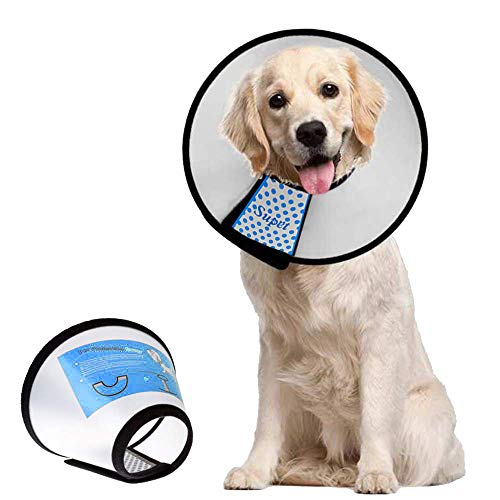
Supet Soft Elizabethan Dog Cone Collar, L

IDOMIK Waterproof Recovery Collar
The Strengths Of Each Pick
For a small or medium dog recovering from abdominal surgery, full-body coverage can be more useful than a cone that reaches toward the incision. The Miaododo bodysuit covers the torso with stretchy cotton and long sleeves, creating a washable layer between your dog and the affected area.
Unlike the Joypig mesh liner, this suit protects the wound without surrounding your dog’s head. The back zipper simplifies dressing, while the cut-out belly section can be trimmed for male dogs; you may find that more practical than managing a neck collar.
Useful Strengths
- Elastic cotton supports comfortable movement during recovery.
- The bodysuit covers the abdomen and limits access to surgical wounds.
- A back zipper makes putting the suit on and removing it more manageable.
- Machine washing helps keep the garment clean during home care.
Small Caveats
- Your dog must be comfortable wearing a garment that covers much of its body.
- The male belly opening requires trimming to fit.
Key Details
Made For Small Breeds
This suit best suits small and medium dogs recovering from abdominal or spay procedures where torso coverage matters.
Another Choice May Suit
Choose the Joypig Soft Liner Cone Collar instead when the protected area is on your dog’s face or limb and you prefer not to cover the torso.
Some dogs tolerate a head cone better when they can still see the room around them. The Joypig Soft Liner Cone Collar uses open mesh, a fabric that allows airflow and visibility, to limit licking and biting without the weight of a solid plastic cone.
That visibility may make this a calmer choice for a dog recovering from facial, skin, or limb treatment. Compared with the transparent but rigid REOMORE cone, it looks lighter and more flexible, although neither offers the Miaododo suit’s broad torso coverage.
Advantages To Know
- Open mesh supports airflow and lets your dog see its surroundings.
- The conical shape discourages access to facial and limb wounds.
- Lightweight construction avoids the bulk of a full fabric cone.
Honest Caveats
- Secure the hook-and-loop straps without restricting breathing or eating.
- A cone provides less coverage than a recovery suit for abdominal wounds.
Feature Snapshot
Who Will Love This
It fits dogs with face or limb wounds whose owners value a light, visible collar during recovery.
Reach For A Different Pick When
The Paipeper Puppy Recovery Suit is a better fit for small dogs whose surgical site needs body coverage rather than head protection.
A dog that resists fabric may test a soft collar more aggressively than a rigid one. The REOMORE A1 uses transparent PVC, a durable plastic that resists bending, and adds soft foam around the inner edge for comfort.
This construction suits medium or large dogs with wounds they may scratch or bite. It feels less flexible than the Joypig mesh liner, but for a determined chewer, that rigidity may be the more useful trade-off.
What Works In Its Favor
- Transparent PVC preserves a clear view of the surroundings.
- Rigid construction is less vulnerable to chewing than fabric mesh.
- Soft foam improves comfort around the neck.
- A wide hook-and-loop strip allows fit adjustments.
- Four collar loops can help keep the cone from being pulled off.
Points To Keep In Mind
- Rigid PVC may feel less natural to your dog than the Joypig mesh liner.
- Collar-loop security depends on pairing it with a suitable everyday collar.
Technical Highlights
Built With Large Dogs In Mind
This cone suits medium or large dogs that need dependable structure and accept a rigid plastic collar.
A Better Fit Elsewhere
The Supet Soft Elizabethan Dog Cone Collar, L suits large and medium dogs that need a softer cone construction instead of firm PVC.
A puppy can outgrow or twist a cone while still needing protection around a surgical site. The Paipeper Puppy Recovery Suit provides a straightforward bodysuit option intended to discourage licking of a wound after an operation.
The straightforward approach may appeal to homes managing a young, small dog. Unlike the Joypig cone, it covers the body rather than the head, but it offers fewer listed construction details than the more feature-focused Miaododo suit.
Useful Highlights
- Body coverage helps discourage direct access to a wound.
- The suit format avoids placing a cone around the head.
- Several striped color options make personal preference easier to accommodate.
Practical Considerations
- Measure your dog’s back length and chest circumference before ordering.
- Compare the pictured size chart carefully with your puppy’s current measurements.
- A growing puppy may need a larger size during a longer recovery period.
The Right Fit
This suit suits small dogs and puppies recovering from surgery where the surgical area needs covered rather than isolated by a neck cone.
Swap It Out When
Choose the Miaododo Pink Dog Surgical Recovery Suit for Small and Medium Dogs Long-Sleeve Zipper Back Bodysuit when a back zipper, stretch cotton, and a male belly opening are priorities.
Some recovery routines call for cone coverage without the rigid structure of hard plastic. The Supet Soft Elizabethan Dog Cone Collar, L combines the familiar extended shape of an Elizabethan collar with softer construction for large and medium dogs.
Its main advantage is the balance between shielding a wound and offering a more flexible feel than the REOMORE PVC model. The trade-off is that a soft cone may offer less resistance to persistent chewing, so supervision still shapes how comfortably your dog settles into it.
Useful Touches
- Soft construction may be gentler than rigid PVC.
- The extended shape helps discourage licking and scratching.
Worth Noting
- Confirm that the neck opening and cone depth suit your dog’s dimensions.
- Check that your dog can reach food and water while wearing the cone.
Who Should Grab It
This collar suits medium and large dogs that need cone-style protection and respond better to soft construction.
Look Elsewhere When
The REOMORE Transparent PVC Dog Cone Collar A1 Black XL is a better fit for a dog likely to chew through a softer cone.
Water spills, damp grass, and muddy paws can complicate a recovery period, particularly for a dog wearing a collar for several weeks. The IDOMIK Waterproof Recovery Collar uses flexible fabric with a cushioned donut shape and a surface that can be wiped clean.
The open center preserves your dog’s view, so eating, resting, and moving around remain more visually open than with a solid cone. Compared with the Joypig mesh liner, it emphasizes cushioning and water resistance rather than a broad mesh cone.
Everyday Perks
- Flexible fabric offers a softer alternative to rigid plastic.
- The cushioned shape supports comfortable wear around the neck.
- Water resistance makes surface cleanup more convenient.
- The open center maintains visibility around the dog.
One Detail To Watch
- Check the fit around the neck and confirm your dog can reach food and water comfortably.
Core Details
Made For Messy Homes
This collar suits dogs whose recovery involves water, damp floors, or frequent wiping of the collar area.
Where A Sibling Pick Shines
Choose the Joypig Soft Liner Cone Collar for a more visible mesh structure and a wider hook-and-loop closure.
Matching Protection To The Surgical Site
Start with the location of the surgical site. A recovery suit provides broader body coverage, while a cone extends protection around the head and keeps a dog’s muzzle away from wounds on the face, paws, or legs. Your veterinary team’s instructions should guide the required coverage.
Compare Coverage Styles
The Miaododo and Paipeper suits suit abdominal or torso procedures because they cover the body without restricting head movement. Cones such as the Joypig, REOMORE, Supet, and IDOMIK options serve situations where keeping the muzzle away from a wound is the main concern.
Coverage is only one part of the decision. A dog that removes soft garments may need a more rigid cone, while a dog frightened by an obstructed view may respond better to a transparent or open-center design.
Check Fit And Daily Movement
Measure neck girth, chest circumference, back length, and the area around the incision where those measurements apply. A close but comfortable fit keeps the collar from slipping without restricting eating, drinking, breathing, or walking.
Leave enough room for normal posture and movement. For growing puppies, recheck the fit during recovery because a size that starts correctly may become loose as the dog grows.
Think About Cleaning And Durability
Machine-washable cotton favors homes that want to launder the garment, while water-resistant fabric makes wiping away spills easier. For chew-prone dogs, rigid PVC may withstand more handling, although the heavier structure can feel less natural.
Follow the care instructions for whichever item you choose. Check the closure, fabric, or PVC edges regularly for signs of wear, and replace damaged recovery equipment according to your veterinary team’s guidance.
Two Details That Change The Choice
Mistakes Worth Dodging
Choosing by color or appearance can leave the important protection requirement unresolved. Confirm that the collar or suit reaches the surgical site, fits securely, and allows your dog to eat, drink, and walk comfortably.
What The Upgrade Payoff Means
Higher-priced models may add transparent plastic, foam cushioning, adjustable straps, collar loops, or water-resistant fabric. Those features help when your dog chews, needs better visibility, or has a messy recovery routine, but a simpler suit can make sense when coverage and correct fit are the main priorities.
Frequently Asked Questions
Should a dog wear a collar after surgery?
Your veterinary team should specify the required protection based on the procedure and incision location. A collar or suit helps limit licking and scratching, but it should complement rather than replace prescribed postoperative care.
Is a soft collar better than a rigid cone?
A soft collar may be more comfortable and less alarming for many dogs. A rigid cone offers greater resistance to chewing, so your dog’s behavior and the location of the wound matter more than softness alone.
How should a recovery collar fit?
The collar should feel secure without restricting breathing, eating, drinking, or movement. Measure the relevant body dimensions before ordering and adjust the closure according to the included fit guidance.
Can a recovery suit replace a cone?
A suit works best when the surgical site is on the covered torso. Facial, paw, or leg wounds may need a cone that keeps the muzzle away from the area.
How often should I clean a soft recovery collar?
Clean it whenever it becomes damp, dirty, or coated in hair, following the product care instructions. Frequent wiping or washing helps keep the material comfortable and reduces trapped debris.
Closing Verdict
The Miaododo suit offers the broadest torso coverage, while the Joypig liner prioritizes airflow and visibility. Larger or chew-prone dogs may prefer the REOMORE cone, and the IDOMIK collar earns its place when water-resistant cleaning matters. Match the design to the wound location, your dog’s behavior, and your veterinary team’s instructions, then check the fit before leaving your dog alone.
