

Hallux rigidus restricts movement at the base of the big toe, making stiff steps, crowded shoes, and long walks increasingly uncomfortable. The right insert may help limit excess toe motion while preserving the space and shape of your footwear. These options suit different activities, from post-shoe rehabilitation to hiking, standing shifts, and daily walking.
The Essentials At A Glance
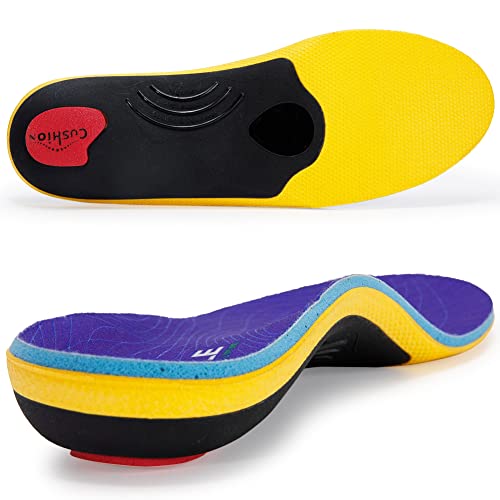
VALSOLE Heavy Duty Support Orthotics 220+ lbs High Arch Insole

FAKILO Carbon Fiber Foot Plate Insole for Hallux Rigidus, 233mm
Estinko PegAssist Insole for Square Toe Post Op Shoe, M

FAKILO Morton’s Extension Carbon Fiber Insole for Hallux Rigidus, Turf Toe, 255mm

Leeuoe Carbon Fiber Insole for Hallux Rigidus and Limitus, Turf Toe, 1.2mm, 24.5cm

LARXREHY Carbon Fiber Insole for Hallux Rigidus and Limitus, 1.3mm, 245mm, Sports
Meet The Standout Selections
A long shift in work boots places more demand on your arches and the joints of your feet. The VALSOLE model is designed for body weights over 220 pounds, with a high arch structure, deep heel cup, and cushioned heel material intended to soften heel impact.
Where rigid carbon plates limit big-toe movement, this orthotic emphasizes arch support and shock absorption. You may find it more comfortable across long standing shifts, although it offers a softer approach to hallux rigidus than the carbon-fiber models in this list.
Where It Helps
- The pronounced arch structure suits feet that need more support during extended standing.
- A Poron heel pad provides cushioning where heel impact can feel harsh.
- The deep heel cup adds stability through work shoes, boots, and walking shoes.
- Trim-to-fit construction lets you tailor the insert to your available shoe space.
Trade Offs
- This is a cushioned arch-support model rather than a rigid first-toe limiter, so direct hallux rigidity control is not its main design goal.
- Its deeper support structure may feel fuller than a thin carbon plate in snug footwear.
Quick Facts
Made For
You benefit most from this model during long work shifts involving heavier body weight and supportive footwear.
Consider Something Else When
FAKILO Carbon Fiber Foot Plate Insole for Hallux Rigidus suits you better when firm big-toe control matters more than arch cushioning.
A carbon-fiber foot plate is a rigid insert that limits unwanted movement without adding the bulk of a deep-cushion orthotic. This FAKILO model is only 1.3 mm thick, which makes it useful for athletic shoes, sneakers, and other roomy footwear where internal volume matters.
Unlike the VALSOLE orthotic, this plate focuses on stability and restricted toe motion. The single-piece design fits either foot, so it can be especially practical for someone comparing one size in a shoe that accepts a removable insole.
A Few Highlights
- The thin rigid construction may preserve more room than a full-length cushioned orthotic.
- One plate can be placed in either shoe, simplifying size selection for compatible footwear.
- Its stiffness is intended to support the forefoot during walking, running, and sports.
Practical Considerations
- Measure your removable insole and leave roughly 1/4 to 1/2 inch of space for a comfortable fit.
- The plate is intended for athletic shoes and sneakers, not dress shoes or high heels.
The Numbers That Matter
Right Fit For
You benefit most from this compact plate in roomy sneakers or athletic shoes that already have a removable insole.
A Better Fit Elsewhere
LARXREHY Carbon Fiber Insole for Hallux Rigidus and Limitus is the stronger option for full-foot coverage in hiking and sports shoes.
Recovery footwear has to do more than provide cushioning; it may need to move pressure away from a sensitive area. The Estinko PegAssist uses removable pegs to shift where pressure falls, while a stabilizer board preserves the insert’s structure and low-arch cushioning adds comfort.
This system is designed specifically for the Estinko Square Toe post-op shoe, which is sold separately. Compared with the carbon plates in this roundup, its adjustable design is more useful for localized pressure management than for controlling hallux rigidus through a rigid first-toe extension.
Notable Upsides
- Removable pegs let you adjust the unloading pattern to match the area that needs reduced pressure.
- The stabilizer board helps keep the insole from losing its shape during use.
- Breathable mesh fabric supports airflow during extended wear.
- Low-arch cushioning provides support without the hard edge of a rigid carbon plate.
Minor Gripes
- It fits only the specified square-toe recovery shoe, which sharply limits compatibility.
- It is sold as one insole, so separate inserts are needed for both feet.
- Its pressure-relief design is less targeted to big-toe stiffness than a Morton’s extension insert.
Who Will Love This
You benefit most from this system during post-operative footwear use when adjustable pressure relief is your main goal.
Another Choice May Suit
FAKILO Morton’s Extension Carbon Fiber Insole for Hallux Rigidus suits you better when firm first-toe control is the priority.
A Morton’s extension is a rigid insert that limits bending at the base of the big toe, a design that directly addresses the motion concerns associated with hallux rigidus. This FAKILO pair uses 1.5 mm carbon fiber and supports the bone behind the big toe while allowing the smaller toes more movement.
That targeted construction gives it a clear advantage over the flatter FAKILO foot plate. The trade-off is a less forgiving fit, so the insert needs sufficient room and careful length matching before it goes beneath your shoe’s existing insole.
Real-World Strengths
- The rigid extension is specifically designed to reduce movement at the first big-toe joint.
- Supporting the first metatarsal may improve stability through each step.
- It suits activities that place substantial pressure on the forefoot.
- The carbon-fiber construction stays slim enough for many casual and athletic shoes.
- You receive a matched pair rather than a single insert.
Factors To Consider
- Measure the original insole and choose a plate roughly 0.2 to 0.4 inches shorter.
- Its firm extension can feel restrictive during the first wear, particularly in flexible shoes.
Core Features
Built With In Mind
You benefit most from this model when big-toe stiffness requires a firm, specifically directed extension.
Look Elsewhere When
Estinko PegAssist Insole for Square Toe Post Op Shoe is the better fit for adjustable pressure relief in recovery footwear.
The Leeuoe pair offers a straightforward rigid layer for shoes with a removable insole. Each plate is 1.2 mm thick, so it adds less height than deeper cushioning while providing the firm surface that can limit excessive big-toe movement.
Unlike the FAKILO Morton’s extension, this is a flat insert rather than a shaped first-toe extension. It may work well for a relatively uniform level of rigidity across the foot, but hallux rigidus can call for more targeted support depending on how your foot moves.
Strengths Worth Knowing
- Two thin plates provide rigid support for both feet.
- The 1.2 mm profile preserves more internal shoe space than a bulky orthotic.
- Its flat carbon-fiber construction suits everyday shoes with removable insoles.
Points To Keep In Mind
- Select a size 1/4 to 1/2 inch shorter than the removable shoe insole.
- Round down for a half-size measurement because the stiff plate does not compress like foam.
- It offers general rigidity rather than the more targeted first-toe geometry of the FAKILO extension.
The Right Fit
You benefit most from this pair when you want a thin, uniform carbon-fiber layer in compatible everyday shoes.
Where A Sibling Pick Shines
FAKILO Carbon Fiber Foot Plate Insole for Hallux Rigidus offers a comparable thin format, while the Morton’s extension provides more targeted big-toe support.
Long hikes and court sports can make a narrow forefoot feel especially unforgiving, so a full-length rigid layer may suit people seeking stability across the entire foot. This LARXREHY model uses a flat 180-degree design intended to reduce flex, limit big-toe movement, and spread pressure more evenly.
It offers broader coverage than the single FAKILO foot plate and a softer-looking profile than the 1.5 mm Morton’s extension. You will still need room beneath the original insole, and a rigid insert may change how a flexible shoe feels from the first walk.
Benefits That Matter
- Full-foot coverage provides a consistent support layer across the forefoot.
- The 1.3 mm carbon-fiber profile suits athletic, hiking, and everyday shoes.
- A flat design minimizes bending through the plate during active movement.
- The insert is designed to limit excessive big-toe movement and pressure around the forefoot.
Details To Watch
- Measure the original insole and leave 1/4 to 1/2 inch of space around the carbon-fiber insert.
- It is not intended for high heels or flip-flops, and it sits below the removable insole.
Key Product Details
Whose Shelf It Belongs On
You benefit most from this model in roomy athletic or hiking shoes used for long, active days.
Swap It Out When
Leeuoe Carbon Fiber Insole for Hallux Rigidus and Limitus is the simpler choice for a 1.2 mm flat pair in everyday shoes.
What Matters Before You Choose Hallux Rigidus Inserts
Match the support to the problem
A rigid carbon insert and a cushioned arch orthotic solve different problems. Carbon plates are designed to restrict movement, while cushioned models emphasize arch support and impact absorption. Your shoe type, daily standing time, and the degree of big-toe restriction should guide that distinction.
Pay attention to the shape
A Morton’s extension targets the joint beneath the big toe, while a flat carbon plate spreads rigidity across more of the foot. The targeted shape may suit pronounced hallux limitus, whereas a full-foot design can feel more balanced during hiking or court sports.
Measure the shoe, not the foot
Most rigid inserts belong beneath the shoe’s removable insole and need clearance around their perimeter. Measure the existing insole, compare the length carefully, and leave roughly 1/4 to 1/2 inch of space. Shoes without a removable insole usually offer too little room.
Pair inserts with suitable footwear
Roomy sneakers and athletic shoes are the easiest starting point because their uppers and footbeds can accommodate a stiff layer. Close-fitting dress shoes, high heels, and flip-flops are poor matches for most carbon plates in this roundup.
Common Shopping Slip Ups
Ignoring the shoe’s internal space
A rigid insert that fits your foot can still crowd the shoe. Check the removable insole, shoe width, and fastening before ordering, especially for narrow dress footwear.
Confusing rigid support with more cushioning
A carbon plate controls motion; it does not provide the soft heel cushioning of a foam orthotic. Your comfort needs and hallux symptoms may point toward different models.
Skipping the length comparison
Each rigid model has slightly different sizing guidance. Measure the original insole and use that measurement rather than relying only on your street-shoe size.
What Separates Premium From Basic
Material and construction
Higher-priced inserts may use more precisely formed carbon fiber, a targeted first-toe extension, or additional structural components. The FAKILO Morton’s extension offers more directional support than a flat plate because its shape follows the anatomy of the first toe.
Fit system and specialization
Adjustable pegs, stabilizer boards, and shoe-specific designs serve different needs. A more specialized system can be worthwhile for post-operative footwear, while a slim carbon pair may be more convenient for regular sneakers.
Frequently Asked Questions
Are rigid carbon insoles suitable for hallux rigidus?
Rigid carbon insoles may suit hallux rigidus because they limit movement at the base of the big toe. A foot and ankle specialist can help confirm whether that approach fits your symptoms and footwear.
Where should a carbon-fiber insert go?
Most of these inserts belong beneath the shoe’s removable insole or another orthotic. The product should sit flat without forcing the sides of the shoe against your foot.
How should you measure an insert?
Measure the original insole from heel to toe and leave the specified clearance, commonly 1/4 to 1/2 inch. Round down when you fall between sizes because the rigid material does not compress like foam.
Can these inserts be used in dress shoes?
They work best in roomy sneakers and athletic shoes. Most models are unsuitable for high heels, narrow dress shoes, and flip-flops because they need both internal space and a removable footbed.
When should you consult a specialist doctor?
Seek advice from an appropriate specialist doctor when hallux rigidus symptoms are persistent, worsening, or affecting your walking. A specialist can assess your foot mechanics and recommend footwear or support appropriate to your condition.
Final Thoughts
The FAKILO Morton’s extension is the most targeted option for restricting big-toe movement, while the LARXREHY model suits full-foot support during active use. VALSOLE offers a softer path for long standing shifts, and Estinko belongs in its compatible square-toe recovery shoe. Measure your footwear carefully and choose the support level that matches how you actually walk.
