

Long shifts on concrete floors, crowded commutes, and shoes that compress the forefoot can leave the ball of your foot aching by noon. The right orthotic may redistribute pressure, cushion the metatarsal area, and add enough arch support to change how your foot feels across the day. This shortlist covers full-length and targeted options for standing workers, active adults, and anyone who needs roomier footwear without sacrificing support.
How The Shortlist Stacks Up

Orthostride Orthotic Insoles with Metatarsal Pads and Deep Heel Cup

Pure Stride Bold Professional Full Length Orthotics for Men 9-9.5, Bold Blue
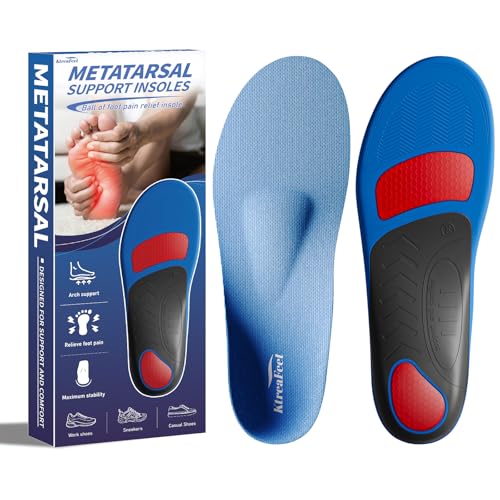
KtreaFeet Metatarsal Insoles

Deepballfeet Metatarsal Insoles
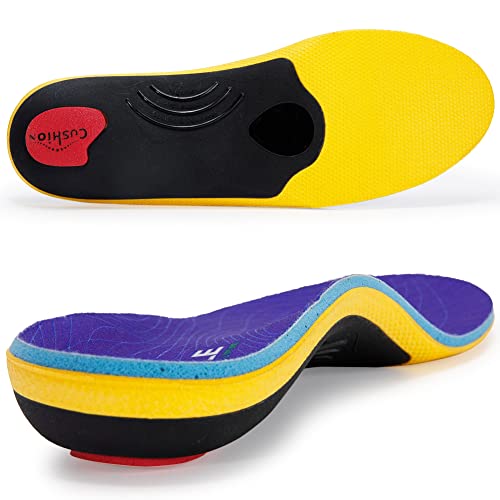
VALSOLE Heavy Duty Support Orthotics for 220+ lbs, Flat Feet, Work Boots

Trustfeet Heavy Duty Metatarsal Support Insoles for Ball of Foot Pain, Men and Women
Taking A Closer Look At The Options
Standing all day rarely places equal pressure across your foot. The Orthostride model concentrates support at the metatarsal area, where the ball of the foot meets the toes, while its raised arch helps steady the position of the whole foot.
This fuller approach makes more sense than a narrow forefoot cushion for work boots, wide sneakers, and athletic shoes. You gain a deeper heel cup and shock-absorbing PU foam, though the roomy-footwear requirement is important.
Real-World Strengths
- Built-in metatarsal pads spread pressure across the forefoot.
- Arch support suits flat-foot and fallen-arch concerns.
- PU foam softens impact during prolonged standing.
- The deep heel cup adds stability across different shoes.
Things To Consider
- Full coverage may feel crowded inside narrow or low-volume footwear.
- Your feet may need time to adjust to the raised arch and heel structure.
Feature Snapshot
Made For
You get the most benefit from these insoles while spending long hours in roomy work boots or wide sneakers.
Where Another Pick Suits Better
Pure Stride Bold Professional Full Length Orthotics may suit you better when a heat-moldable layer and firm shell matter more than a specifically positioned metatarsal pad.
The Pure Stride Bold model approaches foot support as a layered system rather than a single raised pad. Its breathable mesh, soft EVA, polypropylene shell, and firm bottom layer give each section a distinct job, with a recessed Poron heel pad adding cushioning where the heel lands.
Compared with Orthostride’s metatarsal-focused design, this pair offers more visible construction detail. The heat-moldable EVA layer is particularly useful for shoppers who want a fuller orthotic that can adapt somewhat to their foot.
Bright Spots
- Four material layers balance cushioning and structure.
- Heat-moldable EVA can better reflect your foot shape.
- Full-length coverage supports the heel, arch, and forefoot.
- Warm soap and water make routine cleaning straightforward.
Trade Offs
- A full-length orthotic needs adequate space inside the shoe.
- The listed size covers men’s 9-9.5 and women’s 11-11.5.
- Your toe area may need trimming for a closer shoe fit.
Quick Facts
Right Fit For
You benefit from this construction when your footwear has room for a substantial full-length insert and you want adjustable arch support.
A Better Fit Elsewhere
Orthostride Orthotic Insoles with Metatarsal Pads and Deep Heel Cup are a closer match when forefoot pressure is your main concern and your shoes are particularly roomy.
The KtreaFeet model places its focus directly beneath the metatarsal heads, the areas at the front of the metatarsal bones. That targeted approach can feel more purposeful than using a generic cushion in a shoe whose original insert has already worn flat.
Arch support adds a stabilizing element, while two listed lengths cover common men’s and women’s sizing combinations. Orthostride offers a fuller construction, but KtreaFeet keeps the proposition centered on forefoot pressure.
The Value In It
- The built-in pad targets the ball-of-foot area directly.
- Arch support helps stabilize the foot during walking.
- Two length options make size comparison more practical.
Points To Note
- The C size covers men’s 5-6 and women’s 6-7.
- The D size covers men’s 6.5-7.5 and women’s 7.5-8.5.
Core Details
Who Will Love This
You benefit most when tight or narrow shoes compress the forefoot and you want focused cushioning without a bulky heel system.
Another Choice May Suit
Pure Stride Bold Professional Full Length Orthotics suit you better when your feet need a heat-moldable layer and firmer arch structure across the whole foot.
Deepballfeet combines a metatarsal cushion with an arch-supporting structure, giving you two familiar pressure points in one insert. The forefoot pad is intended to soften the area where body weight rolls forward during each step.
The sizing options closely match those of KtreaFeet Metatarsal Insoles, so the deciding factor may come down to your shoe volume and how much arch support you prefer. Neither design leaves much room in a tightly fitted shoe.
Positive Points
- Metatarsal cushioning adds protection under the forefoot.
- Arch support can improve stability during long walks.
- Weight distribution may feel more even while standing.
Small Caveats
- Arch support may feel prominent during the first few wears.
- Check that the selected length fits completely inside your shoe.
Feature Facts
Built With In Mind
You get a practical fit for everyday shoes when forefoot cushioning and moderate arch support are your two main priorities.
Look Elsewhere When
VALSOLE Heavy Duty Support Orthotics suit you better when substantial arch support for work boots matters more than a narrowly focused metatarsal cushion.
The VALSOLE model is built around substantial support rather than a small forefoot cushion. Its positioning for people over 220 pounds, combined with high-arch and flat-foot support, makes it relevant to heavier users who spend substantial time in demanding footwear.
Work boots are a natural match because the insert is intended to absorb shock with each step. Compared with Orthostride, its stated priorities lean more heavily toward robust arch support than a specifically positioned metatarsal pad.
Good Reasons To Consider
- Heavy-duty positioning suits demanding work environments.
- High-arch support targets an uneven inner arch.
- The work-boot focus suits jobs with prolonged standing.
- Shock absorption may soften repeated hard-floor steps.
Trade-Offs To Consider
- Its listed body-weight positioning narrows who may find the design suitable.
- Work boots need enough interior space for a substantial insert.
Made For
You benefit most from this model when body weight is at least 220 pounds and your day includes long stretches in supportive work footwear.
Skip It When
Trustfeet Heavy Duty Metatarsal Support Insoles suit you better when the ball of your foot needs more focused cushioning than general arch support.
The Trustfeet pair connects heavy-duty support with a specific focus on the metatarsal region. That combination makes sense for days that alternate between walking, standing, and wearing shoes with limited cushioning, particularly when the discomfort is concentrated under the ball of the foot.
It shares the heavy-duty positioning of VALSOLE but places forefoot support more clearly at the center of its purpose. Your decision will likely come down to fit and the balance your feet prefer between targeted padding and broader arch support.
The Upside
- Metatarsal support addresses the front of the foot directly.
- Arch support contributes to overall foot stability.
- Heavy-duty construction suits frequent daily wear.
- One design covers several common forefoot discomfort concerns.
Honest Caveats
- Confirm that your shoe can accommodate a full support insert.
- A noticeable arch contour can take some adjustment time.
Whose Shelf It Belongs On
You benefit most from this pair when ball-of-foot discomfort accompanies long days that include both walking and standing.
Where A Sibling Pick Shines
KtreaFeet Metatarsal Insoles are a more focused alternative when your main need is a built-in forefoot pad with two clearly listed length options.
What Matters Most Before You Choose Forefoot Support
Match the support to the pressure point
A metatarsal pad sits beneath the ball of the foot and is most relevant when pressure feels concentrated there. Arch support addresses a different area, so a model combining both can suit mixed foot concerns. Your footwear also matters: broad shoes give a full-length orthotic more room, while close-fitting sneakers may favor a smaller targeted insert.
Check the entire shoe fit
Remove the existing insole and measure the space available inside the shoe. A support insert that sits too far forward can crowd your toes, while one that turns up the heel may shift your stance. Compare the listed shoe size and length carefully, especially for styles that already include a thick footbed.
Allow time for adjustment
A raised arch can feel unfamiliar during the first few wears. Start with a few hours in the shoes that need the most support, remove the insert if your feet feel irritated, and gradually increase wear time. Discomfort that persists or spreads merits attention from an appropriate foot specialist.
Two Details That Change Your Choice
Wrong Turns To Avoid
A ball-of-foot problem does not always require the thickest insert. A targeted pad may suit a narrow shoe better than a full-length orthotic, while a firm arch layer can help in a roomy work boot. Avoid choosing solely from the word “orthotic”; compare the support location, shoe volume, and listed size.
What The Higher Tier Buys
More elaborate orthotics add material layers, firmer shells, and separate heel cushioning. Those additions may matter in demanding shoes, but a simpler targeted insert can be more practical for a narrow sneaker. Pay for the construction your footwear and foot shape can actually accommodate.
Frequently Asked Questions
What type of insole is best for ball-of-foot discomfort?
An insole with a metatarsal pad is often the most directly relevant option because it cushions the area beneath the ball of the foot. Arch support can add stability, so the best choice depends on your shoe volume and the rest of your foot structure.
Are metatarsal pads different from arch supports?
Yes. A metatarsal pad cushions the forefoot, while an arch support follows the inner midfoot and helps position the foot. Some insoles combine both features for people who need support across more than one area.
How long should you wear new orthotic insoles at first?
Begin with a few hours and increase wear time gradually as your feet adjust. Remove the insert if irritation or pain develops, and consult an appropriate specialist doctor when discomfort continues or worsens.
Can ball-of-foot insoles fit inside work boots?
Many can, provided the boot has enough interior space after its existing insole is removed. Full-length or heavy-duty designs generally need more room than a narrow metatarsal cushion, so measure before choosing.
When should persistent foot pain be evaluated?
Seek guidance from an appropriate foot specialist when pain persists, returns quickly, or changes how you walk. A specialist can assess the foot and help determine whether an insert, footwear adjustment, or another form of care best fits your situation.
Final Verdict
Orthostride offers the most balanced combination of forefoot padding, arch support, and heel structure for roomy everyday shoes. Pure Stride adds more layered construction, while KtreaFeet and Deepballfeet keep the focus closer to the forefoot. Your best choice comes down to shoe fit, the location of your discomfort, and how much structure your feet feel comfortable wearing.
