

A stiff big-toe joint can make ordinary walking shoes feel difficult, especially when the forefoot bends during each step. Carbon fiber insoles address that problem by adding structure, while cushioned metatarsal insoles take a different approach focused on the ball of the foot. You’ll find options here for rigid big-toe support, arch support, and removable insole designs, based on material, fit, and construction.
A Quick View Of The Lineup

EstCarbon 1.2 mm Carbon Fiber Insole for Women 7, Single Reversible Full-Length Rigid Foot Plate for Sneakers

Aromuva 1.3 mm Rigid Carbon Fiber Insole

PowerStep ProTech Met Full Length Orthotics, Men’s 8-8.5 and Women’s 10-10.5
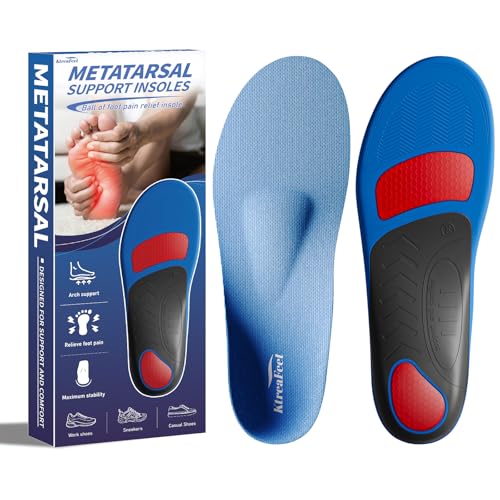
KtreaFeet Metatarsal Insoles with Built-In Pad

PowerStep Pinnacle Plus Met Insoles, Men’s 8-8.5 and Women’s 10-10.5
PowerStep Morton’s Extension Carbon Fiber Insole, Men’s 8-8.5 and Women’s 10-10.5
A Closer Look At Each Pick
This insert takes a direct approach to hallux rigidus by placing a rigid plate inside the shoe to reduce forefoot bending. Its 1.2 mm 3K twill carbon fiber construction keeps the plate thin and light, while the reversible design lets you use the same insert in either foot.
It suits someone seeking a women’s size 7 rigid insert for sneakers, especially with another softer layer beneath the plate. Measure from heel to the tip of the big toe, and follow the recommendation to choose a half size smaller when your measurement falls between sizes.
Key Advantages
- Full-length construction supports the heel, midfoot, and forefoot as one continuous plate.
- The thin profile fits more readily inside a sneaker than a bulky rigid insert.
- Reversibility simplifies use when only one foot needs a restrictive plate.
- Carbon fiber provides stiffness without the weight of a similarly rigid plastic plate.
Trade Offs
- Only one insert is included, so the second foot may require a separate purchase.
- The rigid design needs a shoe with a removable insole and enough interior space.
Key Specs
Made For
You’ll get the most useful fit from this insert if you wear women’s size 7 sneakers and need direct big-toe motion restriction.
Consider Something Else When
Aromuva 1.3 mm Rigid Carbon Fiber Insole suits you better when you need a matched pair and prefer measuring your existing shoe insert for sizing.
Unlike the single EstCarbon plate, this option arrives as a pair for men and women. Its rigid 1.3 mm carbon fiber design limits bending through the big-toe joint and forefoot, making it a practical fit for sensitive walking shoes with removable factory insoles.
Sizing follows a straightforward method: remove the original insert, measure it from heel to toe, and match that length to the listed range. The plate sits flat on the footbed, with the original insert placed over it.
What It Does Well
- Supplies one plate for each foot without separate sizing decisions.
- Restricts big-toe and forefoot bending during ordinary walking.
- Uses a slim 3K twill weave that adds stiffness without bulk.
- Works with walking shoes, athletic shoes, casual sneakers, work shoes, and boots.
Practical Considerations
- Fixed-insole, pointed, narrow, and high-heeled shoes may lack the required space.
- You need a flat footbed for the plate to sit securely without creating an uneven edge.
Feature Snapshot
Right Fit For
This pair works well for adults who need controlled big-toe movement and use roomy shoes with removable inserts.
A Better Fit Elsewhere
PowerStep Morton’s Extension Carbon Fiber Insole offers a better fit for someone who wants big-toe control combined with a contoured arch-support design.
ProTech Met approaches foot support from several directions rather than relying on a rigid carbon plate. Its full-length design supports pronation, the inward rolling pattern of the foot, while a metatarsal pad cushions the ball of the foot and a heel pad softens impact during the first part of each step.
That makes it a sensible option for someone whose hallux discomfort accompanies broader arch, heel, or forefoot fatigue. The listed fit covers men’s 8 to 8.5 and women’s 10 to 10.5, and the insert is made in the USA.
What Works In Its Favor
- Combines heel cushioning, arch support, and forefoot padding in one insert.
- Total-contact construction supports several areas of the foot rather than one point.
- The metatarsal pad targets pressure under the ball of the foot.
- Full-length coverage suits everyday walking and standing.
Where It May Fall Short
- Its support centers on arch, heel, and metatarsal mechanics rather than restricting big-toe motion.
- The listed size may not suit feet outside the included combinations.
Built With In Mind
This orthotic best serves people needing full-foot support for plantar fasciitis, arch discomfort, and metatarsal pain.
Look Elsewhere When
EstCarbon 1.2 mm Carbon Fiber Insole for Women 7 is the more direct choice when your main priority is limiting big-toe bending.
The KtreaFeet insert focuses on concentrated forefoot support, using a built-in metatarsal pad to spread pressure beneath the ball of the foot. Arch support adds a broader base for people who spend part of the day standing or walking, making it a more cushioned choice than the carbon plates in this lineup.
Two listed lengths provide some flexibility. Size E is 250 mm for men’s 5 to 6 or women’s 6 to 7, while size D is 262 mm for men’s 6.5 to 7.5 or women’s 7.5 to 8.5.
Everyday Wins
- The raised pad targets discomfort associated with the ball of the foot.
- Arch structure adds support for feet that tire during extended standing.
Smaller Details
- Its padded design does not restrict big-toe bending like a carbon fiber plate.
- You must select one of the listed letter sizes and measure the foot first.
- Room inside the shoe matters because the raised pad changes the footbed contour.
Quick Facts
Who Will Love This
You’ll appreciate this model if metatarsal pressure and arch fatigue matter more to you than limiting big-toe motion.
Another Choice May Suit
PowerStep Pinnacle Plus Met Insoles suit you better when you want a firmer arch, deeper heel support, and removable-shoe compatibility.
Pinnacle Plus Met emphasizes comfort and broad support rather than rigid restriction. A built-in metatarsal pad cushions the forefoot, while the neutral arch design and deep heel cradle create a stable platform for the entire foot.
You’ll find this approach useful when hallux discomfort accompanies ball-of-foot pressure during long commutes, retail shifts, or days spent moving around the house. The 100% polyester construction is made in the USA, and the listed size fits men’s 8 to 8.5 or women’s 10 to 10.5.
What Earns Its Place
- Metatarsal padding cushions the area that often feels most sensitive in supportive shoes.
- A neutral arch offers structure without the pronounced contour of a strongly molded insert.
- The deep heel cradle adds stability during heel strike and standing.
- Firm yet flexible construction suits shoes where the factory insert can be removed.
Possible Compromises
- Unlike a carbon plate, it allows more forefoot bending.
- The deep heel and arch contours may feel substantial in low-profile shoes.
The Right Fit
This model suits people who spend long periods walking and need cushioning around the forefoot and heel.
Reach For A Different Pick When
PowerStep Morton’s Extension Carbon Fiber Insole fits better when limiting big-toe movement matters more than adding soft cushioning.
This PowerStep model combines the big-toe control of a carbon fiber plate with a more substantial arch-support design. The full-length construction is intended to stabilize the joint where the big toe meets the forefoot, making it directly relevant to hallux rigidus.
Compared with the flat EstCarbon and Aromuva plates, it adds firm support for standard arches. You may find the combined structure more useful in a roomy walking shoe, although the added contour requires more space than a minimal insert.
Everyday Perks
- Carbon fiber limits movement through the big-toe joint.
- Full-length support covers the heel, arch, and forefoot.
- Firm arch support suits feet with a standard arch profile.
- The listed fit includes men’s 8 to 8.5 and women’s 10 to 10.5.
- Made in the USA for a construction that combines rigid and supportive elements.
Details To Watch
- Confirm that your shoe has a removable insole and a flat footbed before ordering.
Feature Facts
Whose Shelf It Belongs On
This insert belongs with adults seeking both hallux rigidus support and firm arch support in a roomy, removable-insole shoe.
Swap It Out When
EstCarbon 1.2 mm Carbon Fiber Insole for Women 7 is the better option for a lighter, flatter plate designed for a women’s size 7.
What Matters Before You Commit
Rigid Control or Cushioned Support
A carbon fiber plate limits movement through the stiff big-toe joint, making it the more direct design for hallux rigidus. Cushioned metatarsal inserts prioritize pressure distribution around the ball of the foot and broader arch support, so they suit a different set of symptoms.
Measure Both Foot and Shoe
Measure from the heel to the tip of the big toe, then compare the result with the size chart. Also remove the factory insert and check whether it sits flat, since fixed or deeply contoured footbeds can prevent a rigid plate from lying evenly.
Check the Interior Space
A full-length plate needs enough room in both length and depth. Shoes with narrow toes, pointed fronts, fixed inserts, or high heels are less compatible, while roomy walking shoes and removable athletic inserts usually offer a better foundation.
Consider the Support Profile
Standard-arch support may feel more structured than a neutral or cushion-focused insert. Persistent joint discomfort, changing foot shape, or uncertainty about the right construction calls for an assessment by an appropriate foot specialist.
Small Decisions That Matter
Mistakes Worth Dodging
Choosing by condition name alone can oversimplify the decision. Check whether the insert restricts big-toe motion, cushions the forefoot, or supports the arch, and confirm the required size and shoe compatibility before ordering.
What Separates Premium From Basic
Higher-cost models may use more specialized carbon construction, fuller-length shaping, or additional arch features. Those upgrades suit you when several areas need support; a simple rigid plate can be enough for a narrower need.
Frequently Asked Questions
Can a rigid insole help hallux rigidus?
A rigid insole can reduce bending through the big-toe joint during walking. Carbon fiber provides a firmer platform than a soft cushion while remaining relatively thin.
How do carbon fiber insoles differ from walking boots?
A carbon fiber insert adds structure inside a compatible shoe without replacing the shoe’s upper or outsole. Its effect depends on the shoe’s fit and how much the plate reduces forefoot movement.
How should I measure my foot for an insole?
Measure from the heel to the tip of the big toe with the foot flat. Compare that length with the size guide, or measure the removable factory insert for a product that uses shoe-based sizing.
Are metatarsal insoles useful for hallux rigidus?
Metatarsal insoles can cushion the ball of the foot and support the arch, but they do not restrict big-toe motion like a rigid carbon plate. They work best when forefoot pressure is the main concern.
When should I consult a foot specialist?
Persistent pain, worsening stiffness, or difficulty walking deserves an assessment by an appropriate specialist. A professional can also help determine whether rigid restriction, arch support, or another approach best matches your foot.
Closing Thoughts
The most direct hallux rigidus choices in this lineup are the EstCarbon, Aromuva, and PowerStep Morton’s Extension carbon fiber inserts, with sizing and shoe fit determining the practical difference. The ProTech Met, KtreaFeet, and Pinnacle Plus Met options shift toward cushioning and arch support, making them worth considering when forefoot pressure or broader foot fatigue is part of the picture. Choose the design that matches your symptoms, then give it a fair fit check in the shoes you wear most.
