

A child whose feet roll inward can struggle with long school days, playground sessions, and sports practice, especially when a shoe offers little cushioning or structured support. You need an insole that fits the shoe, suits the child’s age, and addresses either foot alignment, heel discomfort, or general padding. The six options below cover different needs, from a full-length orthotic for overpronation to lightweight gel heel cups for active children.
A Closer Look At The Lineup

KidSole Camo Comfort Arch Support Insoles, Kids Size 12-1.5

Pedag Soft Latex Foam Insoles, Size 4L/5L, 3 Pair

PRO 11 Children’s Orthotic Insoles, UK 11-13
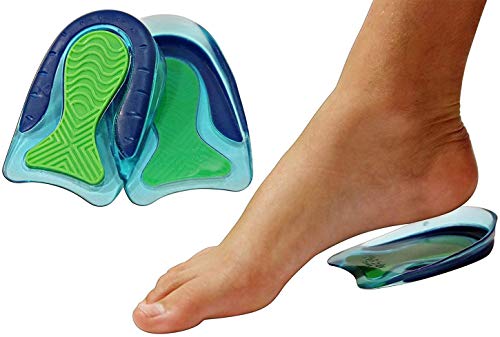
KidSole Sport Traction Lightweight Gel Heel Cups, Kids Size 3-7, 4 Single Cups

KidSole Starry Shield 26 cm Insole, Teen 6.5-8.5

Pure Stride Kids Orthotics H08, Youth 4-4.5, Metatarsal and Arch Support
Why These Options Stand Out
Camo Comfort gives you a flexible way to add arch support to a child’s everyday shoes without choosing a bulky full-length orthotic. Its EVA, a lightweight foam material, combines with memory foam and a gel heel to cushion the foot during school, play, and sports.
The guided cutting lines add practical value for shoes that need a custom fit. Compared with the PRO 11 orthotic, Camo Comfort offers less structured alignment support, but it may suit families seeking a lighter, easily trimmed option.
Positive Points
- Memory foam and a gel heel soften daily impact.
- Arch support suits mild flat-foot concerns.
- Guided trimming allows a closer shoe fit.
- The lightweight build suits sneakers and cleats.
Practical Considerations
- The listed size range is limited to kids’ size 12 through 1.5.
- Its flexible design does not provide the structured correction of the PRO 11 orthotic.
Key Specs
Made For
This option suits children who need mild arch support, heel cushioning, or a light insert for removable school and sports insoles.
Consider Something Else When
Children needing a more structured insole for overpronation fit the PRO 11 Children’s Orthotic Insoles better.
Pedag Soft focuses on cushioning a shoe that feels thin or slightly loose. The fabric-covered latex foam adds impact padding, while a flexible neoprene layer uses small air chambers and a breathable membrane to encourage airflow during long days of school and play.
Three pairs make it easier to rotate insoles among shoes or replace them as they wear. The honest read is that this is a padding-focused option, not the more structured approach offered by the PRO 11 model.
Standout Benefits
- Extra foam cushions harder gym and playground surfaces.
- Breathable construction helps manage moisture and warmth.
- The fabric cover feels softer against a child’s foot.
- Three pairs support convenient rotation between shoes.
Points To Note
- The listed size is children’s US 4L/5L, or EU 34/35.
- Lemon fragrance and a fabric surface may not suit every child.
- The listed design emphasizes cushioning rather than alignment correction.
Who It Suits Best
Young children with sensitive feet benefit most from breathable padding in sneakers, boots, or lightly structured everyday shoes.
Look Elsewhere When
You need alignment-focused support for overpronation, making the PRO 11 Children’s Orthotic Insoles the more relevant option.
For a child whose feet roll inward, the PRO 11 model offers the most directly aligned choice in this group. An orthotic is an insole shaped to support the foot’s structure, and this full-length version is contoured to assist overpronation.
That structure distinguishes it from Pedag Soft and the sport-oriented heel cups. The practical catch is shoe compatibility, because these insoles are intended for footwear with a removable insert.
Useful Highlights
- The contour is designed to support overpronating feet.
- Full-length coverage supports the arch and heel area.
- Scissors allow trimming for excess length.
- A medium-width shape fits many everyday shoes and boots.
- The design addresses several common foot-comfort concerns.
Some Limits To Know
- The listed size range is UK 11-13 only.
- The shoe must have a removable insole.
- Full-length structure takes more room than a heel cup or slim foam insert.
The Right Fit
Children with confirmed overpronation and a shoe that accepts a full-length orthotic benefit most from this model’s structured contour.
Another Choice May Suit
Children who mainly need breathable cushioning for lightly padded shoes fit the Pedag Soft Latex Foam Insoles better.
Heel comfort becomes the focus in the KidSole Sport Traction cups. Gel cushioning targets the heel, while the grippy design helps each cup stay in place during running, court sports, and playground activity.
Unlike the PRO 11 full-length orthotic, these inserts do not support the whole arch or attempt to guide the foot’s alignment. They suit a narrower need: adding cushioning where the heel meets the shoe.
What Helps Most
- Lightweight gel cushions impact around the heel.
- Sport traction helps reduce movement during activity.
- The cups suit running shoes, athletic shoes, and cleats.
- Four individual cups cover multiple pairs of footwear.
Small Caveats
- Heel cups provide focused cushioning rather than full arch support.
- Placement depends on the shoe’s heel shape and available room.
- The listed size range is kids’ size 3-7.
Feature Snapshot
Who Will Love This
Active children who feel heel impact during running or sports benefit most from these compact gel cups.
A Better Fit Elsewhere
Children needing full-foot alignment support fit the PRO 11 Children’s Orthotic Insoles better.
A 26 cm arch-support insole gives teenagers a straightforward option for cushioned sneakers, especially once smaller children’s sizing no longer fits. The Starry Shield centers its purpose on arch support and general cushioning rather than a heel-only insert.
That makes it more relevant to overpronation than the Sport Traction cups, though it does not present the same explicit alignment design as the PRO 11 orthotic. The trade-off is a tighter size and length requirement.
Everyday Wins
- Arch support adds structure beneath the middle of the foot.
- Cushioning suits regular school and casual wear.
- The 26 cm length targets larger teenage feet.
Worth Noting
- The listed shoe-size range is limited to 6.5-8.5.
- Measure the shoe interior to confirm that a 26 cm insole fits.
- Camo Comfort offers clearer guided trimming for custom adjustments.
Right Fit For
Teenagers needing basic arch support and cushioning in size 6.5-8.5 shoes benefit most from this option.
Swap It Out When
You need clearly structured correction for overpronation, making the PRO 11 Children’s Orthotic Insoles the more suitable choice.
Four layers set the Pure Stride H08 apart from a basic foam insert. Its breathable mesh sits above high-rebound EVA, a plastic shell, and a blue EVA plug positioned in the metatarsal area, the broad section of the forefoot where the toes meet the foot.
The real distinction is its combination of arch support and forefoot cushioning. Compared with the PRO 11, it adds a layered build and metatarsal cushioning, while the PRO 11 more explicitly describes alignment support for overpronation.
Key Advantages
- Breathable mesh supports airflow around the foot.
- High-rebound EVA adds resilient cushioning.
- A plastic shell introduces a more structured layer.
- The metatarsal plug cushions the forefoot area.
- Arch support suits high-arch and flat-foot profiles.
Trade-Offs To Consider
- The listed youth size is limited to 4-4.5.
- Only one pair is included.
- The layered construction may need more shoe space than a slim insert.
Core Details
Whose Shelf It Belongs On
Youth with arch or forefoot support needs, along with shoes with room for a layered insole, fit this model well.
Reach For A Different Pick When
Explicit overpronation alignment support matters most, making the PRO 11 Children’s Orthotic Insoles a more direct choice.
What to Look for in Children’s Orthotic Insoles
Start With the Shoe
A removable original insole gives you more room and a clearer fit. Check the insole width, heel cup, and available length before selecting a size, and compare full-length orthotics with compact heel cups based on where your child feels discomfort.
Match Support to the Need
Structured contouring is the central feature for overpronation, while foam and gel inserts focus more on cushioning. Heel cups suit localized heel impact, and forefoot cushioning matters for children whose discomfort develops across the front of the foot.
Fit and Growth Matter
Measure both feet and compare the result with the listed sizing. Leave enough room around the toes, check that the heel sits securely, and remember that a child’s shoe size can change quickly during active growth.
Seek Professional Input for Persistent Pain
Ongoing foot discomfort, visible changes in walking, or pain that affects school and sports deserves assessment from a podiatrist or appropriate specialist doctor. An insole may support footwear, but it should not replace a professional foot evaluation.
Shopping Details That Prevent Fit Problems
Mistakes Worth Dodging
Do not assume every arch-support insert provides the same alignment correction. Measure the shoe, confirm that the original insole removes, and distinguish between a full-foot orthotic, foam layer, and heel cup before making a selection.
What Separates Premium From Basic
More complex construction may add breathable mesh, multiple foam layers, a support shell, or targeted forefoot cushioning. That extra structure can suit specific footwear and foot-shape needs, while a simple foam insert remains practical for light padding and easy trimming.
Frequently Asked Questions
Which insole is most suitable for overpronation in children?
The PRO 11 Children’s Orthotic Insoles are the most directly aligned option because their contour is designed to support overpronating feet. A podiatrist can also confirm whether an orthotic is appropriate for your child’s gait.
Can children use these insoles in sports shoes?
Camo Comfort fits closed-toe shoes such as sneakers and cleats, while the Sport Traction cups target athletic footwear. The PRO 11 model needs a shoe with a removable insole.
How do I choose the correct size?
Measure your child’s feet and compare them with the product’s listed range, accounting for left and right differences. Shoe sizing alone can be misleading, so measure the interior as well.
Can these insoles be trimmed?
Camo Comfort has guided cutting lines, and the PRO 11 orthotic can be shortened with scissors. Follow the marked areas and leave enough material to preserve the insole’s shape.
When should a child see a foot specialist?
Persistent pain, changes in walking, or discomfort that continues despite supportive footwear calls for professional assessment. A podiatrist or appropriate specialist doctor can identify the underlying issue.
Final Thoughts
The PRO 11 orthotic takes the lead for structured overpronation support, while Camo Comfort offers a lighter, trimmable option for everyday shoes. Pedag Soft suits children needing breathable padding, the Sport Traction cups focus on heel cushioning, and the Starry Shield and Pure Stride options serve larger-foot profiles. Start with the child’s gait, shoe construction, and exact measurements, then choose the level of support that matches the actual daily need.
