

A heel that aches after a shift, a long walk, or a full day in work boots can make every step feel harder than it should. The right insole should match your arch, fit inside your footwear, and provide cushioning where your day demands it. These options suit a range of needs, from narrow dress shoes to wide work boots, so you can compare the details that matter before choosing.
Your Options, Compared

Aetrex L2200 Memory Foam Plantar Fasciitis Insoles
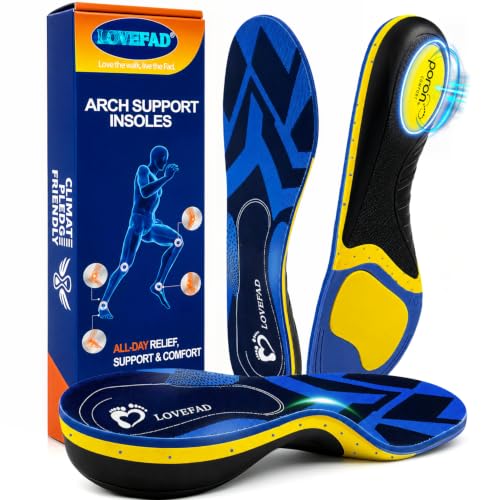
LOVEFAD Arch Support

FitVille 2 Pair Plantar Fasciitis Insoles, Wide Feet, Large


CRUVHEAL Work Pro Insoles, L

CRUVHEAL Work Orthotics, Blue, XL
Meet The Standout Selections
Your feet encounter uneven pressure differently depending on the shoes you wear, and the Aetrex L2200 aims to address that combination with cushioning and structured arch support. Its 0.25-inch profile makes it a practical starting point for sneakers, flats, and heels where a bulky insole would change the fit too much.
The memory-foam upper, Poron base, and cupped heel give it more support than a simple foam pad without reaching the pronounced height of some orthotic models. For teachers, nurses, walkers, and anyone spending hours on their feet, the balanced design looks like the most versatile starting point here.
A Few Highlights
- The 0.25-inch thickness fits more readily inside close-fitting shoes.
- Memory foam cushions the foot while the lower Poron layer absorbs impact.
- The heel cup adds stability without dominating the shoe’s interior.
- One design works across sneakers, flats, and heels.
Things To Consider
- People seeking a pronounced 1.3-inch or 1.4-inch arch height may find this profile less substantial.
- Check the toe and heel clearance before wearing the insoles in narrow shoes.
Key Specs
Made For Everyday Footwear
You benefit most from this option if you alternate among sneakers, flats, and heels and want moderate support without a towering arch profile.
Another Choice May Suit
LOVEFAD Arch Support is the better fit for a pronounced high arch or for trimming an insole to a roomier shoe.
Compared with the thinner Aetrex L2200, LOVEFAD Arch Support takes a firmer approach with a 1.3-inch arch profile and a three-point “Golden Triangle” layout. That design supports the forefoot, arch, and heel, making it a more structured option for flat feet or a pronounced high arch.
The arch area can feel firm during the first few days, particularly during an all-day shift or a long walk. The maker recommends starting with two to three hours and increasing wear over one or two weeks, which gives your foot time to adjust to the added support.
The Helpful Details
- The 1.3-inch arch profile gives high arches more material to contact.
- A deep heel cradle supports the rear foot during standing and walking.
- Trim-to-fit construction lets you adapt the shape to different shoes.
- The supportive structure suits walking shoes, athletic shoes, boots, and hiking shoes.
- A Poron heel pad adds cushioning at a common pressure point.
Practical Considerations
- The pronounced profile may feel crowded inside shallow shoes.
- Trimming changes the fit, so compare the toe and heel clearance before cutting.
At A Glance
Built With High Arches In Mind
You benefit most from this option when a moderate or high arch needs defined support across several types of footwear.
Where A Sibling Pick Shines
Aetrex L2200 Memory Foam Plantar Fasciitis Insoles suit people who want a slimmer profile for close-fitting everyday shoes.
Wide feet can make a supportive insole difficult to fit, particularly inside athletic shoes or boots. FitVille 2 Pair Plantar Fasciitis Insoles take a roomier approach, with a low-arch design, wide sizing, and a U-shaped heel cup intended to keep the foot positioned.
You receive two pairs, which makes it easier to place one set in walking shoes and another in work footwear. The trim-to-fit shape also gives you some control over the final dimensions, although the low arch makes this a less natural match for someone seeking the taller profiles offered by the LOVEFAD and CRUVHEAL high-arch options.
The Value In It
- Two pairs support separate pairs of everyday shoes.
- Wide sizing suits feet that feel cramped in standard insoles.
- The low-arch profile offers a gentler alternative to high-arch models.
- Trim-to-fit edges help align the insole with different footwear.
- The heel cup supports positioning during walking or running.
Less Ideal Details
- Large sizing runs from men’s 13 to 15, so smaller feet need another option.
- A low arch may provide less support for a pronounced high arch.
Made For Wider Footwear
You benefit most from this option when you have wide or large feet and want two pairs for rotating between shoes.
Reach For A Different Pick When
CRUVHEAL 220+ lbs Insoles, M suit shoppers who need a much taller arch profile and a more structured heel area.
FitVille takes the low-arch, wide-foot route, while CRUVHEAL 220+ lbs Insoles, M takes the opposite direction with a 1.4-inch arch and a design specifically aimed at heavier body weights. The added height gives the arch more surface area, which can feel useful in a roomy work boot.
That structure comes with a tradeoff. The insole is less discreet than the Aetrex L2200, so fit inside the shoe matters, and you may notice the arch shape during the first few wears. People carrying more weight may particularly appreciate the combination of arch support and a deeper heel cradle.
Where It Delivers
- The 1.4-inch arch provides substantial support for higher arches.
- Heel cradling adds stability during extended standing.
- The design is intended to retain support under higher body weight.
- Work-boot orientation suits a roomy footwear interior.
Points To Note
- The tall profile may crowd low-volume shoes.
- This listing is marked size M, so check your corresponding shoe size carefully.
Core Details
Built With Heavier Users In Mind
You benefit most from this option when you have a high arch, carry more body weight, and wear roomy work footwear.
A Better Fit Elsewhere
CRUVHEAL Work Pro Insoles, L fit low-arch users who prioritize gel cushioning over a 1.4-inch arch.
Not every heel needs a tall arch insert, and CRUVHEAL Work Pro Insoles, L take a lower, cushion-centered approach. Gel pads add extra material beneath the heel, while the low-arch support follows a more natural foot shape for people who spend much of the day in work boots.
A velvet top layer encourages airflow and helps limit the buildup of moisture and odor over a long shift. Raised massage points add texture under the foot, though you may notice them more during the opening wears than a conventional flat insole.
Advantages To Know
- Multiple gel pads add cushioning around high-pressure areas.
- Low-arch support suits feet that dislike a pronounced wedge.
- The breathable top layer suits extended daily wear.
- Massage points provide a textured cushioning effect.
- The black design keeps the insole visually understated inside boots.
Where It May Fall Short
- Low-arch support may feel insufficient for a pronounced high arch.
- The textured massage points can feel more noticeable during early use.
Made For Workday Comfort
You benefit most from this option when you spend long shifts in boots and prefer soft cushioning to a tall orthotic profile.
Swap It Out When
CRUVHEAL Work Orthotics, Blue, XL make more sense when you need arch structure, a deeper heel cup, and broader shock-absorbing support.
CRUVHEAL Work Orthotics, Blue, XL combines several support layers instead of relying on cushioning alone. A cushioned base, defined arch section, deep U-shaped heel cup, and shock-absorbing pads work together to keep the foot more stable through extended standing and walking.
Compared with CRUVHEAL Work Pro Insoles, L, this model places greater emphasis on arch support and heel containment. Its XL designation also makes it a more relevant choice for larger footwear, although the structured build can take several wears to become familiar.
The Upside
- Multiple layers provide both cushioning and structured support.
- The deep heel cup improves stability around the rear foot.
- Shock-absorbing pads soften repeated walking and standing impacts.
- The XL format suits larger work boots.
- The design targets foot and leg fatigue during extended shifts.
Possible Compromises
- The structured interior needs enough room inside the boot.
- The XL size may not correspond to the size marked on your current insoles.
Feature Snapshot
Built For Extended Shifts
You benefit most from this option when you need fuller orthotic support in larger work boots and stand or walk for long periods.
Look Elsewhere When
FitVille 2 Pair Plantar Fasciitis Insoles, Wide Feet, Large suit people who want low-arch support across two pairs of footwear.
What Matters Before You Choose An Insole
Match Your Arch Profile
A low arch, neutral arch, and high arch need different amounts of support. A neutral foot may find the Aetrex L2200 easier to wear because its 0.25-inch profile adds cushioning without creating a pronounced slope. A high arch may respond better to the taller LOVEFAD or CRUVHEAL designs, while low arches may prefer the flatter FitVille or CRUVHEAL Work Pro construction.
Check The Space Inside Your Shoes
Support cannot work properly when an insole crowds the toe box or lifts the heel above its usual position. Compare each insole’s height with the shoe’s internal dimensions, then consider whether the footbed can be trimmed. You should also check heel-to-toe length after trimming and avoid cutting away support near the arch.
Think About Your Workload
Standing on a hard floor calls for cushioning under the heel, while walking across uneven pavement puts more demand on arch stability. Work boots usually have more internal room than dress shoes, so a structured orthotic may fit comfortably there but feel excessive in a loafer. Think about your longest normal day rather than occasional use.
Give Firm Support Time
A more structured insole may initially feel unfamiliar because your foot is being held in a new position. Start with a shorter wear period and increase it gradually, especially for the LOVEFAD model, which includes a staged transition plan. Persistent heel pain or swelling deserves evaluation by a qualified healthcare professional.
Common Mistakes To Avoid
Wrong Turns To Avoid
Choosing only by the word “orthotic” misses the details that determine fit. Compare arch height, shoe volume, material, and intended footwear before buying. Avoid trimming the insole until you have checked the fit, because an overgenerous cut can remove useful support.
What Separates Premium From Basic
Premium options often devote more material to the arch, heel cradle, or layered cushioning. That extra construction may help when you stand for hours, but it can also make an insole bulky. Paying more makes sense when the added support matches your foot and fits your shoes comfortably.
Frequently Asked Questions
Which insole is best for standing all day?
CRUVHEAL Work Pro Insoles, L and CRUVHEAL Work Orthotics, Blue, XL are designed for extended standing. The Work Pro model emphasizes soft cushioning, while the Work Orthotics model provides more arch and heel structure.
Should plantar fasciitis insoles feel uncomfortable initially?
A firm arch can feel unfamiliar during the first few wears. Short sessions followed by gradual increases help your foot adjust, particularly with a 1.3-inch or 1.4-inch profile.
Can I use the same insoles in work boots and sneakers?
Only when the insole fits both pairs without crowding the toes or lifting the heel. The Aetrex L2200 has a slimmer 0.25-inch profile, making it more practical across different shoe styles.
Are high-arch insoles suitable for flat feet?
High-arch profiles can provide more support for flat or neutral feet, but the fit depends on your anatomy and footwear. The LOVEFAD model is described for flat and normal feet, so its adjustable shape deserves a close check before full-time use.
When should heel pain be evaluated by a professional?
Seek professional evaluation for pain that persists, worsens, or makes standing and walking difficult. A clinician can assess your feet and identify whether an insole is an appropriate part of your care plan.
Final Verdict
The Aetrex L2200 offers the most balanced starting point for everyday shoes, while the remaining picks narrow the focus for pronounced arches, wide feet, heavier body weight, and work boots. Match the insole to your arch and footwear, then allow time to adjust before deciding whether it belongs in your daily rotation.
