

A long shift at work can leave your feet feeling crowded, sore, and unstable, especially when your shoes lack meaningful arch or forefoot support. The right insole can shift pressure across the foot, stabilize the heel, and give the toes a more comfortable foundation without adding bulk. These options cover everything from structured support and work boots to trim-to-fit gel cushioning, helping you match the insert to your footwear and daily routine.
A Side-By-Side Look

PowerStep ProTech Met Full Length Orthotics, Made in USA, M 9-9.5 W 11-11.5
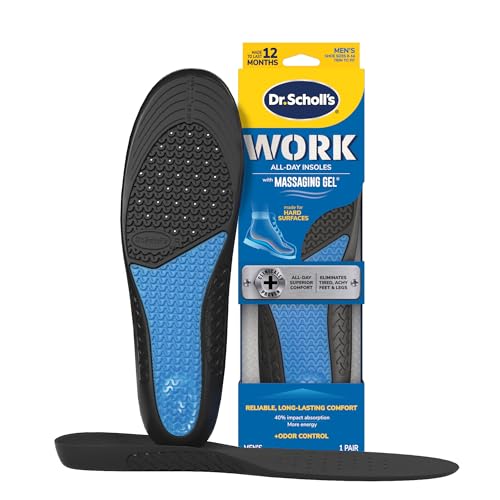
Dr. Scholl’s Work All-Day Insoles

Dr. Scholl’s Work Insoles with Arch Support for Work Boots, Pack of 2

CRUVHEAL 220+ lbs Plantar Fasciitis Insoles, M

CRUVHEAL Work Pro Low Arch Insoles, Black L

CRUVHEAL Work Orthotic Boot Insoles, Blue XL
What Each Pick Brings To The Table
Forefoot support deserves more attention than a toe-focused label suggests, and this full-length orthotic puts it directly under the ball of the foot. The integrated metatarsal pad is designed to spread pressure across that area, while a semi-rigid arch supports the foot’s inward rolling, a term used to describe pronation. You may find that combination more useful for daily walking than a soft cushion without structure.
The PowerStep ProTech Met also has a deep heel cradle and a ShockAbsorb Premium Foam heel cushion, so it handles both the rearfoot and forefoot rather than focusing on one region. It requires a shoe with a removable factory insole, and the listed size covers men’s 9 to 9.5 and women’s 11 to 11.5.
Noteworthy Benefits
- The ball-of-foot pad can reduce pressure concentration in tight work shoes.
- Full-length coverage supports the heel, arch, and forefoot during standing shifts.
- Semi-rigid structure offers more control than a loose gel insert.
- Made in the United States, according to the product details.
Practical Considerations
- Your shoes need removable insoles for a clean fit.
- The structured shape may feel more noticeable than a soft gel inlole.
Key Specs
Made For
You benefit most from this structured option in walking shoes or work shoes with removable insoles and a roomy toe area.
Consider Something Else When
Choose CRUVHEAL Work Pro Low Arch Insoles, Black L instead when soft gel cushioning and a lower arch profile suit your foot better.
A gel insole makes sense when your feet spend most of the day moving and your shoes have uneven interior space. Dr. Scholl’s Work All-Day Insoles use massaging gel to create a softer, more flexible underfoot experience, and the trim-to-fit format lets you cut the insert to match the inside of your shoe.
Compared with the PowerStep ProTech Met, this is the less structured option. You may prefer that springier feel in loafers, casual work shoes, or any footwear where a pronounced heel cradle would interfere with fit. The trim is practical, but the original outline still needs to resemble the shoe’s interior.
Notable Gains
- Massaging gel adds flexible cushioning under the heel and forefoot.
- Trim-to-fit construction accommodates shoes with different interior shapes.
- A soft profile can work well in shoes that reject rigid inserts.
Small Caveats
- These are designed for men’s shoes and may not suit women’s sizing.
- Flexible cushioning offers less control than a semi-rigid orthotic.
- Cut carefully to preserve the intended outline and support zones.
Right Fit For
You will likely appreciate this choice in men’s work shoes where removable, flexible cushioning matters more than rigid arch control.
Another Choice May Suit
PowerStep ProTech Met Full Length Orthotics, Made in USA, M 9-9.5 W 11-11.5 fits people who want stronger arch control and a dedicated ball-of-foot support pad.
Rotating insoles between work boots can leave one pair taking every shift while the other sits unused. This two-pack solves that practical problem by giving you a second pair for another pair of boots or for alternating days. Reinforced arch support and shock absorption make it a more structured choice than the flexible gel model in Dr. Scholl’s Work All-Day Insoles.
The listed fit covers men’s sizes 8 through 14 and women’s sizes 6 through 10. Because boot interiors vary considerably, measure the shoe and compare it with the insole before cutting or trimming anything, especially with a structured design.
Features That Help
- Two pairs make rotation between work shoes more convenient.
- Reinforced arch support suits people who want firmer positioning.
- Shock-absorbing construction cushions repeated steps on hard surfaces.
- The broad size range covers many common work-boot dimensions.
Worth Noting
- Structured inserts need enough room inside the boot.
- The two-pack offers less variety than choosing separate models for different footwear.
Quick Facts
Built With In Mind
This two-pair set is built for people who divide long shifts between work boots and need dependable arch positioning in both.
Look Elsewhere When
CRUVHEAL 220+ lbs Plantar Fasciitis Insoles, M offers a more targeted high-arch profile for feet that need pronounced support.
High arches can make a standard insert feel as though it gives way beneath your foot, particularly during long workdays. CRUVHEAL 220+ lbs Plantar Fasciitis Insoles use a 1.4-inch arch height to create a taller support profile, and their stated design accounts for body weights above 220 pounds.
That pronounced support is the key distinction from CRUVHEAL Work Pro Low Arch Insoles, which deliberately follow a flatter arch. You may find the greater height more supportive, but it also needs a shoe with adequate interior volume. A structured insert should sit flat without pressing the top of your foot.
Positive Takeaways
- The 1.4-inch arch provides a more substantial support profile.
- Design considerations account for body weight above 220 pounds.
- The tall profile suits people who feel unsupported in flatter insoles.
- Heel-focused support can improve the feeling of stability in work shoes.
Points To Keep In Mind
- High arch support may feel excessive for a low-arch foot.
- The insert needs sufficient room beneath the instep.
- Confirm the correct size before ordering.
Feature Facts
Who It Suits Best
This model suits people with high arches, heavier body weights, and shoes that can accommodate a tall structured insert.
Skip It When
CRUVHEAL Work Pro Low Arch Insoles, Black L is a better match for a low arch or a boot with a shallower interior.
Some work boots already have plenty of structure, so adding a tall arch support can make the foot feel pushed upward. CRUVHEAL Work Pro Low Arch Insoles take the opposite approach, following a flatter profile while adding cushioning beneath the heel and forefoot.
Gel pads provide flexible shock absorption, a velvet surface helps manage moisture and odor, and raised massage points add texture under the foot. Compared with the more formal PowerStep ProTech Met, this model prioritizes a cushioned work-boot feel rather than controlled arch positioning.
What Helps Most
- Gel pads cushion the heel and forefoot during long shifts.
- The low profile follows a flatter arch shape.
- Velvet helps air circulate against the foot.
- Massage points provide textured stimulation underfoot.
Less Ideal Details
- A low profile offers less arch control than a semi-rigid orthotic.
- Textured massage points may not suit people who prefer a flat surface.
- The listed size is large, so check the fit before ordering.
Best Suited To
You benefit most from this option in work boots when you have a low arch and want cushioning without a pronounced support ridge.
Reach For A Different Pick When
CRUVHEAL 220+ lbs Plantar Fasciitis Insoles, M suits people who need a taller arch profile and stronger support.
Long shifts call for support that remains comfortable from the first hour to the last. CRUVHEAL Work Orthotic Boot Insoles combine a cushioning layer, arch support, a deep U-shaped heel cup, and shock-absorbing pads. The heel cup helps hold the rearfoot more steadily, while the arch section supports the middle of the foot.
Compared with CRUVHEAL Work Pro Low Arch Insoles, this model places more emphasis on structured heel and arch control. The listed size is extra large, so make sure the boot’s removable insole area has enough width and depth. A stable base matters more than a dramatic height on this particular model.
Benefits That Matter
- The deep heel cup adds stability during extended standing.
- Arch support balances the boot’s underfoot structure.
- Shock-absorbing pads soften the impact of hard flooring.
- The combined cushioning supports repeated work shifts.
Where It May Fall Short
- The extra-large size may not align with narrower boots.
- The structured heel cup can require more room than a flat cushion.
Technical Highlights
Who Will Love This
This model is a strong match for people who spend full shifts standing in roomy boots and prefer stable heel support.
A Better Fit Elsewhere
Dr. Scholl’s Work All-Day Insoles suit people who prefer flexible, trim-to-fit gel cushioning over a structured heel cup.
Match The Insole To Your Foot And Workday
Arch height is the first feature to check because it determines how the insole meets the middle of your foot. A high profile provides more upward support, while a low profile follows a flatter shape. Your shoe’s interior volume matters just as much, since a supportive insert should sit flat without forcing the top of your foot upward.
Forefoot And Toe Comfort
Ball-of-foot support is more relevant to comfortable toes than direct toe padding in many cases. A metatarsal pad spreads pressure beneath the widest part of the forefoot, which can help prevent the front of the foot from feeling overly compressed. PowerStep ProTech Met offers the most explicit forefoot feature in this group.
Cushioning Versus Structure
Gel insoles flex with your foot and work well in shoes with limited space. Semi-rigid orthotics control movement more closely, which may feel steadier during long walks or standing shifts. The honest choice is the one that feels supportive without creating pressure anywhere in the shoe.
Work Boot Fit
Remove the factory insole and compare its length, width, and heel shape with the replacement. Structured inserts generally need more room, while trim-to-fit gel models offer more adjustment. For persistent pain, numbness, swelling, or foot changes associated with diabetes, seek guidance from an appropriate specialist doctor before changing your footwear setup.
Common Mistakes To Skip
Common Shopping Slip Ups
A common mistake is choosing arch height from a label rather than your foot shape and shoe. Another is ordering a rigid insert for a low-volume shoe without checking the toe area. Measure the removable factory insole and compare its outline with the new insert before making a decision.
What The Higher Tier Buys
Higher-cost orthotics often add a taller or more precisely contoured profile, a defined heel cradle, and a dedicated forefoot pad. That extra structure can matter in demanding footwear, but it does not automatically suit every foot. A simple gel insert may integrate more comfortably with a particular work shoe.
Frequently Asked Questions
Are Insoles For Toe Support Supposed To Be Very Thick?
Not necessarily. A thin, flexible insole can fit narrow shoes better, while a structured model may need more interior room. Match thickness to the footwear and your support preferences.
Do Toe-Support Insoles Help With Plantar Fasciitis Discomfort?
They may provide a more supportive and comfortable platform, but the right approach depends on your symptoms and footwear. Persistent discomfort deserves assessment by an appropriate specialist doctor.
Can You Use Work Insoles in Regular Shoes?
You can use them in many removable-insole shoes, provided the dimensions and shape match. Structured insoles are less suitable for shoes with a fixed footbed or a very shallow interior.
Should High-Arch Insoles Be Trimmed?
Follow the maker’s fitting guidance and avoid cutting support-critical areas. Check the size markings first, since a high arch insert may also need adequate room above the instep.
How Often Should Work Insoles Be Replaced?
Replace them when the shape, cushioning, or fit no longer suits your shoes or daily routine. A daily work schedule may create more wear than occasional use.
Final Thoughts
The most useful choice depends on your shoe, arch, and workday. PowerStep stands out for structured forefoot support, Dr. Scholl’s offers flexible convenience, and the CRUVHEAL models cover high-arch, low-arch, and boot-focused needs. Measure your removable insole, check the internal fit, and select the support level that feels comfortable without crowding your foot.
