

A high arch can leave a shoe feeling oddly roomy through the middle while still pressing on your heel and the ball of your foot. The right insert can add shaped support without changing the shoe’s exterior, which matters during long commutes, office days, and shifts spent walking. These six EASYFEET options cover different needs, including firmer arch geometry, heavier-duty cushioning, odor control, and support for people weighing 220 pounds or more.
A Quick View Of The Lineup
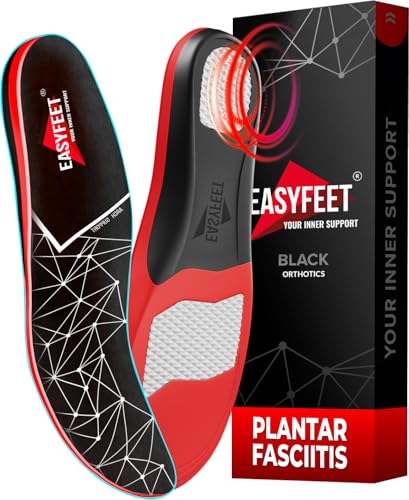
EASYFEET High Arch Support Insoles

EASYFEET Core Energy Arch Support Insoles

EASYFEET 220+ lb Work Boot High Arch Insoles

EASYFEET Black Onyx High Arch Insoles

EASYFEET Mount Strength High Arch Insoles
EASYFEET Orthotic Work Insoles
The Details Behind The Selections
A high arch often needs support that fills the empty space beneath the middle of the foot. This insert uses a firm arch bridge to distribute weight across more of the foot rather than concentrating it at the heel and forefoot. That makes it a sensible starting point for daily shoes, especially during walks that leave the middle of your foot feeling unsupported.
The raised heel cup gives the heel a defined boundary, which can make the rear of the foot feel more settled inside a roomy shoe. You may find this firmer profile more noticeable than a soft everyday insert, especially during your first few wears. It suits people who want structure without switching to a heavily padded work insole.
Strong Points
- The firm arch bridge fills the space created by a high arch.
- Weight distribution can reduce pressure at the heel and ball of the foot.
- The deep heel cup helps keep the rear foot centered in the shoe.
- Its structured shape works well in casual and walking shoes.
Worth Noting
- Firm support may feel intrusive in very flexible or thin shoes.
- Arch height and shoe volume still need to match your foot.
Key Specs
Made For
You benefit most from these insoles when high arches and long walking sessions are part of your normal routine.
A Better Fit Elsewhere
EASYFEET Core Energy Arch Support Insoles offer a better fit for you when extra forefoot and heel cushioning matters more than this model’s firmer structure.
Core Energy takes a different approach from EASYFEET High Arch Support Insoles by combining a high, firm arch section with cushioning at the heel and forefoot. That combination makes it useful for shoes where you want support through the middle of the foot but also spend time on hard surfaces. It can be especially appealing for commuters who alternate between walking, standing, and sitting.
The deep heel cup keeps the heel from shifting around, while the forefoot cushioning softens the area under the ball of the foot. The manufacturer also states that the cushioning absorbs up to 43% of shock. Your comfort will still depend on the room available inside your shoes, so a removable insole should fit beneath the existing footbed without raising the heel excessively.
The Good Stuff
- Firm arch support suits high, flat, and fallen arch profiles.
- Heel and forefoot cushioning improves comfort on hard surfaces.
- The deep heel cup helps stabilize the rear foot.
Trade Offs
- The combination of height and cushioning may reduce space in close-fitting shoes.
- The stated shock absorption depends on using the insert as intended.
Best Suited To
These insoles suit you when your day mixes standing, walking, and enough firm arch contact to make structured support worthwhile.
Another Choice May Suit
EASYFEET Orthotic Work Insoles suit you better when prolonged standing at work is the central concern.
Work boots leave little room for a decorative insert, so this model concentrates on a strong arch profile and layered cushioning. Its extra-strong support is designed for people weighing 220 pounds or more, while heel and metatarsal pads add cushioning at two common pressure points. A metatarsal pad sits beneath the ball of the foot and spreads contact across that area.
Compared with Core Energy Arch Support Insoles, the emphasis shifts toward load distribution and sustained support in demanding footwear. The listed Size M fits men’s sizes 9 to 10.5 and women’s sizes 10 to 11.5. That narrow sizing explains why checking your shoe’s insole measurements matters before ordering.
What It Does Well
- Extra-strong arch geometry is intended for users weighing 220 pounds or more.
- Layered cushioning softens heel and forefoot contact.
- Heel and metatarsal pads cushion separate pressure areas.
- The design supports more even weight distribution during standing.
- Shock-absorbing sections help manage repeated walking impact.
Small Caveats
- Size M covers a specific men’s and women’s range.
- Its substantial structure may need trimming to suit your boot.
Feature Breakdown
Built With In Mind
This insert is built for you when your work boots, body weight, and full days on your feet demand more substantial support.
Swap It Out When
EASYFEET Mount Strength High Arch Insoles suit you better when you need heavy-duty arch support without a specific work-boot size range.
Black Onyx brings a different priority to the lineup: odor control alongside premium materials and high-arch shaping. That combination makes it a practical consideration for office shoes, walking shoes, and other footwear worn through long, warm days. The dark finish also gives the insert a discreet appearance inside a shoe.
Unlike the layered construction of EASYFEET 220+ lb Work Boot High Arch Insoles, this model is framed around everyday refinement and materials intended for regular use. You may find it less specialized than the work-focused insert, which is useful when you want support that suits several environments rather than a single demanding job.
Practical Pluses
- Odor control adds value in shoes worn throughout the day.
- Premium materials support regular use in office and walking shoes.
Factors To Consider
- The exact arch height and material details should be checked against your shoe’s removable footbed.
Quick Facts
Who Will Love This
This model appeals to you when understated styling, odor control, and general high-arch support matter in shoes used from morning to evening.
Consider Something Else When
EASYFEET Core Energy Arch Support Insoles suit you better when pronounced heel and forefoot cushioning is your first priority.
Mount Strength is built around a straightforward requirement: extra-strong arch support for people whose body weight reaches 220 pounds or more. Its shaped profile is intended to fill the arch area and distribute weight across the foot. That makes it a more focused selection than the general-purpose Black Onyx model, particularly for people who feel the floor through a standard insert.
The work-boot version uses additional heel and forefoot pads, while Mount Strength centers the decision around a firm arch platform. You may prefer it over EASYFEET 220+ lb Work Boot High Arch Insoles when you want the heavier support rating without being limited to the listed Size M range. Check your shoe’s internal dimensions and intended trim allowance before ordering.
Practical Advantages
- Extra-strong support is designed for users weighing 220 pounds or more.
- The contoured shape aims to spread weight across the foot.
- It suits walking and standing shoes with removable footbeds.
Points To Keep In Mind
- The strong profile may feel too pronounced in flexible shoes.
- Fit depends on the internal dimensions and shape of your shoe.
The Right Fit
You’ll find the strongest fit when your body weight is at least 220 pounds and your shoes have room for a firm, high arch profile.
Where Another Pick Suits Better
EASYFEET Black Onyx High Arch Insoles suit you better when odor control and premium everyday materials matter more than heavy-duty support.
Standing all day asks more of an insole than simple cushioning, and this model uses an orthotic shape to support the foot during long occupational shifts. Orthotic describes a contoured insert designed to influence how the foot sits inside the shoe. The result is aimed at people who finish work with noticeable fatigue through their feet and legs.
Compared with EASYFEET Mount Strength High Arch Insoles, the emphasis is less about a 220-pound weight threshold and more about sustained standing. You may find this a better fit for kitchen crews, warehouse staff, retail employees, and anyone spending hours on hard flooring. Size details deserve attention because the insert must sit flat inside the shoe without crowding the toes.
A Favorable Mix
- The orthotic shape supports the foot during prolonged standing.
- Anti-fatigue design targets workday discomfort at the feet and legs.
Possible Compromises
- Less specific sizing details make checking the shoe dimensions essential.
- Contoured support may take some time to adjust to.
- Boots with fixed footbeds may not accept the insert cleanly.
Core Details
Whose Shelf It Belongs On
These insoles belong in your work shoes when you spend most of the workday standing on hard floors or concrete.
Look Elsewhere When
EASYFEET 220+ lb Work Boot High Arch Insoles suit you better when your body weight is 220 pounds or more and you know your exact size.
What To Check Before Buying High-Arch Inserts
Match The Support To Your Arch
A high arch needs contact beneath its raised middle section, but too much structure can feel uncomfortable in a shallow shoe. Remove the current insole and compare its shape with the insert you’re considering. A close outline is usually more useful than a rough shoe-size match.
Think About The Time You Spend Standing
Commuters, warehouse workers, restaurant staff, and people standing through long meetings place different demands on an insert. Cushioning can soften hard-floor contact, while a firmer arch bridge adds structure. Your most demanding pair of shoes should guide the decision.
Check The Internal Shoe Space
A supportive insert still has to fit beneath the shoe’s footbed without crowding the toes or lifting the heel too far. Measure the removable insole from heel to toe and compare its width with the replacement. This simple check can prevent the most frustrating ownership problem.
Shoe Fit Details Worth Checking
Common Shopping Slip Ups
Choosing solely by shoe size can miss differences in width and arch shape, so compare the actual insole dimensions. Another common mistake is assuming every high arch needs maximum firmness; a lightly cushioned insert may suit a less structured daily shoe better.
What The Higher Tier Buys
More specialized designs often add heel and forefoot cushions, heavier arch support, or materials intended for prolonged use. That extra construction is most useful when your work demands long periods of standing or your body weight calls for a stronger profile.
Frequently Asked Questions
What type of shoe is best for a high arch?
A shoe with a removable footbed and enough internal volume gives you the most control over support. The fit around the heel, toes, and midfoot matters more than the label on the box.
Should high-arch insoles be hard or soft?
Firm inserts provide structure, while softer designs cushion and mold around the foot. A moderately firm model often works for general daily use, while boots and prolonged standing may justify more pronounced support.
Can an insole make a shoe fit a high arch?
An insole can fill space and add support beneath the middle of the foot, but it cannot correct a shoe that is too short or narrow. You still need adequate toe room and a secure heel fit.
Do these insoles treat plantar fasciitis?
These inserts are supportive shoe components, not medical treatments. Persistent heel discomfort, swelling, or pain deserves assessment by an appropriate specialist doctor.
How do I choose between EASYFEET models?
Choose EASYFEET High Arch Support Insoles for a firm bridge, Core Energy for combined arch support and cushioning, and the work-focused designs for long standing or body weights of 220 pounds or more. Measure your shoe’s removable footbed before selecting a size.
Final Verdict
High-arch support works best when the insert’s shape, cushioning, and your shoe work together. EASYFEET High Arch Support Insoles offer the clearest starting point for everyday use, while the work-focused options address heavier loads and extended standing. Match the model to your daily demands, confirm the internal fit, and choose shoes that still feel secure around the heel and toes.
