

Low arches can make everyday shoes feel unstable by midday, especially during long walks or hours spent standing. These shoe-compatible insoles add structured support, heel stability, and cushioning to shoes that lack them. You’ll find options suited to daily wear, work boots, heavier body weights, and narrower shoe sizes.
The Main Contenders
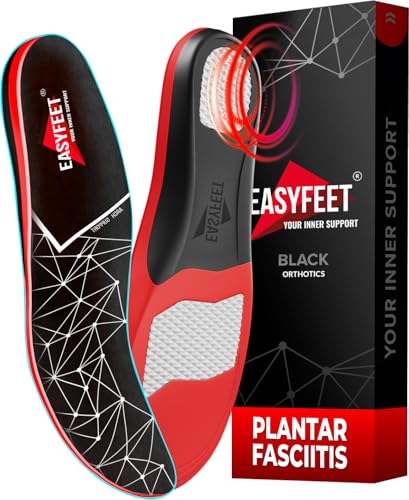
EASYFEET High Arch Support Insoles

EASYFEET Arch Support Insoles

EASYFEET 220+ lbs High Arch Work Boot Insoles, Men 9-10.5, Women 10-11.5

EASYFEET Premium High Arch Insoles

EASYFEET 220+ lbs High Arch Insoles
EASYFEET Orthotic Work Insoles
Taking A Closer Look At The Options
A flat foot can roll slightly inward inside a shoe, leaving the heel and forefoot carrying more of the load. This EASYFEET model uses a firm arch bridge, which is the raised section that supports the middle of your foot, to spread pressure more evenly. It’s a practical choice for low-arch feet that need structure without moving to a full-length orthotic.
The deep heel cup adds another layer of positioning by helping keep your heel centered. Compared with the cushioned EASYFEET Arch Support Insoles reviewed later, this pair puts more emphasis on the arch bridge and heel structure. You may find that firmer feel more noticeable during long shifts.
What Works In Its Favor
- The firm arch bridge provides a clear support profile for low or flat feet.
- Pressure can spread beyond the heel and ball of the foot during walking.
- The deep heel cup helps stabilize your heel inside compatible shoes.
- It adds support without requiring a specialized orthotic-style shoe.
Worth Noting
- The firm bridge may feel pronounced in thin shoes, so start with shorter wear periods and assess the fit.
Key Specs
Made For
You’ll get the most benefit from this pair if low arches make ordinary walking shoes feel uneven or unstable.
A Better Fit Elsewhere
EASYFEET Orthotic Work Insoles suit people who spend most of the day standing in work shoes.
This updated EASYFEET model combines a high, firm arch with cushioning under both the heel and forefoot. That makes it a sensible middle ground for walking shoes, casual sneakers, and office footwear where you want support and a softer landing without the boot-oriented construction of the EASYFEET Work Boot Insoles.
The manufacturer states that the cushioning absorbs up to 43% of shock, a figure that explains its more cushioned approach. In most shoes, you’ll notice the extra padding sooner than the arch bridge. The listed XS and S sizes make this a better fit for smaller feet than the wider size range available from several work-focused choices.
Everyday Wins
- Heel and forefoot cushioning softens each step in frequently worn shoes.
- The deep heel cup supports steadier positioning during long walks.
Trade Offs
- The provided size options cover only XS and S, so check your shoe size carefully.
- Multiple layers of cushioning may reduce the usable space inside a very snug shoe.
- A firm arch is not the gentlest choice for someone who dislikes structured support.
Built With In Mind
This pair works well for daily walkers and office workers who want support with noticeable cushioning.
Where A Sibling Pick Shines
EASYFEET Premium High Arch Insoles offer a better fit for people who prioritize odor control and premium materials.
Work boots leave less room for a thin insert, so this EASYFEET model concentrates on support and cushioning where it counts. Its extra-strong arch profile is designed for people weighing 220 pounds or more, while a base cushioning layer and separate heel and metatarsal pads add softness beneath high-pressure areas.
Metatarsal pads sit beneath the ball of the foot, where a rigid work shoe can feel especially unforgiving. Compared with the EASYFEET 220+ lbs High Arch Insoles, this version adds more explicit shock-absorbing cushioning for boot use. The listed M size fits men’s 9-10.5 and women’s 10-11.5, so compare that range with your boot size.
A Few Strong Suits
- Extra-strong arch geometry targets support needs above 220 pounds.
- A dedicated cushioning layer softens contact with a firm boot bed.
- Heel pads absorb impact beneath the heel.
- Metatarsal pads add cushioning under the forefoot.
- The size range covers two common work-boot widths.
Practical Considerations
- Size M may not fit your boots, and a thicker insole can reduce interior room.
- The 220-pound design target is specific rather than a universal fit category.
Feature Snapshot
The Right Fit
You’ll appreciate this model in sturdy work boots, especially with a body weight above 220 pounds.
Another Choice May Suit
EASYFEET Orthotic Work Insoles fit people whose priority is support during long periods of standing.
Daily shoes rarely need to look technical, and this EASYFEET pair takes a more refined approach than the overtly rugged work-boot models. Its premium materials and detailed construction are aimed at walking, office work, and routine wear. The high-arch positioning adds support without turning the insole into the main event.
Odor control is the feature that separates it from the other choices. That makes sense for shoes worn through commutes, meetings, and long afternoons, although odor control doesn’t replace regular shoe rotation and foot care. Compared with EASYFEET Arch Support Insoles, the appeal here is presentation and material quality rather than published shock-absorption data.
Good Reasons To Consider
- Premium materials suit shoes where appearance matters as much as function.
- Odor control supports daily wear without adding a bulky work-boot look.
- The high-arch profile provides structure for low arches.
Points To Keep In Mind
- No specific size range appears in the available listing details, so check the size options carefully.
- The insole may take less room in close-fitting office shoes.
Quick Facts
Who Will Love This
This pair appeals to you if understated styling and odor control matter in everyday shoes.
Look Elsewhere When
EASYFEET Work Boot Insoles suit people who need thicker cushioning for demanding work boots.
Body weight changes how much support an insole needs to remain useful, and this EASYFEET model is designed around a 220-pound threshold. Its extra-strong arch support and anatomical shape aim to position the foot while distributing weight across a broader area. That makes it a more targeted choice than a general cushioning insert.
For low arches, the support geometry is the main event. Unlike the EASYFEET Work Boot Insoles, which add multiple pads for shock absorption, this model presents a simpler high-arch design for everyday shoes. You may find it useful for walking shoes, sturdy sneakers, or work footwear where structured support matters more than extra padding.
The Practical Payoff
- The 220-pound design target provides a clear support rationale.
- Anatomical shaping supports the arch and spreads weight across the foot.
- The focused design suits shoes that already provide some cushioning.
Small Caveats
- The firm support may feel too structured in thin or flexible shoes.
- The design is specifically positioned for people weighing more than 220 pounds.
- Boot users seeking separate heel and metatarsal pads have a more specialized option.
Whose Shelf It Belongs On
You’ll appreciate this pair if you weigh more than 220 pounds and want pronounced arch support in sturdy shoes.
Reach For A Different Pick When
EASYFEET Arch Support Insoles suit smaller feet needing layered heel and forefoot cushioning.
Warehouse aisles, kitchen shifts, and hospital corridors can leave your feet feeling tired long before your schedule ends. This EASYFEET orthotic model is made for occupations that involve extended periods of standing. An orthotic insole uses shaped support to influence how your foot sits inside the shoe, and this pair focuses on that positioning rather than fashion.
Its anti-fatigue design makes it more specialized than the EASYFEET Premium High Arch Insoles, which lean toward polished daily wear. For standing work, the difference in purpose matters more than appearance. You may find this model most useful in sturdy work shoes that have enough internal volume to accommodate structured support.
Features That Help
- The orthotic profile is designed around prolonged standing.
- Arch positioning can make supported work shoes feel more stable.
- The anti-fatigue focus suits physically demanding jobs.
- You can use it as a dedicated insert in compatible work footwear.
Points To Note
- Your work shoe needs enough room for a structured insole without distorting its fit.
Core Details
Best Suited To
This pair is built for nurses, warehouse staff, cooks, and other people who stand for much of the working day.
Swap It Out When
EASYFEET High Arch Support Insoles suit casual daily shoes that need a simpler arch bridge and heel cup.
What Matters Most In Low-Arch Footwear
Start With The Shoe’s Fit
A supportive insole cannot compensate for a shoe that crowds your toes or bends unpredictably. Place the insole in the shoe and check that your heel sits securely without your foot sliding. Low-arch feet often feel more stable in shoes with a firm heel counter, the rigid section that keeps your heel centered.
Consider Arch Shape And Support Level
A low arch needs support without being forced into an excessively raised position. The EASYFEET models here range from firm arch bridges to orthotic-style positioning and thicker work-boot cushioning. Compare the support level with your comfort preferences, especially in shoes with removable factory insoles.
Match The Insole To The Activity
Walking, standing, and lifting create different demands. A cushioned daily insert may suit commutes, while padded work insoles make more sense for long shifts and sturdy boots. Higher body weight can also change the amount of structure and load distribution you need from an insole.
Check Size Before Ordering
Use the listed shoe size, not your casual footwear size alone. A thicker insert reduces interior space, and work shoes often follow different sizing rules than sneakers. Persistent foot discomfort warrants guidance from an appropriate specialist doctor.
Common Mistakes Worth Avoiding
Pitfalls Shoppers Hit
The most common mistake is choosing an insole by arch label alone. Shoe volume, heel position, and daily activity matter just as much. Another mistake is forcing a thick insert into a narrow shoe, which can change the fit enough to create pressure elsewhere.
What Separates Premium From Basic
Higher-tier insoles may spend more on support geometry, heel cups, and layered cushioning. Those additions can justify a higher price for someone who spends long hours walking or standing. A simpler insert remains sensible for occasional use in roomy shoes.
Frequently Asked Questions
Do Low Arches Require Special Shoes?
Low arches often benefit from shoes with firm heel support and removable insoles. A supportive insert can add structured support to compatible everyday shoes.
Can I Use These Insoles in Running Shoes?
Their compatibility depends on the shoe’s internal volume and insole shape. You’ll have more room in shoes designed for removable inserts than in closely fitted models.
Which EASYFEET Insole Is Best for Standing All Day?
EASYFEET Orthotic Work Insoles focus specifically on extended standing and anti-fatigue positioning. Work-boot models add thicker cushioning for heavier loads.
Do High-Arch Insoles Work for Flat Feet?
Several options include firm or extra-strong arch geometry intended for flat feet as well as high arches. The appropriate choice depends on the shoe fit and the amount of support you prefer.
Should I Size Insoles by Shoe Size?
Start with the manufacturer’s size chart and compare it with your shoe size. Pay attention to the listed length range and account for the space taken up by a thicker insole.
Final Thoughts
The best choice depends on your shoes, schedule, and preferred level of structure. EASYFEET High Arch Support Insoles offer a simple starting point, while the work-focused models bring heavier cushioning and pronounced support for demanding days. Check the size, confirm that the insole fits your footwear, and choose based on how much structure feels comfortable.
