

Flat feet can make a long workday feel much harder, especially when your shoes lack meaningful arch support. The right insert should match your arch height, activity, and footwear rather than simply add extra cushioning. Six options here cover running, standing shifts, court sports, and everyday walking, with different levels of structure and heel control.
The Main Contenders

Superfeet Run Cushion Insoles

ZHEOHSKY 4D Cloud Insoles

PowerStep Pinnacle Maxx Orthotic Insoles
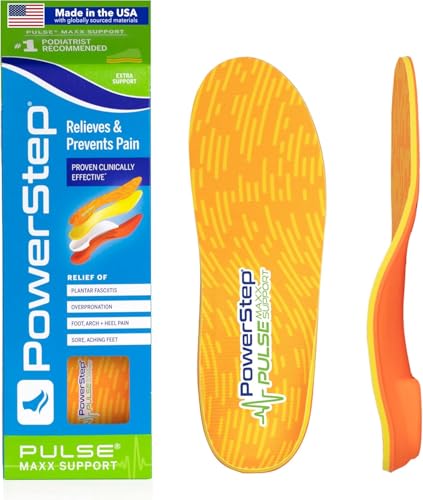
PowerStep Pulse Maxx Running Insoles

MOVE Game Day Pro Insole
PowerStep Pinnacle Low Orthotic Insoles
Inside Each Recommended Option
A runner with a high arch can feel every hard section of a route through the shoe. The Superfeet Run Cushion uses a structured high-arch profile, meaning the support rises farther beneath the middle of your foot, while its deeper heel cup adds stability during landing and toe-off.
Flexible support is the useful part here. Its adaptive construction bends with your foot, so it is designed for running and walking shoes, including zero-drop models, without behaving like a rigid orthotic. Compared with the memory-foam ZHEOHSKY 4D Cloud Insoles, you get more deliberate arch and heel support rather than mostly soft cushioning.
Bright Spots
- High-arch support suits feet that feel under-supported in ordinary athletic shoes.
- Adaptive construction moves with your stride instead of forcing one fixed shape.
- A moisture-wicking cover helps manage warmth and odor during longer runs.
- Trim-to-fit construction lets you adapt the insert to your footwear.
Trade Offs
- You must follow the cutting instructions before wearing the insoles.
- The pronounced arch profile may feel too tall for a low-arch foot.
Quick Facts
Who Will Love This
You will get the most from these insoles as a high-arch runner or walker who wants structured support in athletic shoes.
Where Another Pick Shines
PowerStep Pinnacle Low Orthotic Insoles make more sense for a low-arch foot that needs a broader, less elevated support profile.
Concrete floors rarely feel kind during a twelve-hour shift, and that is the situation these ZHEOHSKY insoles target. Their 4D cloud cushioning is designed to soften heel landings and distribute pressure as you walk, while the memory foam gradually takes on the shape of your foot.
They suit sneakers, casual shoes, boots, and work footwear, so you can move one pair between settings. The breathable, moisture-wicking fabric also supports airflow. Unlike the Superfeet Run Cushion, these inserts prioritize plush cushioning and adaptable comfort over a high, clearly defined arch platform.
A Strong Showing
- Soft cloud cushioning makes sense for prolonged standing and walking.
- Memory foam adapts to the foot for a more personalized feel.
- Moisture-wicking fabric improves breathability inside work shoes.
- Multiple sizes and a trim-to-fit design cover several footwear styles.
Things To Consider
- Cloud cushioning may feel less precise than the structured support of the PowerStep Pinnacle Maxx Orthotic Insoles.
- You need to select the appropriate size and trim it to prevent bunching.
- These are broad everyday inserts rather than running-specific motion-control devices.
Made For
Service workers, retail staff, and anyone spending long stretches on hard floors will appreciate the soft landing and moisture management.
A Better Fit Elsewhere
Superfeet Run Cushion Insoles offer a clearer arch profile for athletes who need support that flexes through running movement.
Standing all day in work shoes calls for more than a soft layer. The PowerStep Pinnacle Maxx combines firm, flexible support with an angled heel, a feature designed to influence how your heel meets the ground and how your foot moves through a step.
That structure makes it a practical choice for flat feet and overpronation, meaning the foot tends to roll inward during movement. Compared with the Pinnacle Low model, the Maxx emphasizes stability and stronger heel positioning. You may notice the angled heel sooner than the arch support during your first walks.
Well-Handled Touches
- Firm, flexible construction balances support with movement.
- The angled heel provides a more deliberate foot position.
- Its stability focus suits work shoes and long walking days.
- Made in the United States.
Practical Considerations
- The firm structure may take more adjustment than a foam insert.
- A pronounced angled heel can feel different from a neutral heel cradle.
- Its size within the shoe matters for preventing movement and bunching.
Core Details
Built With In Mind
You benefit most from this insert during long workdays in roomy shoes that can accommodate structured orthotic support.
Consider Something Else When
PowerStep Pinnacle Low Orthotic Insoles are a better choice for a lower arch that responds better to a gentler, broad heel cradle.
Fast running shoes do not always provide the motion control your stride needs. The PowerStep Pulse Maxx is built for running shoes and uses a more rigid shell plus an angled heel to guide the foot during vigorous activity.
Compared with the broader PowerStep Pinnacle Maxx Orthotic Insoles, this model concentrates on running-specific movement control. That makes it a more focused choice for overpronating runners, though the firmer construction may feel more noticeable than the flexible Superfeet Run Cushion Insoles.
Where It Excels
- Designed specifically for use inside running shoes.
- A rigid shell provides more structure during faster movement.
- The angled heel supports alignment for overpronating feet.
- Polyester construction keeps the focus on foot control.
Things That May Matter
- The rigid shell may feel too substantial for a casual walking shoe.
- Running-specific sizing should be checked before use.
- Motion-control inserts can take time to feel natural during strides.
Technical Highlights
Who Should Grab It
Distance runners whose feet roll inward can benefit from this focused motion-control design in supportive running shoes.
Another Choice May Suit
Superfeet Run Cushion Insoles suit high-arch runners who prefer flexible arch support over a rigid corrective shell.
Quick cuts on a tennis court or repeated drives on a basketball floor call for a responsive base rather than an ordinary walking insert. The MOVE Game Day Pro is designed to mold to your shoe, foot, and playing style, providing a stable foundation for takeoff with cushioning on landing.
It preserves natural foot movement while giving court athletes a more responsive platform. Unlike the PowerStep Pulse Maxx Running Insoles, its emphasis is adaptable athletic cushioning rather than corrective control for overpronation, so it is less targeted to flat-foot mechanics.
Useful Strengths
- Molds to the shoe and foot for a personalized shape.
- Responsive cushioning suits repeated starts and stops.
- Stability supports movement without forcing a rigid shape.
- Designed for basketball, tennis, and other field sports.
Less Ideal Details
- Its sport-specific design does not target overpronation as directly as the Pulse Maxx.
- You must confirm that your shoe has enough room for a molded insole.
- Walking shoes may not need this much athletic shaping.
The Right Fit
Competitive basketball and tennis players benefit from this option when quick direction changes matter more than corrective arch support.
Reach For A Different Pick When
PowerStep Pulse Maxx Running Insoles better serve runners who need firm motion control for inward foot rolling.
Flat feet often need support spread across a broad area rather than pushed upward through a tall arch. The PowerStep Pinnacle Low uses a low-arch profile and a deep heel cradle, a raised section around the heel that helps hold the foot in a more centered position.
Its firm, flexible construction and dual-layer cushioning make it a practical choice for extended daily wear. Compared with the Pinnacle Maxx, the low profile and broad cradle feel more accommodating for lower arches. The insert is also designed to handle body weights of 250 pounds and above.
Benefits That Matter
- A low arch profile suits feet that dislike elevated support.
- The deep heel cradle adds broad stability around the heel.
- Dual-layer cushioning balances support with shock absorption.
- Made in the United States for daily walking and standing.
Some Limits To Know
- A low arch may provide too little support for a notably high arch.
- The heel cradle requires adequate shoe volume to sit securely.
- Supportive footwear remains important alongside any insert.
Key Product Details
Whose Shelf It Belongs On
Adults with low arches who spend substantial time walking or standing benefit from this broad, supportive profile.
Swap It Out When
PowerStep Pinnacle Maxx Orthotic Insoles suit feet that need a firmer structure and a more pronounced angled heel.
What Matters Before You Choose Your Inserts
Arch Profile and Foot Movement
Arch height is only one part of the decision. Overpronation describes the foot rolling inward during a step, and an insert may address that motion through a firmer shell, heel cradle, or angled heel. Your shoe type matters too because walking shoes, running shoes, and court shoes have different amounts of internal space.
Fit Inside the Shoe
Remove the factory insole and compare its shape with the replacement before trimming anything. The insert should sit flat without curling, bunching, or creating pressure at the toe. A trim-to-fit design can improve the final fit, but the size still needs to correspond to the footwear you plan to use.
Structure and Cushioning
A foam insert prioritizes a soft landing, while a firm orthotic offers more defined control. High-arch profiles add support beneath the middle of the foot, whereas low-arch designs spread support across a broader area. The strongest option is the one whose shape and firmness feel compatible with your foot and daily activity.
Activity and Adjustment
Walking, running, standing, and court sports create different demands. Running-specific inserts often use firmer motion-control construction, while general-purpose choices tend to blend cushioning with moderate support. Give a new pair time to become familiar, and consult an appropriate specialist doctor if persistent discomfort continues.
Avoiding Common Insoles Mistakes
Common Shopping Slip Ups
Do not select an insert solely by cushioning, since a soft foam layer may not provide the structure your foot needs. Measure your shoes, check the intended arch profile, and avoid trimming before confirming the correct size. Replacing a removable factory insole can also reveal whether the replacement actually fits.
What Separates Premium From Basic
Higher-tier models often add firmer shells, shaped heel cups, specialized arch profiles, or activity-specific construction. Those additions help when you need targeted motion control or a precise fit. A simpler foam insert remains sensible for casual wear and a softer walking experience.
Frequently Asked Questions
Can sole inserts help flat feet?
They can add arch support and improve how comfortably your feet sit inside supportive shoes. Persistent pain or worsening symptoms deserve evaluation by an appropriate specialist doctor.
What arch support do flat feet usually need?
Many feet with a low arch respond better to a low-profile insert with a broad heel cradle. A high-arch design may be useful when your foot arches higher but feels unsupported.
Should I trim insoles before using them?
Only trim them when the manufacturer provides cutting guidance for that model. Removing too much material can affect support and cause the insert to move inside the shoe.
Can I use orthotic insoles in running shoes?
Running-specific models are designed for that footwear, while general inserts may fit better in walking or work shoes. Check the intended use and leave enough room inside the shoe.
How long should I adjust to new insoles?
Allow a gradual break-in period and compare how your feet feel across different activities. Stop using the insert if it creates sharp discomfort, numbness, or worsening symptoms.
Final Thoughts
The right choice comes down to your arch shape, footwear, and movement pattern. High-arch runners may prefer the flexible Superfeet support, while low arches and long workdays point toward the broad Pinnacle Low. Rigid motion control, soft cushioning, and sport-specific shaping each serve a different purpose, so match the insert to your daily movement rather than choosing by cushioning alone.
