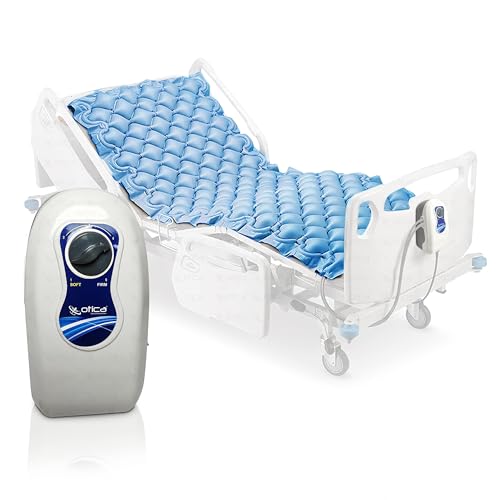
Bed sores, also called pressure injuries, become a serious concern whenever someone spends long stretches unable to reposition in bed. An alternating-pressure mattress can help by periodically changing which areas carry the body’s weight, but the right fit depends on bed size, weight capacity, power access, and comfort. These options give home caregivers several practical ways to build that support setup.
The products differ most clearly in pump features, surface construction, dimensions, and load limits. That makes a direct comparison more useful than treating every air mattress as interchangeable.
A Side-By-Side Look
PickWhy We Picked ItBest ForAction

Performance LeaderOTICA Medical Air Mattress with Alternating Pressure Pump
Adjustable pressure with 130 air cells
Home care up to 300 pounds
Balanced ChoiceLunderg Alternating Air Pressure Mattress Pad
Quiet pump with static mode
Quiet bedside pressure support
Comfort ChoiceLunderg Air Pressure Mattress Pad with Static Mode and Flocking
Flocked surface for warmer comfort
Sleep comfort with pressure relief
Heavy Duty PickLunderg Queen Air Pressure Mattress Pad with Flocking
Queen sizing and 320-pound capacity
Queen beds and larger users
Flexible FavoriteLunderg Queen Air Pressure Mattress Pad with Static Mode
Static mode for steady support
Queen beds needing static support
Utility PickKigley Alternating Pressure Mattress with Electric Pump
Long profile with electric pump
Standard hospital-style bed setups
A Closer Look At Each Pick
The OTICA Medical Air Mattress with Alternating Pressure Pump puts unusually fine control in the hands of a home caregiver. Its 130 heat-sealed air cells expand and contract in sequence, changing the support pattern across the surface while the person rests.
Unlike the simpler Lunderg models in this roundup, OTICA provides a clearly stated six-minute pressure cycle and multiple pressure settings. That makes this a practical choice for an adjustable bed setup supporting up to 300 pounds, provided the pad and hoses fit the intended mattress.
Reasons It Performs
- ✓Alternating inflation helps shift pressure away from the same body areas.
- ✓Multiple pressure levels allow adjustment for different comfort preferences.
- ✓The 130-cell surface spreads support across the full sleeping area.
- ✓Flexible, non-binding hoses simplify placement beside an existing bed.
- ✓A quiet variable-pressure pump suits overnight use in a shared room.
Things To Consider
- •Bare vinyl may feel warm or sticky during long periods of use.
- •Check the pad dimensions and pump placement before setting up the bed.
Key Specs
| | Feature | Specification | Why It Matters |
|---|
| Surface material | Vinyl | Creates a wipe-clean layer over the existing mattress. |
| Air cells | 130 heat-sealed cells | Supports changing pressure points across the pad. |
| Pressure settings | Multiple adjustable levels | Allows the firmness to suit the user’s comfort. |
| Pressure cycle | Approximately six minutes | Regularly changes which cells carry the load. |
| Load limit | Up to 300 pounds | Sets the intended user-weight range. |
Built With In Mind
This model suits caregivers supporting someone up to 300 pounds who need adjustable pressure and a pad that can sit over an existing mattress.
Reach For A Different Pick When
Lunderg Alternating Air Pressure Mattress Pad offers a quieter 23 dBA pump and a quick connector for bedside setups where low sound and simple hookup matter most.
Check on Amazon
A quiet pump can matter more than an extra setting in a bedroom where someone needs uninterrupted rest. The Lunderg Alternating Air Pressure Mattress Pad operates at a stated 23 dBA, with pressure adjustment from soft to firm and a static mode for pausing the alternating cycle.
Compared with OTICA’s more elaborate 130-cell construction, this model focuses on straightforward bedside control. The quick connector makes setup easier, while static mode offers a useful pause during repositioning or settling into bed.
Notable Upsides
- ✓The 23 dBA operating level favors bedrooms where pump noise is a concern.
- ✓Soft-to-firm control lets you adjust the feel without changing the whole setup.
- ✓Static mode gives the user a non-alternating position when needed.
- ✓A quick connector reduces the work of attaching the pad to its pump.
Small Caveats
- •Confirm the pad dimensions fit the selected bed before ordering.
- •Static mode changes the support pattern, so regularly scheduled repositioning remains important.
Made For
This pad fits caregivers who want a quiet, adjustable system for a home bed where the user spends long periods resting.
Swap It Out When
Lunderg Air Pressure Mattress Pad with Static Mode and Flocking is a more comfortable alternative when a softer textile-like surface matters more than the lowest pump reading.
View Latest Price
Air-cell mattresses can feel warm because the vinyl surface sits close to the body. The Lunderg Air Pressure Mattress Pad with Static Mode and Flocking adds a flocked, textile-like layer, which may feel softer and less sticky during extended use.
That comfort-focused construction distinguishes it from the plainer Lunderg Alternating Air Pressure Mattress Pad. Static mode also lets the user settle into one pressure setting, while the alternating function remains available for routine pressure changes.
Strong Points
- ✓Flocking softens the contact between the user and the air-cell surface.
- ✓Static mode supports a consistent setting during short breaks.
- ✓Alternating pressure remains available for routine support changes.
- ✓The padded surface may be more comfortable for overnight use than bare vinyl.
Worth Noting
- •The extra surface material can make the pad bulkier than a plain vinyl model.
- •Measure the sleeping area before ordering because queen sizes can vary between bed sets.
Feature Snapshot
| | Feature | Specification | Why It Matters |
|---|
| Surface | Flocked finish | Adds a softer feel over the air cells. |
| Pressure controls | Alternating and static modes | Offers both changing support and a fixed setting. |
Who Will Love This
Long-term home users and caregivers who find bare vinyl uncomfortable will appreciate the added surface softness and dual operating modes.
A Better Fit Elsewhere
OTICA Medical Air Mattress with Alternating Pressure Pump provides more specified cell, cycle, and weight details for caregivers who value fine adjustment over a flocked finish.
Check Latest Price
A queen-sized pressure mattress has to cover a large area without leaving gaps, and the Lunderg Queen Air Pressure Mattress Pad with Flocking measures 53 by 77 inches. That makes it a more deliberate fit for queen or larger beds than a smaller household pad.
The stated capacity reaches 320 pounds, which exceeds the OTICA model’s 300-pound limit. Its flocked surface carries over the comfort advantage of the other Lunderg pad, while the larger dimensions suit a bedroom, care bed, or nursing-facility setup designed around queen-width equipment.
A Few Strong Suits
- ✓The 53-by-77-inch size is aimed at queen and larger sleeping surfaces.
- ✓A 320-pound capacity supports a wider range of user weights.
- ✓Flocking adds a softer feel for extended contact.
- ✓The broad surface suits care beds requiring full-width coverage.
Points To Note
- •Measure the actual bed because some queen frames have slightly different interior dimensions.
- •A larger pad needs more room for the pump, tubing, and bedside setup.
Quick Facts
| | Feature | Specification | Why It Matters |
|---|
| Dimensions | 53 by 77 inches | Targets queen and larger beds. |
| Capacity | Up to 320 pounds | Accommodates a higher user-weight range. |
| Surface | Flocked finish | Provides a softer contact surface. |
The Right Fit
This model suits queen beds, nursing equipment, and users up to 320 pounds who need broad coverage with a softer surface.
Consider Something Else When
Kigley Alternating Pressure Mattress with Electric Pump fits long hospital-style bed frames better when the 114.96-inch length is a closer match than queen dimensions.
View on Amazon
Static mode gives this queen mattress a different role from the flocked Lunderg Queen Air Pressure Mattress Pad with Flocking. Instead of maintaining one pressure level throughout use, it can alternate the air-cell pattern and then pause at a chosen setting.
That makes the Lunderg Queen Air Pressure Mattress Pad with Static Mode useful for home care where the user spends part of the day settled into bed and part of the day adjusting position. Its listed support reaches 320 pounds, so it also serves larger users, though the selected bed dimensions still need to match.
Where It Helps
- ✓Static mode supports a steady pressure setting when alternating feels unnecessary.
- ✓Alternating operation remains available for routine support changes.
- ✓Queen sizing suits larger bedroom and care-bed layouts.
- ✓The 320-pound capacity accommodates a broader user-weight range.
Potential Compromises
- •Confirm the variant dimensions before setting up the bed.
- •Static mode should not replace a regular repositioning schedule.
Best Suited To
This model fits caregivers serving a larger user in a queen bed who values both alternating pressure and a fixed setting for settling in.
Another Choice May Suit
Lunderg Queen Air Pressure Mattress Pad with Flocking is the stronger fit when the flocked surface is the main source of comfort.
Check on Amazon
The Kigley Alternating Pressure Mattress with Electric Pump is built around a long, narrow profile measuring 114.96 by 35.43 inches. That shape points toward hospital-style beds and elongated care frames rather than a standard queen mattress.
Unlike the Lunderg Queen models, this pad is paired with an electric pump and does not include batteries. Its stated maximum user weight is 130 kilograms, while the long profile distinguishes it most clearly from the wider OTICA option.
A Few Highlights
- ✓The long profile fits many hospital-style bed frames.
- ✓The included electric pump supports straightforward inflation.
- ✓Alternating pressure changes the support pattern beneath the user.
- ✓A stated 130-kilogram limit gives caregivers a clear load reference.
Practical Considerations
- •Measure the frame and confirm that the narrow width will not leave gaps.
- •The pump requires access to electrical power, and no battery is included.
Technical Sheet
| | Feature | Specification | Why It Matters |
|---|
| Dimensions | 114.96 by 35.43 inches | Targets long, narrow care-bed frames. |
| User weight | Up to 130 kilograms | Defines the stated load range. |
| Pump | Electric pump included | Provides powered inflation without a separate battery system. |
| Battery | Not included | Requires planning around electrical power access. |
Who Should Grab It
This model suits households and care facilities using elongated hospital-style beds with an electrical outlet near the frame.
Look Elsewhere When
Lunderg Queen Air Pressure Mattress Pad with Flocking is a closer match for a conventional queen bed requiring a broader, softer surface.
View on Amazon
What To Check Before Ordering
Pressure Redistribution
Alternating pressure works by inflating and deflating different air cells so the support pattern changes over time. That can help reduce prolonged pressure on the same areas, but the mattress still needs to fit properly and the user should continue repositioning according to their care plan.
Bed Fit And Capacity
Measure both the sleeping surface and the space needed for the pump and tubing. The OTICA model supports up to 300 pounds, the Lunderg queen option reaches 320 pounds, and the Kigley mattress has a stated limit of 130 kilograms.
Controls And Power
Static mode is useful when the user wants a steady setting during part of the day. Electric pumps need reliable power access, so consider outages, cable placement, and whether the pump will interfere with mobility around the bed.
Surface Comfort
Vinyl is easy to wipe clean but may feel warm or sticky during long use. Flocking adds a softer textile-like layer, which may be more comfortable for someone spending hours in bed.
Common Mistakes To Avoid
Mistakes Worth Dodging
A common error is choosing by bed name alone. Queen beds can differ in width, so measure the usable surface and leave room for tubing. Another mistake is ignoring the weight limit or assuming alternating pressure removes the need for regular repositioning.
The Upgrade Payoff
A higher-tier model may add finer pressure controls, quieter operation, a flocked surface, greater capacity, or a more practical connector. The added cost is worthwhile when that feature addresses a daily problem, such as pump noise, uncomfortable vinyl, or a bed-size mismatch.
Frequently Asked Questions
QHow do alternating pressure mattresses help with pressure injuries?
They periodically inflate and deflate different air cells, changing which parts of the body receive support. They support a broader care plan but do not replace repositioning or professional advice.
QDo these air mattress pads come with pumps?
Yes, each option includes its specified pump or compressor. The Kigley model uses an electric pump without an included battery, so a nearby power source matters.
QWhich option fits a queen-size bed?
The Lunderg Queen Air Pressure Mattress Pad with Flocking and Lunderg Queen Air Pressure Mattress Pad with Static Mode are the closest fits. Measure the bed interior before ordering because queen dimensions can vary.
QIs static mode suitable for someone who cannot reposition?
Static mode provides a consistent pressure setting, but it does not remove the need to change position. Ask a healthcare professional for guidance based on the person’s mobility and care needs.
QShould an air mattress replace a regular mattress?
It can serve as a pressure-management topper over a suitable existing mattress or as part of an adjustable care-bed setup. Comfort, support, and fit vary, so the underlying bed still needs to suit the user.
Final Thoughts
The OTICA model offers the most clearly documented pressure controls, while the Lunderg options cover quieter operation, flocked comfort, and queen-size setups. The Kigley pad serves elongated hospital-style frames particularly well. Match the dimensions, capacity, pump requirements, and surface feel to the actual bed and daily care routine, then follow the guidance of the healthcare professional overseeing the user’s comfort and repositioning.