

At 2 a.m., you are holding a bottle while your baby fusses, and the formula label feels far less straightforward than it did last week. You need a feeding option that matches your baby’s age, nutritional priorities, and any lactose sensitivity without overlooking preparation or storage details. These six choices range from reduced-lactose and A2 formulas to organic options and development-focused formulas.
An Overview Of The Picks

HAPPY BABY Stage 1 A2 Organic Formula

Mama Bear Sensitivity Baby Formula Powder with 2′-FL HMO, 22.5 oz
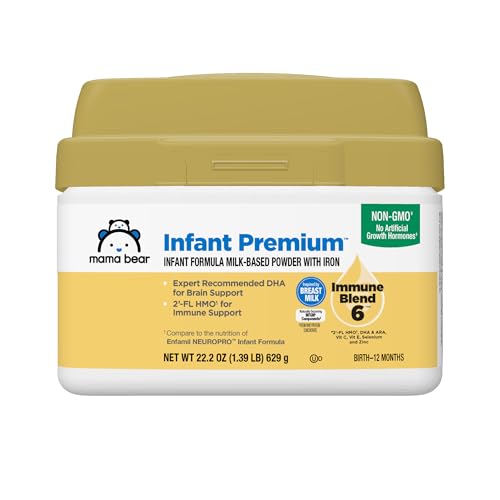
Mama Bear Infant Formula with Iron, 2′-FL HMO, DHA, 1.39 lb

HAPPY BABY Stage 1 Organic Formula

HAPPY BABY Stage 2 Organic Formula

Enfamil NeuroPro DHA & MFGM
A Breakdown Of The Leading Choices
A2 milk makes this Stage 1 option easy to separate from a standard milk-based formula, while probiotics and prebiotics give you a more specific digestive-support angle. You may find that combination useful when organic sourcing matters and your baby is starting life on formula.
Unlike Mama Bear Sensitivity, which is organized around reduced lactose, this Happy Baby choice is centered on A2 milk and a dual prebiotic-probiotic blend. The trade-off is that A2 milk should not be treated as a reduced-lactose label on its own, so symptom-driven decisions still need professional guidance.
Real-World Strengths
- A2 milk provides a distinct formula base for Stage 1 feeding.
- Probiotics and prebiotics support the balance of beneficial gut bacteria.
- DHA6 supplies a nutrient associated with brain and eye development.
- The formula is made in Europe to USDA organic standards.
Things To Consider
- A2 milk and reduced lactose describe different formula characteristics.
- The 22.9-ounce tub needs more cabinet space than the 14.1-ounce HAPPY BABY Stage 1 Organic Formula.
Feature Snapshot
Made For
You want an organic Stage 1 formula with A2 milk and paired digestive-support ingredients for your baby from birth through 12 months.
A Better Fit Elsewhere
Mama Bear Sensitivity Baby Formula Powder with 2′-FL HMO, 22.5 oz suits you better when reduced lactose is the central feeding requirement.
This is the clearest reduced-lactose option in the group, carrying 99% less lactose than standard milk-based infant formula. That makes it the most direct fit for your research when fussiness and gas have been associated with lactose sensitivity.
Your feeding plan also receives 2′-FL HMO, a human milk oligosaccharide that acts as a prebiotic, along with DHA, lutein, and vitamin E. Compared with HAPPY BABY Stage 1 A2 Organic Formula, the distinction here is the amount of lactose rather than the milk type.
Positive Points
- The reduced-lactose level directly addresses the category’s main concern.
- 2′-FL HMO supports the growth of beneficial digestive bacteria.
- DHA supports brain and eye development during the first year.
- Iron and vitamins provide complete nutrition for ages 0-12 months.
- The ingredients contain no artificial growth hormones.
Practical Considerations
- Reduced lactose addresses only one feeding variable, so persistent symptoms still need professional evaluation.
- Confirm the label-directed preparation and storage instructions before making the powder your routine.
Who It Suits Best
You are looking for complete Stage 1 nutrition for a lactose-sensitive baby with fussiness or gas associated with standard milk-based formula.
Consider Something Else When
HAPPY BABY Stage 1 A2 Organic Formula offers a better fit when organic sourcing, A2 milk, and paired probiotics and prebiotics matter more than a reduced-lactose label.
A broad nutrient profile makes this standard milk-based formula useful when your baby tolerates regular cow’s-milk formula and you want a straightforward Stage 1 option. Thirty nutrients, iron, DHA, choline, 2′-FL HMO, and dual prebiotics cover several routine feeding priorities.
It does not share the reduced-lactose positioning of Mama Bear Sensitivity, so the two products answer different questions. This one works better for a general feeding profile; the sensitivity formula addresses a more specific concern.
Practical Pluses
- Twenty milligrams of DHA per six fluid ounces support brain development.
- Choline joins the nutrient lineup for your baby’s developing brain.
- Thirty nutrients create a broad foundation for everyday formula feeding.
- Dual prebiotics and 2′-FL HMO add digestive and immune-support features.
Smaller Caveats
- This is not the reduced-lactose choice offered by Mama Bear Sensitivity.
- The 1.39-pound package may need replenishing sooner than a larger canister.
- A broad nutrient list does not replace individualized guidance for a diagnosed feeding condition.
Quick Facts
Who Will Love This
You want a standard Stage 1 formula with broad nutrient coverage, including DHA, choline, iron, HMO, and prebiotics.
Reach For A Different Pick When
Mama Bear Sensitivity Baby Formula Powder with 2′-FL HMO, 22.5 oz suits you better when reduced lactose is the deciding factor.
The smaller 14.1-ounce package makes this Stage 1 Happy Baby formula convenient for a limited feeding space or a first trial of the brand. You still receive the central organic, probiotic, prebiotic, and DHA6 features that define this line.
Compared with HAPPY BABY Stage 1 A2 Organic Formula, the shared digestive-support system may matter more to you than the A2 designation. The package size is the clearest practical difference at the cabinet.
Reasons It Performs
- The compact tub fits more easily into a smaller cabinet.
- Probiotics and prebiotics support beneficial gut bacteria.
- DHA6 provides a nutrient for brain and eye development.
- European production and USDA organic standards suit organic-focused shopping lists.
Points To Note
- The 14.1-ounce size may need replenishing sooner than the 22.9-ounce A2 option.
Core Details
The Right Fit
You want a smaller organic Stage 1 tub with probiotics, prebiotics, and DHA6 for a baby aged birth through 12 months.
Swap It Out When
Mama Bear Sensitivity Baby Formula Powder with 2′-FL HMO, 22.5 oz is the better match for you when reduced lactose is the central requirement.
Once your baby reaches six months, Stage 2 becomes the relevant Happy Baby formula because its key nutrient levels change to reflect a more developed feeding stage. Calcium, iron, phosphorus, iodine, and selenium each appear at higher levels than in Stage 1.
The three-pack format reduces the frequency of canister handling, while probiotics, prebiotics, DHA6, and organic production carry over from the Stage 1 options. This is a stage-specific fit rather than a newborn formula, so readiness matters more than brand preference alone.
Features That Help
- Stage 2 nutrients are tailored for babies aged 6-12 months.
- Higher mineral levels reflect the change in feeding stage.
- Probiotics and prebiotics support digestive health.
- DHA6 contributes to brain and eye development.
- Three 22.9-ounce canisters simplify cabinet organization.
Factors To Consider
- Stage 2 is not appropriate before your baby reaches six months.
- Three canisters require more storage room than a single tub.
- The formula focuses on organic nutrition and stage-specific nutrients rather than reduced-lactose positioning.
Built With In Mind
You need an organic formula for a baby from six through 12 months and want a three-canister format for regular home use.
Not Your Match When
HAPPY BABY Stage 1 A2 Organic Formula suits you better for a newborn or younger baby still within Stage 1 feeding.
MFGM components and DHA give this powder formula a different decision angle from the digestive-support picks. You may favor it when brain and communication development sit at the top of your infant-feeding priorities.
The stated research follows children whose formula feeding included NeuroPro during the first year, with developmental findings described through age five. That longer-term framing sets Enfamil apart from the Happy Baby options, which emphasize probiotics, prebiotics, and digestive support.
Practical Advantages
- MFGM components provide a development-focused formula feature.
- DHA supports brain and eye development during infancy.
- The powder format fits standard at-home formula preparation.
- Research connected first-year feeding with later developmental findings.
Worth Bearing In Mind
- Verify the exact variety and ingredient panel before using it for a lactose-sensitive feeding plan.
- The five-year development finding applies when the formula is fed through the baby’s first year.
Technical Highlights
Made With In Mind
You prioritize MFGM and DHA for infant development and want a powder formula for everyday first-year feeding.
Look Elsewhere When
Mama Bear Sensitivity Baby Formula Powder with 2′-FL HMO, 22.5 oz suits you better when reduced lactose is your main feeding requirement.
What Matters Most For Lactose-Sensitive Feeding
Confirm The Lactose Level
Start with the actual formula category rather than a brand name. A2 milk identifies a milk-protein type, while reduced-lactose formula addresses the amount of milk sugar. For ongoing fussiness, gas, or feeding discomfort, ask your pediatrician to help identify the cause before making a change.
Match Stage And Age
Stage numbers are age-specific, so the label takes priority over a familiar brand. Stage 1 covers the first year, while the Happy Baby Stage 2 choice is made for ages 6-12 months. Confirm the stage, preparation directions, and feeding amount printed on the container.
Read The Nutrient Priorities
Digestive support and developmental support are different goals. Probiotics, prebiotics, HMO, DHA, choline, and MFGM each play a defined role, but the number of highlighted nutrients does not determine suitability by itself. Your baby’s tolerance and professional guidance remain more useful than a crowded ingredient panel.
Plan Powder Storage
Powdered formula needs adequate storage space and careful preparation. Compare canister size before ordering, especially when a larger tub, a smaller trial size, or a three-pack must share the same cabinet. Keep the container closed and follow its label instructions.
Two Details That Shape Your Decision
Mistakes Worth Dodging
Do not treat A2 milk, gluten avoidance, or a sensitive-sounding label as proof that a formula addresses every feeding symptom. Read the exact variety and ingredient panel, and separate age-specific nutrition from your baby’s tolerance.
What The Higher Tier Buys
The added expense may reflect organic sourcing, A2 milk, or a specialized nutrient system. It becomes worthwhile when those features match your baby’s tolerated formula and your feeding priorities, rather than adding complexity without a clear purpose.
Frequently Asked Questions
Which Pick Is Made For Reduced Lactose?
Mama Bear Sensitivity contains 99% less lactose than standard milk-based infant formula. It is the most direct fit in this group for a lactose-sensitive feeding plan.
Is A2 Milk The Same As Reduced Lactose?
No, A2 milk describes a milk-protein type, while reduced lactose describes the amount of milk sugar in the formula. Your pediatrician can help determine which characteristic matches your baby’s symptoms.
Can A Stage 2 Formula Be Used From Birth?
No, HAPPY BABY Stage 2 Organic Formula is intended for babies aged 6-12 months. Stage 1 is the appropriate Happy Baby option for the first year.
Which Options Use Organic Formula?
The Happy Baby Stage 1 A2, Stage 1, and Stage 2 choices are made to USDA organic standards. The A2 formula adds A2 milk, while the Stage 2 version introduces higher levels of several stage-specific minerals.
What Should Happen After A Formula Change?
Follow the label’s preparation instructions and monitor your baby’s feeding and digestion. Persistent symptoms or concerns about a milk-protein allergy deserve prompt guidance from your pediatrician.
Final Verdict
Mama Bear Sensitivity is the clearest fit for a reduced-lactose routine, while Happy Baby offers organic options across Stage 1, A2, and Stage 2. Enfamil NeuroPro stands apart for its MFGM and DHA emphasis. Match the label to your baby’s age, symptoms, and storage needs, then let professional guidance make the final call.
