

A cabinet full of milk powder can make infant feeding feel more complicated than it should, especially when goat milk appears alongside reduced-lactose and hydrolyzed formulas. You may be comparing digestive support, protein processing, container size, or simply which option fits your daily routine. The list covers infant formula, general goat milk powder, and one goat milk lotion that belongs in a skincare routine rather than a feeding routine, so checking each label matters before you make a choice.
The Essentials At A Glance

Dionis Goat Milk Lotion, 8.5 oz
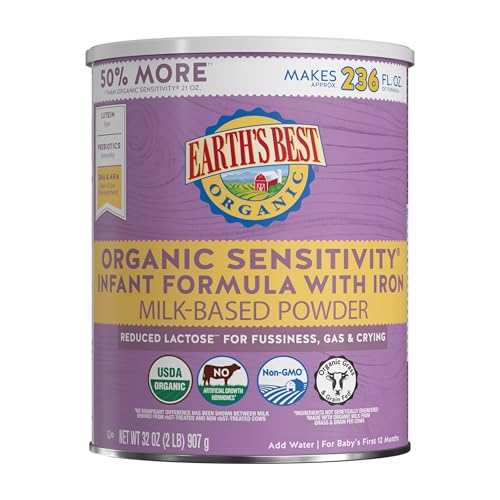
Earth’s Best Organic Sensitivity Infant Formula, Reduced Lactose, 32 oz

Good Start Dr. Brown’s Gentle Pro Formula, 32 oz

Hoosier Hill Farm Goat Milk Powder, 1LB
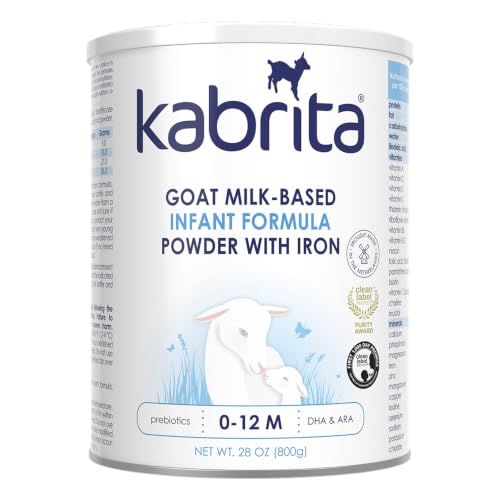
Kabrita Goat Milk Infant Formula, 28 oz

Kabrita Goat Milk Infant Formula, 28 oz, 2 Pack
The Picks, Examined More Closely
A pump bottle beside the sink makes much more sense for daily hand and body care than a scoop beside the formula cans. Dionis Goat Milk Lotion is an unscented moisturizer for dry, sensitive skin, and the lightweight cream is designed to absorb without leaving a heavy residue.
Goat milk contributes proteins, minerals, vitamins, and lactic acid, which is a mild exfoliating compound. The lotion is also formulated without parabens, sulfates, phthalates, formaldehydes, phosphates, or alcohol. In a busy bathroom, the pump and quick absorption make this a practical lotion choice, but it is not an infant feeding product.
Useful Strengths
- Fast absorption suits skin that dislikes heavy creams
- Unscented formula avoids an added fragrance
- Goat milk adds a distinctive moisturizing base
- The pump dispenses readily for repeated use
Points To Note
- This lotion belongs in a skincare aisle, not an infant formula routine
- The 8.5-ounce size may need more frequent refills than a larger bottle
Key Specs
Made For
This lotion suits adults and older children who want a fast-absorbing moisturizer for dry or sensitive skin.
A Better Fit Elsewhere
Anyone shopping for infant nutrition should consider Earth’s Best Organic Sensitivity Infant Formula instead of a body lotion.
Reduced-lactose formula gives parents a more targeted option than standard cow’s milk formula, especially when fussiness, gas, or crying accompanies an upset stomach. Earth’s Best Organic Sensitivity Infant Formula combines reduced lactose with iron, lutein, prebiotics, DHA, and ARA for infants from birth through 12 months.
Made with milk from grass- and grain-fed cows, it is positioned as a gentle, easy-to-digest option that can supplement breastfeeding or replace breast milk during the first year. The container’s water-to-powder instructions make preparation straightforward, and properly diluted powder makes approximately 236 fluid ounces.
Good Reasons To Consider
- Reduced lactose targets a specific feeding consideration
- Iron and prebiotics round out the nutrient profile
- DHA and ARA suit infant nutrition routines
- Clear mixing ratios simplify bottle preparation
Practical Considerations
- The reduced-lactose approach may not address every feeding concern
- The 32-ounce container requires space for proper storage
Feature Snapshot
Who It Suits Best
This formula fits parents seeking reduced lactose and a broad nutrient profile for an infant in the first 12 months.
Consider Something Else
Good Start Dr. Brown’s Gentle Pro Formula offers a more extensive protein-hydrolysis approach for families focused on smaller, broken-down proteins.
Not every sensitivity formula uses the same protein structure, and that distinction sets Good Start Dr. Brown’s Gentle Pro Formula apart. Hydrolysis means splitting proteins into smaller pieces; this formula uses a two-step process that makes its whey proteins 10 times smaller than intact cow’s milk proteins.
Made with 100% whey protein and no casein, it is intended for infants 0-12 months whose families prioritize easy digestion and softer stools. Probiotic B. lactis, DHA, HMOs, and probiotics add a breast milk-inspired ingredient profile. The honest read is that this is a specialized choice rather than a general-purpose formula.
A Strong Showing
- Two-step hydrolysis makes protein size the central feature
- Whey-only protein avoids casein-related curdling
- B. lactis adds a familiar probiotic component
- DHA and HMOs support a more breast milk-inspired profile
Small Caveats
- Hydrolyzed proteins may not be the focus you want for every feeding routine
- The 32-ounce container needs adequate storage space
Right Fit For
This formula fits families specifically looking for hydrolyzed whey protein and a digestion-focused formula for babies from birth to 12 months.
A Better Fit Elsewhere
Earth’s Best Organic Sensitivity Infant Formula may align better with parents whose main consideration is reduced lactose rather than extensive protein hydrolysis.
A one-pound bag of full-cream goat milk powder serves a different role from infant formula: shelf-stable milk powder for general food preparation. Hoosier Hill Farm describes it as a natural alternative for people sensitive to cow’s milk or soy, with a sweet milk taste and a short, straightforward ingredient story.
The powder is made without additives, gluten, antibiotics, or growth hormones. That simplicity may appeal to households seeking a general pantry ingredient, although the label does not present it as an infant formula. Storage is uncomplicated, with a cool, dry location recommended instead of refrigeration or freezing.
Strengths Worth Knowing
- Full-cream powder offers a rich milk profile
- A one-pound package is easy to store in a pantry
- Cool, dry storage avoids freezer space
Trade Offs
- It is not presented as an infant formula
- General milk powder requires your own recipe and preparation guidance
Core Details
Who Will Love This
This powder suits adults seeking a general goat milk pantry ingredient rather than a nutritionally complete infant formula.
Where A Sibling Pick Shines
Kabrita Goat Milk Infant Formula is the more relevant option for feeding healthy infants from birth through 12 months.
Kabrita brings the category back to goat milk with a direct infant-feeding proposition. This European formula uses goat milk with naturally occurring A2 protein and is made for healthy infants from birth through 12 months, giving parents a clearer choice than general goat milk powder.
The formula’s proteins form softer curds during digestion than intact cow’s milk proteins, and the product is designed around gentle digestion. A2 refers to a type of protein absent in this milk, while the 28-ounce container keeps the volume manageable for many kitchens. It is a straightforward single-container option for families committed to goat milk formula.
A Favorable Mix
- Goat milk provides the defining formula base
- A2 protein suits protein-focused shoppers
- Soft curds support the gentle-digestion positioning
- The 28-ounce container balances volume and storage
- Non-GMO status adds another label distinction
Where It May Fall Short
- It is intended for healthy infants, not specialized feeding needs
- Goat milk protein does not make it interchangeable with hydrolyzed formula
Feature Breakdown
Built With In Mind
This formula suits parents seeking goat milk with A2 protein for healthy infants during their first 12 months.
Another Choice May Suit
Kabrita Goat Milk Infant Formula, 28 oz, 2 Pack suits families that prefer two containers for more streamlined restocking.
The two-pack version of Kabrita changes the storage rhythm rather than the formula itself. You still receive European goat milk formula with naturally occurring A2 protein, intended for healthy infants from birth through 12 months and positioned around gentle digestion.
Two 28-ounce containers can reduce the frequency of replenishment and keep spare powder within reach, which is useful in a home with two caregivers or a second feeding location. The trade-off is straightforward: twice as much container volume means more cupboard space than the single 28-ounce option.
Positive Takeaways
- Goat milk and A2 protein match the single-container version
- Two containers simplify household restocking
- Each package holds 28 ounces
One Practical Limit
- You need cupboard space for two containers
Best Suited To
This two-pack suits families using goat milk formula regularly and wanting fewer replenishment stops.
Reach For A Different Pick When
Kabrita Goat Milk Infant Formula, 28 oz is more suitable when minimizing pantry space matters more than keeping two containers on hand.
What Matters Before You Choose
Match The Formula To The Feeding Stage
The age label comes first because an infant formula is designed for a specific developmental stage. Earth’s Best, Good Start Dr. Brown’s, and Kabrita all list an intended range of 0-12 months, while Hoosier Hill Farm goat milk powder is a general pantry ingredient rather than an infant formula. Confirm the label and preparation directions before preparing a bottle.
Compare Protein And Lactose Approaches
Reduced lactose, hydrolyzed proteins, and A2 goat milk are different approaches, not interchangeable descriptions. Reduced lactose lowers the amount of milk sugar, hydrolysis divides proteins into smaller pieces, and A2 protein identifies a type of protein found in goat milk. Match the distinction to the specific concern that matters in your feeding routine.
Consider Container Space And Preparation
A 32-ounce container serves a similar basic purpose to a 28-ounce container, but its extra volume requires a little more cabinet space. The two-pack option makes restocking simpler while doubling the storage footprint. The powder-to-water instructions are just as important as the container size because correct dilution determines the final prepared volume.
Making Sense Of The Differences
Mistakes Worth Dodging
Don’t assume every product containing goat milk serves the same purpose. Lotion belongs on skin, general milk powder belongs in food preparation, and infant formula has its own age range and preparation instructions. Read the category statement on the container before making any feeding decision.
What The Higher Tier Buys
A higher cost may reflect specialized protein processing, added nutrient components, a particular milk source, or simply more containers. It does not automatically make a formula right for every baby. The upgrade matters most when its specific formulation answers a concern you have chosen deliberately.
Frequently Asked Questions
Is Goat Milk Formula Better Than Cow’s Milk Formula?
No single formula is automatically right for every baby. The useful comparison depends on reduced lactose, hydrolyzed proteins, A2 protein, nutrient additions, and your baby’s feeding needs.
What Is A2 Milk Protein?
A2 protein is a type of milk protein found in goat milk and absent from A1 protein. Kabrita uses it as the central distinction in its goat milk-based infant formulas.
Is Kabrita Goat Milk Formula Suitable for Newborns?
The listed Kabrita formula is designed for healthy infants from 0-12 months. Preparation, storage, and feeding decisions should still follow the package instructions and guidance from your baby’s clinician.
How Much Formula Does Earth’s Best Sensitivity Make?
Properly diluted, the 32-ounce container makes approximately 236 fluid ounces of prepared formula. The exact amount per bottle depends on the water-to-powder ratio printed on the container.
How Should Hoosier Hill Farm Goat Milk Powder Be Stored?
Hoosier Hill Farm recommends keeping the powder in a cool, dry place and advises against refrigeration or freezing. Keep the container closed and follow its label for preparation and use.
Final Thoughts
Kabrita Goat Milk Infant Formula, 28 oz is the direct fit for families specifically seeking goat milk with A2 protein, while Good Start Dr. Brown’s offers a distinct hydrolyzed-protein route. Earth’s Best suits reduced-lactose routines, and the two-pack favors convenient restocking. Hoosier Hill Farm belongs in general food preparation, while Dionis is a body lotion, not a feeding choice.
