

A cardiology stethoscope is built for clinicians, medical students, and home health professionals who need to hear subtle internal sounds, especially during heart and lung assessment. Auscultation means listening to those sounds through a chestpiece, and choosing the right instrument comes down to acoustic design, headset comfort, tubing, and patient range. The seven options below range from lightweight titanium models to full-size dual-head scopes, a one-sided tunable design, three color choices, and replacement tubing for compatible Littmann instruments.
Your Options, Compared

MDF Instruments ProCardial MDF797BO Black Stainless Steel Stethoscope
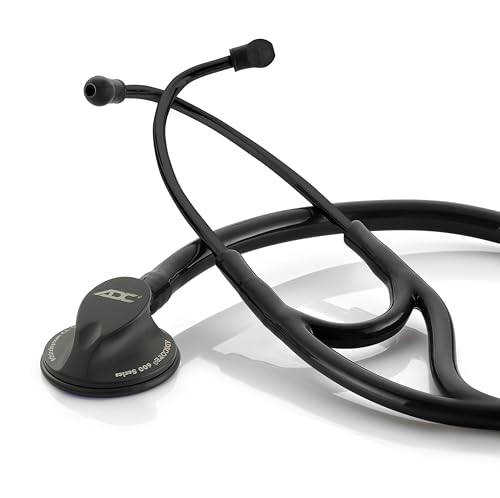
ADC Adscope 600 AFD Stethoscope
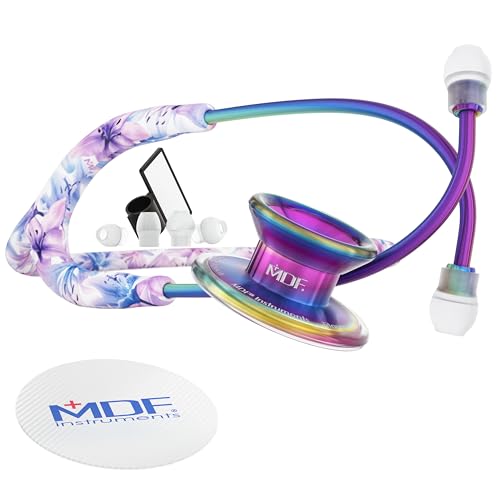
MDF Monet Kaleidoscope MD One MDF777TMOKL Titanium

Littmann Cardiology IV 6177C Satin Black

Littmann Cardiology IV 6242C Satin Navy

Littmann Cardiology IV 6159C Satin Rose Pink

CardioTubes T7 7mm Blue Littmann-Compatible Tubing
A Breakdown Of The Leading Choices
You get a conventional dual-head scope with a stainless steel chestpiece and a rotating stem that switches between diaphragm and bell. Each side serves a different listening need: the diaphragm handles higher-frequency sounds, while the bell opens onto lower-frequency sounds such as Korotkoff sounds, the changing tones heard while checking blood pressure. The C34 tubing adds 34 internal channels intended to keep transmitted sound organized and clear.
During a busy ward round, the thicker, longer tubing gives you room to move between you and a patient without rushing your position. The dual-leaf spring headset and soft silicone eartips also matter during long shifts, where a secure but comfortable seal becomes more valuable than a novelty feature. Compared with the ADC Adscope 600, this model gives you two physical chestpiece sides rather than one pressure-responsive side.
Points In Its Favor
- The rotating chestpiece makes switching between bell and diaphragm a direct, repeatable action.
- Thirty-four internal tubing channels support clear signal transmission during examinations.
- Three sizes of silicone eartips let you adjust the fit and improve the acoustic seal.
- The flexible, thicker tube supports comfortable positioning in crowded clinical spaces.
- Latex-free construction suits people with latex sensitivities.
Things To Consider
- The full pediatric and infant chestpiece is sold separately, so pediatric use may require an extra accessory.
- Its steel construction is likely less light on the neck than the titanium MDF Monet Kaleidoscope.
Key Specs
Who It Suits Best
You benefit most from this scope as a medical student, nurse, or clinician who wants a full dual-head instrument with interchangeable listening modes.
A Better Fit Elsewhere
The ADC Adscope 600 AFD Stethoscope suits professionals who prefer controlling frequency response through light or firm pressure on one chestpiece side.
Your listening controls shift from the chestpiece side to the amount of pressure you apply. Light pressure favors lower, bell-like frequencies, while firmer pressure emphasizes higher, diaphragm-like frequencies through the ADC adjustable frequency design, or AFD. That makes this a more compact alternative to models that require you to rotate between two separate sides.
At 27 inches long and 7.15 ounces, the scope balances reach with a reasonably manageable weight. The dual-channel tubing supports stereo separation, meaning separate left and right sound paths, while the large-bore binaurals add structure to the headset. In practice, you may find the pressure-controlled approach useful during rapid assessments where changing your grip is more convenient than turning the chestpiece.
The Upside
- AFD tuning gives you two frequency responses without rotating to another chestpiece side.
- The 27-inch length provides practical reach in examinations and bedside settings.
- Dual-channel tubing helps maintain separation between the two listening paths.
- Four pairs of Adsoft Plus eartips support replacement and fit adjustments.
- The included storage case helps protect and organize the scope between uses.
Trade Offs
- You must learn to vary pressure accurately rather than select a physical bell or diaphragm side.
- The 27-inch tube may feel less pocketable than a shorter or lighter model.
Feature Snapshot
Made For
This model fits clinicians who value compact chestpiece operation and want fine control over frequency response through pressure.
Consider Something Else When
The MDF Instruments ProCardial MDF797BO Black Stainless Steel Stethoscope is a stronger fit when you prefer a true physical bell and diaphragm rather than pressure-based tuning.
You get the same broad acoustic approach as the MDF ProCardial, including a dual head, rotating stem, and separate bell and diaphragm. The main difference is titanium construction, which reduces the material weight without giving up the dual-head format. That makes this model worth considering for mobile rounds, home visits, or any day spent moving between rooms.
The Monet Tube and Kaleidoscope chestpiece set add visual character without changing the core listening design. Its thicker flexible tubing, three sizes of silicone eartips, and GlideLock chestpiece system keep the instrument focused on fit and sound routing. Unlike the ADC Adscope 600, you still rotate the stem to choose the side, so the interaction remains familiar to experienced clinicians.
Practical Advantages
- Titanium construction reduces neck load during mobile work and long shifts.
- The dual-head layout gives you independent bell and diaphragm access.
- Three eartip sizes help you create a secure, comfortable seal.
- The Kaleidoscope finish adds personality to an otherwise traditional scope.
Worth Noting
- The full pediatric chestpiece is a separate accessory rather than an included conversion.
- You pay for the lightweight titanium and decorative finish when a basic dual-head scope would meet simpler needs.
Right Fit For
This scope suits mobile professionals and students who want dual-head versatility in a noticeably lightweight titanium design.
Another Choice May Suit
The Littmann Cardiology IV 6177C Satin Black suits you better when adult and pediatric use without a separate pediatric chestpiece is your priority.
Your listening priorities center on a deep bell and larger chestpiece. Compared with the 3M Littmann Classic III, this model has a chestpiece that is 40 percent larger and a bell that is 60 percent deeper, creating more physical surface for lower-frequency sounds. That construction makes it a logical choice for detailed heart assessment and clinical environments where subtle changes matter.
The satin tubing bends more easily than a rigid tube, resists hair and clothing from catching, and folds down for storage. You also get a tunable stainless steel chestpiece for adult and pediatric patients, plus a non-chill bell sleeve that reduces cold contact during auscultation. Compared with the ADC Adscope 600, the Littmann gives you separate open and closed bell positions rather than pressure-controlled AFD tuning.
Useful Touches
- The deeper bell supports a focus on lower-frequency heart sounds.
- Flexible satin tubing folds neatly into a pocket between uses.
- The smooth coating is easier to clean and resists scratches.
- A non-chill sleeve improves comfort during direct bell contact.
- Soft-sealing eartips help reduce outside sound interference.
Minor Gripes
- The larger chestpiece may take up more pocket space than a compact model.
- Its satin black appearance is traditional, so it offers less visual personality than the rose pink variant.
Feature Facts
Who Will Love This
This model fits clinicians who regularly assess adult and pediatric patients and prioritize a deep bell over compact dimensions.
Look Elsewhere When
The MDF Instruments ProCardial MDF797BO Black Stainless Steel Stethoscope suits you better when separate pediatric and neonatal conversion options matter.
Your acoustic equipment matches the Littmann Cardiology IV 6177C Satin Black, with the main visible change being the navy tube color and corresponding model number. You retain the large dual-sided chestpiece, deep bell, and flexible satin tubing, so the decision comes down to appearance rather than a different listening mechanism. Navy also stays more understated than the rose pink option.
The satin coating helps the tube move over clothing without catching and makes the scope easier to clean during regular use. Its open or closed bell, non-chill sleeve, and soft-sealing eartips support practical examinations involving adults and children. For a uniform workplace with existing navy equipment, the 6242C model offers a familiar profile without compromising the core features of the Cardiology IV design.
Real Benefits
- You get the same deep-bell, large-chestpiece configuration as the black Littmann variant.
- The flexible tube folds for convenient storage in a clinical pocket.
- The navy finish gives you a professional appearance without the rose pink statement.
A Few Limitations
- The larger chestpiece remains less pocket-friendly than a compact single-sided scope.
Quick Facts
Built With In Mind
This model suits professionals who want the Littmann Cardiology IV’s acoustic design in a restrained navy finish.
Where Another Pick Shines
The Littmann Cardiology IV 6159C Satin Rose Pink suits you better when expressive color matters more than a conventional clinical palette.
You get the Cardiology IV’s deep bell and large dual-sided chestpiece in a rose pink tube, combining a traditional acoustic design with a noticeably personal appearance. This is the same core instrument seen in the black and navy versions, so you are not trading essential listening features for color. It simply changes how the scope looks when worn or stored.
The satin surface remains flexible, easy to clean, and less likely to snag on hair or clothing. You can fold the tube for storage, while the soft-sealing eartips and non-chill bell sleeve support comfortable contact during examinations. Compared with the MDF Monet Kaleidoscope MD One MDF777TMOKL Titanium, this model offers a deeper bell and built-in adult and pediatric capability, although the MDF design remains lighter in your hands.
The Case For It
- You receive a large, deep-bell dual-sided chestpiece rather than cosmetic-only changes.
- The rose pink finish adds personality to a traditionally conservative clinical tool.
Points To Note
- The larger chestpiece may be less convenient for compact pocket storage.
- The color has no effect on the acoustic design, so your decision should still include bell depth and patient range.
Made For
This variant fits clinicians and students who want a professional dual-head scope with a distinctive rose pink appearance.
Reach For A Different Pick When
The Littmann Cardiology IV 6177C Satin Black suits you better when a traditional black finish fits your workplace or personal preferences.
You are replacing a worn tube rather than buying a complete stethoscope, and that distinction should guide your decision. This CardioTubes T7 tubing is made for Littmann Master Cardiology and Cardiology III instruments that use 7 mm binaurals with a double-yoke design. The blue replacement gives you a practical way to renew the sound path while keeping a compatible instrument in service.
Replacement tubing is useful when your current scope has a damaged or worn section but the chestpiece and headset remain usable. Sound transmission depends on proper attachment, so you should check both the tubing diameter and yoke configuration before ordering. Unlike the complete Littmann scopes in this list, this item does not include a chestpiece, bell, diaphragm, or headset.
What Makes Sense
- You can replace a damaged tube without replacing the entire stethoscope.
- The 7 mm sizing gives you a clear fit check for compatible Littmann models.
- Double-yoke compatibility supports use with the specified Master Cardiology and Cardiology III designs.
Practical Considerations
- You need an existing compatible stethoscope because this is tubing only.
- A different binaural diameter or single-yoke configuration may prevent a proper fit.
- You must remove and install the existing tubing correctly to maintain sound transmission.
Technical Reference
Whose Shelf It Belongs On
This tubing belongs with a clinician who already owns a compatible Littmann scope and needs a targeted tubing replacement.
Skip It When
The Littmann Cardiology IV 6177C Satin Black suits you better when you need a complete stethoscope rather than a replacement component.
What Matters Before You Commit
Chestpiece design and listening modes
A dual-head scope gives you a bell for lower-frequency sounds and a diaphragm for higher-frequency sounds, while a tunable model combines both responses on one side. Your work setting and familiarity with each design should guide the choice. A physical rotation feels intuitive, whereas pressure-based tuning offers a more compact alternative.
Headset, tubing, and seal
The headset must sit securely enough to block distracting sound without creating pressure during a long shift. Flexible tubing helps with positioning, while eartip size and material affect comfort and acoustic isolation. You should also consider how the scope folds or fits into your storage space.
Intended patient range
Some scopes are designed directly for adult and pediatric patients, while others offer smaller-patient conversion through a separately sold chestpiece. Your daily caseload makes this more important than a broad use claim. Students and early-career professionals may prefer one instrument that covers several patient groups.
Accessories and replacement parts
Check the included eartips, diaphragms, carrying cases, and identification tags before buying. A complete scope needs the right attachments to support daily use, while replacement tubing requires an exact match to the binaural diameter and yoke arrangement. These details separate a useful purchase from an expensive mismatch.
A Few Details That Affect Your Decision
Wrong Turns To Avoid
Avoid focusing on color before checking the chestpiece, bell, tubing, and patient range. A striking finish cannot compensate for an unsuitable acoustic design. Confirm the model number and included components, especially when purchasing a replacement tube.
What Separates Premium From Basic
Higher-tier scopes often add a deeper bell, more structured tubing, refined eartips, or a lighter material. Those upgrades matter most for frequent use and subtle listening tasks. A basic dual-head model can still meet simpler requirements without extra attachments.
Frequently Asked Questions
What is a cardiology stethoscope?
A cardiology stethoscope is a clinical listening instrument with a chestpiece designed for detailed heart and lung assessment. It commonly includes a bell, diaphragm, headset, and tubing.
Is a dual-head stethoscope better than a single-sided model?
A dual-head scope gives you a separate bell and diaphragm, while a single-sided model may combine both through pressure or another control method. Your familiarity and preferred listening technique determine which feels more useful.
What does a deep bell help with?
A deep bell creates a larger physical cavity for lower-frequency sound. This can help with sounds such as Korotkoff tones and certain heart sounds, although the complete instrument also depends on proper placement and technique.
Are Littmann replacement tubes interchangeable?
No, you should check the tubing diameter, binaural configuration, and compatible stethoscope models. The CardioTubes T7 7mm Blue Littmann-Compatible Tubing is intended for specified 7 mm double-yoke designs.
Should a student buy the lightest cardiology stethoscope?
Light weight can improve comfort during long training sessions, but acoustic design and patient coverage matter more. Choose a lightweight model only after confirming that its chestpiece and tubing meet your learning needs.
Wrap Up
Your best fit depends on how you listen: a dual-head scope suits traditional workflows, pressure-tuned designs offer compact control, and titanium construction reduces the load around your neck. The three Littmann models share the same core acoustic design, so color and model number determine their place in your kit. Replacement tubing only makes sense after you verify the exact dimensions and yoke style of your existing scope.
