

A full day of standing at work, walking through an airport, or training outdoors can leave your feet and lower legs asking for relief. Comfortable compression socks add graduated pressure that feels supportive without turning into a bulky, restrictive layer. The right choice depends on pressure level, sock height, fabric, and the activities filling your schedule.
A Fast Comparison Of The Options

IRAMY Ankle Compression Socks
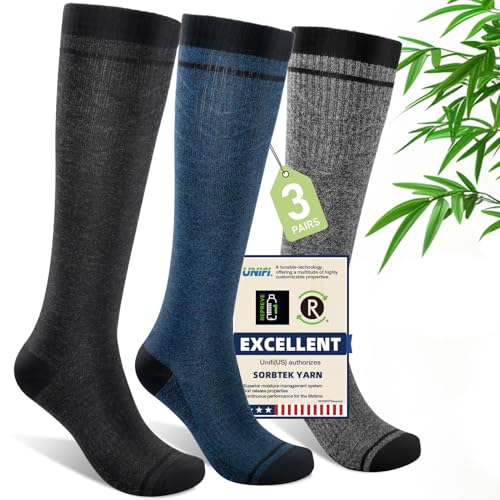
Iambamboo Compression Socks 15-20 mmHg

RTZAT Merino Wool Compression Socks 15-20 mmHg

IRAMY Ankle Compression Socks 3/5 Pairs

IRAMY Knee-High Compression Socks 15-20 mmHg

CEP Core Run 5.0 Tall Compression Socks for Men
The Picks, Examined More Closely
IRAMY Ankle Compression Socks put targeted support close to the foot, where six compression rings and reinforced arch sections can feel most noticeable during long shifts. The ankle cut slips comfortably into low-cut sneakers, work shoes, and boots, making it more practical than a knee-high sock for people who change footwear or move through the day quickly.
Unlike the softer Iambamboo model, this pair focuses on a firmer, activity-oriented feel with quick-drying fabric and ventilated mesh over the instep. Runners, warehouse staff, and walkers may appreciate that balance, though the stated sizing guidance deserves attention before ordering.
What Stands Out
- Six ankle rings create concentrated support without extending above the shoe line.
- Reinforced arch support suits standing jobs, walking, and active recovery.
- Mesh panels improve airflow during workouts and warm shifts.
- Stretch-enhanced fabric balances a snug fit with everyday flexibility.
- Sizes run from Small through X-Large, with fit guidance for lighter or firmer pressure.
Practical Considerations
- The sock is designed for a snug fit, so check the size-up and size-down guidance before checkout.
- Ankle coverage gives up the calf support offered by the RTZAT Merino Wool Compression Socks.
Feature Snapshot
Who It Suits Best
These socks suit people who spend long periods walking or standing but prefer discreet ankle coverage over knee-high styling.
Where Another Pick Suits Better
Travelers seeking softer bamboo fabric and precisely graduated pressure may prefer Iambamboo Compression Socks 15-20 mmHg.
Softness takes center stage in Iambamboo Compression Socks 15-20 mmHg, a pair built around 80% renewable bamboo viscose, Sorbtek yarn, and Lycra spandex. The smooth fabric feels gentle against the skin, while grooved fibers and breathable construction help manage moisture during a flight, a long office day, or an evening at home.
Graduated compression means the pressure changes along the leg rather than remaining uniform. Here, it starts at 20 mmHg around the ankle, then falls to 17 mmHg at the calf and 15 mmHg below the knee, offering a softer landing than the CEP Core Run 5.0 Tall Compression Socks for Men.
A Strong Showing
- Exact graduated pressure levels suit people who want control rather than a vague heavy feel.
- Bamboo viscose gives the fabric a notably smooth, lightweight texture.
- Moisture-management fibers promote quicker drying during extended wear.
- Lightweight stretch permits easy movement without a rigid feel.
- Fade-resistant colors add practical variety to a travel wardrobe.
Minor Gripes
- Graduated pressure may feel less substantial than the 20-30 mmHg range offered by CEP Core Run 5.0 Tall Compression Socks for Men.
- The fabric composition prioritizes smoothness, so it may not suit someone seeking the insulating character associated with merino wool.
Made For
These socks are well suited to travelers, desk workers, and sensitive feet that need soft, light compression across long hours.
Consider Something Else When
People working in changing temperatures may find RTZAT Merino Wool Compression Socks 15-20 mmHg more useful for year-round wear.
RTZAT Merino Wool Compression Socks 15-20 mmHg add temperature-regulating wool to a familiar 15-20 mmHg compression range. Merino wool naturally manages moisture and helps maintain a comfortable temperature, making the knee-high design useful for flights, desk shifts, outdoor days, and changing seasons.
The stretch comes from 13% Lycra spandex, which supports easy dressing and shape recovery. Unlike Iambamboo Compression Socks 15-20 mmHg, this pair places more emphasis on climate control and seasonal versatility, although its three listed sizes and taller cut deserve a closer sizing check.
Why It Works Well
- Merino wool helps regulate temperature as conditions shift.
- Moisture-wicking fibers move perspiration away from the skin.
- Four-way stretch supports a secure fit without limiting movement.
- Knee-high coverage suits travel, standing shifts, running, and daily wear.
- Four colors give you practical choices without changing the core design.
Points To Note
- Only Medium, Large, and Extra Large sizes are listed, so smaller feet need to verify fit before ordering.
- The knee-high profile may sit less comfortably with low-cut footwear than IRAMY Ankle Compression Socks.
Core Details
Right Fit For
These socks suit commuters, travelers, and outdoor walkers who want merino comfort with structured knee-high support.
Not Your Match When
Low-profile footwear and a lighter, softer feel may point you toward Iambamboo Compression Socks 15-20 mmHg instead.
IRAMY Ankle Compression Socks 3/5 Pairs keep the support concentrated around the foot, which helps them disappear inside the shoes you already own. Six zoned compression rings surround the ankle, while targeted arch support gives the sock more structure than a standard athletic sock.
The multi-pair format suits anyone rotating socks through a busy week, especially healthcare workers, teachers, retail staff, and active seniors. Compared with IRAMY Knee-High Compression Socks 15-20 mmHg, this model covers less of the leg but offers a neater fit with sneakers, work shoes, and boots.
What Helps Most
- Ankle-high construction avoids the bunching associated with taller socks in some shoes.
- Six support zones create a focused, held feeling around the ankle.
- Arch support benefits long periods of standing and walking.
- Mesh ventilation releases heat while compression and cushioning remain in place.
- The low profile works with sneakers, work shoes, and boots.
Things To Consider
- Arch support can feel more noticeable than a uniform crew sock, so start with a comfortable pairing.
- The ankle cut does not provide the calf coverage available from RTZAT Merino Wool Compression Socks 15-20 mmHg.
Feature Breakdown
Who Will Love This
These socks suit people on their feet for long shifts who value supportive feet over visible calf coverage.
A Better Fit Elsewhere
Travelers who want temperature control and knee-high coverage may prefer RTZAT Merino Wool Compression Socks 15-20 mmHg.
IRAMY Knee-High Compression Socks 15-20 mmHg cover more of the leg than the ankle models, adding calf support for travel, long shifts, and extended periods on your feet. Ankle compression rings and targeted arch support create a structured feel without abandoning the coverage that makes a knee-high sock useful.
This design works across different routines, including nursing shifts, teaching days, office work, travel, and running. It shares the 15-20 mmHg range with RTZAT Merino Wool Compression Socks 15-20 mmHg, but its calf mesh and high-performance fabric construction give it a lighter, more athletic character.
Key Advantages
- Knee-high coverage supports both the ankle and calf during long days.
- Arch support adds structure where foot fatigue tends to build.
- Calf mesh promotes airflow and a dry-feel finish.
- The 15-20 mmHg range offers a middle ground for work and travel.
- A clean knee-high profile coordinates with work clothes and casual outfits.
Trade Offs
- Longer socks take more space in a drawer and may not pair well with low-cut shoes.
- The athletic mesh construction may not provide the seasonal temperature control offered by RTZAT Merino Wool Compression Socks 15-20 mmHg.
Built With In Mind
These socks suit healthcare workers, teachers, travelers, and office professionals who want structured leg coverage throughout the day.
Another Choice May Suit
Runners seeking firmer 20-30 mmHg pressure and Achilles and shin support may find CEP Core Run 5.0 Tall Compression Socks for Men more aligned with their routine.
CEP Core Run 5.0 Tall Compression Socks for Men sit at the firmer end of this group with 20-30 mmHg compression. That stronger pressure makes the socks more relevant to experienced runners and active people accustomed to substantial support than to casual wearers seeking light everyday compression.
Achilles and shin support target areas that receive repeated attention during running, while breathable quick-dry fabric addresses heat and moisture. The tall cut offers more coverage than the ankle-focused IRAMY models, although the 20-30 mmHg range creates a much more pronounced squeeze.
The Upside
- 20-30 mmHg provides firmer pressure for experienced users.
- Achilles support focuses on a prominent area during running.
- Shin support adds structure below the knee.
- Breathable fabric helps release heat during demanding activity.
- Quick-drying construction suits workouts and active recovery.
Worth Bearing In Mind
- The 20-30 mmHg range may feel too intense during desk work or light travel, making IRAMY Knee-High Compression Socks 15-20 mmHg a gentler option.
Technical Highlights
Made For
These socks suit men with a running routine who are comfortable with firm compression and want focused lower-leg support.
Reach For A Different Pick When
Office workers and travelers who need gentler support will likely find Iambamboo Compression Socks 15-20 mmHg more comfortable.
How To Match Compression Socks To Your Day
Pressure Range
Millimeters of mercury, abbreviated mmHg, describe the amount of pressure applied by a compression sock. A 15-20 mmHg range provides moderate support, while 20-30 mmHg feels firmer and suits people already comfortable with substantial pressure. Match the range to your activity rather than assuming stronger compression always feels better.
Sock Height and Fit
Ankle socks work neatly with low-cut shoes and concentrate support around the foot. Knee-high socks extend support through the calf and fit best with footwear that accommodates the extra fabric. Check the listed sizes carefully, especially for RTZAT Merino Wool Compression Socks 15-20 mmHg, which come in Medium, Large, and Extra Large.
Fabric for Daily Comfort
Bamboo viscose offers a smooth, lightweight feel, while merino wool adds temperature regulation for changing conditions. Breathable mesh and quick-drying fibers help manage perspiration during workouts. For office days, prioritize a smooth texture and moderate pressure; for running, a firmer range and targeted shin or Achilles support may make more sense.
Compression Sock Details That Matter
Common Shopping Slip Ups
Choosing only by sock color misses the features that affect daily comfort. Check pressure, height, fabric, and footwear compatibility first. Sizing guidance also matters, since the same design can feel snug or loose depending on your foot and calf measurements.
What The Higher Tier Buys
A more specialized pair may spend more on targeted support, refined yarn, or a stronger compression range. That spending makes sense for dedicated runners or frequent travelers, while a moderate pair remains easier to wear for office work and long shifts.
Frequently Asked Questions
Are 15-20 mmHg Compression Socks Comfortable?
They usually feel firmer than ordinary socks, especially around the ankle, and become more familiar after several wears. Soft bamboo or merino fabric can make the pressure feel less intense.
Should You Size Up for More Comfort?
Sizing up may reduce the compression, while sizing down can produce a tighter feel. Follow each listing’s guidance and compare the stated size range with your usual footwear measurements.
Are Ankle or Knee-High Compression Socks Better?
Ankle socks suit low-cut shoes and focused foot support. Knee-high socks provide more calf coverage and work well with workwear, travel outfits, and running shoes.
Is Merino Wool Worth Choosing for Compression Socks?
Merino wool is useful when temperature control matters across changing seasons. Bamboo viscose may feel softer and lighter for stationary work or travel.
Who Benefits Most From 20-30 mmHg Socks?
Runners and active people accustomed to firm compression often find this range more useful. Beginners and all-day desk workers may prefer the gentler 15-20 mmHg options.
Final Thoughts
The most comfortable compression socks are rarely the ones with the strongest pressure alone. Ankle cuts prioritize discretion, merino and bamboo blends favor softness, and higher compression ranges suit experienced runners and active schedules. Match the sock to your footwear, climate, and tolerance for pressure, then give a new pair a chance to settle in.
