

A parent leaves the bedroom knowing their father may need help before reaching the kitchen. A daughter rests nearby while an alert reaches her phone. An older adult wants to call without relying on a smartphone or monthly service. These systems serve different routines, so the useful choice depends on the kind of response you need. The most practical setup matches the alert to the person, the distance between rooms, and the caregiver’s location.
A Side-By-Side Look

Greetmed Caregiver Pager Wireless Emergency Button, 38 Melodies

EverNary WiFi Smart Bed Sensor Alarm with App for 2.4GHz Wireless

HOMATTER 113dB Door Alarm

Vamtyk Wireless Caregiver Pager
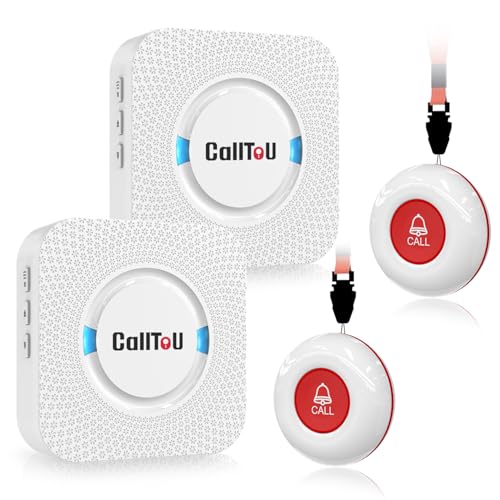
CallToU Pager with Two Buttons

CallToU Wireless Caregiver Pager

CallToU Pager with Walkie-Talkies
A Closer Look At Each Pick
A resident can press a light, portable button and alert a nearby caregiver without learning a complicated app. The Greetmed system suits homes where reliability matters more than remote phone notifications. Its 38 selectable melodies help you distinguish calls from different rooms or transmitters as the setup grows.
For a person recovering at home, the pendant-style button offers an easy way to request assistance while moving between the bedroom and kitchen. The receiver plugs into a wall, so you can place it where the alert will be heard, although thick walls may reduce the effective indoor distance.
Positive Takeaways
- Works without cellular service, Wi-Fi, or a monthly fee
- Reaches more than 1,000 feet in open areas
- Offers 38 melodies at a stated 70 dB or higher
- Light 98-gram transmitter supports wall, pocket, or pendant use
- Allows separate melodies for multiple transmitters
Things To Consider
- Each receiver needs a nearby wall outlet for power
- The stated indoor reach begins around 165 feet, so very large homes may need another arrangement
Feature Snapshot
Made For
This system fits homes that need a dependable local call button without Wi-Fi or subscription fees.
Consider Something Else When
Choose EverNary WiFi Smart Bed Sensor Alarm with App for 2.4GHz Wireless when phone alerts and shared family notifications are essential.
Unlike the Greetmed system, which sounds inside the home, EverNary sends a warning through the Smart Life app when movement is detected. A sensor placed under a bed can signal a foot reaching the floor, while a doorway placement can reveal a resident leaving the room. That makes it useful for a caregiver who is not always downstairs.
The hub alerts a connected phone and records call history, while shared access can notify other relatives. A caregiver traveling elsewhere may appreciate this remote visibility, provided the home network uses a 2.4 GHz connection.
Benefits That Matter
- Delivers motion alerts to a phone away from home
- Supports flexible bed and doorway placement
- Shares alerts with other family members
- Expands to 20 transmitters per hub
Practical Considerations
- Requires a 2.4 GHz Wi-Fi network
- Only one phone connects directly to each hub
- Range varies indoors, with approximately 30 to 150 feet stated
Quick Facts
Right Fit For
EverNary fits family caregivers who need phone-based updates from a bed, doorway, or other monitored location.
Where Another Pick Shines
The Greetmed Caregiver Pager Wireless Emergency Button, 38 Melodies is simpler for caregivers who need only a local call and no Wi-Fi.
A portable alarm on the bedroom or patio door can tell a caregiver that someone has opened an exit point. The HOMATTER model takes a different approach from a wearable pendant because it monitors the door itself. That makes it useful for a resident who wanders or routinely tries to leave a room.
The included remote controls arming and disarming from up to 200 feet away, which reduces the need to reach a wall-mounted control. You may find this especially handy in a home where the caregiver moves between rooms while the resident rests.
What Stands Out
- Remote arming and disarming reduce frequent trips
- Four volume levels and four chime options suit different rooms
- One remote can control as many as eight portable alarms
Minor Gripes
- Each attached alarm needs a secure, reachable position
- The 200-foot remote limit may not cover a very large property
Who Will Love This
This alarm suits caregivers focused on exterior doors, bedroom exits, and other wandering-related entry points.
Look Elsewhere When
The Vamtyk Wireless Caregiver Pager is a better fit when the older adult must initiate the call from a wearable button.
A lightweight pendant gives an older adult a direct way to request help, even after a fall or while recovering at home. The Vamtyk system keeps the interaction simple: press the button, and the plugged-in receiver sounds. That straightforward arrangement works well for a family caregiver sharing a home or nearby apartment.
You can wear the button on a neck strap or secure it to a wall with the included bracket or adhesive pad. The receiver may move between the bedroom, kitchen, and living area, giving you some flexibility in placement.
Where It Helps
- Pendant, bracket, and adhesive mounting options
- 26 tones and four volume levels distinguish different alerts
Small Caveats
- The receiver requires a continuously available outlet
- Open-area reach exceeds 1,000 feet, but interior walls shorten the working distance
- One-button operation suits a single resident better than a shared call point
Technical Notes
Built With In Mind
This pager fits an older adult who may struggle with a smartphone but can comfortably press a worn button.
Reach For A Different Pick When
Choose CallToU Pager with Two Buttons when two people need separate call points within the same home.
Two call buttons and two receivers cover a common home-care arrangement: a button near the bed and another beside a chair, with receivers sounding in separate rooms. CallToU Pager with Two Buttons keeps the process familiar, relying on local radio communication rather than smartphone activity. That simplicity can be reassuring for an older adult who only needs to press and wait.
The receiver can move to whichever room the caregiver occupies, while the buttons remain near the person. Its stated open-area reach of more than 500 feet gives you flexibility in a typical property, although the exact range between interior rooms will vary.
Points In Its Favor
- Two receivers support alerts in separate living areas
- Two portable buttons cover different bedside or chair locations
Points To Note
- Both receivers need access to electrical outlets
- Walls and household electronics may shorten the practical indoor range
The Right Fit
This set fits a shared home where one older adult needs assistance from more than one room.
Another Choice May Suit
The CallToU Wireless Caregiver Pager offers a better fit when three receivers are needed across a larger floor plan.
CallToU Wireless Caregiver Pager expands beyond a single bedside setup with three receivers and two call buttons. That combination suits a home with a bedroom, living room, and hallway where family members rotate their attention. Each receiver can remain in a different area while the portable buttons stay close to the resident.
The straightforward local alert suits daily use because it does not depend on an active phone or app. In a multi-caregiver household, separate ringing locations may be more useful than trying to keep one receiver within hearing range of everyone.
What Earns Its Place
- Three receivers support several home zones
- Two portable call buttons offer separate access points
- More than 500 feet of stated open-area reach
Some Limits To Know
- Three receivers require three available power outlets
- No listed remote phone-notification feature
- Interior construction can affect the working distance
Feature Facts
Whose Shelf It Belongs On
This set suits families coordinating care from several rooms without requiring phone-based alerts.
Swap It Out When
Choose CallToU Pager with Walkie-Talkies when the caregiver also needs two-way communication outdoors.
The yard creates a different problem from a bedroom: a caregiver may hear a call but need to speak with someone across the property. CallToU Pager with Walkie-Talkies includes two receivers, two call buttons, and two walkie-talkies. That combination extends beyond a simple alert and supports direct conversation when the caregiver is outside.
For an older adult who spends time in a garden, workshop, or patio, the portable button remains the simple part of the setup. The walkie-talkies add a practical communication layer for adults moving between indoor and outdoor areas.
Useful Highlights
- Two walkie-talkies add two-way communication
- Two receivers and two buttons support a shared home
- Portable call buttons suit bedrooms, patios, or workshops
- Over 500 feet of stated open-area pager range
Things That May Matter
- Receivers need nearby wall outlets
- Large yards benefit from a quick radio-range check
Core Details
Made For
This bundle fits households where the caregiver needs both a call button and portable voice communication outdoors.
A Better Fit Elsewhere
EverNary WiFi Smart Bed Sensor Alarm with App for 2.4GHz Wireless is better for off-site phone notifications and shared family alerts.
What Matters Most Before You Choose
Start With the Alert Path
A wearable call button, doorway alarm, and bed sensor each create a different alert path. Choose the device that fits the behavior you need to monitor rather than selecting the broadest feature list. A resident who reliably presses a pendant may need less complexity than someone whose movement must be detected automatically.
Account for Walls and Power
Open-area range is only part of the decision. Interior walls, floor levels, and the placement of receivers affect real coverage. Also count nearby outlets, since most plug-in receivers and hubs need continuous access to household power.
Match the Alert to the Caregiver
A local pager suits a caregiver sharing the same property. A Wi-Fi hub can send a notice to a phone farther away, but it also introduces network requirements and app setup. Consider whether the person receiving alerts shares the home or works elsewhere.
Check How Many People Need Alerts
One receiver may be adequate for a small apartment with a nearby caregiver. Multiple receivers help family members hear a call from different rooms, while shared app access reaches relatives who are away. The right quantity depends on where people listen and how the older adult moves through the home.
Common Mistakes Worth Avoiding
Mistakes Worth Dodging
A long stated range can overshadow the need for a reachable receiver. Place the receiver where the caregiver usually spends time, and position the button where the older adult can reach it easily. Comparing a door alarm with a pendant pager also matters because they detect different actions rather than serving the same purpose.
What The Higher Tier Buys
Higher-cost sets commonly add app connectivity, more receivers, extra call buttons, or walkie-talkies. Those additions suit caregivers who need remote notifications or two-way communication. A simple local pager remains more practical when one person monitors the home and wall outlets are plentiful.
Frequently Asked Questions
Do elderly monitoring systems need Wi-Fi?
Most local pager systems operate without Wi-Fi, while app-based models require a compatible 2.4 GHz network. Local systems suit caregivers and older adults living in the same property.
Which type is easiest for an older adult to use?
A wearable call button is generally easier than operating a small screen. Choose a large, clearly identifiable button that the older adult can press while seated, lying down, or walking.
Can one system cover several bedrooms?
Multi-receiver sets can place alerts in different rooms. The call button remains portable, so it can move with the older adult while the receivers remain where family members can hear them.
How far should a caregiver pager reach?
The listed ranges describe open-area conditions, while walls shorten indoor coverage. Compare the stated indoor distance with the home’s size and the receiver’s position before deciding.
Should a monitoring system send alerts to a phone?
Phone notifications help when the caregiver is away, but they depend on a hub, compatible Wi-Fi, and app access. A local pager offers simpler operation for caregivers who remain nearby.
Closing Remarks
The most useful system responds to a specific routine rather than chasing the longest feature list. Match wearable buttons, movement sensors, and door alarms to the behavior that matters, then account for walls, outlets, and caregiver location. A setup that feels simple for the older adult is usually easier to maintain every day.
