

A clinician listening for a faint murmur and a mechanic hunting down an intermittent squeal need very different tools. Electronic stethoscopes help amplify, filter, and isolate sounds, but medical models can also provide waveforms and ECG data, while automotive versions focus on locating machinery noise. These options serve distinct professional environments.
The Lineup, Simplified
Eko CORE 500 COR503-BLK Matte Black Digital Stethoscope, 40x Amplification

Fikeloy 45W Charger 6+6+10FT Kit
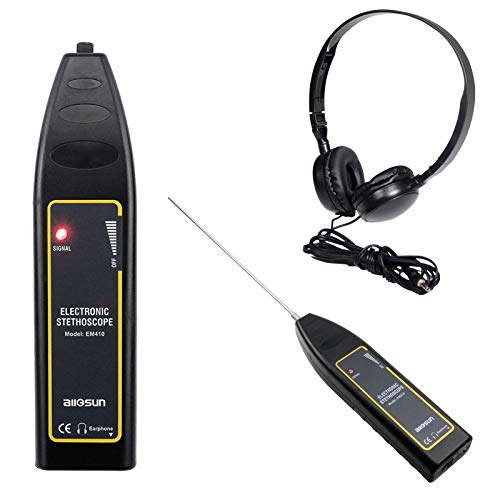
allsun EM410 Electronic Stethoscope Diagnostic Kit

Eko CORE 500 COR503-SLV Silver Digital Stethoscope, 40x Amplification

Eko CORE 500 COR503-CHP Champagne Digital Stethoscope, 40x Amplification

BGS 3531 Electronic Stethoscope

Steelman EngineEAR II Electronic Stethoscope, 60-120 Decibel Meter
A Closer Look At Each Pick
During a busy outpatient shift, the ability to move from an audible murmur to a visual waveform changes the device from a listening tool into a broader examination aid. The CORE 500 combines up to 40x amplification, three audio filters, a three-lead ECG, and a full-color display, making it relevant to physicians, nurses, EMS personnel, and clinical students.
Unlike the automotive instruments later in this roundup, this model is built around human patient assessment rather than machinery. Its app connection adds visualization and recorded sound, while the rechargeable battery is rated for up to 60 hours of regular clinical use. For your workflow, the central question is whether ECG and recording support justify a subscription-oriented setup.
Real-World Strengths
- Up to 40x amplification helps surface subtle heart, lung, and body sounds in demanding clinical environments.
- Cardio, Pulmonary, and Wide filters let you tailor the audio to the type of examination.
- The full-color screen presents heart rate, ECG information, settings, and exam insights directly on the device.
- Waveform visualization and recorded audio support teaching, documentation, and later review.
- A rechargeable battery rated for up to 60 hours suits regular clinical schedules.
Things To Consider
- The advanced Eko+ features require a paid membership after the initial 14-day trial, although basic app functions remain available.
- Your facility or employer may have specific reimbursement, compatibility, and device-management policies to review.
Key Specs
Made For
You benefit most from this model as a clinical professional who regularly needs amplified audio, ECG information, waveform review, and exam recording.
Where Another Pick Suits Better
Choose the allsun EM410 instead when your priority is locating abnormal sounds in engines, motors, pipes, or industrial equipment.
This kit is not an electronic stethoscope, so it belongs in a broader troubleshooting roundup rather than a medical-device comparison. The Fikeloy set includes three 45W USB-C charging blocks with two 6-foot cables and one 10-foot cable. It serves anyone who wants spare charging equipment for compatible USB-C phones and tablets.
The useful distinction from the Eko CORE 500 is purpose rather than sound quality. This charger replenishes device batteries, while the Eko listens to patients and displays ECG information. Verify your device uses a USB-C connection before treating either one as the right choice for your intended task.
The Good Stuff
- Three charging blocks make the set practical for keeping one at home, one at work, and one in a travel bag.
- The 10-foot cable reaches across a desk or bedside area without requiring another cable.
- USB Power Delivery 3.0 provides a maximum stated output of 45W for supported devices.
- Protection circuitry manages voltage, charging, and heat while adjusting output for the connected device.
Points To Keep In Mind
- It does not amplify, record, or analyze body sounds, so it cannot replace an electronic stethoscope.
- The listed USB-C-to-USB-C cables are not suitable for older iPhone models that use a different connector.
- Charging speed depends on the phone, its power-management settings, and the connection used.
Quick Facts
Who Will Love This
You will appreciate this set as a phone owner who works across several locations and wants compact USB-C charging backups.
A Better Fit Elsewhere
The Eko CORE 500 Digital Stethoscope is the relevant choice for clinical listening, ECG data, and patient-exam visualization.
A noisy workshop can bury the vibration you need to hear inside a valve, bearing, pump, or motor. The allsun EM410 answers a different challenge from the CORE 500: it uses a contact probe and amplifier to inspect machinery rather than a display and ECG leads to assess patients.
Its stated 100Hz-to-10kHz detection range and 100dB environmental-noise level make it relevant for maintenance work in loud settings, depending on the equipment and listening conditions. The included long and short probes also let you reach different components without moving the machine as much.
Useful Strengths
- The contact probe helps separate mechanical vibration from ambient workshop noise.
- A broad frequency range supports inspection of engines, motors, bearings, pipes, and assembly equipment.
- Long and short probes offer practical access to exposed and recessed components.
- The carry bag and instructions make the kit easier to organize between jobs.
Practical Considerations
- The single 9V battery means you should keep a spare available for extended maintenance work.
- Its contact-based design requires a suitable accessible surface on the machine, unlike the non-contact Steelman EngineEAR II.
Feature Snapshot
Right Fit For
This model suits mechanics, engineers, and facility technicians who diagnose vibration across engines, motors, pipes, and production equipment.
Consider Something Else When
The BGS 3531 fits vehicle diagnostics that benefit from multiple color-coded probes and clamp-mounted contact points.
The silver CORE 500 carries the same clinical platform as the matte-black version, rather than introducing a different device. You get the same three-lead ECG, 40x amplification, audio filters, color display, waveform visualization, and recording features, so your decision comes down to finish and listing preference.
A silver instrument may suit a shared clinical environment where a coordinated set matters, and the model’s screen reduces the need to handle a phone during part of an examination. The honest read is that the finish does not change the core function, so confirm the advanced app features fit your needs before choosing by appearance alone.
The Practical Payoff
- Three ECG leads add electrical heart data alongside traditional auscultation, meaning body-sound listening.
- Up to 40x amplification and three sound filters support focused listening across different exams.
- Waveform display and app playback make recorded sounds easier to review or discuss.
- Its rechargeable battery is rated for up to 60 hours of regular clinical use.
Minor Gripes
- Advanced Eko+ functions require a paid membership after the 14-day trial.
- Compared with the matte-black CORE 500, the only meaningful listed difference here is color.
Built With In Mind
This version fits clinical professionals who prioritize the CORE 500 feature set and prefer a silver finish for their professional equipment.
Not Your Match When
The matte-black Eko CORE 500 is the more direct alternative for anyone who simply prefers a darker, less conspicuous finish.
Champagne gives the CORE 500 a softer look for clinical professionals who do not want the usual black instrument in every pocket. Functionally, it remains the same digital platform: three-lead ECG, full-color visualization, up to 40x amplification, and three targeted audio modes remain the deciding features.
Compared with the silver Eko CORE 500, you gain no additional measurement function, so this choice is primarily aesthetic. For teaching settings, clinical rotations, or a personal practice, the finish can matter more than expected without changing how the device handles heart, lung, and body sounds.
What Makes Sense
- The champagne finish gives clinical equipment a less conventional appearance.
- ECG information, full-color display, and waveform visualization support a broader examination workflow.
- Recording and app playback can help with review, teaching, and sharing exam sounds.
Trade Offs
- The listed Eko+ subscription requirement remains relevant after the initial trial period.
Who Should Grab It
Choose this CORE 500 variant when you want its clinical capabilities and a champagne finish for a personal or teaching setup.
Look Elsewhere When
The allsun EM410 is a better fit for technicians who need vibration-based diagnostics for motors, pipes, and machinery.
Tracking a rattle through an alternator or engine can become faster when each contact point has a clear visual identity. The BGS 3531 includes six color-coded probes, which helps your team associate particular locations with different components during a diagnosis.
Its one-way amplifier supports acoustic testing, and clamps can hold a probe against a component for steadier contact. Unlike the Steelman EngineEAR II, which offers a non-conductive microphone and adjustable sound-level settings, this kit emphasizes organized probe placement and vehicle-oriented fault finding.
The Upside
- Six color-coded probes make component-by-component checks easier to organize.
- Clamp mounting helps maintain acoustic contact at a selected test point.
- The amplifier approach supports quicker isolation of abnormal mechanical noise.
- The tool can remain in place while you inspect different operating points.
Some Limits To Know
- Contact probes need access to a suitable surface on the component being inspected.
- This model is designed for machinery noise, not patient auscultation or ECG information.
- International-product terms may differ from those associated with domestic items, so check the included instructions and warranty terms.
Technical Highlights
The Right Fit
This model fits vehicle technicians who repeatedly check several components and want each probe location clearly identified.
Another Choice May Suit
The Steelman EngineEAR II suits mechanics who prefer a flexible gooseneck, non-conductive microphone, and adjustable decibel controls.
A persistent squeal or rattle becomes easier to isolate when you can move from a broad search to a controlled listening pass. The EngineEAR II combines a flexible gooseneck, a non-conductive microphone, and over-ear mono headphones, making it a practical fit for automotive diagnostics without placing a contact probe on every component.
The stated 60-to-120-decibel range uses seven sound-level settings to accommodate different noise conditions. Compared with the BGS 3531, the Steelman offers adjustable sound handling and a flexible shaft, while the BGS emphasizes color-coded contact probes and clamps.
Noteworthy Benefits
- Seven sound-level settings let you adapt the listening range as the vehicle noise changes.
- The flexible gooseneck helps position the microphone near awkward components.
- Over-ear mono headphones reduce distracting surrounding sound while you listen.
- A non-conductive microphone supports diagnostic work without requiring direct probe contact.
Details To Watch
- This is an automotive noise locator, not a clinical stethoscope or ECG device.
- The decibel range is most useful for comparing or isolating machinery noise within a practical automotive setting.
At A Glance
Best Suited To
You get the most from this instrument as a mechanic tracing rattles, squeaks, and irregular sounds in cars and light machinery.
Reach For A Different Pick When
The Eko CORE 500 is the appropriate choice for healthcare professionals who need patient auscultation, ECG data, and clinical waveform display.
What Matters Before You Make a Choice
Start with the environment. Patient assessment requires a medical digital stethoscope with appropriate audio amplification and examination features. Automotive maintenance calls for a sound locator designed around engines, alternators, bearings, or other moving components. The two categories should not be treated as interchangeable.
Intended Use
Clinical users should examine amplification, filters, recording, ECG capability, display information, and app dependence. Automotive users need to decide between contact probes, clamps, a flexible microphone, and adjustable sound levels. The allsun EM410 and BGS 3531 lean toward contact-based inspection, while the Steelman EngineEAR II offers a flexible non-contact approach.
Audio and Visual Information
Amplification makes quieter sounds easier to hear, while filters help separate selected frequencies from surrounding noise. A display adds a different layer by showing heart rate, ECG information, waveforms, or exam settings. You gain more from visualization when recording, teaching, or reviewing an examination is part of your routine.
Power, Accessories, and Compatibility
A rechargeable battery removes the need for routine disposable-battery changes, while a conventional 9V battery keeps an instrument simple but calls for a spare. Probe length, headphone style, cable reach, and device compatibility also shape daily use. Check your existing equipment and charging or battery setup before ordering.
Common Mistakes to Avoid
Mistakes Worth Dodging
Choosing an automotive tool for patient care, or a clinical device for engine faults, creates an immediate compatibility problem. Another common error is focusing on amplification alone. Filters, probe placement, noise handling, display data, and power requirements can matter just as much during routine use.
What Separates Premium From Basic
The higher-tier clinical model adds ECG leads, waveform visualization, recording, app connectivity, and a rechargeable battery. Those features justify the added complexity for clinical workflows that rely on digital documentation. For a straightforward vehicle-noise search, a simpler probe or microphone kit may provide everything you need.
Frequently Asked Questions
Can an electronic stethoscope be used on patients?
The Eko CORE 500 is designed for screening, monitoring, and triaging human patients. The allsun EM410, BGS 3531, and Steelman EngineEAR II are intended for machinery and automotive noise instead.
Can an electronic stethoscope diagnose engine problems?
These tools can help locate and isolate unusual mechanical sounds, but they support diagnosis rather than replace a complete inspection. You may still need to check fluid levels, wear, clearances, and other vehicle conditions.
What does amplification do?
Amplification increases the volume of a detected sound so quieter details may be easier to distinguish. Filters narrow the audio emphasis, while recording and waveform display provide additional ways to review an examination.
Which model includes ECG capability?
The Eko CORE 500 models include a three-lead ECG and a full-color display. The other electronic stethoscopes in this roundup focus on mechanical sound detection without ECG data.
Is an Eko+ membership required?
A 14-day Eko+ trial is included, and advanced murmur or AFib detection features require the paid membership afterward. Basic app features remain available without that membership.
Final Verdict
Your choice depends on the sound you need to hear and the environment around it. The Eko CORE 500 fits clinical professionals who want amplified audio, ECG data, visualization, and recording, while the allsun, BGS, and Steelman models serve mechanics and maintenance teams. Match the tool to the task, then check power, accessories, and app requirements before ordering.
