

A flight gate, a long shift behind a counter, or a full day on your feet can leave your lower legs feeling heavy and uncomfortable. Compression socks apply graduated pressure, meaning the pressure changes along the sock to support circulation and reduce swelling, but the right pair depends on compression level, height, fit, and your daily routine. These options cover everything from airplane travel and standing shifts to running and firm graduated support.
The Leading Options At A Glance

Sockwell Women’s Circulator Sock
Iambamboo Flight Compression Socks

Trusiel Ankle Compression Socks

Dr. Motion Knee High Socks

Sockwell Women’s Elevation Socks

Sockwell Men’s Elevation Sock
What Each Pick Brings To The Table
A nurse spending most of the shift on their feet needs more than a thin sock that feels ordinary after an hour. The Circulator pairs four zones of moderate compression with an over-the-calf length, making it a practical choice for long shifts, travel, recovery, and active days.
The 15-20 mmHg range sits between the mild Dr. Motion model and the more athletic Trusiel pair. Arch support, a smooth toe, and a cushioned sole give this Sockwell option a more finished everyday profile, particularly for people who need support without a sock built primarily around running.
A Strong Showing
- Four graduated zones provide a more structured pressure profile for long periods on your feet.
- The over-the-calf length covers more of the lower leg than the Trusiel ankle socks.
- Accu-fit technology, arch support, and a cushioned sole favor regular extended wear.
- Moisture management and temperature regulation suit travel, work, and exercise.
Things To Consider
- Moderate compression may feel more substantial than the 8-15 mmHg level used by Dr. Motion.
- Fit depends on the listed women’s shoe ranges of 4-7.5 or 8-11, so check your usual size before ordering.
Key Specs
Who It Suits Best
This model suits women who spend long hours standing, sitting, traveling, or moving between several activities during the day.
Where Another Pick Suits Better
Trusiel Ankle Compression Socks serve runners and walkers better when a low profile and stronger athletic construction matter more than calf coverage.
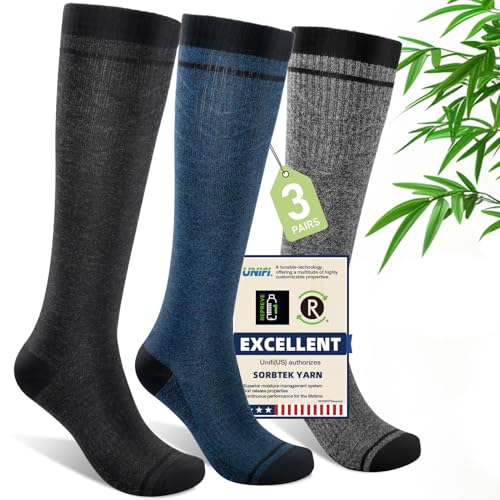
Airport security lines, cramped coach seats, and hours of walking can make softness and moisture control nearly as important as compression. These socks pair a 15-20 mmHg profile with bamboo viscose, Sorbtek yarn, and Lycra spandex for a lightweight option aimed at travel and extended wear.
Pressure starts at 20 mmHg near the ankle and decreases through the calf and below-knee area. Compared with the Sockwell Circulator’s four-zone construction, the Iambamboo pair takes a softer textile approach, which may appeal more to people who dislike a dense athletic sock.
The Practical Payoff
- The stated moisture-wicking improvement reaches 60%, useful during long flights and warm conditions.
- Lightweight stretch supports walking without the rigidity associated with heavier athletic socks.
- Bamboo viscose creates a smooth feel that suits extended wear.
- The pressure profile supports travelers, office workers, and athletes.
Minor Gripes
- The 20 mmHg ankle level may feel firmer than the 8-15 mmHg Dr. Motion socks.
- Its below-knee construction provides less calf coverage than the Sockwell Elevation choices.
Feature Snapshot
Made For
This pair is made for frequent travelers, office workers, and anyone who wants lightweight compression for long hours of movement.
Another Choice May Suit
Sockwell Women’s Circulator Sock offers a better fit for shoppers who prioritize over-the-calf coverage and a more structured four-zone construction.
Runners often need a sock that controls movement rather than merely adding warmth around the calf. The Trusiel pair uses an ankle cut, 15-21 mmHg compression, full-toe cushioning, and reinforced underfoot areas to focus protection around the parts of the foot that take repeated impact.
This is the most athletic design in the group, with a higher stated pressure range than the Iambamboo flight socks. For a walk, a flight, or a recovery day, you could still wear it, but its added padding and blister-oriented details make more sense with trainers and active routines.
Points In Its Favor
- Full-toe cushioning adds impact protection where runners place repeated stress.
- A double-thick heel tab helps reduce rubbing from footwear.
- The fitted heel cup and smooth toe limit bunching in high-friction areas.
- Quick-drying material and airflow channels support long active days.
- Five pairs make it convenient to rotate between workouts and travel.
Where It May Fall Short
- The ankle cut offers less lower-leg coverage than the Sockwell Circulator.
- Extra cushioning may feel excessive for people who wear compression socks mainly under dress shoes.
Core Details
Built With In Mind
These socks suit runners, walkers, and active people who want cushioned low-cut compression through repeated movement.
Consider Something Else When
Dr. Motion Knee High Socks offer a better match for formal clothing, long office shifts, and shoppers wanting a milder pressure range.
A knee-high sock can look perfectly ordinary with slacks while still delivering the graduated support needed during a workday. This Dr. Motion set uses three compression zones and an 8-15 mmHg range, placing it at the milder end of this collection.
Five pairs make rotation easy for retail workers, office employees, and anyone who spends hours seated or standing. Compared with the Iambamboo socks, the pressure is lighter, while the taller cut may feel more natural under longer trousers.
The Good Stuff
- Mild 8-15 mmHg compression suits people wanting support without intense pressure.
- Three graduated zones move from ankle to calf.
- Moisture-wicking fabric helps keep feet dry during extended wear.
- The five-pair format simplifies weekly rotation.
Practical Considerations
- The listed fit covers women’s shoe sizes 4-10 with a 12-18.5 inch calf range, so check both measurements.
- Its milder support may not provide the athletic feel sought by runners.
Technical Sheet
The Right Fit
These socks suit women seeking mild, knee-high support for office work, travel, shopping, or extended periods of standing.
A Better Fit Elsewhere
Iambamboo Flight Compression Socks suit travelers better when lightweight fabric and a higher 15-20 mmHg pressure range take priority.
Choosing between two compression socks from the same brand often comes down to the stated pressure level and height. The Women’s Elevation model is positioned around firm graduated compression and calf coverage, giving shoppers a firmer option than the moderate Circulator without moving to the men’s knee-high version.
That makes Elevation useful for shoppers who know they want more substantial support but have not settled on the heavier construction of a running sock. You may find the firmer specification more appropriate for long standing days, while the calf format keeps it closer to a conventional legwear choice.
Practical Advantages
- Firm graduated compression provides a more substantial option than the moderate Circulator model.
- Calf coverage makes the design easy to pair with shoes that expose more of the lower leg.
- The women’s version provides a focused fit choice within the Elevation line.
Details To Watch
- Confirm the available size and calf fit before ordering, particularly when comparing firm styles.
- Choose the Circulator instead when moderate rather than firm compression is the priority.
Who Will Love This
This model suits women who want firm graduated compression with calf-length coverage for regular wear.
Swap It Out When
Sockwell Women’s Circulator Sock suits you better when moderate pressure and four compression zones are a closer match.
Men comparing the Elevation models have a clear distinction to work with: this version adds knee-high coverage to the model’s firm graduated compression positioning. It is the more substantial choice of the two Sockwell Elevation options and fits naturally with a wardrobe built around longer trousers or work shoes.
Compared with the Trusiel ankle socks, the knee height gives you more coverage, though it lacks their running-specific toe and heel cushioning. For a desk day, a long flight, or a shift spent standing, the fuller profile is the more logical direction for this list.
Useful Touches
- Firm graduated compression targets shoppers seeking a more substantial pressure profile.
- Knee-high coverage suits workwear and longer trousers.
- The dedicated men’s version simplifies the fit decision within the Elevation range.
Worth Bearing In Mind
- Check the available size and calf measurements before selecting this knee-high style.
- Runners may prefer the lower profile and targeted cushioning of the Trusiel pair.
Whose Shelf It Belongs On
This sock suits men who want firm compression, knee coverage, and a straightforward option for commuting or long workdays.
Where A Sibling Pick Shines
Trusiel Ankle Compression Socks serve active runners better with their 15-21 mmHg range, low cut, and impact-focused cushioning.
What To Look For Before Buying
Compression Level And Daily Demand
Millimeters of mercury, abbreviated mmHg, describe the pressure applied by a compression sock. The socks here range from mild 8-15 mmHg support to the Trusiel pair’s 15-21 mmHg athletic range. Match the level to the activity and your tolerance: a desk day may suit lighter support, while prolonged standing or running can justify firmer construction.
Height And Footwear Compatibility
Height changes both coverage and how the sock works with your shoes. Ankle socks disappear neatly inside trainers, while knee-high versions add lower-leg coverage and pair well with trousers. Consider the footwear you wear most and the amount of leg coverage you actually want.
Fit Around Foot And Calf
A close, even fit matters more than squeezing harder. Check shoe sizing, calf measurements, and any size-specific details on the listing. Shoes and socks occupy space, so measure your feet in the footwear you plan to pair with them.
Moisture Control And Care
Moisture-wicking yarn, quick-dry soles, and breathable fabric help manage perspiration during long wear. Trusiel also provides specific washing guidance, including avoiding bleach and fabric softener. Follow the care instructions for the pair you select so its construction and stretch can be maintained properly.
Practical Details That Change Your Choice
Common Shopping Slip Ups
Compression level, sock height, and size are separate decisions, and confusing them leads to disappointing purchases. A firm sock may not fit a specific shoe, while a taller sock may sit differently than expected under trousers. Compare all three details rather than choosing on color or pack size alone.
What The Upgrade Payoff Means
A higher-priced pair may put more emphasis on fiber technology, pressure construction, cushioning, or a multi-pair set. That extra spending makes sense when it matches a specific routine, such as frequent running or daily rotation. Paying more for a complex design that conflicts with your shoes or workday is harder to justify.
Frequently Asked Questions
What compression level should I choose for long flights?
Choose 15-20 mmHg for moderate support during travel, especially when you expect long periods of sitting or walking. A lighter 8-15 mmHg pair may feel more comfortable for shorter flights or shoppers sensitive to pressure.
Are compression socks useful for prolonged standing?
Compression socks can reduce the heavy-leg sensation that often accompanies prolonged standing by supporting graduated pressure and limiting fluid buildup. They work best as part of a routine that also includes movement breaks and changes in position.
Should I choose ankle or knee-high socks?
Choose ankle socks for low-profile athletic footwear and focused activity. Knee-high socks provide more lower-leg coverage and suit office clothing, work uniforms, and shoppers who want more coverage under longer trousers.
How should compression socks fit?
They should feel snug without creating painful pressure, visible distortion, or excessive bunching. Check the listed shoe and calf measurements, and consider the footwear you will wear with the socks.
Do compression socks need special washing care?
Follow the care instructions for your chosen pair. Trusiel recommends a gentle cold or warm cycle, no bleach or fabric softener, and low tumble drying, while hanging or laying the socks flat can help with drying.
Wrap Up
The best fit comes down to your routine, not simply the strongest compression. Choose mild Dr. Motion socks for understated daily support, Iambamboo for lightweight travel, Trusiel for running, or Sockwell for moderate and firm graduated options. Check the pressure, height, and measurements, then choose the pair that suits your shoes and schedule.
