

A long flight can leave your legs feeling heavy after hours in a narrow seat. These compression socks use graduated pressure, meaning the fit feels firmer near your ankle and eases upward, helping you choose comfortable support for air travel, long workdays, or active trips.
Your Options, Compared

SB SOX Lite Compression Socks

PULIOU Merino Wool Compression Socks

COOLOVER 4-Pair Compression Socks 15-20mmHg
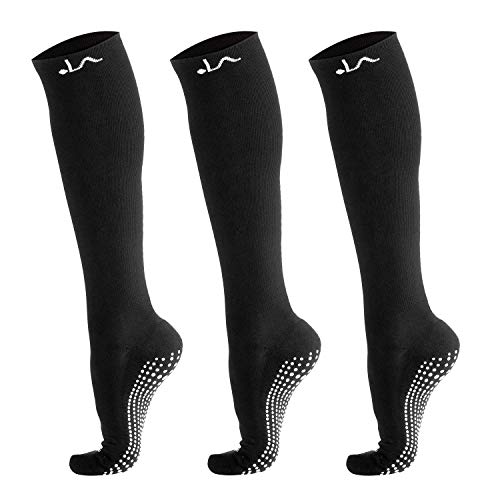
LA ACTIVE 20-30mmHg Grip Compression Socks, Black 3-Pack

ABSOLUTE SUPPORT T.E.D. Socks

Sockwell Women’s Damask Socks
More Details On Our Top Picks
Lightweight support matters when a flight turns into several hours of sitting, walking, and waiting at the gate. The SB SOX Lite Compression Socks use a 15–20 mmHg pressure profile, placing them in the lighter range compared with the 20–30 mmHg LA ACTIVE socks.
The 80% nylon and 20% spandex construction should feel light against your skin while retaining stretch through long sitting periods. You also get unusually detailed sizing, making calf measurement the more useful starting point for travelers with different shoe and leg proportions.
Good Reasons To Consider
- The lightweight fabric suits extended wear without adding bulky material.
- Graduated pressure eases from the ankle upward for supportive movement.
- Three calf ranges cover a wide range of leg proportions.
- The breathable construction suits warm airports and long travel days.
Practical Considerations
- Measure your calf before ordering and consider sizing up when your shoe size falls outside the listed range.
- Its lighter pressure may feel less substantial than the stronger LA ACTIVE profile.
Key Specs
Made For
You benefit most from these socks on long flights, road trips, and travel days spent sitting for extended periods.
Where Another Pick Suits Better
PULIOU Merino Wool Compression Socks suit travelers who prioritize warmth and temperature control over the SB SOX sock’s lighter nylon blend.
A cold aircraft cabin can make a long trip feel less comfortable than the flight time suggests. PULIOU Merino Wool Compression Socks add a 50% merino wool blend, bringing warmth and breathability to the same 15–20 mmHg pressure range used by the SB SOX Lite socks.
Merino wool also helps manage temperature and odor, making these a practical choice for winter travel or long work shifts. Sizing starts with calf circumference, although the close fit may feel more substantial than a basic synthetic sock.
What Stands Out
- Half merino wool adds warmth without turning the sock into a heavy fabric.
- Breathable material suits both cold flights and mild conditions.
- The same 15–20 mmHg range offers support for travel and long standing periods.
- Men’s and women’s sizing options cover several shoe sizes.
Size Checks Matter
- Choose by calf measurement first, and size down only if you deliberately want a tighter feel.
- Wool blends can need more care than basic nylon and spandex socks.
Feature Snapshot
Who Will Love This
You benefit most from the warm material balance on cold flights, winter commutes, and workdays spent standing for long periods.
Consider Something Else When
ABSOLUTE SUPPORT T.E.D. Socks are the better fit when open toes, a reinforced heel, and latex-free material matter more to you.
Four pairs solve the familiar travel problem of reaching for a spare pair after a sweaty walk through an airport. COOLOVER 4-Pair Compression Socks combine 15–20 mmHg support with soft, breathable, moisture-wicking fabric for travel, nursing shifts, office days, and light exercise.
The multiple colors and patterns also make them easier to coordinate with everyday clothing than a plain technical sock. Compared with PULIOU, you trade merino warmth for a broader wardrobe mix and a four-pair set.
The Case For It
- Four pairs give you convenient rotation during frequent travel.
- Moisture-wicking fabric helps your feet stay dry through long days.
- The 15–20 mmHg range works across travel, standing, and light activity.
- Patterns and colors add more variety than a basic travel pair.
Less Ideal Details
- The four-pair format takes up more drawer space than carrying one or two pairs.
- Lightweight everyday fabric offers less warmth than the merino blend in the PULIOU socks.
The Right Fit
You benefit most from the four-pair rotation during frequent flights, nursing shifts, office routines, and active weekends.
A Better Fit Elsewhere
LA ACTIVE Grip Compression Socks suit travelers who prefer 20–30 mmHg pressure and non-slip tread across the heel and toe.
Walking through a dim aircraft aisle in socks calls for more traction than a smooth sole provides. The LA ACTIVE socks add a PVC grip pattern over the heel and toe, while their 20–30 mmHg profile delivers stronger pressure than the 15–20 mmHg picks in this list.
Flexible nylon and spandex tubes make the fabric easier to pull up the leg, and machine washing simplifies care. You also receive a black three-pack, making this a practical choice for frequent travelers or anyone keeping socks at work and home.
Where It Excels
- Full heel and toe grips improve traction around cabin floors and other smooth surfaces.
- The 20–30 mmHg profile provides a more substantial feel for travelers who want stronger support.
- Stretchy nylon and spandex construction makes the tall socks easier to put on.
- Machine-washable care is convenient for regular travel.
What To Weigh
- The stronger pressure may feel more noticeable than the lighter SB SOX and COOLOVER options.
- The grip pattern is a consideration when pairing the socks with close-fitting shoes.
Technical Sheet
Best Suited To
You benefit most from the stronger pressure and grip pattern during frequent flights, travel days, and active routines.
Another Choice May Suit
COOLOVER 4-Pair Compression Socks suit you better when softer everyday fabric and more color choices matter more than stronger pressure.
Open-toe compression socks solve a narrow but annoying travel issue: shoes that feel crowded at the toes. The ABSOLUTE SUPPORT T.E.D. Socks combine an open toe with a reinforced heel, while their 15–20 mmHg pressure matches the lighter travel options in this roundup.
The stay-put design is intended to remain positioned during long seated periods, and the latex-free material may suit travelers with a latex sensitivity. Made in the USA, this option is particularly practical for passengers whose footwear leaves little room around the toes.
What Pays Off
- Open toes give your footwear extra breathing and room.
- A reinforced heel adds structure in an area that regularly meets your shoe.
- Latex-free material offers a useful material choice for sensitive skin.
- The stay-put design supports consistent positioning during travel.
Points To Note
- Use the sizing chart based on both calf and ankle measurements before ordering.
- The open-toe design is less suitable when you want full coverage inside boots.
Quick Facts
Built With In Mind
You benefit most from the open-toe construction on long flights where snug shoes or limited foot room create discomfort.
Look Elsewhere When
SB SOX Lite Compression Socks suit you better when lightweight nylon and spandex are priorities for a warm-weather trip.
Compression socks do not have to look like athletic equipment. The Sockwell Women’s Damask Socks bring a decorative pattern to a moderate graduated compression design, giving your travel outfit more polish than a plain performance sock.
They suit women who want the appearance of a dressier hosiery while keeping graduated compression as the central feature. Your footwear choice still matters, since a close-fitting boot can alter how a patterned knee-high sock looks.
The Good Stuff
- Damask styling adds a refined pattern to your travel clothing.
- Graduated compression provides a more polished alternative to a technical athletic design.
Details To Watch
- Check the listed sizing and compression details before ordering to confirm your intended fit.
- Decorative styling is less useful when your trip calls for technical performance clothing.
Who Should Grab It
You benefit most from these socks when a long flight includes a polished outfit, a business trip, or a day that continues after landing.
Swap It Out When
PULIOU Merino Wool Compression Socks suit you better when warmth, temperature control, and a clearly stated 15–20 mmHg profile matter most.
How To Match Compression Level To Your Trip
Pressure Makes The Difference
Compression strength is commonly expressed in millimeters of mercury, or mmHg. The 15–20 mmHg socks in this roundup provide lighter support, while the LA ACTIVE socks use 20–30 mmHg for a firmer feel. A lighter level may suit long sitting periods, whereas stronger pressure may suit travelers who prefer a more substantial fit.
Measure Before Ordering
Calf circumference is often more useful than shoe size alone because it determines how the sock fits around your leg. Compare your measurements with the size chart, then check the corresponding shoe range. The SB SOX sizing offers especially broad calf coverage, while PULIOU provides separate measurements for Small/Medium and Large/X-Large.
Match Fabric To The Cabin
Nylon and spandex blends suit warm-weather travel because they are light and stretchy. Merino wool adds warmth and temperature regulation for colder flights. Moisture-wicking fabric can also help during long travel days, particularly when your schedule includes a long airport walk before or after the flight.
Account For Your Footwear
Open toes can make crowded shoes feel more manageable, while textured soles may work best with shoes that have room for the grip pattern. Knee-high socks also need enough space inside your footwear to sit without bunching. Check the shoe opening, closure, and sock length before packing.
Avoid Common Travel Sock Missteps
Mistakes Worth Dodging
Don’t choose solely by color or pattern, and don’t assume one size fits every shoe size. Measure your calf, review the listed compression range, and consider how your footwear fits before ordering.
What Separates Premium From Basic
Higher-priced pairs may use merino wool, stronger compression, grip patterns, or multiple pairs. Those additions suit particular trips, so pay for the feature that matches your trip rather than assuming a higher cost serves every traveler.
Frequently Asked Questions
Should I Wear Compression Socks on a Long Flight?
Compression socks can add graduated support during long periods of sitting and walking. Wearing them throughout the journey helps you maintain that support from the airport to your destination.
What Compression Level Is Best for Flights?
The 15–20 mmHg range offers a lighter fit for many travelers, while 20–30 mmHg creates a firmer pressure profile. Your comfort preferences and footwear should guide the choice.
How Do I Measure for Compression Socks?
Measure your calf circumference and compare it with the product’s size chart. Check the listed shoe size too, especially when your feet sit near the upper end of a size range.
Do Compression Socks Help With Swelling?
Their graduated construction is designed to ease heavy-feeling legs during prolonged sitting or travel. The degree of comfort you notice can vary with pressure level, fit, and your personal preference.
Can I Wear Compression Socks With Boots?
You can, but you need room around the calf and foot without creating bunching. Open-toe designs can help with tight footwear, while thicker grips may require a roomier shoe.
Final Verdict
The SB SOX Lite Compression Socks are the easiest all-around choice for typical long-haul travel, with a lightweight feel and detailed sizing. Choose PULIOU for cold cabins, LA ACTIVE for stronger pressure and grip, ABSOLUTE SUPPORT for open toes, COOLOVER for a four-pair rotation, and Sockwell for dressier Damask styling. The right pair comes down to pressure, climate, fit, and the shoes already in your suitcase.
