

A Geiger counter gives you a numerical view of ionizing radiation, turning an unfamiliar material into a measurable reading. That makes it useful for checking uranium glass, antique scientific equipment, building materials, or work areas where beta, gamma, and X-ray sources may appear. The tricky part is finding a detector that matches the radiation types, display, logging needs, and portability required for your routine.
The Lineup, Simplified
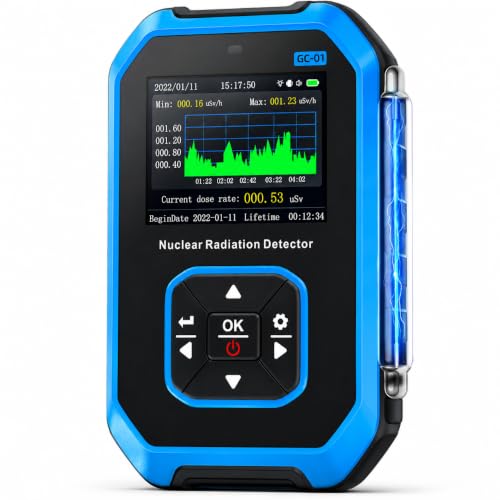
FNIRSI GC-01 Curve Display Geiger Counter

FNIRSI GC-03 3-in-1 Detector

AEGTEST Radar-9989 Geiger Counter with LND7311 Sensor, Blue

GQ GMC-320+V4 Data Logger

GQ GMC-800 Large Color LCD Geiger Counter with Five Alarms and Data Save

GQ GMC-300S Digital Radiation Monitor

GQ GMC-500Plus White Radiation Monitor
Taking A Closer Look At The Options
A curve display gives the GC-01 a useful place to show changing readings over time, which is more informative than staring at a single number while you move a detector around a room. The built-in GM sensor covers gamma, beta, and X-ray radiation, making this a practical choice for checking antique materials, uranium glass, or suspicious objects in a home workshop.
Its configurable alarms suit both quiet and active settings. Light, vibration, and sound modes let you tailor the notification to a busy kitchen, laboratory, or vehicle, while one-handed operation keeps repeated checks uncomplicated. Compared with the Radar-9989, the GC-01 offers fewer measurement units, but it may feel more approachable for occasional home use.
The Good Stuff
- Covers gamma, beta, and X-ray radiation through a built-in GM sensor.
- Offers light, vibration, and sound alarms for different environments.
- Accepts separate current-dose and cumulative-dose alarm thresholds.
- Supports English and Chinese, with selectable measurement units.
Things To Consider
- The available radiation types do not include alpha, so it does not cover every possible source.
- Curve and dose readings are useful, but the GC-01 offers fewer units than the Radar-9989.
Key Specs
Made For
Home hobbyists and collectors who want simple radiation and dose monitoring without a large control panel.
Consider Something Else When
Choose the AEGTEST Radar-9989 when alpha detection, six measurement units, and a larger color display matter more than compact operation.
The GC-03 combines a radiation monitor with an electromagnetic-field meter in one portable package. That saves you from carrying separate instruments for basic checks around computers, household electronics, or collected scientific equipment, especially during a home survey where convenience matters more than laboratory-level configuration.
Its three display modes keep the radiation and EMF functions distinct, which helps prevent one reading from being mistaken for another. Unlike the FNIRSI GC-01, this model adds electromagnetic-field measurement, but the distinction between electric, magnetic, and radio-frequency fields still matters, so check the specific function you actually need.
The Value In It
- Combines real-time radiation monitoring and EMF measurement.
- Portable format suits home, travel, and workplace checks.
- Rechargeable operation removes the need for disposable batteries.
Points To Note
- The EMF function does not detect radio-frequency fields, so it cannot cover every kind of electromagnetic radiation.
- Three display modes add useful versatility, but the controls are less focused on deep radiation analysis than those of the Radar-9989.
Quick Facts
Right Fit For
Compact-toolkit users who want radiation and basic EMF measurements in one rechargeable device.
A Better Fit Elsewhere
Choose the FNIRSI GC-01 when gamma, beta, and X-ray detection with configurable radiation alarms matters more than an EMF function.
The Radar-9989 gives you the broadest measurement vocabulary in this group. Its LND7311 mica-window sensor is designed to detect alpha, beta, gamma, and X-ray radiation, while the six display units and 270-second waveform make it easier to compare dose rate, counts, and accumulated readings during a scan.
For laboratory, industrial, or personal monitoring, the 3.5-inch color screen adds practical detail without turning the device into a tabletop instrument. A telescopic rod and storage box support field work, although that larger package may be more than you need for quick household checks. Compared with the FNIRSI GC-01, the trade-off is greater complexity in exchange for broader coverage.
Key Advantages
- Detects alpha, beta, gamma, and X-ray radiation.
- Displays readings in six measurement units.
- Graphs dose-rate changes across a 270-second window.
- Uses visual and audible alarms with adjustable thresholds.
- Includes a storage box, telescopic rod, lanyard, and charging cable.
Small Caveats
- The rod and case make the package bulkier than the compact FNIRSI options.
- Surface-contamination measurements involve alpha readings, so check your handling process before using the instrument around loose contamination.
Feature Snapshot
Built With In Mind
Technical users who need alpha coverage, flexible units, and a visual trend display for detailed radiation surveys.
Where A Sibling Pick Shines
The FNIRSI GC-03 is easier to carry for quick radiation and EMF checks that do not require the Radar-9989’s analytical display.
The GMC-320+V4 is built around record keeping rather than a quick glance. Its data-logging focus suits workplace surveys, training exercises, and repeated measurements where preserving a sequence of readings matters. The V4 platform also adds environmental and orientation aids that can make a changing measurement easier to interpret.
A temperature sensor, electronic gyroscope, adjustable LCD contrast, front LED indicator, and analog data output give it a more instrument-like character. Compared with the colorful Radar-9989, this model may appeal more to someone maintaining records in a lab or industrial workflow. The honest read is that its usefulness depends on how you intend to use the logged data.
Real Benefits
- Internal flash memory supports stored measurement data and record processing.
- Temperature and gyroscope readings add context to a radiation survey.
- Adjustable display contrast improves visibility under changing light.
- Analog data output supports connection to compatible recording equipment.
Worth Noting
- The listed package dimensions and 8-pound package weight describe the shipment rather than the handheld dimensions, so check your storage space before ordering.
- A data logger is more useful when you have a defined logging plan, particularly for comparing readings over time.
Made For
Laboratory and industrial users who need stored measurements plus temperature, orientation, and output options.
Another Choice May Suit
The AEGTEST Radar-9989 is a better fit for immediate visual trend monitoring because it combines a color screen, waveform, and broad unit selection.
A large color screen makes the GMC-800 a natural fit for outdoor and workplace surveys where quick interpretation under different lighting conditions matters. It detects beta, gamma, and X-ray radiation, and the four-function screen layout helps keep readings, graphs, settings, and recorded information within reach.
Five alarm types give you more ways to react to changing readings, while data saving and global sharing extend the device beyond a standalone meter. That makes the GMC-800 a stronger candidate for organized field monitoring than the simpler GC-01, though sharing features may be unnecessary for a collector checking one object at a time.
The Practical Payoff
- Large color display keeps readings and settings easy to scan.
- Five alarm types support different monitoring habits.
- Data saving preserves information for later review.
- Global sharing supports coordinated or remote monitoring.
Trade Offs
- Remote sharing introduces account and connectivity considerations that local-only monitoring avoids.
- Its feature set may be excessive for occasional checks around a single household object.
At A Glance
Whose Shelf It Belongs On
Field technicians, safety trainers, and educators who need a readable display, multiple alarms, and shareable records.
Swap It Out When
Choose the GQ GMC-300S when downloadable computer records are more important than remote sharing and a large color screen.
The GMC-300S focuses on local record keeping. It logs data every second into internal memory, and that history can be downloaded to a computer for later review. That makes it a sensible fit for repeated readings, comparison charts, and training records where keeping the data on your own machine is the priority.
Dosimeter, CPM, and graph modes give you different ways to view the same activity, where CPM means counts per minute. A rechargeable battery and included PC viewing software round out a practical work setup. Compared with the GMC-800, the tradeoff is less emphasis on large-screen presentation and remote sharing.
Practical Pluses
- One-second internal logging supports detailed histories.
- Downloadable records make comparison and documentation easier.
- Dosimeter, CPM, and graph modes suit different review habits.
- Rechargeable battery support fits repeated daily use.
Minor Gripes
- Computer-based review depends on the included software working with your operating system.
- A local logging workflow offers less visibility than the GMC-500Plus remote-sharing setup.
Who Will Love This
Students, technicians, and hobbyists who want frequent readings downloaded to a computer for analysis.
Reach For A Different Pick When
Choose the GQ GMC-500Plus when publishing readings through a shared world map is part of your monitoring workflow.
The GMC-500Plus is built for readings that need to travel. It stores information in internal memory while also submitting data to a server, allowing measurements to appear through a shared world-map service. That approach suits group projects, environmental monitoring, and situations where several people want access to the same stream.
Submissions occur every minute, so the remote view is designed for a steady sequence of observations rather than instantaneous troubleshooting. Compared with the GQ GMC-300S, local storage and computer downloads remain available, but the standout addition is shared visibility. A white portable enclosure also gives it a straightforward, travel-friendly profile.
Where It Delivers
- Stores measurements internally for a local record.
- Submits readings to a server every minute.
- Supports shared viewing through a world-map service.
- Portable white enclosure suits travel and field collection.
Possible Compromises
- Remote viewing depends on connectivity and the associated account setup.
- The one-minute submission interval is less immediate than a direct on-device waveform.
Core Details
Best Suited To
Community monitors, educators, and field projects that benefit from publicly shared radiation readings.
Look Elsewhere When
The GQ GMC-300S suits private computer-based logging better when remote map sharing and server accounts are unnecessary.
What Matters Before You Choose a Radiation Meter
Start with the radiation coverage your situation actually requires. Gamma, beta, and X-ray detection covers the needs of most casual household checks, while alpha measurement becomes relevant for surface contamination and certain industrial workflows. The AEGTEST Radar-9989 is the only option here that explicitly includes alpha, so it deserves special consideration for those tasks.
Next, separate a live reading from a recorded one. A dosimeter estimates accumulated radiation dose, and a count rate shows how quickly the sensor registers events. The FNIRSI GC-01 offers current and cumulative dose tracking, while the GQ GMC-300S and GQ GMC-320+V4 emphasize stored histories for longer investigations.
Display choice matters according to where you will use the instrument. A large color screen helps in changing outdoor light, while a compact graph can be enough for desk-based analysis. The GQ GMC-800 favors legibility, whereas the FNIRSI GC-01 keeps the control set more focused.
Alarms and portability should shape your final decision. Light, vibration, and sound modes help the FNIRSI GC-01 fit different surroundings. The Radar-9989 adds adjustable visual and audible warnings, but its rod and storage case take more space than the compact FNIRSI models.
Common Mistakes in Geiger Counter Shopping
Wrong Radiation Type
Choosing by display size or alarm style before confirming radiation coverage can leave a critical gap. Match the detector to the source first, then narrow the choice by display, logging, and portability.
Ignoring the Output Unit
Microsieverts, counts per minute, and becquerels describe different things. A detector with several units can be useful, but you still need to understand which reading fits your task before comparing values.
Assuming Every Logged Reading Can Be Shared
Local computer exports, internal storage, and remote map publishing are separate workflows. Check the sharing method your project needs rather than assuming every data logger provides the same access.
What The Higher Tier Buys
A larger display, broader radiation coverage, and more logging options add useful capabilities, though they do not make every advanced model right for your routine. The Radar-9989 earns its complexity through alpha detection, multiple units, a trend graph, and a telescopic rod. The GQ GMC-800 focuses more on readability, alarms, and shared data.
The extra capability is worthwhile for technical surveys, group monitoring, and repeated records. A compact FNIRSI model makes more sense for occasional checks where simpler operation and easier carrying matter more.
Frequently Asked Questions
What radiation types can a Geiger counter detect?
Most models cover gamma, beta, and X-ray radiation, while the AEGTEST Radar-9989 also includes alpha detection. Check the listed coverage before using a detector for a particular material or work process.
What is the difference between CPS and CPM?
CPS measures counts per second, while CPM measures counts per minute. They describe the sensor’s event rate in different time intervals, making CPM useful for longer-term comparisons.
Do all Geiger counters store readings?
No. The GQ GMC-300S and GQ GMC-320+V4 emphasize internal logging, while the GQ GMC-500Plus also supports server submission and shared viewing. Simple display-only models focus on immediate readings.
Which model is easiest to carry?
The FNIRSI GC-01 and FNIRSI GC-03 are the most compact-looking options here, while the Radar-9989 includes a telescopic rod and storage box. Actual pocketability also depends on how you secure the device during travel.
Can one detector handle radiation and EMF measurements?
The FNIRSI GC-03 combines radiation monitoring with an electromagnetic-field meter. Its EMF function does not cover radio-frequency fields, so you may still need a separate instrument for that task.
Final Verdict
Your best fit depends less on the longest feature list and more on the job in front of you. Choose the FNIRSI GC-01 for approachable household monitoring, the FNIRSI GC-03 for combined radiation and EMF checks, and the Radar-9989 for broad technical coverage. The GQ models make more sense when logging, display readability, or shared data drives the decision. Measure the routine, then pick the instrument that fits it.
