

Compression sleeves can make a noticeable difference during a workday, a therapy session, or a long day at home. They apply graduated pressure to the arm and hand, and the right level matters because firmer compression is not automatically more comfortable. The six options below range from 15-20 mmHg to 20-30 mmHg, with different sleeve lengths, hand coverage, fabrics, and silicone grips to consider.
The Lineup, Simplified
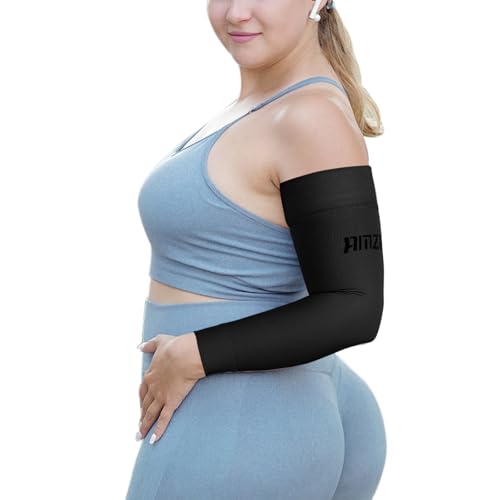
AMZAM Medical Arm Sleeve
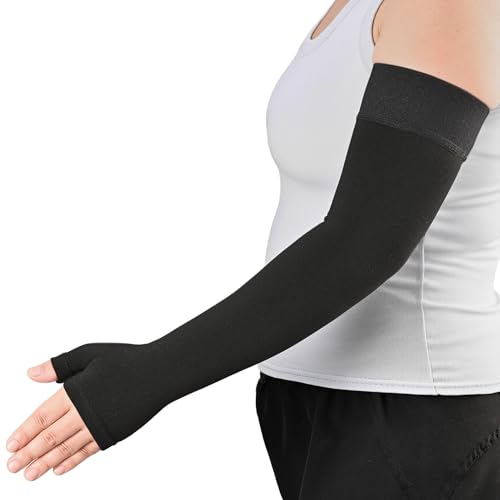
KEKING 15-20 mmHg Sleeve & Gauntlet

Juzo Soft 2001 Arm Sleeve

Juzo Dynamic 3511 Arm Sleeve

Hiball Lymphedema Medical Compression Arm Sleeve with Gauntlet, 20-30 mmHg, Long

Hiball 20-30 mmHg Lymphedema Arm Sleeve with Silicone Band, Long
The Details Behind The Selections
The AMZAM Medical Arm Sleeve applies 15-20 mmHg graduated compression, meaning the pressure is strongest around the wrist and decreases toward the upper arm. That design makes it a practical starting point for daily support, especially during typing, cooking, or lighter exercise sessions where a firmer sleeve might feel restrictive.
Compared with the longer Juzo options later in this lineup, this sleeve keeps the price and sizing decision straightforward. You also get a wide silicone-dot band intended to reduce slipping, while the nylon-spandex construction offers stretch without a bulky feel. The honest read is that its broad size range, extending through 3XL, makes it especially approachable for full-arm daily wear.
The Practical Payoff
- Graduated 15-20 mmHg pressure supports the wrist, forearm, and upper arm without reaching the firmer 20-30 mmHg range.
- Silicone-dot bands help the sleeve remain in place during desk work and daily movement.
- The nylon-spandex fabric offers breathability and stretch for warm-weather use.
- Flatlock seams reduce bulky joins and help limit chafing during repeated wear.
- Sizes through 3XL accommodate a wider range of arm proportions.
Points To Note
- You still need to match the compression level to your care plan and confirm the size using the arm measurements.
- The silicone band may feel more noticeable than a plain top edge, particularly during the first wear.
Quick Facts
Made For
You benefit most from this option for everyday tasks, lighter exercise, and full-arm support without hand coverage.
A Better Fit Elsewhere
The Juzo Soft 2001 Arm Sleeve may suit you better when a softer inner fiber and 20-30 mmHg compression take priority.
KEKING extends support from the palm to the upper arm with an integrated gauntlet, giving you more continuous coverage than a standard wrist-to-arm sleeve. The 15-20 mmHg compression stays within the lighter range, while the stretchy construction allows the fabric to move with your elbow and wrist during typing, gardening, or repetitive work.
Unlike the AMZAM Medical Arm Sleeve, which stops at the wrist, this option gives the hand and forearm a shared support area. Silicone grip bands help keep the sleeve from shifting, and you can turn the silicone section inward when direct contact feels uncomfortable. The material is 78% nylon and 22% spandex, a blend chosen for flexibility and moisture management.
Where It Helps
- The integrated gauntlet provides continuous coverage from the palm through the upper arm.
- Lightweight 15-20 mmHg compression works well for long, active days.
- Reversible silicone detailing lets you adjust the contact surface.
- Left and right orientation gives you flexibility when arranging your wardrobe.
Small Caveats
- Hand coverage means you must check the fit around your palm, wrist, and forearm rather than measuring only the bicep.
- The sleeve may occupy more space in a narrow medical compartment or travel case.
Feature Overview
Built With In Mind
You benefit most from this design when hand support and flexible 15-20 mmHg compression matter during active or repetitive routines.
Swap It Out When
The AMZAM Medical Arm Sleeve is a better fit when you prefer full-arm support without the added bulk of a gauntlet.
The Juzo Soft 2001 Arm Sleeve uses 20-30 mmHg compression with a max, long configuration for substantial coverage. Its defining detail is FiberSoft technology, which places a soft protective thread around each elastic fiber to create a gentler surface against the skin while preserving stretch and durability.
That focus on comfort sets it apart from the KEKING 15-20 mmHg Sleeve & Gauntlet, which offers more hand coverage but uses a lower compression range. You also get a fully beaded silicone top band, which spreads contact over a wider area than a simple narrow strip. The seamless construction helps the sleeve sit smoothly beneath long sleeves.
What Makes Sense
- FiberSoft construction places a soft outer layer around the elastic fibers.
- The max sizing option suits larger upper arms, while the long length extends farther along the arm.
- A fully beaded silicone band offers broad contact at the top edge.
- Warm-water washing and low-temperature drying simplify repeated care.
Things To Weigh
- Its 20-30 mmHg compression is firmer than the 15-20 mmHg AMZAM and KEKING options.
- You should confirm that the max and long dimensions correspond to your arm measurements before ordering.
- The long profile takes more room in a closet or drawer than a standard sleeve.
The Right Fit
You benefit most from this sleeve when 20-30 mmHg compression, a longer profile, and a softer inner feel guide your selection.
Another Choice May Suit
The Juzo Dynamic 3511 Arm Sleeve may suit you better when firmer containment and two-way stretch matter more than the Soft 2001 fiber treatment.
The Juzo Dynamic 3511 Arm Sleeve is built around firm containment. Its circular-knit fabric uses two-way stretch, meaning it extends in both directions to move with the arm while maintaining a close fit. At 20-30 mmHg, it sits in the same compression range as the Juzo Soft 2001 Arm Sleeve, but with a more structured approach to holding the arm shape.
That distinction matters when your priority is pronounced swelling management rather than the softest possible surface. You get a silicone top band for retention and a long sleeve that extends through the forearm toward the upper arm. For active days, the structured fabric may feel more substantial, yet the two-way construction helps preserve mobility.
A Favorable Mix
- The circular-knit construction offers high containment for firm 20-30 mmHg compression.
- Two-way stretch supports bending and movement without relying on a loose fit.
- A silicone top band helps the sleeve remain positioned.
- Machine washing and low-temperature drying make care straightforward.
Practical Considerations
- Firm compression may feel substantial during initial wear, particularly with a larger upper arm.
- The long configuration needs accurate arm-length measurement for proper placement.
- You may prefer the Juzo Soft 2001 Arm Sleeve when gentle fiber contact takes priority.
Core Details
Who It Suits Best
You benefit most from this model when firm containment and flexible movement are more important than a minimal hand-barely-there feel.
Consider Something Else When
The KEKING 15-20 mmHg Sleeve & Gauntlet may suit you better when palm coverage and lighter compression align with your needs.
The Hiball Lymphedema Medical Compression Arm Sleeve with Gauntlet combines three coverage decisions in one design: long arm length, 20-30 mmHg compression, and an integrated hand section. You may find that combination useful when you want the wrist and hand included rather than leaving the fingers and palm completely uncovered.
Compared with the other Hiball option, this model is the one to examine closely when hand support is central to your routine. The long sleeve also distinguishes it from the shorter AMZAM Medical Arm Sleeve. Its firm compression range can feel more substantial, so accurate sizing becomes particularly important around the wrist, elbow, and upper arm.
Useful Highlights
- The integrated gauntlet adds hand and wrist coverage to the long arm sleeve.
- Graduated 20-30 mmHg compression offers a firm pressure level.
- The long profile supports coverage from the hand through much of the upper arm.
- Combined hand and arm coverage simplifies your garment choice for therapy or daily wear.
Where It May Fall Short
- You need measurements for the hand, wrist, forearm, and upper arm to confirm that the integrated gauntlet fits comfortably.
- The firm 20-30 mmHg level may be more noticeable than the lighter KEKING sleeve during long sessions.
Who Will Love This
You benefit most from this option when continuous hand-to-upper-arm coverage takes priority over a wrist-only design.
Look Elsewhere When
The Hiball 20-30 mmHg Lymphedema Arm Sleeve with Silicone Band, Long may suit you better when you want arm coverage without an integrated gauntlet.
The Hiball 20-30 mmHg Lymphedema Arm Sleeve with Silicone Band, Long focuses on firm graduated compression and extended arm coverage. The silicone band helps secure the upper edge, which is useful during repeated arm movement or when the sleeve is worn beneath close-fitting clothing. The design leaves the hand uncovered for easier washing and dressing.
That hand-free construction gives it a clear advantage over the Hiball option with a gauntlet. You gain a simpler wrist opening and avoid pulling fabric across your palm, although the trade-off is less direct hand coverage. Compared with the 15-20 mmHg AMZAM and KEKING choices, you get a notably firmer compression level that should match more specialized daily support needs.
What Works In Its Favor
- The 20-30 mmHg graduated compression provides a firm pressure level.
- A silicone upper band helps reduce shifting and keeps the sleeve positioned.
- The long profile extends coverage through the forearm and upper arm.
- The open hand area makes daily dressing and hand washing more convenient.
Details To Watch
- Accurate arm-length and circumference measurements are essential because the compression level is firm.
- You may find the upper silicone edge more noticeable beneath a narrow sleeve.
- This option does not provide the hand coverage offered by the Hiball gauntlet model.
Key Attributes
Best Suited To
You benefit most from this model when firm arm compression, a silicone grip, and convenient hand access guide your choice.
Reach For A Different Pick When
The Hiball Lymphedema Medical Compression Arm Sleeve with Gauntlet, 20-30 mmHg, Long is a better fit when continuous hand coverage matters.
What Matters Before You Order
Compression Level and Medical Guidance
Compression is measured in mmHg, which describes the pressure applied by the garment. The 15-20 mmHg options provide lighter pressure, while the 20-30 mmHg choices feel firmer and suit more specialized support needs. Confirm your prescribed level and fit with your care professional, especially after surgery or with persistent swelling.
Coverage from Hand to Upper Arm
A standard sleeve usually stops at the wrist or forearm, while a gauntlet extends across the hand. Full-arm options cover more of the upper arm and may suit people with broader limb proportions. Measure your wrist, elbow, bicep, and arm length before ordering, since a small mismatch can affect both comfort and positioning.
Fabric, Grip, and Daily Use
Nylon-spandex fabric provides stretch and moisture management, while seamless construction helps reduce bulky joins. Silicone bands add grip at the upper edge, though you may prefer to turn or cover them for sensitive skin. For frequent use, account for dressing time, washing, drying, and the space needed to store a long sleeve.
Fit, Compression, and Daily Comfort
Mistakes Worth Dodging
Choosing by color or size alone can leave out the details that matter most. Check the compression range, hand coverage, and exact length before ordering, and compare the arm measurements with the manufacturer’s chart. A sleeve that looks supportive but fits poorly can bunch at the elbow or slide during movement.
What Separates Premium From Basic
The more specialized options mainly add firmer compression, extended coverage, or a more refined inner construction. A basic sleeve can still work well for lighter daily support. You gain value by paying for a premium model only when its specific fabric, length, or containment level matches your routine and care plan.
Frequently Asked Questions
What compression level should I select?
Your care plan should determine the compression level, so confirm 15-20 mmHg versus 20-30 mmHg with your care professional. The firmer option may provide more substantial support but can also feel more noticeable.
Should I choose a sleeve with a gauntlet?
Choose a gauntlet when you want compression across the palm, wrist, and forearm as one continuous section. A standard sleeve leaves the hand uncovered and may be easier to put on.
How should I measure my arm?
Measure the arm at the wrist, elbow, and bicep, then record the distance from the wrist to the upper arm. Compare those figures with the size chart because length and circumference both affect the fit.
Are silicone bands likely to irritate sensitive skin?
You may find the silicone edge more noticeable than the rest of the sleeve. Some designs allow the silicone section to be turned inward, or you can place a smooth layer beneath that area.
Can I wash these compression sleeves?
Care depends on the construction, so follow the product instructions. The Juzo options permit warm-water washing and low-temperature drying, while other garments may call for hand washing and air drying.
Final Verdict
Your best choice depends on compression level, coverage, and fabric preference rather than a single feature. The AMZAM Medical Arm Sleeve offers lighter daily support, the Juzo models cover firmer compression needs, and the KEKING and Hiball gauntlets extend coverage into the hand. Confirm your measurements and prescribed compression, then select the sleeve that fits your routine and comfort.
