

Swollen feet and legs can make shoes, workdays, and even evening walks feel harder than they should. Compression garments apply graduated pressure to support circulation and manage the sensation of heaviness, with strength typically measured in millimeters of mercury, or mmHg. The right choice depends on pressure level, coverage, ease of dressing, and how closely the fit matches your legs. A healthcare professional can help confirm the compression level and wear schedule suited to your situation.
A Fast Comparison Of The Options

CircAid Juxtalite Leg Wrap
Truform Surgical Stockings

JOBST ACTIVA Opaque Thigh Socks

JOBST Relief 30-40 mmHg Knee High Open Toe Stockings

JOBST ACTIVA Men’s Dress Socks
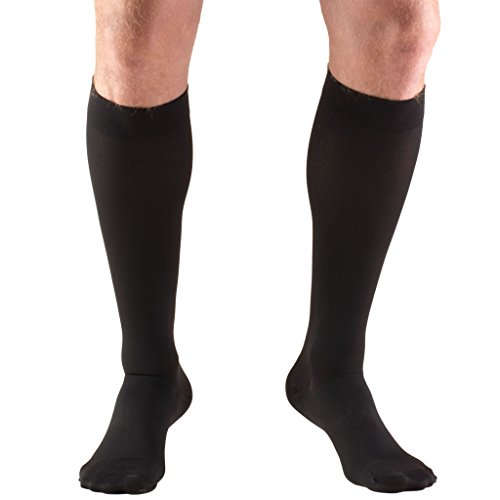
Truform 20-30 mmHg Knee Stockings
The Details Behind The Selections
The CircAid Juxtalite Leg Wrap offers a different route to compression for anyone who finds conventional stockings difficult to pull on. Its inelastic construction provides pressure through a built-in system and adjustable bands, avoiding the need to stretch the fabric over your leg. For people managing limited hand strength or dexterity, that distinction can matter during daily dressing.
Three selectable pressure ranges make this more adaptable than the fixed-pressure garments later in the list. The tradeoff is added setup, and the wrap may take a few attempts before you settle on a comfortable arrangement.
Useful Touches
- Choose 20-30, 30-40, or 40-50 mmHg as your needs change.
- Adjustable bands suit legs that vary in shape or swelling.
- Breath-O-Prene material adds lightness and airflow.
- The odor-control lining supports longer wear periods.
- Undersocks and a pressure guide accompany the wrap.
Points To Note
- Confirm whether the 28 cm or 33 cm length matches your lower leg before ordering.
Key Specs
Built With In Mind
This wrap suits people who need adjustable lower-leg compression and find pulling on elastic stockings physically difficult.
A Better Fit Elsewhere
JOBST ACTIVA Men’s Dress Socks suit people who want a simpler, office-friendly garment with fixed 15-20 mmHg compression.
Truform Surgical Stockings are built around the needs of recovery settings, including periods after surgery or reduced activity with the legs elevated. The stocking delivers 18 mmHg at the ankle and graduated pressure through the calf and thigh, meaning the pressure changes along the leg rather than remaining uniform. That profile makes it a focused option for medically guided use.
The open-toe construction gives caregivers direct access to inspect the toes and surrounding skin without removing the stocking. Compared with the closed-toe Truform option later, that visibility is the key distinction.
What Works In Its Favor
- Designed for post-surgery and hospital-related use.
- Open toes support direct skin inspection.
- Graduated pressure covers the ankle, calf, and thigh.
- A wide, soft upper band helps keep the stocking in place.
Practical Considerations
- Confirm the compression level and wear schedule with your healthcare professional.
- Leg dimensions can change during recovery, so recheck the fit as needed.
Feature Snapshot
Right Fit For
These stockings suit people recovering from surgery who need open-toe access and direction from a healthcare professional.
Another Choice May Suit
JOBST Relief 30-40 mmHg Knee High Open Toe Stockings suit people seeking stronger gradient compression outside a recovery setting.
JOBST ACTIVA Opaque Thigh Socks extend above the knee, making them a practical choice for people who want compression across the lower leg, knee, and upper thigh. The 20-30 mmHg level sits above the lightweight JOBST ACTIVA Men’s Dress Socks, offering more substantial pressure for swollen or tired legs.
Moisture management and an easy-donning design suit active days, travel, or long periods spent standing. In most work settings, the opaque finish also provides a more uniform appearance than sheer hosiery.
The Upside
- Thigh-high coverage supports the entire lower leg.
- Moisture management helps handle extended wear.
- The design is easier to put on than a basic stocking.
- Opaque fabric gives a polished, consistent appearance.
Some Limits To Know
- The 20-30 mmHg pressure is firmer than the 15-20 mmHg JOBST ACTIVA Men’s Dress Socks.
- Closed toes and thigh-high coverage provide less direct toe access than an open-toe knee-high design.
Who Will Love This
These socks suit people who need thigh coverage and moderate-to-firm compression for daytime wear, especially during extended periods of standing.
Where A Sibling Pick Shines
JOBST ACTIVA Men’s Dress Socks suit office settings where a lighter 15-20 mmHg level and classic ribbed appearance matter more.
JOBST Relief 30-40 mmHg Knee High Open Toe Stockings deliver the strongest listed pressure in this group. That makes them a serious option for substantial swelling or tired, heavy legs, but the level also calls for careful sizing and guidance from a healthcare professional.
The soft spandex construction and reinforced heel balance comfort with routine use, while the open toe simplifies inspection and dressing. Compared with JOBST ACTIVA Opaque Thigh Socks, the coverage ends below the knee and the pressure is higher.
A Few Strong Suits
- Provides 30-40 mmHg of graduated compression.
- Soft spandex yarn creates a snug, comfortable fit.
- The reinforced heel supports repeated wear.
- Open toes allow easier inspection and dressing.
Things To Weigh Up
- Do not select the pressure level without professional guidance.
- Depending on your footwear, the open-toe design may not suit every formal shoe.
Technical Highlights
Made For
These stockings suit people with significant leg swelling who need firm compression and easy access to inspect their toes.
Reach For A Different Pick When
JOBST ACTIVA Men’s Dress Socks suit people who need gentler compression that coordinates with business clothing.
JOBST ACTIVA Men’s Dress Socks bring compression into a business wardrobe without looking like clinical equipment. The classic ribbed texture, closed toe, and 15-20 mmHg level make them a restrained choice for office wear, long meetings, and commutes spent sitting or standing.
The durable, lightweight fabric is designed for regular use, and the lower pressure level can feel more approachable than the firmer JOBST options. For most workdays, the balance of coverage and formality is the main appeal.
Everyday Advantages
- A classic ribbed look suits business clothing.
- Lightweight fabric works for regular daily wear.
- Closed toes provide full-foot coverage.
The Fine Print
- The 15-20 mmHg level is the lightest among these selections.
- Knee-high coverage stops below the knee, unlike JOBST ACTIVA Opaque Thigh Socks.
The Right Fit
These socks suit men who want understated compression for office clothing, commuting, and long periods of standing.
Look Elsewhere When
JOBST Relief 30-40 mmHg Knee High Open Toe Stockings suit people who need firmer pressure and open-toe visibility instead of a dress finish.
Truform 20-30 mmHg Knee Stockings offer a middle-ground pressure level in a conventional closed-toe, knee-high format. The 20-30 mmHg range provides more compression than JOBST ACTIVA Men’s Dress Socks without reaching the 30-40 mmHg level of JOBST Relief.
The unisex design works for men and women, while the covered foot may feel more substantial than an open-toe stocking. Fit can still vary by leg shape, so checking the size chart before ordering remains important.
The Helpful Details
- The 20-30 mmHg range supports firmer daily compression.
- Closed toes provide complete foot coverage.
- The unisex format fits a broad range of wardrobes.
Possible Compromises
- Closed toes offer less direct visibility than JOBST Relief open-toe stockings.
- Knee-high coverage provides no thigh support, unlike JOBST ACTIVA Opaque Thigh Socks.
Core Details
Best Suited To
These stockings suit adults who want moderate compression, closed-toe coverage, and a unisex knee-high design.
Swap It Out When
JOBST ACTIVA Opaque Thigh Socks suit people who need coverage extending above the knee during active daytime use.
What Matters Before You Order Compression Socks
Pressure And Coverage
Compression garments use different pressure levels and lengths, so the most useful choice starts with your daily needs. A 15-20 mmHg level offers a lighter starting point, while 20-30 and 30-40 mmHg provide progressively firmer compression. Coverage also changes the feel: knee-high stockings end below the knee, whereas thigh-high socks extend across the upper thigh.
Getting The Fit Right
Measure your ankle, calf, thigh where applicable, and the distance from the relevant body point to your heel. Compare those numbers with the garment’s size chart rather than relying on your usual clothing size. A close, even fit helps the pressure sit where intended, while a loose or twisted garment can create uneven pressure.
Donning And Care
Open-toe designs can make dressing easier and allow direct inspection of the toes. Closed-toe garments provide fuller foot coverage, while wrap systems offer adjustable straps but require more setup. Follow the care instructions closely, and for JOBST Relief 30-40 mmHg Knee High Open Toe Stockings, hand washing or a mesh laundry bag helps protect the fabric during laundering.
Practical Details That Change The Decision
Mistakes Worth Dodging
Avoid choosing compression by appearance or by a level recommended for someone else. Check the ankle-to-calf pressure, garment length, toe design, and measured leg dimensions before ordering. Dressing the garment properly also matters, since twisted bands or bunched fabric can make the fit less consistent.
What The Higher Tier Buys
Higher compression levels add pressure, while extended coverage and stronger construction can affect a garment’s purpose. Those upgrades suit people with more substantial swelling, specialized recovery needs, or a requirement for firmer support. For everyday desk work and business clothing, a lighter option may deliver a more comfortable fit at a level that suits ordinary wear.
Frequently Asked Questions
What compression level is right for edema support?
The right level depends on your leg condition, daily activity, and professional guidance. A healthcare professional can help you select between 15-20, 20-30, and 30-40 mmHg.
Should compression socks be knee-high or thigh-high?
Thigh-high socks suit people who want support across the knee and upper thigh, while knee-high stockings cover the lower leg and knee. Choose the height that matches both your swelling pattern and clothing preferences.
Are open-toe compression stockings easier to inspect?
Open-toe stockings allow direct visual access to the toes without removing the garment. That makes JOBST Relief 30-40 mmHg Knee High Open Toe Stockings useful when regular inspection is important.
Can compression socks be worn every day?
Daily wear depends on the garment and your individual needs. JOBST ACTIVA Men’s Dress Socks are designed for regular use, while your healthcare professional can confirm a suitable schedule.
Do support hose fix the cause of swollen legs?
Support hose provide external compression and comfort, but they do not diagnose or resolve the underlying cause of swelling. Persistent or recurring edema deserves professional evaluation.
Final Verdict
The right support hose for edema depends on pressure, coverage, and ease of use rather than brand alone. CircAid Juxtalite Leg Wrap leads for adjustable dressing, JOBST offers several coverage and pressure combinations, and Truform provides focused recovery and moderate-compression options. Confirm the level, measure your legs, and choose the format you can comfortably wear each day.
