

A nutrient solution can contain plenty of minerals yet still feed plants poorly when its pH sits outside the range roots can use. For hydroponic growers, indoor gardeners, and anyone mixing water-based nutrients, the right meter turns a vague guess into a quick adjustment. These options cover everything from simple color strips to connected monitors and multiparameter instruments, with one specialty kit designed for viscous liquids.
A Quick View Of The Lineup

GIDIGI Hydroponics pH Up Down Control Kit

LETPOT EC and Temperature Monitor with App

Apera PH60-VS pH Meter with LabSen 855 Electrode

Bluelab pH Pen with Double Junction Probe
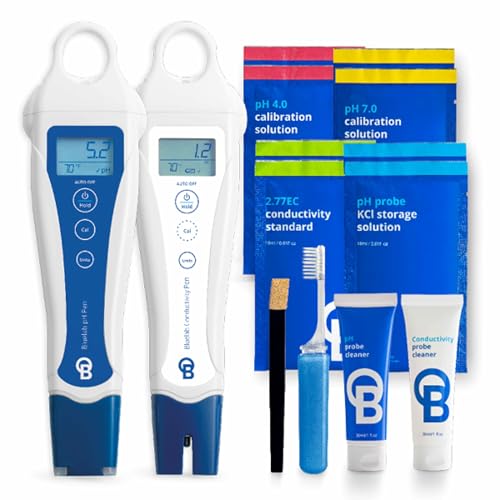
Bluelab pH and Conductivity Starter Pack with Two Pens
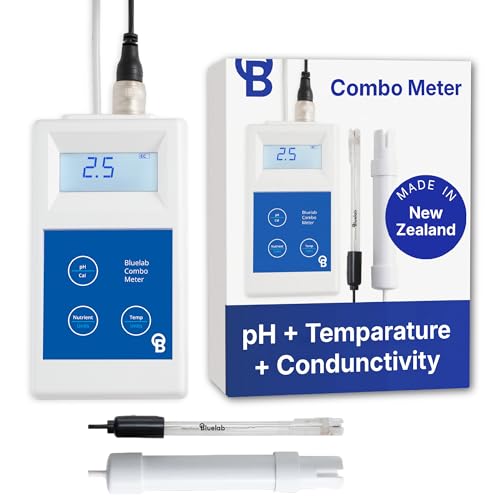
Bluelab METCOM pH, EC and Temperature Meter

IPPINKA Sustee Aquameter 12-Pack, Medium Green
Meet The Standout Selections
A small countertop garden can drift out of range before you notice a problem, especially as nutrient solution changes through the day. This kit handles both sides of that adjustment: pH Down uses phosphoric acid, while pH Up and buffering agents help bring overly acidic solutions back toward the listed 5.5 to 6.5 range.
For a first reservoir, the included strips, color chart, cup, and dropper make the setup approachable without a electronic meter. The trade-off is measurement precision, since color matching cannot provide the detailed digital display you would get from the Apera PH60-VS.
Notable Upsides
- Both raising and lowering solutions are included, so you aren’t left with only half an adjustment kit.
- The 15 mL-per-gallon guidance makes the concentrate practical for maintaining a small or large reservoir.
- It works across hydroponics, coco coir, soil, aquaponics, and outdoor plantings.
- Two 250 mL bottles, a cup, dropper, strips, and chart create a ready-to-use starting setup.
Things To Consider
- Color strips offer a coarser reading than a calibrated digital meter.
- The kit handles pH only, leaving nutrient concentration and temperature to separate tools.
- Adjustments should be added gradually after testing, which takes more attention than an automated monitor.
Key Specs
Made For
This kit suits first-time hydroponic growers and mixed-media gardeners who need a straightforward way to start testing and adjusting pH.
Where Another Pick Suits Better
Choose the Bluelab METCOM pH, EC and Temperature Meter when you need continuous nutrient concentration and temperature readings in one instrument.
Temperature changes and falling water levels often happen together in an indoor reservoir, which is exactly where connected monitoring earns its place. The LETPOT monitor displays live electrical conductivity, or EC, and temperature readings while its app can send alerts when either value moves beyond a range you set.
Compared with the GIDIGI kit, this device watches conditions without requiring a strip dipped into the solution. It still does not measure pH, so the setup works best alongside a separate pH tool rather than replacing every instrument in the garden.
Where It Delivers
- Continuous EC and temperature readings reduce the need to sample a reservoir at intervals.
- App alerts help you notice changing nutrient strength or water temperature away from the setup.
- Low-water detection adds a useful safeguard for connected indoor gardens.
- The included planting basket works with LetPot, AG, and other desktop hydroponic formats.
Practical Considerations
- This is a monitoring accessory rather than a complete irrigation pump.
- Its focus on EC and temperature leaves pH measurement outside the feature set.
- App-based alerts add convenience, but the display remains useful for direct tank-side checks.
Feature Snapshot
Right Fit For
This monitor fits hydroponic growers with desktop systems who want app alerts, continuous EC readings, and water-level warnings without a separate pump.
Another Choice May Suit
The Bluelab pH and Conductivity Starter Pack with Two Pens is a better fit for portable manual checks across multiple tanks.
Honey, paint, resin, and cosmetic mixtures can clog the tiny liquid junction found in a conventional pH electrode. The LabSen 855 uses a pre-pressurized reference system intended to keep that junction open in viscous samples, giving this Apera kit a clear advantage over general-purpose hydroponic pens.
This is specialized laboratory-style equipment rather than a garden-centered bundle. Automatic calibration, temperature compensation, reading lock, and alarm settings make it useful for repeatable measurements where sample consistency matters.
Everyday Wins
- The specialized electrode targets viscous liquids that can hinder conventional pH probes.
- Automatic calibration and temperature compensation support consistent readings.
- A water-resistant body suits work areas where spills are possible.
- Ready-to-use calibration and soaking solutions simplify setup.
Potential Drawbacks
- The electrode and meter focus on pH rather than EC or temperature readings.
- Calibration solutions require organized storage and regular electrode care.
- Its specialty design offers little advantage for a basic clear-water reservoir.
Technical Highlights
Whose Shelf It Belongs On
It belongs with formulators, quality-control workers, and serious hobbyists who regularly measure thick cosmetics, coatings, adhesives, or resins.
Look Elsewhere When
Choose the Bluelab pH Pen with Double Junction Probe for straightforward water measurements across aquariums, brewing, and small growing systems.
A pen-shaped meter fits naturally into a small routine involving a fish tank, indoor reservoir, brewing vessel, or pool. This Bluelab focuses on one measurement, pH, with a stated accuracy of plus or minus 0.1 and a double-junction probe for water-based applications.
That single-purpose design makes it easier to carry and use than the Apera PH60-VS, particularly for clear liquids. The tradeoff is equally direct: it does not provide the EC and temperature information needed to assess an entire nutrient solution.
What It Does Well
- The compact pen format is convenient for checking several small containers.
- A double-junction probe suits regular water measurements.
- Support assistance is available for setup and troubleshooting questions.
- The stated plus-or-minus 0.1 accuracy offers a clear purchasing reference.
Small Caveats
- This model focuses on pH, so nutrient concentration still requires another instrument.
- Keeping the pen ready for repeated use means planning a dry storage spot between checks.
Best Suited To
This pen suits aquarists, home brewers, and hydroponic beginners who mainly need a portable pH reading.
Reach For A Different Pick When
The Bluelab METCOM pH, EC and Temperature Meter serves growers better when one instrument must cover three separate water conditions.
Moving between a propagation tray and a main reservoir becomes less awkward when pH and conductivity readings come from separate pen-shaped instruments. This Bluelab pack includes one pH pen and one conductivity pen, giving you the two core measurements needed to assess a nutrient solution separately.
Both units display temperature in Celsius and Fahrenheit, and their backlit screens remain legible in dim grow rooms. Compared with the LETPOT connected monitor, this setup favors portability over continuous readings and app alerts.
Notable Gains
- Separate pens let you check pH and EC without navigating a multiparameter display.
- Backlit screens improve visibility in shaded indoor setups.
- Temperature can be viewed in either Celsius or Fahrenheit.
- Compact instruments are easier to carry between separate growing areas.
Details To Watch
- Two pens require storage and handling space in a compact growing area.
- Unlike the LETPOT monitor, the instruments do not provide continuous connected readings.
Quick Facts
Who Should Grab It
This pack suits portable growers who want pH and EC readings without carrying a larger multiparameter meter.
Consider Something Else When
The LETPOT EC and Temperature Monitor with App fits better when remote alerts and continuous readings matter more than portability.
A complete reservoir check often involves more than one number. The METCOM combines pH, conductivity, and temperature in one unit, so you can compare nutrient strength, acidity, and water conditions without moving three separate pens around the tank.
Its automatic temperature compensation adjusts readings as water temperature changes, while the double-junction pH probe suits regular hydroponic monitoring. Compared with the LETPOT, this is the more complete manual instrument, but it does not add app connectivity.
Benefits That Matter
- Three measurements cover the main variables in a nutrient reservoir.
- Temperature compensation helps keep readings consistent as water conditions shift.
- A glass pH probe and double-junction design fit routine water analysis.
- One unit reduces the number of separate probes you need to maintain.
Possible Compromises
- The multifunction display takes more time to learn than a single-purpose pen.
- Its larger footprint may be less convenient for quick checks carried across several rooms.
- Connected alerts are absent, so you must perform checks yourself.
The Right Fit
This meter fits serious hydroponic growers who regularly compare pH, nutrient concentration, and temperature in a water-based system.
Swap It Out When
The LETPOT EC and Temperature Monitor with App is the better fit for a connected setup that prioritizes alerts and continuous monitoring.
Forget to water a shelf of indoor plants, and the damage can appear before the soil looks dry. The Sustee Aquameter stays in the pot and gives the plant a visible moisture signal, which is handy in a busy home where several containers need different watering schedules.
This medium model measures moisture rather than pH, so it serves indoor potted plants instead of hydroponic reservoirs. Its 12 refillable sticks and stated pot-size range make it particularly useful for a grouped collection of similarly sized houseplants.
Features That Help
- Leave-in sticks provide an ongoing visual cue without repeated probing.
- Twelve sticks cover a meaningful group of potted plants.
- Refillable cores extend the usefulness of the set.
- The green color coding makes the moisture indication easy to spot.
Where It May Fall Short
- The device does not measure pH or nutrient concentration.
- Its stated pot range may not suit very small or oversized containers.
Core Details
Built With In Mind
It suits plant owners with several medium indoor pots who want a quick moisture cue between watering sessions.
Not Your Match When
Choose the GIDIGI Hydroponics pH Up Down Control Kit instead when your priority is adjusting nutrient-solution pH.
What Matters in a Water-Based Growing System
Choose the Measurements You Actually Need
A pH meter answers only one part of the reservoir puzzle. EC, short for electrical conductivity, indicates how conductive the solution is, while temperature affects both plant growth and the performance of measurement equipment. Match the tool to your setup before comparing display features.
Match the Probe to the Liquid
A general water probe is suitable for clear hydroponic solutions. Thick coatings, honey, cosmetics, and resin call for an electrode designed to resist junction clogging. The Apera PH60-VS targets those demanding samples, while the Bluelab pens lean toward routine water checks.
Account for Monitoring Rhythm
Color strips suit occasional manual checks and budget-conscious starter setups. A handheld meter gives faster numerical readings, while a connected monitor can track changes and send alerts. For a busy indoor system, continuous monitoring may save more attention than a slightly more capable standalone meter.
Plan for Care and Storage
Probes need to be handled and stored according to their design, and connected monitors add an app and power arrangement to your setup. Leave room for calibration supplies, dry storage, and the actual tanks or pots you intend to monitor.
Two Details That Shape Your Choice
Wrong Turns To Avoid
Don’t assume a moisture meter measures pH or that a pH meter reports nutrient concentration. Match the instrument to the liquid and the number of measurements you need, especially before arranging storage space.
What Separates Premium From Basic
Advanced models add continuous readings, app alerts, specialized electrodes, or several measurements in one housing. Those extras suit demanding samples and connected gardens, while simpler tools can handle routine checks with less equipment to manage.
Frequently Asked Questions
Do hydroponic meters measure nutrient concentration?
Some models do, while others measure only pH. Look for EC or conductivity specifications when you need to assess how concentrated the nutrient solution is.
Is a pH meter enough for a hydroponic reservoir?
A pH meter handles acidity, but temperature and EC can also affect plant growth. The Bluelab METCOM covers all three measurements in one unit.
Can I use a pH meter for soil?
Some pens can measure soil slurry, but soil moisture and soil pH are different tasks. A dedicated moisture tool can help with watering, while a pH meter checks acidity.
What type of pH meter handles honey or paint?
A specialized electrode for viscous liquids is more suitable than a standard water probe. The Apera PH60-VS includes a LabSen 855 electrode designed for that purpose.
Should I calibrate a digital pH meter?
Regular calibration helps keep readings consistent, particularly when the electrode is used with different samples. Follow the manufacturer’s calibration instructions and care guidance for the chosen model.
Final Thoughts
The right meter depends on what you measure and how often you check it. Strip-based adjustment suits a simple starting setup, the Bluelab pens cover portable pH and EC checks, and the METCOM handles three readings at once. Connected monitoring suits an unattended indoor garden, while the Apera instrument serves demanding liquid samples. The IPPINKA option is the practical exception, focusing on soil moisture rather than pH.
