

Drinking, eating, and moving around a home should not require constant assistance. Adults with disabilities or limited mobility often need products that reduce spills, stabilize utensils, or make transfers and short walks more manageable. The right support also depends on the task, the person using it, and the space where it will live.
The Main Contenders

Providence Spillproof 10oz Adult Sippy Cup with Handle for Limited Mobility

HOMECRAFT Kennedy Spillproof Adult Sippy Cup with Handle, 7 oz, Blue

FOMIYES Suction Feeding Plates for Elderly, 2-Piece Silicone Set

Fitnet Electric Lift Transfer Chair with Tracks, 480 lb Capacity

HOMLAND 17 lb Walker with Seat
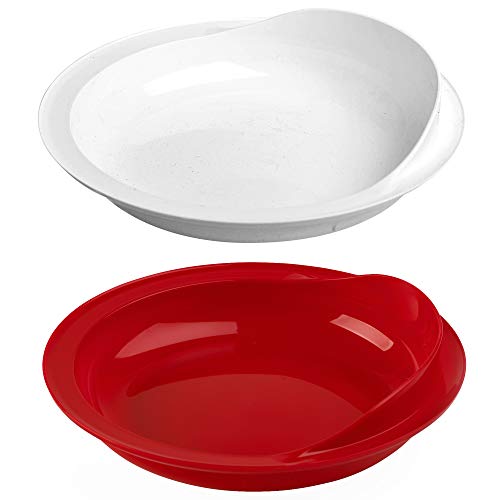
Providence Non-Slip Scoop Plates, 2 Pack

HOMLAND 17 lb Rollator with Seat
More On The Choices That Made The List
You get a 10-ounce cup built around a large handle, giving you a more secure grip than a narrow ordinary glass may provide. The spouted lid supports direct sipping, while the anti-splash lid accepts a straw for people who find lifting a full cup difficult.
For a bedside table, wheelchair tray, or meal where one hand is occupied, the two-lid approach gives you more control over the drinking method. You may prefer the Providence cup for warm or cold drinks, while the smaller HOMECRAFT Kennedy Cup offers a more compact vessel for reclined use.
Strong Points
- The large handle helps you maintain a steadier grasp.
- You can select a spout or straw depending on your mobility.
- The 10-ounce capacity suits regular drinks without becoming oversized.
- Dishwasher-safe construction simplifies cleanup after daily use.
Practical Considerations
- You need to select and maintain the lid that best matches your drinking method.
- The 10-ounce size may occupy more table or tray space than the Kennedy Cup.
Quick Facts
Who It Suits Best
You benefit most from this cup when limited hand strength makes a standard drinking glass difficult to control.
A Better Fit Elsewhere
The HOMECRAFT Kennedy Cup suits you better when you regularly drink while lying down and prioritize a tighter, smaller container.
Drinking while reclined calls for more than a lid that resists a small bump. The Kennedy Cup tilts up to 90 degrees, so you can bring its drinking opening toward your mouth without raising the entire cup as far.
You also get a handle for positioning and a screw-on lid intended to contain hot or cold drinks. Compared with the larger Providence cup, this 7-ounce design takes up less room, making it a sensible bedside option for someone who wants the cup to stay near a comfortable drinking angle.
Everyday Advantages
- The tilting design supports drinking from a seated or reclined position.
- Standard disposable or reusable straws fit the opening.
- Its compact 7-ounce size works well beside a bed or chair.
Trade Offs
- The smaller capacity requires more frequent refills than the 10-ounce Providence model.
- You need a straw for the advertised drinking setup.
- Dishwasher use is limited to 180°F, so hotter wash settings should be avoided.
Feature Snapshot
Made For
You benefit most when you spend much of your day in bed or a reclined chair and need controlled sipping without sitting fully upright.
Consider Something Else When
The Providence Spillproof 10oz Adult Sippy Cup fits your needs better when larger drinks and a choice between straw and spout matter more than a compact tilted design.
A plate that moves can turn a self-feeding session into a cleanup exercise. These silicone plates use a suction base to grip a flat surface, helping you keep food in place while you bring food to a utensil or your mouth.
You receive two plates, which makes the set practical for separate courses or shared table settings. Unlike the Providence Scoop Plates, which rely on raised edges to guide food toward a utensil, the FOMIYES design focuses on preventing the entire plate from sliding.
The Practical Payoff
- The suction base reduces sliding during meals.
- Silicone provides a flexible, food-safe surface.
- Two plates support individual portions or separate foods.
- The odorless material stays practical for regular dining.
- You can use the set at home or with family meals.
Small Caveats
- You need a smooth, flat tabletop for the suction base to grip effectively.
Right Fit For
You benefit most from these plates when limited hand control causes dinnerware to shift during self-feeding.
Another Choice May Suit
The Providence Non-Slip Scoop Plates suit you better when raised edges and a scooping shape address food that is difficult to collect.
Moving between a bed, chair, or wheelchair is one of the most demanding parts of staying independent at home. This electric transfer chair uses tracked movement to travel across a surface while raising or lowering the seated position for the transfer.
You can operate it with a button or push it manually, and its folding frame supports storage in a vehicle or compact room. The 480-pound capacity and reinforced nylon seat make it more substantial than the lightweight rollators, although its 70-pound weight means storage deserves attention.
Practical Pluses
- Electric assistance reduces the effort required to reposition.
- Manual movement gives you another operating option.
- The 480-pound capacity accommodates a higher user range.
- Its folding frame helps with vehicle storage.
- Setup requires no assembly, with video guidance provided.
Factors To Consider
- The 70-pound product weight makes lifting and setup less convenient.
- You need a suitable clear route for the chair to move.
- Its corrosion-resistant coating supports indoor and outdoor use, though terrain still matters.
Technical Highlights
Who Will Love This
You benefit most when transferring is a daily task and your household has room for a 70-pound powered chair.
Not Your Match When
The HOMLAND 17 lb Rollator with Seat suits you better when you need a lightweight walking aid rather than a powered transfer chair.
A seated rollator gives you two ways to move: walking with the support of the frame and resting on the built-in seat. Its lightweight aluminum construction and 17-pound weight make it more manageable than the Fitnet transfer chair, especially around a home with narrow routes.
The 350-pound capacity and locking mechanisms suit daily use across indoor floors and typical sidewalk or park surfaces. You may find the seat most useful during longer outings, while the folding design helps you store the walker between trips.
The Case For It
- The 17-pound frame is easier to maneuver and lift.
- A built-in seat provides a place to rest.
- The 350-pound capacity supports many adult users.
- Folding storage suits vehicles and small homes.
Storage Notes
- You need a clear route because a seated rollator takes more space than a basic walking cane.
- The folded unit still needs a vehicle cargo area large enough to hold it.
The Details
Built With In Mind
You benefit most when you want a rolling walking aid with a rest seat and need it to fit into a car or compact storage area.
Swap It Out When
The HOMLAND 17 lb Rollator with Seat suits you better when a stated three-second folding design and double support bars are especially useful to you.
You can approach a plate from one side and use a spoon or fork to bring food toward you. The raised edges of these scoop plates reduce the distance food must travel across the surface, which helps when pushing a utensil with limited hand control takes effort.
Two plates give you separate settings or separate courses, and the non-slip design supports a steadier place setting. Compared with the FOMIYES silicone plates, the Providence pair addresses food collection rather than relying primarily on a suction base to prevent the plate from moving.
Positive Points
- Raised sides help guide food toward your utensil.
- The scoop shape supports one-handed eating movements.
- Two plates support separate foods or table settings.
Where It May Fall Short
- You still need some hand control to guide the utensil.
- Food that is very loose or wet may be difficult to collect.
- The two-pack gives you fewer plates than a larger household set.
The Right Fit
You benefit most from these plates when the main obstacle is gathering food with a utensil rather than moving the plate itself.
Look Elsewhere When
The FOMIYES Suction Feeding Plates suit you better when preventing the whole plate from sliding is your priority.
You get a four-wheel rollator that combines a walking frame, hand brakes, and a seat for pauses. The reinforced aluminum frame and double support bars support up to 350 pounds, making it a practical option for regular indoor or paved outdoor mobility.
Its stated three-second folding design helps with trunk storage and quick transitions between rooms. At 17.6 pounds, it is slightly heavier than the 17-pound HOMLAND walker, but the quick-fold feature gives it a clearer advantage for car travel and compact storage.
Key Advantages
- Four wheels support smooth rolling during short trips.
- The seat offers a place to rest when fatigue sets in.
- Double support bars add structure to the frame.
- Hand brakes give you control over the rollator.
- The three-second fold simplifies vehicle loading.
- The 350-pound capacity covers a broad adult weight range.
Points To Note
- You need enough storage or cargo space for the folded rollator.
- The four-wheel design needs more maneuvering room than a basic walking frame.
Essential Details
Whose Shelf It Belongs On
You benefit most when regular walking sessions, seated rests, and frequent vehicle transport are all part of your routine.
Where A Sibling Pick Shines
The HOMLAND 17 lb Walker with Seat suits you better when saving a fraction of a pound matters more than the stated quick-fold design.
Match the Support to the Daily Task
Start With the Limitation
You get a better match by identifying the exact obstacle: spilling while drinking, food sliding across a plate, difficulty transferring, or trouble walking longer distances. Each product addresses a different task, so the broadest-looking option is not always the most useful one for your routine.
Compare Grip and Drinking Position
For cups, you need to compare handle size, cup capacity, lid type, and drinking angle. The Providence model offers two drinking methods and more volume, while the HOMECRAFT Kennedy Cup favors compact use while reclining. Your hand strength and typical posture should decide between them.
Examine Eating Support
A scoop plate helps you collect food with a utensil, while a suction plate keeps the dinnerware from moving. Depending on your table surface and hand control, one approach may be enough. You may also benefit from using both styles for different meals or parts of the day.
Check Storage and Transfer Space
You need to measure doorways, vehicle cargo areas, and bedside clearance before choosing a mobility aid. The 17-pound HOMLAND options are easier to manage than the 70-pound Fitnet chair, while the powered chair offers a different level of transfer assistance.
Practical Lessons Before You Buy
Wrong Turns To Avoid
You can miss a useful feature by focusing only on capacity or weight. Check the drinking position, tabletop surface, storage space, and operating method, because each determines how comfortably the item fits into daily life. A product that suits one routine may be awkward in another.
What Separates Premium From Basic
You pay more for added assistance, larger capacity, materials, or convenience features such as powered movement and quick folding. The upgrade pays off when those features remove a repeated struggle, not simply when they appear on a list. Confirm that the added capability matches the task you face most often.
Frequently Asked Questions
Which cup is best for drinking while lying down?
The HOMECRAFT Kennedy Cup is designed to tilt up to 90 degrees for reclined drinking. You also need a compatible straw, and the smaller 7-ounce capacity may require more frequent refills.
Can adaptive plates help someone eat independently?
Adaptive plates can make self-feeding easier by keeping dinnerware steady or guiding food toward a utensil. You may notice the greatest benefit when limited hand control causes spills or difficulty gathering food.
What size transfer chair is suitable for a higher-weight user?
The Fitnet Electric Lift Transfer Chair has a stated capacity of 480 pounds. You should also confirm that your doorways, vehicle, and transfer space can accommodate the chair and its 70-pound weight.
Are lightweight rollators suitable for travel?
The HOMLAND rollators weigh about 17 to 17.6 pounds and fold for storage. You should compare the folded dimensions with your vehicle’s cargo opening and account for the need to lift the frame.
Should a rollator or a transfer chair come first?
Choose a rollator when walking and resting are your main needs, and consider a transfer chair when moving between sitting and standing positions is the greater challenge. Your daily routine and available space should guide that choice.
Closing Remarks
The most useful independent living aid is the one that removes a specific obstacle from your day. A tilting cup, steady plate, powered transfer chair, or compact rollator can each support greater control, but only within the right routine. Measure your space, match the product to the task, and choose the level of assistance that makes everyday life feel more manageable.
