

A loose denture can turn breakfast, a conversation, or a long afternoon into constant adjustments. You may need an adhesive cream to improve everyday stability, a thermoplastic cushion to fill gaps, or a dental-lab glue for repairing tools and appliance components. The right choice depends on whether you need daily wear, temporary adjustments, or professional bench work, and laboratory adhesives should never be treated like everyday mouth adhesives.
The Main Contenders

Cushion Grip Thermoplastic Denture Adhesive 1 oz

Liovsiso Dental Lab Instant Bonding Glue Gel 1 oz

Poligrip Denture Adhesive Cream 2.4 oz, 4 Count
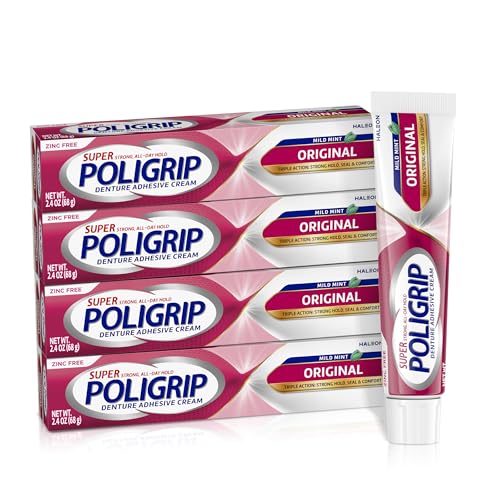
Super Poligrip Original Denture Adhesive Cream 2.4 oz, 4 Pack

Poligrip Ultimate All-in-1 Denture Adhesive Cream 2.2 oz, 4 Pack

Zhizaiql Dental Lab Dental Glue 1 oz Crack Repair
A Breakdown Of The Leading Choices
Loose dentures need more than a slippery cream when the gap between the appliance and gum tissue is the main problem. Cushion Grip uses thermoplastic material that softens in hot water and molds around the denture, creating a cushion rather than simply adding another slick layer.
This approach suits people dealing with recurring movement, sore spots, or a fit that has become less secure. Unlike the cream formulas later in this roundup, it is intended to fill space and create suction, so your decision comes down to fit rather than adhesive strength alone.
Good Reasons To Consider
- Fills gaps to improve the fit of loose or receding dentures.
- Forms a soft cushion that can ease pressure around tender areas.
- Stays in place during meals, drinking, and overnight soaking.
- Softens in hot water for molding directly to the denture.
- Works with plastic, porcelain, and acrylic appliances.
Practical Considerations
- The molding process takes more preparation than squeezing on a cream.
- Dentures with major cracks or damaged teeth need professional assessment first.
Key Attributes
Made For
This option best suits people whose loose fit comes from shrinking gum tissue or a small gap that leaves food underneath the denture.
Consider Something Else When
Choose Poligrip Ultimate All-in-1 Denture Adhesive Cream instead when you want a ready-to-use cream with a stated 12-hour hold.
Dental benches have different priorities from a kitchen sink. Liovsiso focuses on joining tools and laboratory accessories quickly, with a gel that forms a bond in 15 to 60 seconds and remains attached for days or weeks.
The precision applicator and micro brush make it more relevant to careful bench work than casual denture wear. This distinction matters because the manufacturer explicitly limits the product to dental laboratory tools and accessories rather than medical or oral use.
Where It Delivers
- Sets rapidly, which helps limit waiting time at the bench.
- Targets small joints and accessories with controlled gel placement.
- Provides a bond intended to remain in place across multiple workdays.
Where It May Fall Short
- The label restricts use to dental laboratory applications.
- Its rapid setting leaves little room for repositioning after contact.
- A gel applicator suits precision work rather than broad coverage.
Quick Facts
Right Fit For
This gel suits dental technicians and laboratory workers who need a rapid temporary bond for tools, holders, or accessories.
A Better Fit Elsewhere
Choose Cushion Grip Thermoplastic Denture Adhesive instead when your goal is to cushion and tighten a loose denture for mouth wear.
A cream adhesive works best when your denture fit is generally sound and you need a consistent layer for daily chewing, speaking, and meals. Poligrip Denture Adhesive Cream focuses on that familiar routine, combining an all-day hold with a seal intended to reduce irritation from trapped food.
The four-tube package gives you room to keep a tube in different living spaces or replace them at useful intervals. Compared with the original cream in this roundup, this version is positioned for people who want a straightforward adhesive without zinc or flavor.
A Few Highlights
- Provides an all-day hold for regular denture wear.
- Creates a food seal that may reduce irritation from loose particles.
- Includes four 2.4 oz tubes for regular use.
- Contains no zinc or added flavor.
- Supports comfort alongside adhesion rather than grip alone.
Small Caveats
- A cream cannot repair a poorly fitting or damaged appliance.
- Applying more than the recommended amount can create excess material around the denture.
Built With In Mind
This cream suits everyday users who want a food seal, dependable daily adhesion, and a formula without zinc or flavor.
Where A Sibling Pick Shines
Poligrip Ultimate All-in-1 Denture Adhesive Cream offers a more forceful holding option for people whose priority is stronger everyday stability.
Super Poligrip Original Denture Adhesive Cream takes the familiar cream approach: steady adhesion, a food seal, and added comfort for daily wear. For someone who already understands this format, the appeal is a predictable routine without switching to a molded cushion or laboratory adhesive.
Each tube holds 2.4 oz, and the set contains four tubes, which makes the package easy to divide between home, travel, or a care routine away from home. Compared with Poligrip Ultimate, this formula is the more straightforward choice unless extra holding strength is your main concern.
Positive Points
- Delivers all-day hold for normal denture use.
- Helps form a seal against irritating food particles.
- Combines adhesion with a comfort-focused formula.
- Four 2.4 oz tubes provide practical storage flexibility.
Minor Gripes
- The four-tube package occupies more storage space than a single tube.
- Less forceful holding specifications make it less compelling for very loose dentures.
Feature Snapshot
The Right Fit
This cream fits regular denture wearers who want an established adhesive format with daily hold, food sealing, and comfort.
Reach For A Different Pick When
Cushion Grip Thermoplastic Denture Adhesive is the stronger match for a loose fit caused by gaps that need physical cushioning.
When everyday cream adhesion does not feel strong enough, the Poligrip Ultimate formula changes the emphasis. It claims 263 percent more holding strength than no adhesive after one hour and adds a stated 12-hour hold, making it the most forceful cream in this group.
The precision nozzle helps you control each application, which matters because excessive cream can become messy around the appliance. The four 2.2 oz tubes offer less per-tube volume than the 2.4 oz sets, but the formula targets a more demanding stability profile.
The Practical Payoff
- Provides a stated 12-hour hold for extended daily wear.
- States 263 percent stronger holding than no adhesive at one hour.
- Helps keep food from becoming noticeable beneath the denture.
- Uses a precision nozzle for controlled placement.
- Contains no zinc or flavor.
Things To Weigh
- A stronger hold does not correct an underlying fit problem.
- The four smaller tubes require more storage space than one large tube.
Who It Suits Best
This formula suits established denture wearers who prioritize stronger daily adhesion and want a cream that can remain in place through a long day.
Look Elsewhere When
Poligrip Denture Adhesive Cream is a more measured choice when your main priorities are daily hold, a food seal, and a formula without zinc or flavor.
Zhizaiql is built around temporary dental-lab repairs rather than a full-day adhesive routine. Its stated uses include crack repairs, securing loose denture components, filling small gaps, and supporting quick temporary restorations during bench work.
The bond forms in 15 to 60 seconds and is intended to last from days to weeks. That makes it useful for a technician handling a loose component, though it does not replace the cushioning role of Cushion Grip or the all-day routine of a Poligrip cream.
A Strong Showing
- Sets rapidly for temporary component repairs.
- Targets small gaps, cracks, and loose dental components.
- Supports temporary restorations and laboratory accessories.
Details To Watch
- The rapid set time allows little opportunity for adjustment.
- Its repair focus differs from the prolonged daily adhesion of cream formulas.
- Confirm that the component and intended application match the labeling.
Core Details
Whose Shelf It Belongs On
This glue belongs on a dental-lab workstation where technicians need temporary repairs to tools, restorations, or denture components.
Another Choice May Suit
Liovsiso Dental Lab Instant Bonding Glue Gel is the better fit for precision joining of laboratory tools and accessories with a precision applicator.
What To Look For In A Denture Adhesive
The first distinction is the job your adhesive needs to perform. A cream improves contact between a denture and the supporting surface, while a thermoplastic reliner fills a physical gap and adds cushioning. Laboratory glue serves an entirely different repair function and should not replace a mouth-worn adhesive.
Match The Product To The Problem
Loose movement caused by shrinking gums calls for a gap-filling material such as Cushion Grip. A denture that generally fits but shifts during meals may respond better to a cream with a stronger hold. Small cracks and detached laboratory components belong in the dental-lab category rather than the everyday adhesive category.
Consider Daily Contact And Comfort
A food seal is a thin barrier intended to keep irritating particles from reaching tender tissue. Comfort-oriented formulas may be more useful during extended wear, while a precise nozzle helps keep application under control. Your own sensitivity and denture condition still determine how comfortably either approach works.
Review Application And Component Compatibility
Hot-water molding takes more preparation than opening a cream tube. Laboratory gels often bond within seconds, leaving little time to reposition a component. Check the labeled use, denture material, and application method before ordering, especially for items intended only for dental-lab work.
Common Sense Before The Checkout
Common Shopping Slip Ups
Do not confuse daily denture adhesion with temporary laboratory bonding. Their ingredients, setting times, and intended environments differ, so a dental-lab adhesive is rarely a sensible substitute for a mouth-worn cream or thermoplastic cushion.
What The Higher Tier Buys
Higher-tier cream formulas may provide stronger adhesion, longer stated wear, or more controlled dispensing. Those traits help when your denture fit is sound but ordinary cream feels marginal. They cannot compensate for a badly fitting appliance, so an accurate fit check matters before buying a more forceful formula.
Frequently Asked Questions
Which Adhesive Is Best For Loose Dentures?
Cushion Grip Thermoplastic Denture Adhesive is the strongest fit when looseness comes from a gap between the denture and gum tissue. It molds into a cushion rather than relying on cream adhesion alone.
How Long Does Cushion Grip Thermoplastic Adhesive Last?
The manufacturer states that the material can hold for up to four days. Application technique and the condition of the denture may affect the practical result.
Can Dental Lab Glue Be Used In The Mouth?
Do not use a glue marked for dental-lab tools and accessories as a mouth adhesive unless its label explicitly permits oral use. Liovsiso Dental Lab Instant Bonding Glue Gel is specifically excluded from medical and oral use.
Which Poligrip Cream Offers The Strongest Hold?
Poligrip Ultimate All-in-1 Denture Adhesive Cream has the strongest stated specifications in this group, with a 12-hour hold and a claimed increase over no adhesive at one hour. Its precision nozzle also supports controlled application.
Should You Use Denture Adhesive With A Poorly Fitting Denture?
Adhesive may improve everyday stability, but it cannot repair a damaged appliance or replace a proper fit adjustment. Persistent looseness or sore spots deserve attention from a dental professional.
Final Thoughts
The right adhesive depends on the failure you want to solve. Cushion Grip handles gaps and loose fits, the Poligrip creams cover daily stability, and the two dental-lab glues serve precision or temporary component work. Match the formula to the application, read its use restrictions, and let the condition of your denture guide the decision.
